For a team already juggling DeepSeek, Kimi, Qwen, or other providers, a shared routing layer can be reasonable if it removes duplicated work and the fallback behavior is tested. GPTProto is one implementation of this approach.
AI API for Roleplay Chat.Your Characters, Your Models.
Write the character card. Set the lore. Decide which parts of the conversation your app sends with each turn. Try different models through one OpenAI-compatible API, then choose the voice and cost that fit your story.
curl https://gptproto.com/v1/chat/completions \ -H "Authorization: Bearer $GPTPROTO_API_KEY" \ -H "Content-Type: application/json" \ -d '{ "model": "claude-opus-5", "messages": [ { "role": "system", "content": "<roleplay rules + 2,818-token card>" }, { "role": "user", "content": "You can't just take whatever you want." } ], "max_tokens": 400, "stream": true }'

Long chats cost more.The story still needs to hold together.
As conversations grow, character details and chat history can make each turn more expensive. Your app also needs to keep the plot on track and choose a model that fits each character.
Token Burn Compounds Every Turn
A 2,818-token card plus 50 turns of history means every single reply carries thousands of input tokens. At list price, one engaged player can cost more per month than they pay you.
Price your own trafficCharacters Forget, Players Churn
Roleplay lives on memory. The card, the lorebook and a thousand turns of history need room to sit in the window — not a summarisation hack that quietly drops the plot.
See context windowsOne Voice Doesn't Fit Every Character
A brooding rival, a lively sidekick and a narrator all want different models. Running three integrations to get three voices is how a two-person team ends up doing ops work.
See the lineupFind the right voice for each character.One key for all of them.
Start with the same card and scene. Switch models to hear the difference, then compare the input price, output price and context limit before you commit.
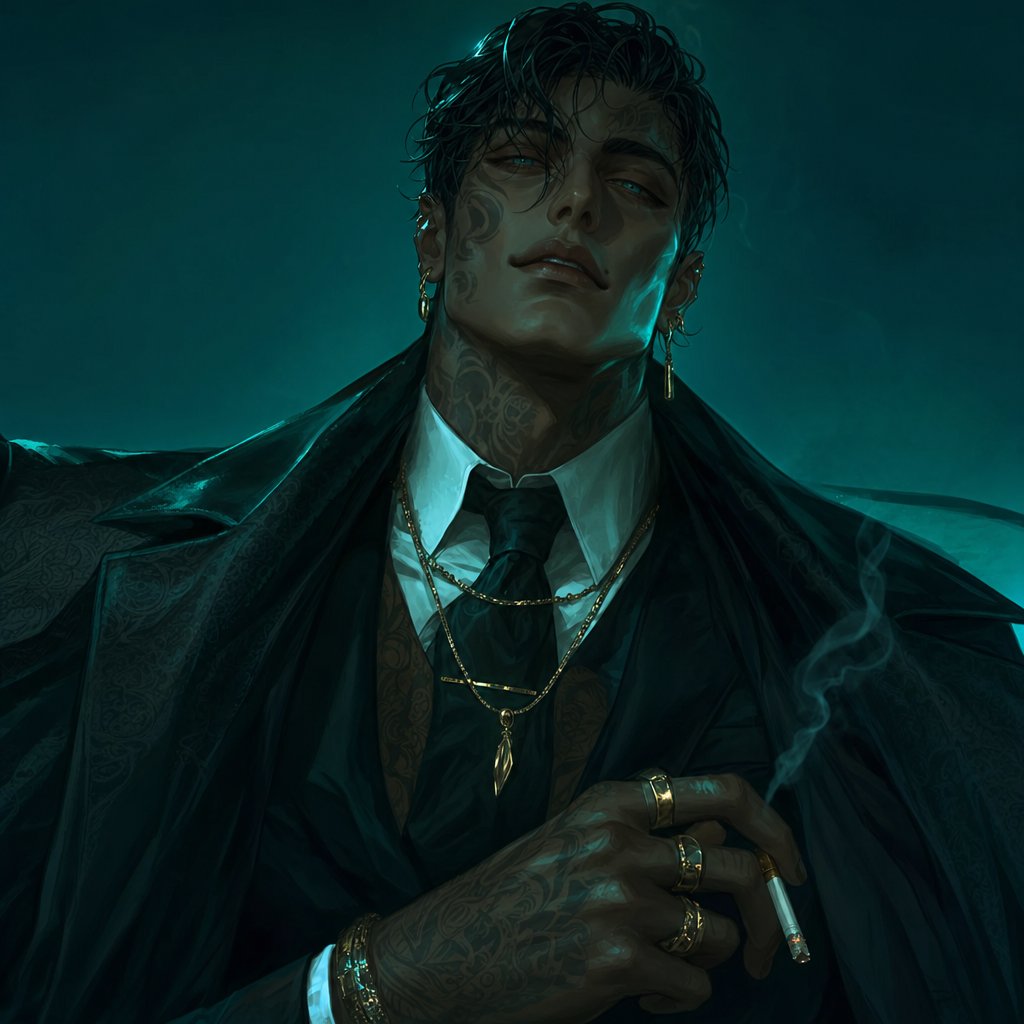
Long conversations with fictional characters — fixed personas and rich worldbuilding, where character consistency and memory continuity decide the experience.
Low-cost long context角色一致性Streaming| 模型 | 價格:GPTProto | 對比官方 | 對比 OpenRouter | 上下文 | 模態 | 穩定度 | 操作 |
|---|---|---|---|---|---|---|---|
| $4.50 / $22.50$0.45 快取讀取 · 每 1M tokens | −10% | −15% | 1M | → | 試用 | ||
| $3.20 / $16.00$0.32 快取讀取 · 每 1M tokens | −20% | −24% | 1.05M | → | 試用 | ||
| $2.70 / $13.50$0.27 快取讀取 · 每 1M tokens | −10% | −15% | 1.05M | → | 試用 | ||
| $1.60 / $9.60$0.16 快取讀取 · 每 1M tokens | −20% | −24% | 1.05M | → | 試用 | ||
| $1.26 / $3.96$0.23 快取讀取 · 每 1M tokens | −10% | −15% | 1.05M | → | 試用 | ||
| $1.12 / $3.37$0.04 快取讀取 · 每 1M tokens | −15% | −19% | 1.05M | → | 試用 |
Your Players Don't Pause for
Upstream Issues.
A failed reply is most noticeable when players are in the middle of a scene. Backup routes, automatic failover and continuous monitoring help your app handle upstream trouble during busy hours.
自動容錯
Major models run on redundant upstream channels. If one degrades mid-evening, traffic shifts to a backup automatically — no code change, no dropped sessions.
冗餘上游通道
Major models are served through redundant upstream channels, so a single provider outage never ends your players' evening with it.
查看模型全天監控
Continuous monitoring with automatic traffic shifting — issues get routed around before they turn into a scene that ends mid-sentence.
What does a long conversationactually cost?
Choose a model and describe a typical chat. See the cost per conversation and what it adds up to across your players.
What users say aboutGPTProto.
From switching models and handling fallback to creating images and video, people use GPTProto for different kinds of work. Here's what they chose to share.

I've been testing GPTProto recently, and it's honestly made my creative workflow much simpler. Instead of paying for multiple subscriptions, I can access several leading AI models from one place.

I turned this single prompt into a cinematic fantasy video using GPTProto. "Continuous 15-second cinematic shot, 4K resolution, hyper-realistic dark fantasy photorealism…"

I challenged myself to create a cinematic AI cooking short in just 15 seconds. I used GPTProto to bring the entire workflow together, from image generation to video, all in one place.

Made with Seedance 2.0 + GPT Image 2 on GPTProto. A Pixar-style commercial with the perfect glow.
What worked for me was pointing the cloud connections at GPTProto so the frontend only sees one endpoint and I just change the model name to swap. I am not rebuilding a connection from scratch every time.
I route the calls through GPTProto so a fallback is a config switch instead of a weekend rewrite when a model disappears. It turns "my default model just got export controlled" from an incident into a config change.

I used to switch between different AI tools just to compare results. Now I just use GPTProto. GPT-5, Claude, Gemini, Kimi, and more — all in one workspace.
I route the calls through GPTProto so the model id and latency land in one place regardless of which provider is behind it. The win is having the log schema consistent across providers.

I created this 15-second cinematic product video with GPTProto using Seedance 2.0, and I was really impressed by how smooth the workflow was.

GPTProto routes the character prompt and shot list to a top model on one API key: 20 minutes … voices it and burns in captions from the same key: 20 minutes.
Text, images, and voice are configured separately. You can keep OpenRouter for text and use GPTProto for visuals.
The call layer underneath the router is GPTProto, so swapping a model does not require provisioning a new provider integration. Changing models becomes cheap enough that the question stops being "should we change."
Choose the model.
Pay for the tokens in each conversation.
Use one GPTProto balance to test models and run your character chat app. Input and output tokens are priced by model; check the current rate before you scale.
Get started. Great for testing the endpoint and trying new models. Top up $20+ anytime to unlock bonus credits.
適合個人開發,以及準備上線的小型專案。
You get $600 in balance for $500 — bonus credits stack on top of already-discounted model pricing. Built for teams running production workloads.
Before you build acharacter chat app
Answers to the questions behind the demo: control, models, memory and cost.
01Can I use my own character cards, lore and dialogue rules?
Yes. Your app can include character details, world information and examples in the messages it sends to the model. You decide how to structure that context and which parts to include on each turn, within the selected model's limits and policies.
02Does GPTProto store a character's memory between conversations?
Your app manages persistent character data and conversation history. For each request, send the details the model needs, or retrieve and summarize earlier events in your own application. A larger context window gives you more room in a request; it is not long-term memory by itself.
03Can I try several roleplay models with one API key?
Yes, you can select from the models currently available in the GPTProto catalog using the same API integration. Change the model ID and compare the same character and scene. Check each model page for its current price, context limit and supported features.
04How do I decide which model is best for my character chat?
Run the same character card and conversation on a short list of models. Compare whether each reply stays in character, uses the right plot details, follows your rules, arrives quickly enough and fits your cost per turn. Test with your own scenes rather than relying on a generic rank.
05What makes long roleplay chats expensive?
Input tokens can grow when your app sends a character card, lore and prior dialogue with every turn. Output tokens have a separate price. The calculator lets you estimate both; any cache savings depend on the selected model and an eligible request pattern.
06Will older messages be kept when a chat gets long?
That depends on what your app sends and the selected model's context limit. Your app can keep recent dialogue, retrieve relevant earlier events or summarize older turns before sending a request. The API cannot guarantee that an unlimited history will fit unchanged.
07Can I use streaming for a chat interface?
Streaming can deliver a response progressively where the selected model and endpoint support it. Confirm the model's supported features and implement interruption and retry handling in your app.
08How do I switch an existing character chat integration?
If your client uses the supported OpenAI-compatible request format, start by testing the GPTProto base URL, API key and a model ID in staging. Verify your use of streaming, tools and error handling for the models you plan to deploy.
09Are all kinds of roleplay content allowed?
Content rules can vary by model and provider. Review the current model-specific restrictions and GPTProto terms before choosing a model for your application. Do not assume that "fully custom" overrides those rules.
10How are conversation data and billing handled?
See the current GPTProto data handling, privacy and billing documentation for retention, logging, invoicing and regional terms. Do not infer these from the API interface alone.
AI 模型指南。實用的 API 教學。
比較模型、了解 API 設定,以及圖像和影片在實際專案裡的做法。
Make every character your own.Find the right model for less.
在瀏覽器裡做圖像和影片,或用一把 API 金鑰把文字、圖像、影片模型接進應用。也可以查看指定模型的折扣。
- ✓相容 OpenAI
- ✓200 多個模型
- ✓比官方低 10–30%
- ✓高可用,自動容錯