Why Midjourney AI Is The Creative Standard Right Now
Generating a picture of a cat astronaut is easy these days. Any basic AI can do that. But creating something that looks like it belongs in a high-end gallery or a professional ad campaign is a different story. That is where midjourney ai separates itself from the pack.
Most people treat image generators like slot machines. They pull the lever and hope for the best. But seasoned creators know that midjourney ai is more like a high-performance engine. If you know how to tune it, the results are staggering. It has become the gold standard for artistic texture.
Here’s the thing: we are past the "wow" phase of generative art. We are now in the "utility" phase. Artists are using midjourney ai to build templates, mood boards, and final assets for paying clients. It is no longer just about the prompt; it is about the control.
In this guide, I want to move past the surface-level stuff. We are going to look at how practitioners actually use this tool to get results that do not look like "AI." It is about understanding the friction and the workarounds that lead to genuine quality.
The Evolution Of Artistic Midjourney AI
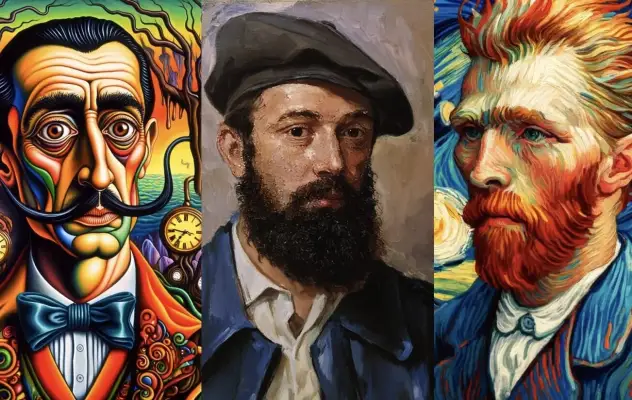
If you look at the early versions of midjourney ai, the images were dreamy and abstract. They lacked coherence. But each iteration brought more "opinion" into the model. The developers did not just want a photorealistic tool; they wanted an artistic one.
This focus on aesthetics is why many professionals stick with midjourney ai despite the competition. Other tools might be faster or more technically accurate in some areas. But they often lack the "soul" or the lighting complexity that midjourney ai provides right out of the box.
"I spend hours using midjourney ai to make templates that stand out to me. These are not just random generations; they are the foundation of my professional portraits." — Professional Digital Artist
Mastering Style And Composition In Midjourney AI
Getting a high-quality image out of midjourney ai requires more than just a list of nouns. You have to understand how to guide the composition. One of the most effective ways to do this is through image referencing and style seeds.
The "plastic" look is a common complaint in the AI world. You know the one—overly smooth skin, weirdly perfect lighting, and a lack of grit. To avoid this, you need to use the advanced parameters that midjourney ai offers. These are the secret sauce for professional work.
By using parameters like `--sref` (style reference) or `--sw` (style weight), you can force the model to look at specific textures and color palettes. This allows you to create a series of images that look like they belong to the same project. Consistency is the key to commercial value.
And let's talk about blending. Blending weighted mood boards is a fantastic way to get organic results. Instead of describing a mood, you show the midjourney ai the mood. This results in far more nuanced lighting and depth than text alone can provide.
Beyond The Prompt With Midjourney AI Parameters
If you want to truly master the tool, you have to learn the shorthand. Parameters like `--iw` (image weight) allow you to tell the midjourney ai how much it should care about your reference image versus your text prompt. It’s a balancing act.
For those working on complex visual projects, the image-to-image capabilities of midjourney ai are essential. This feature lets you take a rough sketch or a low-res photo and transform it into a polished masterpiece while keeping the original structure.
- --sref: Applies a specific style from a reference image to your new generation.
- --sw: Adjusts the intensity of the style reference (0 to 1000).
- --v: Selects the model version (use 6.1 for the most recent high-quality results).
- --ar: Changes the aspect ratio to fit social media, web banners, or print.
Comparative Analysis: Midjourney AI Versus The Field
It is a crowded market. You have Meta AI, Leonardo, Flux, and Stable Diffusion all fighting for your attention. So why choose midjourney ai? For many, it comes down to the "one-click" quality. You don't have to be a prompt engineer to get a good result.
Meta AI is basically midjourney ai for free but with heavy limitations. It’s great for a quick portrait, but it lacks the upscaling and the deep parameter control that professionals need. If you are just playing around, Meta is fine. If you have a deadline, it’s not enough.
Then you have Stable Diffusion and Flux. These are powerful because they are open. You can use Loras and specific models to do almost anything. But the learning curve is a vertical wall. Midjourney ai sits in that sweet spot of high power and manageable complexity.
Leonardo AI is another strong contender, giving away free credits daily. It’s user-friendly and has great presets. But when you put the final images side-by-side, midjourney ai usually wins on texture and lighting realism. It just feels more "expensive."
Finding The Best Midjourney AI Alternative
The choice often depends on your specific workflow. If you need absolute control over every pixel, Stable Diffusion is your best bet. If you want to explore all available AI models to see which fits your style, checking a multi-model platform is a smart move.
| Feature |
midjourney ai |
Stable Diffusion / Flux |
Leonardo AI |
| Ease of Use |
High |
Low |
Medium |
| Artistic Quality |
Elite |
Highly Variable |
High |
| Customization |
Medium (Parameters) |
Infinite (Loras/Checkpoints) |
High (Presets) |
| Cost |
Subscription |
Free (Local) / Paid (Cloud) |
Freemium |
Building A Pro Workflow With Midjourney AI And APIs
In a professional setting, midjourney ai is rarely the only tool in the box. You generate the core asset in midjourney ai, but then you take it elsewhere for the finish. This might involve Photoshop for cleanup or a dedicated AI upscaler for large-format printing.
Transparency is a big deal here. When working with clients, I’ve found that explaining the workflow actually builds trust. They aren't just paying for a prompt; they are paying for your ability to use midjourney ai to execute a specific vision that they couldn't achieve themselves.
Scaling this is the next challenge. For developers and agencies, accessing these models through an API is a game-changer. It allows for bulk generation and integration into custom apps. Using a unified API for midjourney ai can significantly simplify the technical overhead.
But there is a catch: costs can spiral. If you are running a high-volume operation, you need to manage your API billing carefully. Smart scheduling and cost-first modes can help keep your margins healthy while delivering top-tier AI art.
Integrating Midjourney AI Into Commercial Projects
Commercial work requires more than just a pretty picture. It requires a specific resolution and often a specific aspect ratio. Using the `--ar 16:9` or `--ar 9:16` parameters in midjourney ai ensures your images fit the intended medium without awkward cropping later.
And don't sleep on the animation features. Shockingly, the animation feature is free within the midjourney ai ecosystem. You can take a static generation and turn it into a short, atmospheric loop. This is perfect for social media ads or "living" website backgrounds.
If you're worried about the learning curve for developers, check out the simplified access for midjourney ai. Platforms like GPT Proto offer a unified interface, making it easier to plug these high-end models into your existing tech stack without a headache.
Avoiding Common Pitfalls In Midjourney AI
The biggest mistake new users make is "over-prompting." They write a paragraph of text and expect the midjourney ai to follow every word. It doesn't work like that. The model starts to lose the thread when there are too many conflicting instructions.
Keep your prompts lean. Focus on the subject, the lighting, and the medium. If you want a specific vibe, use a style reference rather than three sentences of adjectives. Midjourney ai thrives on clarity, not volume. Less is almost always more.
Another pitfall is relying solely on the built-in upscaler. While midjourney ai has improved its upscaling, it’s not a magic fix for everything. Sometimes the "subtle" upscale is better than the "creative" one, which can introduce strange new artifacts you didn't ask for.
Lastly, pay attention to your "relax" vs. "fast" hours. If you're on a basic plan, you'll burn through your fast hours quickly by generating high-res variations. Save your fast hours for when you are on a tight deadline with a client watching over your shoulder.
Solving The Midjourney AI Plastic Look
So how do you get rid of that fake AI sheen? The answer lies in the `--stylize` (or `--s`) parameter. By default, midjourney ai applies a high level of stylization. Lowering this value can actually make the image look more "real" and less "curated."
Adding keywords like "grainy," "analog film," or "high-speed photography" can also help break up those perfectly smooth surfaces. You want the midjourney ai to introduce some noise. Imperfection is what makes an image feel human and authentic.
And remember: you can always use a negative prompt. If the midjourney ai keeps putting "text" or "watermarks" in your images, use `--no text watermarks` to clean up the output. It’s a simple fix that saves a lot of time in post-production.
The Future Of Midjourney AI: V8 And Beyond
What is coming next? The talk of the town is Version 8. This isn't just an update; it is a total model rebuild. The developers have signaled that midjourney ai V8 will focus on real-time prompt previews. That would be a massive shift in how we interact with the tool.
Imagine seeing the image change as you type. No more waiting 60 seconds for a grid of four. This kind of "style creator" environment would make midjourney ai even more accessible to non-technical artists. It turns the process from a gamble into a conversation.
There is also a native mobile app in the works. Currently, most users interact via Discord or the web alpha. A dedicated mobile app would likely simplify the interface for newcomers, potentially bringing the power of midjourney ai to a much wider, less "techy" audience.
But the core mission remains the same. Whether it's V8 or V10, the goal of midjourney ai is to provide the most aesthetically pleasing results in the AI space. They aren't trying to be the fastest; they are trying to be the best. And for most creative pros, that’s the only thing that matters.
What To Expect From The New Midjourney AI Model
With the V8 rewrite, we expect even better hand rendering and text integration. These have historically been the weak points for midjourney ai. If they can nail those while keeping their signature lighting and texture, the competition is going to have a hard time catching up.
So, is it still worth the investment? Absolutely. Even with new players like Flux entering the scene, the community and the established workflow around midjourney ai make it the safest bet for serious creative work. It is a tool that grows with you as your skills improve.
Stay updated on these shifts by following the GPT Proto tech blog, where we track how these models evolve. The AI world moves fast, and staying informed is the only way to keep your competitive edge in the creative market.
Written by: GPT Proto
"Unlock the world's leading AI models with GPT Proto's unified API platform."