2K Output & Mask Editing
Native output up to 2K (2048px) with neutral, accurate color — the warm cast from gpt-image-1.5 is gone. Inpaint or outpaint precise regions via mask images while untouched pixels stay pixel-identical.

curl --request POST "https://gptproto.com/api/v3/openai/gpt-image-2/text-to-image" \
    --header "Authorization: Bearer $GPTPROTO_API_KEY" \
    --header "Content-Type: application/json" \
    --data '{
        "prompt": "A tiny origami fox sailing a teacup across a moonlit puddle",
        "n": null,
        "quality": "auto",
        "size": "auto",
        "response_format": "url"
}'Start from the cost of a single sample and pick a testing budget. GPTProto rates are 20% below list price.
| Scenario | OpenAI list | OpenRouter | GPTProto | You save / mo |
|---|---|---|---|---|
| Quick tests & prototypes100 images / mo | $3.26 | $3.44 | $2.61 | −$0.65≈ $7.82 / yr |
| Product & e-commerce photos1,000 images / mo | $32.58 | $34.37 | $26.06 | −$6.52≈ $78.19 / yr |
| Ad / marketing creatives2,500 images / mo | $81.45 | $85.93 | $65.16 | −$16.29≈ $195.48 / yr |
| Social media content10,000 images / mo | $325.80 | $343.72 | $260.64 | −$65.16≈ $781.92 / yr |

OpenAI · $6.4/M input · $24/M output
Call OpenAI's gpt-image-2 through one GPTProto key at $6.4/$24 per 1M tokens — 20% under OpenAI's list. Same model ID, no organization verification, one balance shared across 200+ models.
2K Output & Mask Editing
Native output up to 2K (2048px) with neutral, accurate color — the warm cast from gpt-image-1.5 is gone. Inpaint or outpaint precise regions via mask images while untouched pixels stay pixel-identical.
Reference-Guided Consistency
Pass up to 16 reference images in a single call to hold subject identity, style, and product details across a set — for sequential art, catalog shots, and brand-consistent campaigns.
In-Image Text Rendering
Renders small labels, UI copy, and long passages in Latin and CJK scripts with layout accuracy — usable in client work without a separate typesetting pass. A core reason to reach for the gpt image 2 api over older generators.
Agentic Thinking Mod
Before rendering, gpt-image-2 reasons through layout and constraints — the first OpenAI image model with O-series-style planning. It raises success rates on dense scenes like infographics, multi-panel layouts, and packaging.
gpt-image-2 is OpenAI's image generation and editing model, released April 21, 2026 as the successor to gpt-image-1 (April 2025) and gpt-image-1.5 (December 2025). It is natively multimodal — image generation is part of the core model rather than a diffusion model bolted onto a language model — which is why it follows long, multi-part prompts and renders readable in-image text more reliably than DALL-E-era generators.
Two things set the model apart at the API level. First, an agentic "thinking" pass: for complex prompts it plans composition and reasons through constraints before generating, which lifts success rates on infographics, multi-panel layouts, and text-heavy marketing assets. Second, an editing endpoint that accepts mask images for precise inpainting and outpainting, plus up to 16 reference images per call for identity and style consistency. Output is PNG at up to 2K native resolution, with neutral color that fixes the warm cast in gpt-image-1.5.
On GPTProto you call the same gpt-image-2 model ID through the standard OpenAI-compatible request shape — no separate OpenAI account, no organization verification step, and one balance that also covers Nano Banana Pro, Seedream, Flux, and 200+ other models.
| Spec | GPT Image 2 |
|---|---|
| Model ID | gpt-image-2 |
| Released | April 21, 2026 |
| Type | Text-to-image + image editing (inpaint / outpaint) |
| Output format | PNG (raster) |
| Max resolution | Native 2K (2048px); high-res variants up to ~4K |
| In-image text | Latin + CJK (Chinese / Japanese / Korean), dense layouts |
| Reasoning | Agentic "thinking mode" (plans before rendering) |
| Reference images | Up to 16 per call |
| Editing | Mask-based inpaint / outpaint; unedited pixels preserved |
| Input modality | Text (+ reference images) |
| OpenAI list price | $8 / $30 per 1M tokens (input / output) |
| GPTProto price | $6.4 / $24 per 1M tokens (20% under list) |
| Access | One GPTProto key, no OpenAI org verification |
| GPT Image 2 | Nano Banana Pro | GPT Image 1.5 | |
|---|---|---|---|
| Model ID | gpt-image-2 |
gemini-3-pro-image-preview |
gpt-image-1.5 |
| Vendor | OpenAI | OpenAI | |
| Released | Apr 2026 | Nov 2025 | Dec 2025 |
| Max resolution | 2K native (~4K variants ) | up to 4K (4096px) | 2K |
| In-image text | Latin + CJK | multilingual, long passages | improved vs gpt-image-1 |
| Reasoning | agentic thinking | Gemini 3 reasoning + Search grounding | none |
| Reference inputs | up to 16 images | multi-image, ~5-subject identity | fewer |
| OpenAI/Google list | $8 / $30 per 1M | $2 / $12 per 1M | $8 / $32 per 1M |
| GPTProto price | $6.4 / $24 per 1M | $ 0.0804/ per time |
$ 5.6 / $ 22.4 per 1M |
| On GPTProto | ✓ | ✓ | ✓ |
Which to pick (honest): Nano Banana Pro has the lower token rate, native 4K, and Search-grounded generation — reach for it when cost, 4K infographics, or real-world-grounded visuals matter most. GPT Image 2 leads on agentic layout planning, up to 16 reference images, and tight drop-in compatibility with the OpenAI SDK — reach for it for reference-heavy product/packaging work already wired to OpenAI. Because both run on one GPTProto balance, you can benchmark them against your own prompts without opening a second account.
If you already call gpt-image-2 on OpenAI, moving to GPTProto is a base-URL swap — the model ID and request shape stay the same:
model: "gpt-image-2" and your existing images.generate / edit request body. https://gptproto.com/v1 and use your GPTProto key.Find technical details and usage tips for the gpt image 2 api to enhance your creative workflow and image quality.
Guides, comparisons, and updates related to this model.
All Articles
Compare the cheapest AI video generators in 2026 by real cost per clip. Vidu Q3 Pro runs $0.04/video, plus Kling, Sora 2, Veo & the best free tools.
Nano Banana 2 costs half of Nano Banana Pro and scores higher on the Image Arena. See when each Gemini image model wins—plus one-API code to run both.
Seedance 2.0 vs Kling 3.0 for human motion: Kling wins at generating action from text, Seedance at copying a reference. Specs, blind-test data, and runnable API code.
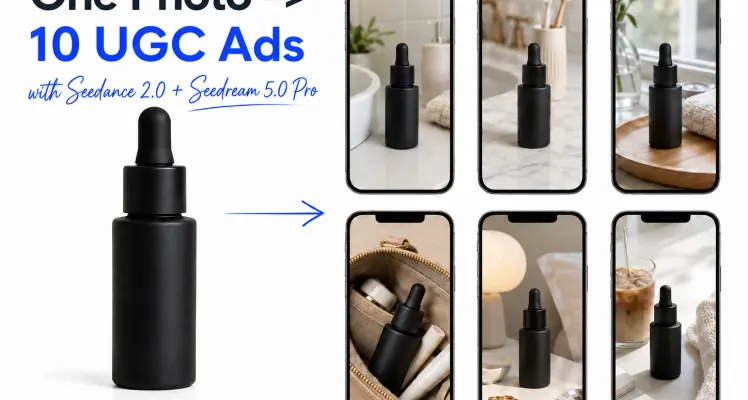
Turn one product photo into 10 native UGC ads for about $25. Step-by-step Seedream 5.0 Pro + Seedance 2.0 API workflow with runnable Python and cURL." slug: "ai-ugc-ads-seedream-5-pro-seedance-2
Input
Output