Si vous ne lisez qu’un seul paragraphe : pour la plupart des tâches, choisissez **Nano Banana 2** (Gemini 3.1 Flash Image). Il coûte deux fois moins cher que Nano Banana Pro par image, s’exécute plus rapidement en utilisation courante et, sur l’Artificial Analysis Image Arena indépendant, obtient actuellement un score *supérieur* à celui de Pro — et non inférieur. Optez pour **Nano Banana Pro** (Gemini 3 Pro Image) lorsque le travail exige une résolution d’impression, une typographie complexe ou une composition multi-éléments sophistiquée pour laquelle vous préférez payer davantage plutôt que de relancer la génération. Voilà toute la décision. La suite consiste à vous montrer les résultats, car les noms sont confus et la plupart des comparaisons inversent le classement en matière de qualité.
J’ai écrit ceci après avoir vu trois équipes différentes gaspiller des crédits en choisissant « la version Pro » par réflexe, en supposant qu’un modèle nommé *Pro* devait tout surpasser. Ce n’est pas le cas. Google a conçu ces deux modèles pour des tâches différentes, et le moins cher a discrètement rattrapé son retard.
Nano Banana Pro vs Nano Banana 2 : quel modèle d’image Gemini devriez-vous utiliser en 2026 ?
Nano Banana 2 coûte deux fois moins cher que Nano Banana Pro et obtient un meilleur score sur l’Image Arena. Découvrez dans quels cas chaque modèle d’image Gemini l’emporte, avec du code utilisant une seule API pour exécuter les deux.
First, untangle the names
Google shipped three image models in roughly six months and gave them nicknames that collide. Here is the clean mapping, straight from Google's own developer docs:
- Nano Banana =
gemini-2.5-flash-image— the original, launched August 2025. - Nano Banana Pro =
gemini-3-pro-image-preview— built on Gemini 3 Pro, launched November 20, 2025. - Nano Banana 2 =
gemini-3.1-flash-image-preview— built on Gemini 3.1 Flash, launched February 2026.
So "Pro" and "2" are not two names for the same upgrade. Pro is the high-reasoning, premium tier. "2" is the newer Flash model that brings most of Pro's quality down to Flash speed and price. If a tutorial ever treats "Nano Banana Pro" and "Nano Banana 2" as interchangeable, stop reading it — the author doesn't know which model they're calling.
On GPT Proto these live at clean model IDs: gemini-3-pro-image-preview, gemini-3.1-flash-image-preview, and the original gemini-2.5-flash-image.
Side by side: specs and price
| Nano Banana 2 (3.1 Flash Image) | Nano Banana Pro (3 Pro Image) | |
|---|---|---|
| Built on | Gemini 3.1 Flash | Gemini 3 Pro |
| Positioning | Speed, high volume | Professional asset production |
| Output sizes | 0.5K, 1K, 2K, 4K | 1K, 2K, 4K |
| Max reference images | 14 | 14 |
| Max object images | 10 | 6 |
| Max portrait (face) images | 4 | 5 |
| Extra ultra-wide/tall ratios (1:4, 4:1, 1:8, 8:1) | Yes | No |
| Google Image Search grounding | Yes | No |
| Google list price (1K image) | $0.067 | $0.134 |
| GPT Proto price (1K image) | $0.0402 | $0.0804 |
The price gap is the cleanest fact in this comparison. Google charges image output at $60 per million tokens for 3.1 Flash and $120 per million for 3 Pro — exactly 2x. That ratio holds at every resolution: roughly $0.067 vs $0.134 at 1K-2K on Google's API, and $0.045 vs $0.24 at the extremes (Flash 0.5K vs Pro 4K). On GPT Proto the same 2:1 ratio survives the markup: $0.0402 for Nano Banana 2 against $0.0804 for Pro at the current rate, with the original Nano Banana cheaper still at $0.0234. (Those are GPT Proto's current promotional rates for a 1K image and rise with resolution; check the live model page for the figure that applies the day you read this.)
The takeaway: switching from Pro to Nano Banana 2 doesn't shave a few percent off your bill. It halves the per-image cost. Over 10,000 images a day that's a different budget line, not a rounding difference.
Quality: what the neutral arena actually says
Here is where reflexes mislead. The honest source for "which looks better" isn't a vendor blog — it's Artificial Analysis' Image Arena, which ranks models by Elo from millions of blind human votes. As of late April 2026, Nano Banana 2 sits around Elo 1254 on the text-to-image leaderboard, a notch above Nano Banana Pro. On the image-editing leaderboard the same order holds: Nano Banana 2 lands at 1249, Pro just behind at 1247.
That's worth sitting with. The cheaper, faster Flash model rates higher than the premium one on a neutral, vote-driven benchmark. It wasn't always like this. When Nano Banana Pro launched in November 2025, it topped both the text-to-image and image-editing arenas — it was, briefly, the best image model anyone had measured. Then Nano Banana 2 arrived, GPT Image 2 arrived, and the leaderboard reshuffled. So the accurate framing isn't "Flash beats Pro forever." It's: Pro launched on top, the field moved, and by spring 2026 the cheaper sibling had pulled level or ahead on aggregate human preference.
My read — and I'll flag this as judgment, not benchmark — is that the gap is small enough that for most prompts you won't reliably tell which model made which image. Community testers keep saying the same thing in different words: outputs are close to indistinguishable, and on dense, spatially complex scenes the Flash model sometimes handles layout better. Elo scores drift week to week, so treat the exact numbers as a snapshot, not a constant. The direction is what matters, and the direction says: don't pay double on the assumption that Pro is simply sharper.
Speed and cost in practice (with the part nobody mentions)
The pitch for Nano Banana 2 is "Pro quality at Flash speed," and in typical use that holds up. Community measurements put it in the 4-8 second range per standard image against roughly 10-20 seconds for Pro. When you're dialing in a prompt over fifty iterations, that's the difference between a four-minute loop and a twelve-minute one. For batch pipelines the math compounds hard.
But I'm not going to tell you the speed win is guaranteed, because it isn't. There's an open issue on Google's js-genai GitHub repo from May 2026 where a developer measured gemini-3.1-flash-image-preview returning slower than gemini-3-pro-image-preview on a minimal 1K request in Node — the opposite of what the names promise. Preview-model latency depends on routing, warm-up, and capacity, and right now both of these are preview models. So: faster on average, yes; faster on every single call, no. If latency is load-bearing for your product, measure it on your own traffic before you commit. That's the kind of caveat the marketing pages skip.
The cost side has no such asterisk. At half the per-image price, Nano Banana 2 wins the economics outright unless you specifically need something only Pro does.
Where each one genuinely wins
This is the part that breaks the "Pro is just better" story, because the feature split runs both directions.
Nano Banana 2 isn't only cheaper — it does several things Pro can't. It adds a 0.5K (512px) output size for cheap thumbnails and previews. It supports ultra-wide and ultra-tall aspect ratios (1:4, 4:1, 1:8, 8:1) that Pro doesn't expose, which matters for banners, sidebars, and vertical media strips. It accepts up to 10 object reference images against Pro's 6. And it carries Google Image Search grounding, so it can pull live visual references at generation time to render specific landmarks, brand objects, or recent real-world subjects more accurately. If your work touches current events or niche real-world subjects, that grounding is a real edge.
Nano Banana Pro earns its premium in a narrower band. It allocates more reasoning to each image, generating up to two intermediate "thinking" passes to refine composition and logic before the final render — which shows up as cleaner placement on prompts with many objects, strict spatial relationships, and layered lighting. It handles one more portrait (face) reference than Nano Banana 2, five against four, which matters for group shots that must keep everyone on-model. And in Google's own human evaluations and the community consensus, Pro still holds a slight edge on the hardest typography: long multi-line paragraphs, fine kerning, packaging-grade text where one malformed letter ruins the asset.
Put plainly: Nano Banana 2 is the wider, more flexible tool. Pro is the specialist you call when failure is more expensive than the model.
Sample outputs
These three were generated in the GPT Proto playground, same platform you'd call from the API, so you can see the personalities rather than take my word for it.
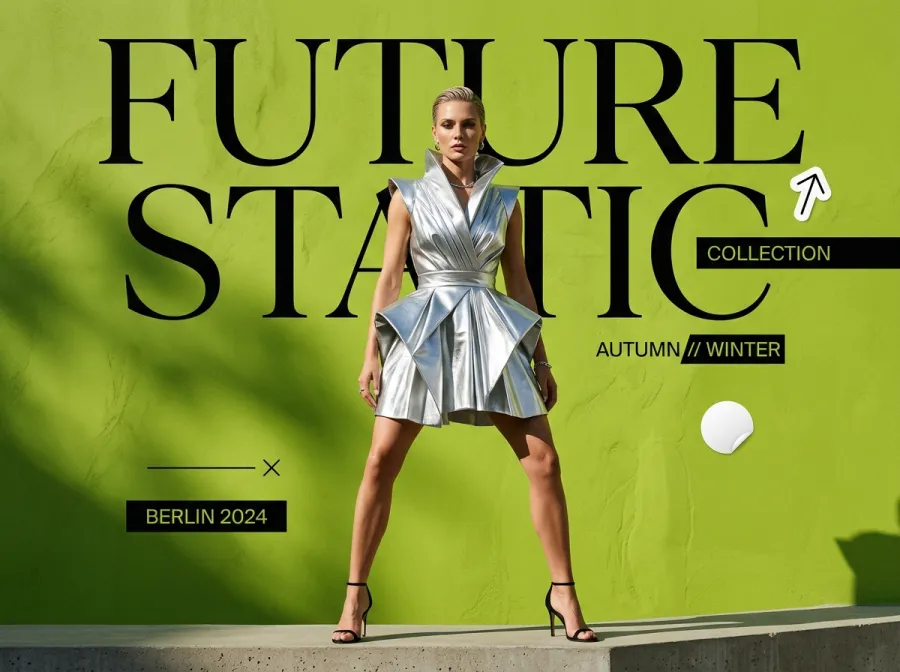
Nano Banana 2 (gemini-3.1-flash-image-preview): a fashion poster with clean, large-scale type rendered correctly — the text-and-layout job Flash is now good enough for.

Nano Banana Pro (gemini-3-pro-image-preview): an 8K-style close-up where the premium reasoning shows up in skin texture, hair strands, and light-on-water detail.

The original Nano Banana (gemini-2.5-flash-image): still capable for stylized, illustrative scenes at the lowest price of the three.
Which should you use?
Default to Nano Banana 2 if you're generating at volume, iterating fast, building user-facing tools where latency and cost per image add up, working in unusual aspect ratios, or rendering subjects that benefit from web-grounded accuracy. For the large majority of production image work in 2026, this is the right starting point — and your bill will be half of what Pro would charge.
Move up to Nano Banana Pro when the deliverable is print-resolution or large-format, when it's typography-critical (packaging, posters, dense infographics) and a single wrong glyph is a re-do, when the composition is genuinely complex with many subjects under strict spatial constraints, or when you need that fifth on-model face in a group shot. The rule I'd write on the wall: choose Pro when an image-quality miss costs more than the model does; stay on Nano Banana 2 when speed, iteration, and volume cost more than the last few percent of fidelity.
And keep the original Nano Banana (2.5 Flash Image) in mind for stylized, illustrative, or low-stakes work where its $0.0234 price tag wins and you don't need the Gemini 3 reasoning at all.
How to call both with one GPT Proto key
The reason you don't have to commit to one model is that on GPT Proto both sit behind the same key and the same endpoint shape — you swap one string to switch. One detail trips people up: the unified /api/v3/ endpoint takes your raw API key in the Authorization header with no Bearer prefix. (The OpenAI-compatible surface is the one that uses Bearer; don't mix them.)
Requests are asynchronous by default: you submit, get back an id and a ready-made result URL, then poll it. Or set enable_sync_mode to true to wait for the image inline.
import requests, time

API_KEY = "YOUR_GPTPROTO_API_KEY"   # raw key, no "Bearer"
BASE = "https://gptproto.com/api/v3"

def generate(model, prompt, size="1K", aspect_ratio="1:1"):
    submit = requests.post(
        f"{BASE}/google/{model}/text-to-image",
        headers={"Authorization": API_KEY, "Content-Type": "application/json"},
        json={
            "prompt": prompt,
            "size": size,
            "aspect_ratio": aspect_ratio,
            "output_format": "png",
            "enable_sync_mode": False,
        },
    )
    submit.raise_for_status()
    poll_url = submit.json()["data"]["urls"]["get"]   # already embeds the prediction id

    while True:
        data = requests.get(poll_url, headers={"Authorization": API_KEY}).json()["data"]
        if data["status"] == "completed":
            return data["outputs"]
        if data["status"] == "failed" or data.get("error"):
            raise RuntimeError(data.get("error"))
        time.sleep(2)

# Same key, same call — switch models by changing one string.
flash = generate("gemini-3.1-flash-image-preview", "a neon ramen stall in the rain, cinematic")
pro   = generate("gemini-3-pro-image-preview",     "product packaging mockup with a legible 12-word tagline")
print(flash, pro)
The cURL equivalent for the submit step:
curl --location 'https://gptproto.com/api/v3/google/gemini-3.1-flash-image-preview/text-to-image' \
  --header 'Authorization: YOUR_GPTPROTO_API_KEY' \
  --header 'Content-Type: application/json' \
  --data '{
    "prompt": "a neon ramen stall in the rain, cinematic",
    "size": "1K",
    "aspect_ratio": "1:1",
    "output_format": "png",
    "enable_sync_mode": false
  }'

# The response carries data.id and data.urls.get — call that GET URL to fetch the result:
# curl "https://gptproto.com/api/v3/predictions/<id>/result" \
#   --header 'Authorization: YOUR_GPTPROTO_API_KEY'
To switch to Pro, change gemini-3.1-flash-image-preview to gemini-3-pro-image-preview and nothing else. That's the practical advantage of running both through one platform: you can A/B the cheaper model against the premium one on your own prompts and let the result — not the name — decide. Grab a key and the current per-image rates on the Nano Banana 2 and Nano Banana Pro model pages.


FAQ
Nano Banana 2 est-il identique à Nano Banana Pro ?
Lequel est le meilleur ?
Quelle économie permet Nano Banana 2 ?
Nano Banana 2 sait-il faire quelque chose que Pro ne peut pas faire ?
Articles associés
Plus de blogs
GPT-4o vs GPT-4 : guide comparatif complet 2026 (mis à jour en janvier)
TL;DR GPT-4 a été officiellement retiré de ChatGPT le 30 avril 2025 et entièrement remplacé par GPT-4o (le « o » signifie « omni »). Bien que GPT-4 reste accessible via l’API, GPT-4o offre de meilleures capacités multimodales, des coûts réduits de 50 % et un traitement plus rapide. Pour la plupart des utilisateurs et des développeurs, GPT-4o constitue le choix évident grâce à sa prise en charge native du traitement du texte, des images et de l’audio au sein d’un seul réseau neuronal.
Schuyler Stacy | 2026-02-03
Générateur d'images Gemini 3 : l'avenir de l'art IA
En bref Le paysage de l'intelligence artificielle évolue rapidement, passant de l'expérimentation pour la nouveauté à un usage professionnel. Alors que les créateurs exigent une plus grande fidélité et une compréhension contextuelle plus profonde, le très attendu générateur d'images Gemini 3 s'apprête à redéfinir le secteur. Ce modèle de nouvelle génération devrait résoudre des défis persistants de l'IA, en offrant des visuels hyperréalistes, une typographie irréprochable et une collaboration multimodale intuitive. En s'appuyant sur l'architecture robuste de ses prédécesseurs, le générateur d'images Gemini 3 transformera probablement notre approche du design numérique, du marketing et de la création de contenu, rendant la création artistique avancée accessible à tous.
Michael Johnson | 2026-03-02
Créez et modifiez des images instantanément avec Gemini 2.5 Flash Image
En bref Gemini 2.5 Flash Image, surnommé « nano-banana », est le dernier outil d'IA disruptif de Google. Il peut non seulement créer des images de toutes pièces, mais aussi modifier des images existantes avec une compréhension remarquable. Grâce à ses capacités avancées de « raisonnement visuel », l'outil permet une édition conversationnelle, surmontant les difficultés des modèles d'IA précédents en matière de cohérence des personnages et rendant la retouche photo complexe accessible à tous.
Tiffany Layne | 2026-02-03
Guide de Seedance 2.0 : transformez vos contenus vidéo grâce à des contrôles IA multimodaux avancés
En bref Seedance 2.0 est arrivé comme une mise à niveau majeure dans le domaine de la vidéo générative, en introduisant des entrées multimodales sophistiquées qui permettent de combiner images, vidéos et audio pour un contrôle créatif précis. Cette version élimine les barrières traditionnelles de la réalisation haut de gamme en proposant des fonctionnalités telles que la réplication des mouvements, l’extension vidéo et le montage fluide. En intégrant ces flux de travail à des solutions économiques comme GPTProto, les créateurs peuvent désormais produire des publicités de qualité studio et des films narratifs avec une efficacité et une finition technique sans précédent.
Tiffany Layne | 2026-03-12