How I ranked these
Three inputs, in this order.
Quality — Elo from the Artificial Analysis Image Arena, where people pick between two images generated from the same prompt without knowing which model made which. It's the least gameable signal we have. One honest caveat: Elo measures average human preference, not your specific job. A model that wins portraits can lose at typography.
Price — pulled from each model's live GPT Proto page the day I wrote this. Image APIs reprice often; check the page before you commit a budget to a number you read in a blog post.
Integration — auth, sync versus async, error handling. The part most lists skip and you hit on day one.
That's my framing, not gospel. If your only axis is "cheapest pixels that don't look broken," skip to the bottom of the table.
The comparison at a glance
| Model |
Provider |
Arena Elo |
GPT Proto price |
Billing |
Best for |
| GPT Image 2 |
OpenAI |
1339 |
$6.4 / $24 per 1M tokens |
metered |
Top-end quality, text rendering |
| GPT Image 1.5 |
OpenAI |
1265 |
$5.6 / $22.4 per 1M tokens |
metered |
Near-flagship, cheaper GPT option |
| Nano Banana Pro (Gemini 3 Pro Image) |
Google |
top tier* |
$0.0804 / image |
per image |
4K professional assets |
| Nano Banana 2 (Gemini 3.1 Flash Image) |
Google |
1255 |
$0.0402 / image |
per image |
High-volume, best price-to-quality |
| Seedream 5.0 |
ByteDance |
top-9 tier* |
$0.0298 / image |
per image |
Photoreal, high native resolution |
| Wan 2.5 |
Alibaba |
not yet ranked |
$0.027 / image |
per image |
Multilingual prompts, negative prompts |
| Kling Image O1 |
Kling |
not yet ranked |
$0.0224 / image |
per image |
Cheapest usable, cinematic detail |
* Nano Banana Pro and Seedream 5.0 weren't broken out as individual entries on the Arena leaderboard at the time of writing; their sibling and predecessor models sit in the top tier. I've flagged that rather than borrow a number that isn't theirs.
Two columns there do work the rest of this list ignores. Billing splits the field cleanly: GPT Image charges per token, so a single image's cost moves with size and quality and is genuinely hard to predict at scale. The other five charge a flat rate per image — boring, and exactly what your finance team wants. Every GPT Proto price above also sits below the model's market reference rate, so for once "cheaper" is a claim the numbers support rather than a slogan.
The seven models
1. GPT Image 2 — the one to beat
GPT Image 2 leads the Artificial Analysis Text-to-Image Arena with an Elo of 1339 across roughly 11,480 blind comparisons. That's not a close lead. It sits comfortably above the rest of the field, and its text-rendering and instruction-following are the reason. OpenAI shipped it on April 21, 2026.
The cost of that quality is real, twice over. First, it's token-metered at $6.4 per 1M input tokens and $24 per 1M output tokens on GPT Proto, so a high-quality 1024×1024 image costs more than a fast draft and your per-image spend drifts with every size and quality change. Second, complex prompts can take up to two minutes to return — fine for a batch job, painful behind a button a user is staring at.
One friction point disappears here, though. Going direct, the GPT Image family is gated behind OpenAI's API Organization Verification before your first call. Through GPT Proto you authenticate with the platform key and skip that step entirely.
Best for: the hero image, the campaign poster, anything where one great result beats ten cheap ones. Price: $6.4 / $24 per 1M tokens. Page: gpt-image-2.
2. GPT Image 1.5 — most of the quality, less of the bill
GPT Image 1.5 sits at Elo 1265, second on the leaderboard and within striking distance of its successor. On GPT Proto it runs at $5.6 / $22.4 per 1M tokens — cheaper than GPT Image 2 on both sides. If you're already on the OpenAI image shape and don't need the absolute top of the table, this is the pragmatic pick.
The catch: it's the same metered billing model, so the same budgeting unpredictability applies. You're trading a little quality for a little cost, not escaping the token meter.
Best for: teams who want GPT-family output and consistency without flagship pricing. Price: $5.6 / $22.4 per 1M tokens. Page: gpt-image-1.5.
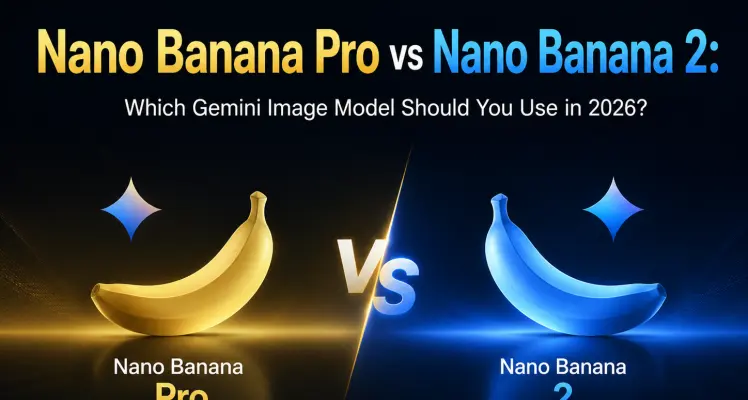
3. Nano Banana Pro (Gemini 3 Pro Image) — the 4K specialist
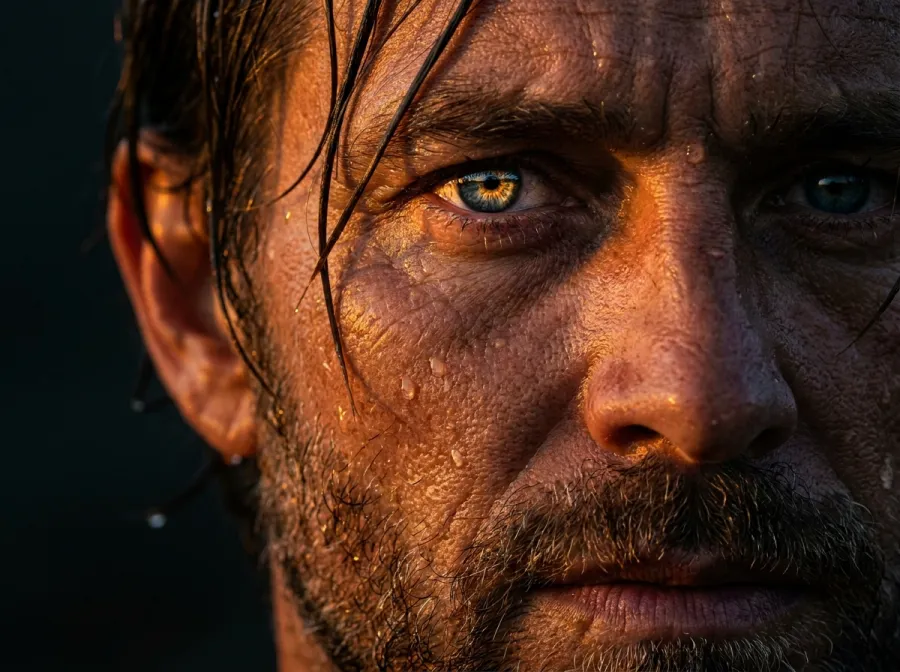
Google's Gemini 3 Pro Image Preview — the model the community calls Nano Banana Pro — is built for professional asset production with reasoning tuned for complex composition. It generates at 1K, 2K, and 4K, takes up to 14 reference images, and on the prompts I ran it held detail in skin, hair, and lighting that the flash-tier models smear at high zoom.
It's the priciest of the two Gemini options at $0.0804 per image — roughly double Nano Banana 2. You pay for the resolution ceiling and the reasoning. For a thumbnail or a social card, you're overpaying; for a print-resolution key visual, you're not.
Best for: 4K output, print, anything where you'll zoom in and judge. Price: $0.0804 / image. Page: gemini-3-pro-image-preview.
4. Nano Banana 2 (Gemini 3.1 Flash Image) — the value pick
This is the one I reach for first. Gemini 3.1 Flash Image Preview holds Elo 1255 — fourth overall, ahead of most of the field — at $0.0402 per image. That ratio of ranked quality to price is the best on this list, and it's not close.
It also has the most flexible spec sheet here: resolutions from 0.5K up to 4K, up to 14 reference images, ultra-wide and ultra-tall aspect ratios (1:4, 4:1, 1:8, 8:1) that no other model on this list offers, and Google Image Search grounding for factual subjects.
The honest limit: at the flash tier you occasionally get a result that's 90% right and needs a second pass, which eats into the price advantage on finicky prompts. For high-volume work where you can afford one retry, it still wins on cost.
Best for: high-volume generation, banners, anything where price-per-good-image is the real metric. Price: $0.0402 / image. Page: gemini-3.1-flash-image-preview.
5. Seedream 5.0 — photoreal at the low end of the price band
ByteDance's Seedream 5.0 generates high native resolution by default (its sample config runs at 2227×3183) and leans hard into photorealism and cultural nuance. At $0.0298 per image it's one of the cheapest genuinely good models here. Western lists tend to ignore the Seedream line entirely; that's their loss, and a gap this article exists to close.
Two costs to know. Integration-wise, Seedream runs on the asynchronous path — you submit a job and poll for the result, one more step than the synchronous models (code below). And it returns a has_nsfw_contents field on every response, which is useful for moderation but means a content filter is in the loop whether you want one or not.
Best for: photorealistic output, Asian-market and multilingual scenes, cost-sensitive volume. Price: $0.0298 / image. Page: seedream-5-0-260128.

6. Wan 2.5 — the multilingual option
Alibaba's Wan 2.5 isn't ranked individually on the Arena yet, so I won't pretend to a quality number it doesn't have. What it does bring, from its model page, is a prompt-expansion toggle and a negative-prompt field — real controls the closed flagship models don't expose — plus strong multilingual prompt handling from its Qwen lineage. At $0.027 per image it's near the floor of this list.
The trade-off: thin third-party benchmarking. I can tell you it produced clean, controllable output on the prompts I tried; I can't point you to an independent Elo to back that up yet. Treat it as a strong utility model, not a proven leaderboard winner.
Best for: non-English prompts, workflows that need negative prompts, budget generation. Price: $0.027 / image. Page: wan-2.5.
7. Kling Image O1 — the cheapest pick that doesn't look cheap
At $0.0224 per image, Kling Image O1 is the lowest price on this list, and it earns its place rather than just undercutting. The O1 variant adds reasoning for better handling of complex, multi-element prompts, and it's strong on cinematic lighting and architectural detail.
Same caveat as Wan: it isn't separately ranked in the Arena, so the quality claim rests on first-hand output rather than an independent score. On dense prompts — the kind with five clauses describing one cluttered scene — it held spatial consistency better than I expected at the price.
Best for: cinematic scenes, dense prompts, the tightest budgets. Price: $0.0224 / image. Page: kling-image-o1.
Quality versus price, plotted
Put the two numbers that matter against each other and the field sorts itself:
Top quality, top price: GPT Image 2 (Elo 1339, metered) and Nano Banana Pro ($0.0804). You buy these when the output is the product.
The value corner: Nano Banana 2 (Elo 1255 at $0.0402) is the standout — ranked quality at a sub-$0.05 price. GPT Image 1.5 (Elo 1265, metered) lands here too if your sizes stay modest.
Budget floor, still capable: Kling O1 ($0.0224), Wan 2.5 ($0.027), Seedream 5.0 ($0.0298) — all under three cents, all good enough to ship, none with an independent top-tier score.
If I had to collapse this to one sentence: pay for GPT Image 2 when the image is the deliverable, run Nano Banana 2 for everything else, and drop to Kling or Seedream when volume math forces the issue.
Content policy and moderation: what each model allows
This is the axis the other lists won't touch, and it's a real selection factor. A model that refuses a swimwear catalog, a beer ad, or a horror-game key art is a model you can't ship with, regardless of its Elo.
A few concrete differences worth knowing before you commit:
GPT Image runs mandatory moderation, and the direct API gates the whole family behind organization verification. It's the strictest of the seven on borderline-commercial prompts.
Seedream 5.0 returns a has_nsfw_contents flag on every response — a content filter is always in the loop, which you may want or may need to design around.
Across all models on GPT Proto, a blocked prompt comes back as a 503 content-policy error (the underlying status is 400), so you can catch and route it cleanly instead of guessing why a job failed.
If your use case needs less restrictive, developer-controlled access — the kind of uncensored API surface that legitimate adult-adjacent commercial work sometimes requires — that's a question to evaluate per model against its terms, not something any single ranking answers. The point for selection is simpler: moderation strictness varies by model, and it belongs in your evaluation next to quality and price.
Which should you use?
You want the best image and cost is secondary → GPT Image 2. Accept the metered billing and the latency on complex prompts.
You're generating at volume and price-per-good-image is the metric → Nano Banana 2. Best ratio on the list.
You need 4K or print resolution → Nano Banana Pro.
You're cost-constrained but can't ship broken output → Kling Image O1 or Seedream 5.0.
Your prompts aren't in English, or you need negative prompts → Wan 2.5, with Seedream 5.0 as the photoreal alternative.
You want OpenAI-family output without flagship pricing → GPT Image 1.5.
How to access all seven through one API
Here's the part that makes "best API" a different question from "best model." On GPT Proto, these seven run behind the same key and the same two endpoints. Switching models is a one-line change.
Authentication is the raw API key in the Authorization header — no Bearer prefix:
Authorization: GPTPROTO_API_KEY
Synchronous (OpenAI-compatible)
The /v1/images/generations endpoint returns the image in the response. To switch models, change the model string — that's the whole migration:
import requests
import base64

resp = requests.post(
    "https://gptproto.com/v1/images/generations",
    headers={
        "Authorization": "GPTPROTO_API_KEY",
        "Content-Type": "application/json",
    },
    json={
        "model": "gemini-3.1-flash-image-preview",  # swap to "gpt-image-2", "gemini-3-pro-image-preview", ...
        "prompt": "An editorial product photo of a matte black camera on red lacquer",
        "size": "16:9",
    },
)

data = resp.json()
b64 = data["data"][0]["b64_json"]
with open("output.png", "wb") as f:
    f.write(base64.b64decode(b64))
The response also carries a usage object with token counts, which is how you reconcile spend on the metered GPT Image models. Size handling differs per model — the Gemini line takes aspect ratios like 16:9, while GPT Image takes pixel sizes — so check the target model's page when you switch.
Asynchronous (submit and poll)
The ByteDance-lineage models like Seedream 5.0 run on the /api/v3/ path: you submit a job, get an id, and poll for the result.
import requests
import time

submit = requests.post(
    "https://gptproto.com/api/v3/bytedance/seedream-5-0-260128/text-to-image",
    headers={
        "Authorization": "GPTPROTO_API_KEY",
        "Content-Type": "application/json",
    },
    json={
        "prompt": "Cute character wallpaper for a phone lock screen, soft studio lighting",
        "size": "2227*3183",
        "enable_sync_mode": False,
    },
).json()

get_url = submit["data"]["urls"]["get"]

while True:
    result = requests.get(
        get_url,
        headers={"Authorization": "GPTPROTO_API_KEY"},
    ).json()
    if result["data"]["status"] == "completed":
        print(result["data"]["outputs"])
        break
    time.sleep(2)
Errors you'll actually hit
| Code |
Meaning |
What to do |
| 401 |
API key missing or invalid |
Check the Authorization header |
| 403 |
No access, or insufficient balance |
Top up credits or check key scope |
| 429 |
Rate limit exceeded |
Back off and retry |
| 503 |
Content-policy block (underlying 400) |
Catch it; route or rephrase the prompt |
Gemini capability matrix (from the docs)
| Feature |
Gemini 2.5 Flash |
Gemini 3.1 Flash (Nano Banana 2) |
Gemini 3 Pro (Nano Banana Pro) |
| Resolutions |
1K |
0.5K, 1K, 2K, 4K |
1K, 2K, 4K |
| Max reference images |
3 |
14 |
14 |
| Ultra-wide ratios |
— |
1:4, 4:1, 1:8, 8:1 |
— |
| Image-search grounding |
— |
yes |
— |
That migration story — change one string, keep your client, fall back across providers when one is down — is the actual reason to call image models through an aggregator instead of wiring up four SDKs. Start from the model catalog and the GPT Proto homepage to see the full set.
Prices and Arena rankings reflect the live model pages and the Artificial Analysis Image Arena at the time of writing. Both change often — check the linked model pages before budgeting.