


1M-Token Context
Review large repositories, technical specifications, logs, or long conversation histories within a 1,048,576-token combined context window.

curl --request POST "https://gptproto.com/v1/chat/completions" \
  --header "Authorization: Bearer $GPTPROTO_API_KEY" \
  --header "Content-Type: application/json" \
  --data '{
    "model": "deepseek-v4-flash",
    "messages": [
      {
        "role": "user",
        "content": "Hello"
      }
    ]
}'Chat, coding agents & document work. Priced per 1M tokens — input, cached input and output are billed separately.
DeepSeek · ≈ 148M tokens/mo (48M cached)
OpenRouter costs include its ~5.5% credit purchase fee. GPTProto applies a per-model discount (10–30% off) and your bonus credits are also spent at discounted rates — savings compound. Estimates assume a 60% cache hit rate.

| Model | Input → Output | ||||
|---|---|---|---|---|---|
| — | 1.05M | $0.30 / $1.20 per 1M | — / $0.006 per 1M | Input: Text Output: Text |
| — | — | $0.30 / $1.20 per 1M | — / $0.006 per 1M | Input: TextInput: Image Output: Text | |
| — | $0.79 / $2.38 per 1M | — / $0.04 per 1M | Input: Text Output: Text | ||
| 1.05M | $8.00 / $40.00 per 1M | $10.00 / $0.80 per 1M | Input: TextInput: ImageInput: Document Output: Text | ||
| 1.05M | $0.90 / $4.50 per 1M | $0.60 / $0.09 per 1M | Input: TextInput: ImageInput: VideoInput: DocumentInput: Audio Output: Text | ||
| 1M | $9.00 / $45.00 per 1M | $11.25 / $0.23 per 1M | Input: TextInput: ImageInput: Document Output: Text | ||
| 1M | $1.80 / $5.40 per 1M | $2.25 / $0.23 per 1M | Input: TextInput: ImageInput: VideoInput: DocumentInput: Audio Output: Text | ||
| — | 1.31M | $0.15 / $0.50 per 1M | — / $0.03 per 1M | Input: TextInput: ImageInput: VideoInput: Document Output: Text | |
| — | 1.05M | $0.30 / $1.20 per 1M | — / $0.006 per 1M | Input: TextInput: Image Output: Text | |
| 1.31M | $1.26 / $3.96 per 1M | — / $0.23 per 1M | Input: TextInput: ImageInput: Document Output: Text | ||
| 1.05M | $0.90 / $4.50 per 1M | $0.60 / $0.09 per 1M | Input: TextInput: ImageInput: Document Output: Text | ||
| 500K | $1.20 / $3.60 per 1M | — / $0.30 per 1M | Input: TextInput: Image Output: Text | ||
| 1M | $1.80 / $5.40 per 1M | $2.25 / $0.23 per 1M | Input: TextInput: ImageInput: VideoInput: Document Output: Text | ||
| 1M | $4.50 / $22.50 per 1M | $5.63 / $0.45 per 1M | Input: TextInput: ImageInput: Document Output: Text | ||
| 1.05M | $0.90 / $4.50 per 1M | $0.60 / $0.09 per 1M | Input: TextInput: ImageInput: Document Output: Text | ||
| 1.05M | $2.70 / $13.50 per 1M | $0.27 / $0.27 per 1M | Input: TextInput: ImageInput: Document Output: Text | ||
| 1.05M | $0.16 / $0.96 per 1M | $0.20 / $0.02 per 1M | Input: TextInput: ImageInput: Document Output: Text | ||
| 1.05M | $1.60 / $9.60 per 1M | $2.00 / $0.16 per 1M | Input: TextInput: ImageInput: Document Output: Text | ||
| 500K | $1.20 / $3.60 per 1M | $0.30 / $0.30 per 1M | Input: TextInput: Image Output: Text | ||
| 1M | $1.80 / $9.00 per 1M | $2.25 / $0.18 per 1M | Input: TextInput: Document Output: Text | ||
| 1.05M | $0.48 / $0.96 per 1M | $0.10 / $0.10 per 1M | Input: TextInput: ImageInput: Document Output: Text | ||
| 1.05M | $1.26 / $3.96 per 1M | $0.23 / $0.23 per 1M | Input: TextInput: ImageInput: Document Output: Text | ||
| 1M | $0.36 / $1.44 per 1M | $0.07 / $0.07 per 1M | Input: TextInput: Document Output: Text | ||
| 1.05M | $1.12 / $3.37 per 1M | — / $0.04 per 1M | Input: Text Output: Text | ||
| 1M | $0.75 / $1.50 per 1M | $0.12 / $0.12 per 1M | Input: TextInput: Image Output: Text | ||
| 262K | $0.85 / $3.60 per 1M | $0.14 / $0.14 per 1M | Input: TextInput: Document Output: Text | ||
| 164K | $0.17 / $0.25 per 1M | $0.02 / $0.02 per 1M | Input: Text Output: Text | ||
| 205K | $0.24 / $0.96 per 1M | $0.30 / $0.02 per 1M | Input: TextInput: Document Output: Text | ||
| 262K | $0.54 / $2.70 per 1M | $0.09 / $0.09 per 1M | Input: TextInput: Document Output: Text | ||
| — | $0.16 / $0.65 per 1M | — | Input: Text Output: Text | ||
| 64K | $0.33 / $1.31 per 1M | — | Input: Text Output: Text | ||
| 262K | $0.10 / $0.97 per 1M | — | Input: TextInput: Image Output: Text | ||
| 262K | $0.10 / $0.97 per 1M | — | Input: TextInput: Image Output: Text | ||
| 262K | $0.02 / $0.18 per 1M | — | Input: TextInput: Image Output: Text |
Run the current DeepSeek V4 Flash API with a 1,048,576-token context window, up to 384K output tokens, tool calling, JSON output, and non-thinking or adjustable reasoning modes. GPTProto gives developers a single key for testing Flash against higher-capability models without opening and funding a separate account for every provider.
Review large repositories, technical specifications, logs, or long conversation histories within a 1,048,576-token combined context window.
Allocate enough completion space for long patches, migration plans, test suites, reports, and multi-step agent responses without switching to a separate long-output model.
The open-weight model contains 284B total parameters and activates 13B per token, targeting higher throughput than the 1.6T / 49B DeepSeek V4 Pro tier.
Use non-thinking or low, high, and max reasoning effort with tool calls, JSON output, the Responses API, and Anthropic-format compatibility documented by DeepSeek.
DeepSeek V4 Flash is the efficiency-focused member of the DeepSeek V4 family. The original V4 preview was released on April 24, 2026, and the current DeepSeek-V4-Flash-0731 API entered public beta on July 31. The stable API model ID remains deepseek-v4-flash, so applications using that ID receive the updated 0731 model without adopting a dated model string.
The model uses a Mixture-of-Experts architecture with 284 billion total parameters and 13 billion activated for each token. DeepSeek V4 combines Compressed Sparse Attention and Heavily Compressed Attention to reduce the cost of processing long context. It is a text-input, text-output model with open weights under the MIT license.
This page covers the standard text model. Image input belongs to the separate experimental model ID deepseek-v4-flash-vision-exp; developers should not send images to deepseek-v4-flash or describe this endpoint as multimodal.
| Specification | DeepSeek V4 Flash |
|---|---|
| Developer | DeepSeek |
| Current hosted version | DeepSeek-V4-Flash-0731 |
| GPTProto model ID | deepseek-v4-flash |
| Architecture | Mixture-of-Experts with hybrid CSA + HCA attention |
| Total / active parameters | 284B / 13B per token |
| Input / output | Text / text |
| Context window | 1,048,576 tokens, including input and generated output |
| Maximum output | Up to 384K tokens |
| Reasoning | Non-thinking; low, high, or max effort |
| API features | Tool calls, JSON output, context caching, Responses API, Anthropic format, Chat Prefix Completion, and FIM in non-thinking mode |
| License | MIT open weights |
Coding agents: Use Flash for bounded implementation tasks, test generation, code explanation, log analysis, dependency review, and repetitive edits that can be checked with tests, linters, schemas, or type checks. For complex migrations or changes with hidden side effects, route planning or final review to a higher-capability model.
Tool-driven workflows: The model can select functions, return structured arguments, read tool results, and continue a multi-turn task. It fits agents that search a repository, call internal services, run commands, and produce a final structured response after intermediate checks.
Long-context review: The 1M-token window can hold extensive code, documentation, issue history, or extracted text. Capacity does not guarantee that every detail receives equal attention, so retrieve the relevant files, repeat acceptance criteria, and keep critical instructions close to the current task.
High-volume text processing: Use the API for classification, extraction, normalization, summarization, support drafts, and first-pass code review when results can be automatically validated. The smaller active parameter count makes Flash the volume-oriented tier of the V4 family.
Model routing: Start routine and verifiable work on Flash, then escalate ambiguous or expensive-to-reverse cases to DeepSeek V4 Pro, Claude Opus 5, or GPT-5.6 Sol. Because these models share a GPTProto key and balance, the application can test routing rules without maintaining separate billing accounts.
DeepSeek reports that the 0731 update substantially improved coding and agent behavior without changing the model architecture or size. The results below are vendor-reported, were produced with DeepSeek Harness minimal mode and max reasoning effort where noted, and have not been independently reproduced by GPTProto. They should be treated as screening evidence, not a production SLA.
| Benchmark reported by DeepSeek | V4 Flash 0731 score |
|---|---|
| Terminal-Bench 2.1 | 82.7 |
| NL2Repo | 54.2 |
| DeepSWE | 54.4 |
| Toolathlon Verified | 70.3 |
| Agent Last Exam | 25.2 |
| Automation Bench (Public) | 25.1 |
Do not compare these numbers directly with a score from another benchmark, snapshot, reasoning budget, or agent harness. For deployment, run the same repository tasks, tools, prompts, token limits, and acceptance tests across every candidate model. Measure accepted results, retries, invalid tool calls, total tokens, latency, and cost per completed task.
DeepSeek V4 Flash is the low-cost, high-concurrency default for tasks whose output can be checked. V4 Pro increases model size and reasoning headroom for difficult work. GLM-5.2 targets long-horizon coding and MCP-style tool workflows, while Claude Opus 5 and GPT-5.6 Sol are higher-priced choices for complex or failure-sensitive agent tasks.
| Model on GPTProto | Context / max output | Inputs | GPTProto input / output per 1M | Practical fit |
|---|---|---|---|---|
| DeepSeek V4 Flash | 1M / 384K | Text | $0.44 / $1.32 peak; half-rate off-peak | High-volume coding subtasks, extraction, batch review, and verifiable agents |
| DeepSeek V4 Pro | 1M / 384K | Text | $1.32 / $3.96 peak; half-rate off-peak | Hard reasoning, architecture decisions, migrations, and costly-to-reverse changes |
| GLM-5.2 | 1M / 128K | Text | $1.26 / $3.96 | Repository-scale coding and long-running tool workflows |
| Claude Opus 5 | 1M / 128K | Text and images | $4 / $20 | Complex coding, visual or document-heavy analysis, and high-impact agents |
| GPT-5.6 Sol | 1.05M / 128K | Text | $4 / $24 | OpenAI-native coding, professional tools, browsing, and agent workflows |
This is a routing guide rather than an apples-to-apples quality leaderboard. Choose by the cost of a correct final result, not token price alone. A practical pattern is to use Flash for execution that has clear tests and reserve a more expensive model for planning, ambiguous diagnosis, or final verification. For a deeper two-model analysis, see DeepSeek V4 Pro vs DeepSeek V4 Flash.
Moving from another OpenAI-compatible chat endpoint normally requires changing the base URL, API key, and model ID. Use deepseek-v4-flash as the model string shown in the GPTProto Quick Start. Do not keep the retired deepseek-chat or deepseek-reasoner aliases in a new integration.
Before routing production traffic, check these V4-specific behaviors:
Thinking is enabled by default in DeepSeek's current API behavior. The supported effort levels are low, high, and max; requests using medium, high, or xhigh map to high in the official DeepSeek implementation.
In thinking mode, temperature, top-p, presence-penalty, and frequency-penalty settings are accepted for compatibility but do not affect sampling.
When a thinking-mode request contains tools, retain the assistant message's reasoning_content in subsequent turns. Omitting it can produce a 400 response during a multi-turn tool workflow.
FIM completion is limited to non-thinking mode. Do not assume that every V4 feature works under every reasoning setting.
The 1M limit is a combined budget for prompt, conversation history, tool results, reasoning, and generated output. Reserve output headroom instead of filling the entire window with input.
Run canary tests for streamed responses, tool-call argument assembly, JSON parsing, retries, and maximum-token behavior before replacing an existing provider route.
Choose DeepSeek V4 Flash when requests are frequent, the task is mostly text-based, and success can be verified with a deterministic check. It is a strong starting point for code generation with tests, structured extraction, first-pass reviews, support automation, agent subtasks, and workloads that benefit from a large context window without requiring the largest model tier.
Choose DeepSeek V4 Pro, Claude Opus 5, or GPT-5.6 Sol when failure is difficult to detect or expensive to repair. Authentication changes, database migrations, architecture decisions, multi-service refactors, and open-ended agent runs usually justify testing a higher-capability model. Route by measured task completion and correction cost instead of assuming one model should handle every request.
Guides, comparisons, and updates related to this model.
All Articles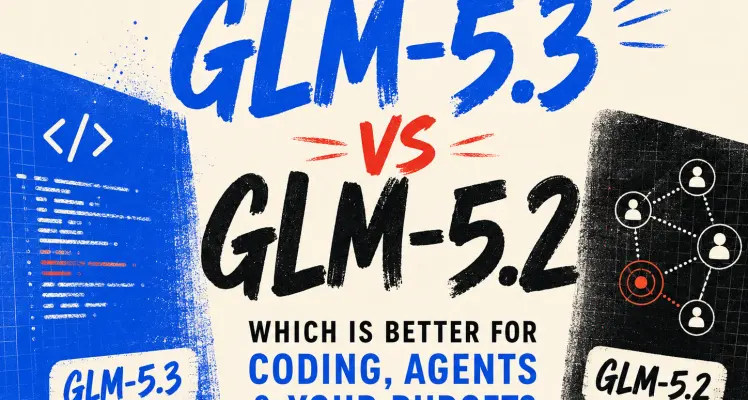
GLM-5.3 vs GLM-5.2 compared on benchmarks, pricing, frontend coding, and agent workflows. Same price, same base — but one is 50% better at code. Here's which to choose.
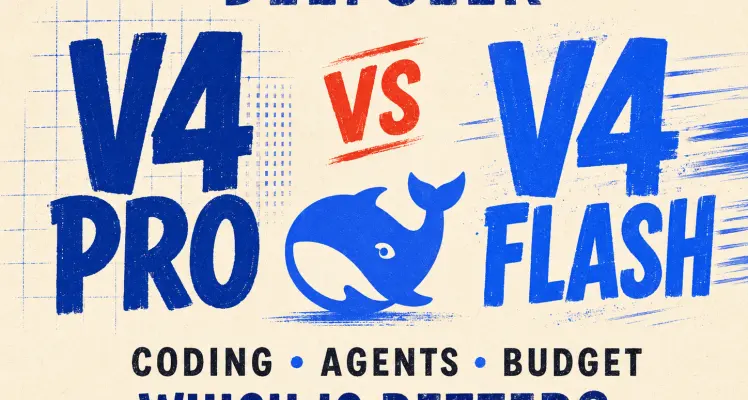
DeepSeek V4 Pro vs V4 Flash compared: API pricing, coding & agent benchmarks, concurrency limits, and cost-per-task math. Find out which model fits your workload.
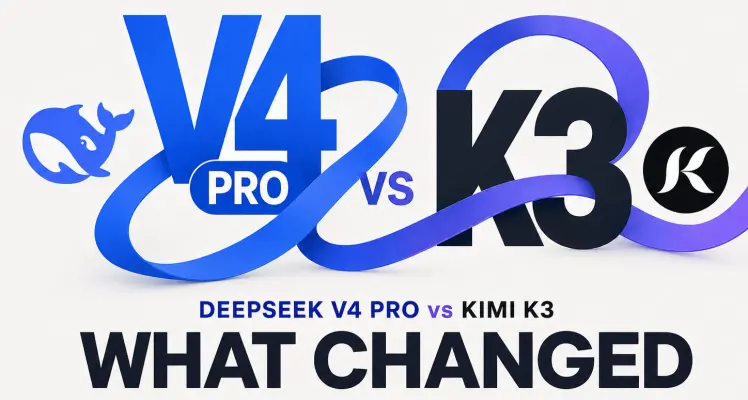
Compare DeepSeek V4 Pro 0813 vs Kimi K3 for coding, speed, multimodal input, and API cost—and see which model better fits your project.
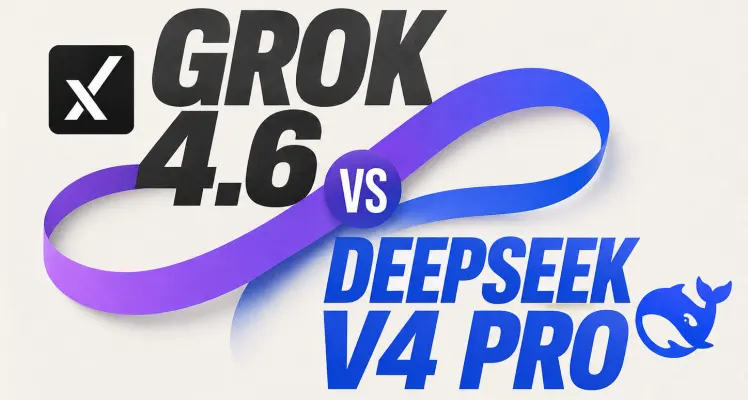
Grok 4.6 vs DeepSeek V4 Pro compared on coding, frontend work, benchmarks, context and API pricing. See which model offers better value for developers.