Tripo3D v2.5 API — Image-to-3D on GPTProto
The Tripo3D v2.5 API turns a single image into a textured 3D mesh in seconds. On GPTProto you call the same tripo3d-v2.5 model through one dollar-based balance and one API key that also covers 200+ text, image, and video models — no separate 3D credit account, no regional sign-up hurdles. This page covers what Tripo3D v2.5 does, its image-to-3D parameters, what a generation costs, and how to switch over if you already call Tripo3D directly.
What Is Tripo3D v2.5?
Tripo3D v2.5 is an AI image-to-3D model from Tripo AI. It reads depth, occlusion, and surface cues from one 2D input and reconstructs a 3D mesh with PBR (physically based rendering) materials. Against earlier versions it produces cleaner geometry, sharper edges, and more consistent textures. Outputs are standard mesh files (GLB) that import into Blender, Unity, and Unreal, so a concept image becomes an editable asset instead of a flat render. If you have searched what is Tripo3D AI or looked for an image to 3D API, this is the model behind that workflow — exposed on GPTProto as the tripo3d-v2.5 string.
Game Asset Use Case: Concept Art to Editable Mesh
A common Tripo3D AI use case is turning concept art or a character portrait into a base mesh for a game engine. Set a face_limit to cap the polygon budget, enable quad topology when the asset needs to rig and deform, and keep PBR on for materials that read correctly in Unity or Unreal. The mesh returns structured — organized edge flow rather than a single fused blob — so it is ready to refine in Blender or Maya rather than rebuild from scratch.
Transforming Product Photography into Interactive 3D Models Easily
E-commerce and marketing industries are shifting toward interactive 3D viewers and augmented reality (AR) experiences to increase customer engagement. Tripo3d-v2.5 excels at taking standard product photography and generating digital twins that can be viewed from any angle. By utilizing Tripo3d-v2.5 on GPT Proto, businesses can automate the creation of their digital catalogs, ensuring that every product—from footwear to furniture—is represented with accurate proportions and lifelike textures. This capability democratizes 3D content creation, allowing small business owners to provide the same immersive shopping experience as global brands without needing a specialized 3D department. The flexibility of the API means you can scale your 3D asset production instantly as your inventory grows.
"Tripo3D v2.5 reconstructs a 3D mesh from a single image, with configurable texture quality, polygon budget (face_limit), and optional quad topology for animation-ready output."
Switching from the Tripo3D Direct API
If you already call Tripo3D directly, the model is the same — what changes is billing and access. Tripo's own API runs on a credit system (1 credit = $0.01) billed separately from its consumer plans, so you top up and track a standalone 3D account.
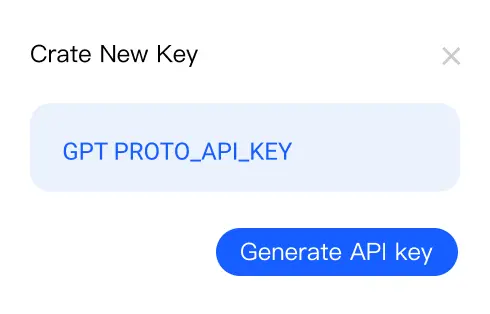
On GPTProto you use one dollar-based balance and one API key that also covers your text, image, and video models — no second key to rotate, no per-service credit ledger to reconcile. The request pattern is the async submit-then-poll flow used by generation models on the platform: submit a task, then poll for status or use a callback to fetch the finished mesh. Exact endpoint and field names are in the tripo3d-v2.5 documentation.
How Tripo3D v2.5 API Pricing Works on GPTProto
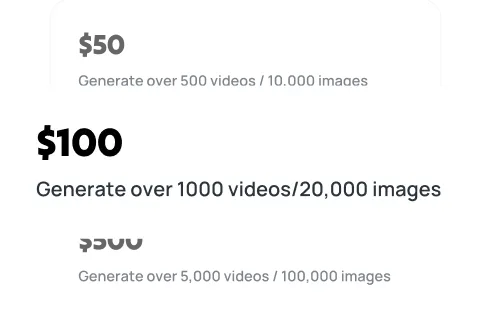
Tripo3D v2.5 API pricing on GPTProto is per generation, drawn from your dollar balance — no credit-to-dollar conversion and no monthly seat. You pay for the generations you actually run and can track spend in the usage dashboard. Because the balance is shared across every model on the platform, the same funds cover your image-to-3D calls and any other model you use. For the exact per-generation rate and what each texture tier includes, see the pricing panel above.
Tripo3D v2.5 Image-to-3D: Specs at a Glance
| Attribute | Value |
|---|---|
| Model string | tripo3d-v2.5 |
| Task | Image-to-3D (single image → textured mesh) |
| Input | One image (image URL). Whether the same string also serves text-to-3D on GPTProto |
| Output | Textured 3D mesh (GLB) + rendered preview. Additional export formats (OBJ/FBX/USD/STL) on GPTProto |
| Topology | Tri-mesh (default) or quad mesh (option) |
| Materials | PBR — standard or HD textures (HD up to ~2K) |
| Geometry control | face_limit (polygon budget; defaults to 10,000 when quad is on) |
| Extras | style, auto_size (real-world scale in meters), texture_seed / seed |
| Generation time | Seconds. |
| Price | $0.3 per generation (see pricing panel) |
Tripo3D v2.5 supports both textured and geometry-only output. Turning textures off returns a bare mesh for fast shape iteration; standard or HD textures add PBR surfaces once the geometry is right.
Generation Options and What They Control
These are the controls that shape a Tripo3D v2.5 image-to-3D result. If you have compared tripo ai api pricing image to 3d across providers, note that Tripo's own billing charges more for heavier options (HD textures, quad, and style each add cost on the model's native rate sheet):
| Option | What it does | Notes |
|---|---|---|
texture |
no / standard / HD |
Geometry-only, standard PBR, or HD (up to ~2K) |
pbr |
PBR materials on/off | On by default; off returns untextured geometry |
quad |
Quad topology | Enable for rigging/animation; tri-mesh is fine for static props |
face_limit |
Polygon budget | Cap density for mobile/web; higher for hero assets |
style |
Stylization | Artistic style options |
auto_size |
Scale to meters | Real-world proportions for AR/product viewers |
seed / texture_seed |
Reproducibility | Same seed → same result |
On GPTProto the per-generation price is shown in the panel above. Whether $0.3 is a flat all-in rate (covering HD/quad/style) or the standard-texture tier is TBC — confirm before publishing any "flat-rate" phrasing.
Input Image Tips for Tripo3D AI
Tripo3D v2.5 is image-driven, so output quality tracks input quality. Unlike text-to-3D, there is no text prompt to tune — the input image is your prompt. Practical recipes:
- Center a single subject on a plain, uncluttered background.
- Use even, diffuse lighting; avoid harsh shadows and blown highlights.
- Crop close so the object fills the frame — small subjects yield softer meshes.
- Start with
textureoff to lock geometry fast, then rerun with standard or HD textures. - Enable
quadonly when the asset will rig or deform; keep tri-mesh for static props.