TL;DR — At the same resolution, Seedance 2.0 Mini costs roughly 20% less than the standard Seedance 2.0 on GPTProto — not the "half price" you'll read on most comparison pages. The larger saving comes from a hard ceiling: Mini stops at 720p, so it skips the expensive 1080p and 4K tiers altogether. Reach for Mini when you want fast, high-volume iteration and short-form social clips. Reach for standard Seedance 2.0 when you need 1080p or 4K, heavier motion, or a client-facing final cut. The setup that actually pays off is running both: draft on Mini, finish on standard. The rest of this guide to Seedance 2.0 Mini and its full-size sibling shows the real numbers behind each of those calls.
Tiffany Layne2026-06-30
Seedance 2.0 Mini vs Seedance 2.0: Price, Quality, and Which One to Actually Use
Seedance 2.0 Mini isn't "half price"—on the API it's ~20% cheaper. The big saving comes from 720p drafting. Real pricing, runnable code, which tier to ship.
Table of contents
The real difference in one line
Both models come from the same Seedance 2.0 family at ByteDance, and they share the same architecture, the same prompt system, and the same three input modes — text-to-video, image-to-video, and reference-to-video. So the difference isn't features. It's tier.
Think of Mini as the iteration tier and standard 2.0 as the delivery tier. Mini exists to generate a lot of candidate clips cheaply and quickly, so you can test framing, motion, and prompts before you commit. Standard Seedance 2.0 exists to render the shot you actually ship, with a higher resolution ceiling and the headroom for complex scenes.
One thing worth getting straight early, because most write-ups blur it: Mini is not a stripped-down model. It launched around mid-June 2026, several months after the standard model, which makes it the newer of the two. It keeps the same prompting and reference workflow — the trims are resolution ceiling, speed, and price, not capability. That's the unusual part of these Seedance 2.0 Mini upgrades: the cheaper option is also the more recent one, and it supersedes the older Seedance 2.0 Fast tier on the speed-versus-quality trade-off rather than sitting below it.
Seedance 2.0 Mini vs Seedance 2.0: side-by-side specs and pricing
Here's where the two tiers diverge on paper. Specs first, then the part everyone gets wrong — price.
| Seedance 2.0 Mini | Seedance 2.0 (standard) | |
|---|---|---|
| Max resolution | 720p | 1080p (plus a 4K tier) |
| Duration | 4–14s | 4–15s |
| Modes | text-to-video, image-to-video, reference | text-to-video, image-to-video, reference |
| Native audio | Yes | Yes |
| Aspect ratios | 16:9, 9:16, 4:3, 3:4, 1:1, 21:9 | Same |
| Built for | fast, cheap, high-volume drafts | high-fidelity final delivery |
On pricing, these are the actual per-run GPT Proto rates without audio, so they're what you pay rather than a headline number:
| Setting (no audio) | Mini | Standard 2.0 | Mini saves |
|---|---|---|---|
| 480p · 1:1 · 4s | $0.2365 | $0.2957 | ~20% |
| 480p · 16:9 · 4s | $0.2475 | $0.3094 | ~20% |
| 720p · 16:9 · 4s | $0.5322 | $0.6653 | ~20% |
| 1080p · 16:9 · 4s | not supported | $1.6466 | — |
| 4K · 16:9 · 4s | not supported | $3.4214 | — |
Adding native audio raises both columns — a 720p, 16:9, 4-second Mini clip with audio lands around $0.63 — but the relationship between the two tiers holds.
Cost, honestly: where the "half price" claim falls apart
If you've already read three of these comparisons, you've seen the line that Mini is "half the cost" — about $0.07 per second against roughly $0.15 for standard. That figure is real, but it's ByteDance's native Dreamina rate, quoted in RMB. It is not what you pay when you call an API.
On GPT Proto's actual per-run pricing, Mini is about 20% cheaper than standard at the same resolution and duration. A 720p, 16:9, 4-second clip is $0.5322 on Mini versus $0.6653 on standard. That's a real discount, but it's a fifth off, not half off. I'd rather you plan around the number you'll be billed than a marketing figure from a different storefront.
So where does the dramatic saving actually live? In the resolution ceiling. Mini stops at 720p, and that's the point. If your work would otherwise go out at 1080p, moving the iteration phase to Mini's 720p drops you from $1.6466 to $0.5322 per 4-second clip — about 68% less. Against the 4K tier at $3.4214, it's roughly 84% less. The cost difference between Mini and standard isn't really a per-second discount; it's the gap between two resolution tiers, and you only capture it by deliberately drafting at lower resolution.
So the practical read on cost: same resolution, expect to save around a fifth; cross-resolution — drafting at 720p instead of finishing at 1080p — is where the money actually moves.
Quality and resolution: what 720p versus 1080p really costs you
The standard model is the one that shows up on independent leaderboards. On Artificial Analysis's Video Arena, ByteDance's entry — listed as "Dreamina Seedance 2.0 720p" — leads or sits near the top of several boards, including image-to-video, where it has held the top Elo score. Exact figures move week to week and vary by source, so treat the ranking as "first tier," not a fixed number. The takeaway that matters here: this is a family at the front of the field, which is why cheap doesn't mean weak when you drop to Mini.
The honest trade-off is the resolution ceiling. Mini tops out at 720p; standard goes to 1080p and a 4K tier. For social formats, vertical clips, and anything that lives inside a feed, 720p is enough and the difference is hard to notice. For a landing-page hero video, a client deliverable, or anything projected large, the missing pixels show, and you'll want standard. There's no recovering detail Mini never rendered.
Is Mini actually better than standard on quality, as a few scattered claims suggest? I'd file that under unsettled. There's some chatter that Mini improved motion coherence and prompt adherence over the older Fast tier, and that it edges the standard model on simple scenes. Most evidence, plus the plain fact of the resolution ceiling, points the other way: standard is the fidelity tier, and it pulls ahead on complex scenes, fine subject detail, and aggressive camera moves. My read is that Mini is strong on lighter motion and simpler subjects and that the gap only opens up as a shot gets harder — but it's cheap enough that you should test both on your own footage rather than trust either of us. Regional availability of these models varies by provider, so check the platform you're buying through before you build around one.
Speed and what each tier is built for
Speed tracks the same split. Mini is tuned for sub-minute generations and snappy 720p clips, which is what makes it usable as a brainstorming tool — you can fire off a dozen variations of a prompt and actually wait for them. Standard takes longer per clip, and longer still when you stack multiple reference files, because it's doing more work at a higher resolution.
That maps cleanly onto use. Mini is for prompt testing, mockups, B-roll, transitions, ambient filler, and short-form content where you're generating many clips and keeping a few. Standard is for the shots that survive to the final cut.
Run both with one API key
The practical advantage of calling these through GPT Proto is that switching tiers is a one-line change — same key, same request shape, different model in the path. If you don't have a key yet, create one from the GPT Proto dashboard; the same key reaches both tiers and 200+ other models on one balance. Here's a text-to-video call against Mini, with the async polling that the API uses to return the finished clip:
import requests
import time

API_KEY = "sk-your-key-here"          # one key reaches both tiers
BASE = "https://gptproto.com/api/v3"
HEADERS = {"Authorization": API_KEY, "Content-Type": "application/json"}

PROMPT = "A barista latte-art pour, overhead shot, soft morning light, steam rising."

def generate(model, prompt, resolution="720p", duration=5, aspect_ratio="16:9", seed=-1):
    # Submit the job
    r = requests.post(
        f"{BASE}/bytedance/{model}/text-to-video",
        headers=HEADERS,
        json={
            "prompt": prompt,
            "resolution": resolution,
            "duration": duration,
            "aspect_ratio": aspect_ratio,
            "seed": seed,
        },
    )
    r.raise_for_status()
    prediction_id = r.json()["data"]["id"]

    # Poll until the clip is ready, capped so a stuck job can't loop forever
    for _ in range(120):  # ~10 min at 5s intervals
        result = requests.get(
            f"{BASE}/predictions/{prediction_id}/result", headers=HEADERS
        ).json()
        status = result["data"]["status"]
        if status == "succeeded":
            return result["data"]
        if status in ("failed", "expired"):
            raise RuntimeError(f"Generation {status}: {result}")
        time.sleep(5)
    raise TimeoutError(f"{prediction_id} still running after 10 min")

# Draft cheaply on Mini...
draft = generate("dreamina-seedance-2-0-mini-260615", PROMPT, resolution="720p")

# ...then render the keeper on standard 2.0 at 1080p, reusing the draft's seed
# so the final is the same shot at higher resolution, not a fresh roll.
final = generate(
    "dreamina-seedance-2-0-260128",
    PROMPT,
    resolution="1080p",
    seed=draft.get("seed", -1),
)
Or the same submit step in cURL:
curl --location 'https://gptproto.com/api/v3/bytedance/dreamina-seedance-2-0-mini-260615/text-to-video' \
  --header 'Authorization: sk-your-key-here' \
  --header 'Content-Type: application/json' \
  --data '{
    "prompt": "A barista latte-art pour, overhead shot, soft morning light, steam rising.",
    "resolution": "720p",
    "duration": 5,
    "aspect_ratio": "16:9",
    "seed": -1
  }'
To switch tiers you change one path segment: dreamina-seedance-2-0-mini-260615 for Mini, dreamina-seedance-2-0-260128 for standard. The same key reaches both, so there's no second account or second integration to maintain.
The hybrid workflow that cuts cost 40–60%
Here's the part worth building around. Say you're hunting for one good 4-second shot and you generate 50 candidates to find it, then render 5 final hero clips.
Do it all on standard at 1080p and you pay 55 × $1.6466 ≈ $90.56. Draft the 50 candidates on Mini at 720p and finish only the 5 keepers on standard 1080p, and you pay (50 × $0.5322) + (5 × $1.6466) ≈ $34.84. That's about 62% less for the same finished output, because the expensive 1080p renders only run on the handful of clips that survive.
By my math from the per-run rates, most real projects land in the 40–60% saving range, depending on how many drafts it takes you to find each keeper. The more you iterate, the more the split pays off. One catch to plan for: once a Mini draft is the one you want, reuse its seed and prompt on standard — with a random seed the 1080p render is a fresh roll, not the same shot at higher resolution. You can sanity-check the exact rates for your resolution and duration on the model page before you commit a batch.
Which should you use?
If you're producing short-form or social content, iterating heavily, or generating high volume where 720p is fine, use Seedance 2.0 Mini — it's cheaper, faster, and built for exactly that. If you need 1080p or 4K, you're rendering complex scenes with detailed subjects or aggressive camera motion, or the clip is going in front of a client, use standard Seedance 2.0.
But the framing of "Mini or standard" is the wrong one for most teams. Draft on Mini, finish on standard, and you get the iteration speed of the cheap tier with the fidelity of the expensive one — at roughly half the total bill. That's the answer to "which is better": neither, used alone.
Related models
All models


FAQs
What's the price difference between Seedance 2.0 Mini and Seedance 2.0?
At the same resolution and duration, Mini runs about 20% cheaper on GPTProto — a 720p, 4-second 16:9 clip is $0.5322 on Mini versus $0.6653 on standard. The "half price" figure you'll see elsewhere is ByteDance's native Dreamina rate, not the API price.
Can Seedance 2.0 Mini do 1080p?
No. Mini tops out at 720p. If you need 1080p or 4K, that's the standard Seedance 2.0 model.
Is Seedance 2.0 Mini lower quality than standard?
On simple scenes and lighter motion, the difference is hard to spot. The standard model pulls ahead on complex scenes, fine detail, and heavy camera movement, and it's the one that ranks on independent leaderboards. A minority of sources argue Mini matches or beats it on simpler shots — cheap enough that the right move is to test both on your own footage.
What are the main differences between Seedance 2.0 Mini and Seedance 2.0?
Three things: resolution ceiling (720p vs 1080p/4K), speed (Mini is faster), and price (Mini is ~20% cheaper at matched resolution). Features — prompting, image and reference inputs, native audio — are shared.
Looking for a full guide to Seedance 2.0 Mini?
The Seedance 2.0 Mini model page has the complete parameter list, the full pricing table across every resolution and duration, and runnable code for text-to-video and image-to-video.
Related Articles
More Blogs
Wan 2.7: The End of the AI Uncanny Valley?
TL;DR Alibaba's wan 2.7 is a major upgrade that swaps out generic AI looks for professional-grade control, including HEX palette matching and a reasoning-heavy Thinking Mode. It signals a shift from models that guess to models that think. Most AI updates feel like more of the same, but this one actually tackles the practical frustrations of professional creators. Between the 4K output and the upcoming video suite, it is clear Alibaba isn't just playing catch-up with Sora—they are carving out a niche for high-fidelity, controllable production. Whether you are battling inconsistent skin tones or trying to match brand colors perfectly, the features packed into this release offer a level of stability we haven't seen in the current text-to-image landscape.
Michael Johnson | 2026-04-05
Doubao API: The Complete Guide (2026) — Which Model to Call, and How
Search “doubao api” and you hit a wall fast. The official console is Volcano Engine, the pages default to Chinese, and the signup wants an identity check that most developers outside China can’t clear in an afternoon. Then there’s the naming. Doubao, Dola, Cici, Seed, Seedream, Seedance, Volcengine — all ByteDance, and none of them is obviously the thing you typed into the search box. I write integration guides for GPTProto, and Doubao is the model family I get asked about most. So this is the guide I wanted to exist: which Doubao model does which job, what each one actually costs, and copy-paste code that calls them — text, image, and video — from a single endpoint, with no Chinese phone number in the loop. Here is a frame the Seedance 2.0 video model produced from a text prompt, called through the API exactly the way the code further down does it. We build up to it.
Schuyler Stacy | 2026-06-23
Is Seedance 2.5 Out Yet? Release Date and What We Actually Know (2026)
I've refreshed ByteDance's Seed page more times than I'd like to admit this week, waiting for Seedance 2.5 to show up. So far, nothing. No model page, no spec sheet, no date. That gap is exactly why this post exists: there's a lot of confident writing about Seedance 2.5 floating around right now, and most of it presents guesses as facts. I want to separate the two cleanly, then point you at what you can actually run today.
Tiffany Layne | 2026-06-23
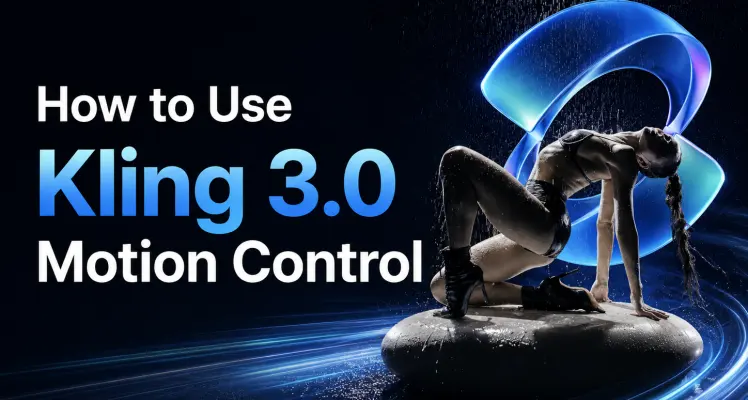
How to Use Kling 3.0 Motion Control: A Developer's Guide (Web + API)
Kling 3.0 Motion Control animates a static character image with the movement from a reference video. You give it two inputs — a picture of your character and a video of someone moving — and it returns a new clip where your character performs that exact choreography while keeping their own face, outfit, and look. This is motion transfer, not text-to-motion. Instead of describing an action in a prompt and hoping the model interprets it, you show it the action frame by frame. That makes it far more reliable for repeatable character animation, dance, and gesture work. This guide covers both paths: the Kling web app for one-off clips, and the GPTProto API for wiring Motion Control into a pipeline. We'll cover inputs and limits, the `pro` vs `std` tiers, prompt technique, full runnable code, pricing, and the failure modes worth knowing before you spend credits.
Michael Johnson | 2026-06-30