Why This Matters Now — The Real Impact of Wan 2.7
The generative space moves so fast it usually feels like we’re drinking from a firehose, but wan 2.7 is different. Alibaba didn’t just drop another incremental update; they released something that actually addresses the "uncanny valley" problem that has plagued us for years. If you’ve spent any time prompting, you know that frustration when every face looks like a shiny, plastic mannequin. With wan 2.7, that specific AI sheen is finally starting to fade into the background.
What makes wan 2.7 stand out isn't just the raw power; it's the intentionality of the features. We are seeing a move toward professional-grade tools that prioritize control over random luck. Whether you are looking at the 4K resolution capabilities or the long text rendering, this model is designed for people who need to get actual work done, not just generate weird hallucinations for social media. The shift from version 2.6 to wan 2.7 represents a massive leap in stability and practical utility.
The community is buzzing because wan 2.7 arrives at a time when we’re all getting a bit tired of "closed" ecosystem promises. While there is plenty of debate about its source code status, the performance benchmarks are hard to ignore. When you start seeing file sizes hitting 25MB for a single generated image, you realize we aren't playing with toys anymore. This is a high-fidelity tool that demands a bit of a learning curve to truly master its potential.
If you're wondering how to get your hands on it, platforms like BudgetPixel and Atlas Cloud are already leading the charge. For those of us managing multiple workflows, having access to the wan 2.7 API is a huge win. It allows for the kind of scaling that manual prompting just can't touch. Honestly, the way this model handles stylization pressure while maintaining structural integrity is something I haven't seen since the early days of Midjourney's big leaps.
How Wan 2.7 Shifts the Generative AI Paradigm
In the past, we had to choose between speed and quality, but wan 2.7 is trying to bridge that gap. The architecture behind wan 2.7 allows it to process complex instructions without losing the thread halfway through the generation. This is especially true for users who are tired of models that ignore half the prompt. When you tell wan 2.7 to include a specific chart or a dense layout, it actually listens, which is a breath of fresh air for any serious designer.
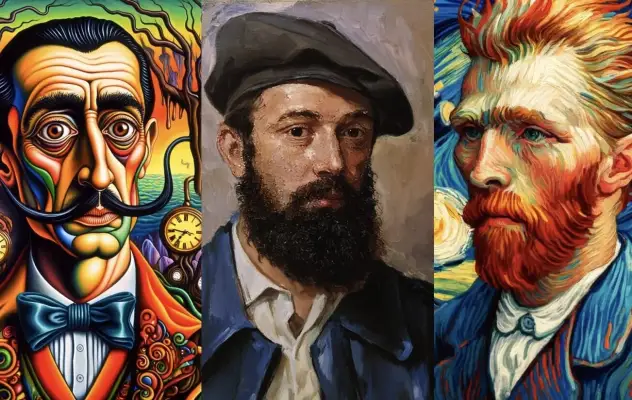
The realism in skin tones is the most immediate "wow" factor when you first use wan 2.7. It’s not just about adding pores; it’s about how light interacts with the skin. This level of AI expertise in rendering biological textures makes wan 2.7 a primary choice for marketing and character design. You can explore wan 2.7 and other video-capable models to see how this technical foundation is setting the stage for the next generation of video content.
Wan 2.7 represents a shift from "generative toy" to "production tool," specifically in how it handles human features and complex data layouts.
Deep Dive into Wan 2.7 Thinking Mode
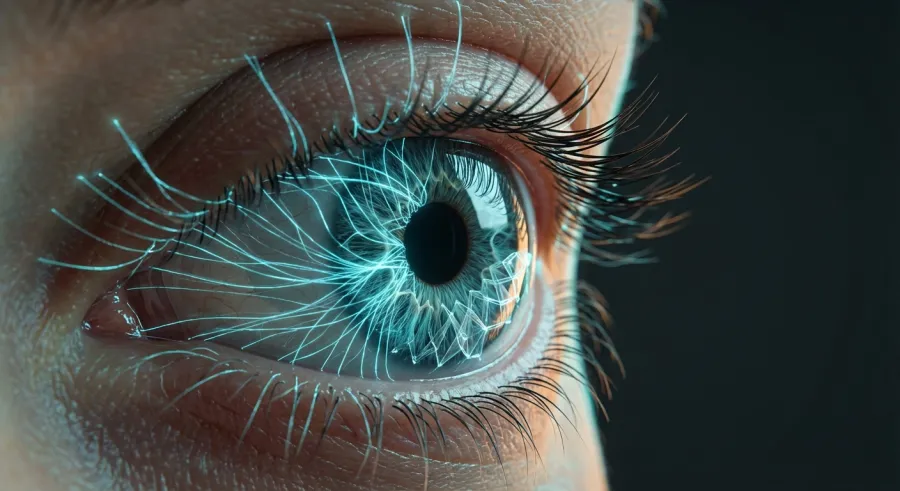
Here’s the thing: most models just "predict" the next pixel based on patterns. But wan 2.7 introduces a "Thinking Mode" that changes the game. This isn't just marketing fluff. Thinking Mode in wan 2.7 allows the model to perform deeper reasoning before it commits to the final output. It’s like giving the AI a second to catch its breath and plan the composition, resulting in much higher quality and fewer anatomical errors.
When you enable Thinking Mode in wan 2.7, you’ll notice that the prompt adherence shoots through the roof. If you’ve ever tried to generate a scene with three people doing three different things, you know the AI usually mixes them up. With the reasoning power of wan 2.7, those distinct elements stay distinct. It understands the spatial relationships between objects far better than its predecessors, which is a direct result of this enhanced processing logic.
This deeper reasoning also helps with the "AI look" that everyone hates. By thinking through the stylization, wan 2.7 avoids the over-processed, hyper-saturated aesthetic that screams "generated." Instead, you get images that feel more like they were shot on a lens rather than calculated by a chip. Using the wan 2.7 API to trigger these "thinking" cycles is becoming a standard practice for developers who need high-stakes visual assets without constant human curation.
Wait, is it slower? A little bit. But the trade-off is worth it. I’d rather wait an extra ten seconds for a wan 2.7 output that is perfect than spend ten minutes re-rolling a faster model that keeps giving me six fingers. This is the kind of practical AI evolution we actually need. It focuses on the quality of the thought process, not just the speed of the delivery, making wan 2.7 a very smart choice for complex projects.
Reasoning Capabilities within Wan 2.7
The reasoning logic inside wan 2.7 is particularly good at handling physics and lighting. If you place a light source in a specific spot in your prompt, wan 2.7 calculates the shadows with surprising accuracy. This isn't just about pixels; it's about the model understanding the 3D space it's trying to represent. This makes wan 2.7 stand out for architectural visualization and product photography where realism isn't optional.
Furthermore, this thinking capacity extends to how the wan 2.7 API interprets natural language. It handles negations and complex clauses much better than older models. If you say "a cat on a mat but NOT a hat," wan 2.7 actually remembers the "not" part. That sounds simple, but in the AI world, it’s a significant hurdle that Alibaba seems to have cleared with this release.
- Enhanced spatial awareness for multi-subject prompts
- Better handling of lighting and shadow physics in wan 2.7
- Improved text-to-image logic for complex negative prompting
- Reduced frequency of "hallucinated" artifacts in high-detail areas
Mastering Visual Consistency with Wan 2.7 Palette Control
If you've ever tried to keep a brand's colors consistent across multiple AI generations, you know it's a nightmare. But wan 2.7 actually gives us a solution: Palette Control with HEX codes. This is such a simple addition, yet it’s incredibly powerful. You can literally feed wan 2.7 your brand's specific hex codes, and it will ensure the generation stays within that color family. No more "close enough" blues or greens.
This feature makes wan 2.7 a massive asset for UI designers and brand managers. You can generate a whole set of icons or background elements using wan 2.7, and they will all look like they belong to the same design system. It’s this kind of granular control that moves wan 2.7 away from being a "surprise machine" and toward being a reliable part of a professional workflow. I’ve used this to match website assets to existing CSS variables, and it works like a charm.
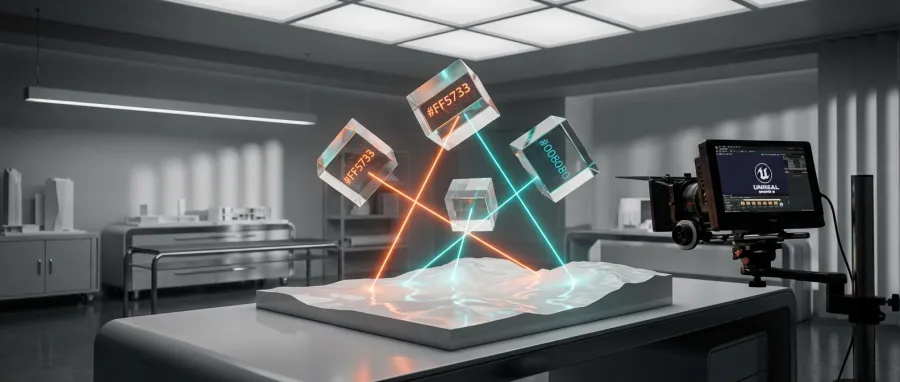
The way wan 2.7 integrates these colors isn't just a filter on top, either. The model understands how those specific colors should interact with light and shadow within the scene. So, if you give wan 2.7 a specific shade of orange for a sunset, it knows how that orange should reflect off a glass building or soak into a sandy beach. It’s a level of color science sophistication that makes wan 2.7 feel like it was built by photographers, not just mathematicians.
And let's talk about the wan 2.7 Pro version. With the ability to handle up to 4K resolution, these color-perfect images are ready for print or high-res web displays. When you combine the palette control with the 4K output of wan 2.7, you have a powerhouse for high-end digital art. You can manage your API billing and start testing these palette features immediately to see how they impact your brand's visual identity.
Why Hex Codes in Wan 2.7 Change Everything
Before wan 2.7, we used descriptive words like "royal blue" or "forest green," which the AI would interpret differently every time. With the wan 2.7 hex code implementation, we finally have a universal language. This eliminates the guesswork. If your client demands #FF5733, you give the wan 2.7 prompt that exact code, and you get that exact color. It sounds like a small thing, but for professional workflows, it’s a revolution in efficiency.
This level of control also extends to the wan 2.7 API, where you can programmatically inject color schemes into your generation pipeline. Imagine a tool that automatically generates social media assets based on a user's uploaded brand colors—wan 2.7 makes that incredibly easy to build. This is why developers are flocking to integrate wan 2.7 into their custom applications; it offers the kind of predictability that businesses crave.
| Feature |
Standard Models |
Wan 2.7 Implementation |
| Color Input |
Natural Language Only |
HEX Codes & Palette Control |
| Consistency |
Random / Variable |
High / Brand-Safe |
| UI Integration |
Difficult to match |
Direct CSS/HEX alignment |
The Upcoming Video Revolution in Wan 2.7
While the image generation is great, the real excitement in the community is about the wan 2.7 video models. We’re talking about T2V (Text-to-Video), I2V (Image-to-Video), and even R2V (Real-to-Video) all within one suite. Alibaba is positioning wan 2.7 to be a serious rival to things like Sora and Kling. The goal isn't just motion; it's *coherent* motion that actually follows instructions without falling apart after two seconds.
The upcoming release of wan 2.7 video models is expected to bring features like 9-grid image-to-video, which allows for incredible control over how a scene unfolds. Instead of just hoping the AI moves the camera correctly, wan 2.7 will let you specify the flow. This is a huge deal for filmmakers and content creators who need to tell a specific story, not just show a cool clip of a cat dancing. The motion in wan 2.7 is planned to be much more natural and less "floaty."
What's even more interesting is the integration of audio. The wan 2.7 video suite is rumored to have audio diversity that matches the visual quality. If this holds up, wan 2.7 could become the first all-in-one stop for high-quality AI cinematography. Most current models treat audio as an afterthought, but wan 2.7 seems to be treating it as a core component of the "reasoning" process, ensuring that what you hear matches what you see perfectly.
Accessing these video features through the wan 2.7 API will likely be a heavy lift in terms of tokens, but the ROI could be massive. For anyone in the ad-tech space, being able to generate 1080p video with natural motion using wan 2.7 is a potential game-changer. You can monitor your API usage in real time as you experiment with these heavy-duty video generations to ensure you’re staying within budget while pushing the limits of what’s possible.
Audio and Motion Integration in Wan 2.7 Video Models
The feedback from early testers of the wan 2.7 video capabilities highlights the "instruction-based editing" as a standout. Instead of re-rendering a whole video because a character’s shirt is the wrong color, you can theoretically just tell wan 2.7 to "change the shirt to red" and it will preserve the rest of the motion. This iterative editing in wan 2.7 is what will actually make AI video viable for professional production environments.
Moreover, the 1080p video quality in wan 2.7 isn't just upscaled garbage; it's native resolution with high visual consistency. The model avoids the common "shimmering" effect where pixels crawl across the screen during movement. By focusing on temporal consistency, wan 2.7 ensures that an object at the start of the video looks the same at the end. This is a massive technical hurdle that wan 2.7 appears to have mastered through its "thinking" architecture.
- T2V: High-fidelity text-to-video generation in wan 2.7
- I2V: Transforming static images into dynamic scenes
- R2V: Instruction-based video editing for existing footage
- Integrated audio sync for realistic soundscapes in wan 2.7
Addressing the Closed-Source Debate around Wan 2.7
Let's address the elephant in the room: the community is pretty split on wan 2.7 being closed source. For the open-source purists, "nobody cares about closed models" is a common sentiment. There’s a fear that if wan 2.7 stays behind a curtain, we lose the ability to fine-tune it or run it on our own hardware. It’s a valid concern, especially when we’ve seen how much innovation happens when models are released into the wild.
However, from a practitioner's standpoint, the performance of wan 2.7 might just outweigh the lack of transparency. If wan 2.7 is better at prompt adherence, visual concepts, and audio diversity than its open-source competitors, people will use it. Business users, in particular, often care more about "Does it work?" than "Is the code on GitHub?" For those who need a reliable wan 2.7 API to power their apps, the stability of a managed service is often a feature, not a bug.
Alibaba is under a lot of pressure to make wan 2.7 significantly better than Sora or Kling if they want to keep people interested in a closed model. So far, the image quality and the "thinking" features are doing a lot of the heavy lifting. But the real test will be the video release. If wan 2.7 video doesn't blow the competition out of the water, the closed-source nature might become a major hurdle for widespread adoption among the dev community.
That said, platforms like Venice AI are making wan 2.7 accessible in ways that feel more "open" even if the model itself isn't. By providing robust API access, they allow developers to build on top of wan 2.7 without needing to manage the massive infrastructure required to run a model of this scale. You can read the full API documentation to see how to integrate these high-level capabilities into your own projects regardless of the source code debate.
Performance Benchmarks vs. Accessibility in Wan 2.7
When we look at the benchmarks, wan 2.7 is punching way above its weight class in terms of "stylization pressure." This refers to how well the model can maintain a specific artistic style without the whole image becoming a muddy mess. In my experience, wan 2.7 handles complex styles like "cyberpunk oil painting" or "hyper-realistic blueprint" with more grace than almost any other model on the market right now.
And here's the kicker: wan 2.7 is surprisingly stable at smaller sizes. Even if you aren't using the Pro version, the base wan 2.7 model produces clean, usable results that don't require a ton of post-processing. This makes it a great entry point for those who want to dip their toes into high-end AI generation without committing to a massive subscription or hardware setup. The balance between accessibility through the wan 2.7 API and raw performance is where Alibaba is currently winning.
"If it's not open source, this model better be at Sora levels of prompt adherence." This community quote perfectly captures the high stakes for wan 2.7.
Expert Tips for Optimizing Wan 2.7 Prompts
Ready to actually use wan 2.7? Here is some hard-won advice. First, use the "Multi-Reference Images" feature. You can feed wan 2.7 up to 9 reference images. This is huge for character consistency. If you have a specific character from different angles, feed them all into wan 2.7, and it will "understand" the 3D structure of that character better than any single-image reference ever could. It’s a game-changer for comic artists and storytellers.
Second, don't sleep on the "Interactive Editing" features. Instead of rewriting your entire prompt when wan 2.7 gets one small detail wrong, use the interactive mode to describe the change. This saves so much time and token cost. You can tell wan 2.7 to "make the lighting moodier" or "move the person to the left," and it will adjust the existing image rather than starting from scratch. It makes the process feel more like collaborating with a junior designer than fighting with a computer.
Third, take advantage of GPT Proto to manage your wan 2.7 costs. Integrating wan 2.7 through a unified API platform can save you up to 70% on API costs compared to going direct to some specialized providers. GPT Proto offers a standard interface that makes switching between wan 2.7 and other models like Claude or Midjourney totally seamless. It’s the smartest way to keep your workflow flexible without blowing your budget on a dozen different subscriptions.
Finally, remember that wan 2.7 thrives on detail. Because of its reasoning capabilities, you can be very specific about textures, lighting, and composition. Don't just say "a room." Tell wan 2.7 about the "dust motes dancing in the afternoon sun hitting a mahogany desk." The more you give wan 2.7 to "think" about, the better the final output will be. It's a model that rewards creativity and precision in equal measure.
Leveraging Multi-Reference Images in Wan 2.7
The multi-reference system in wan 2.7 is actually quite sophisticated. It doesn't just blend the images; it extracts features. If you provide a color palette in one image and a structural layout in another, wan 2.7 can fuse them into a brand-new concept that respects both inputs. This is perfect for architectural "mashups" or fashion design where you want to combine a specific fabric texture with a particular garment cut.
When using the wan 2.7 API for these multi-reference tasks, make sure your images are clean and clearly focused. The better the input, the more accurately wan 2.7 can map those features onto your new generation. This feature alone makes wan 2.7 one of the most versatile tools in my kit for professional client work. It’s about having a conversation with the AI, where you provide the ingredients and wan 2.7 provides the culinary expertise.
- Use up to 9 reference images for maximum character consistency
- Employ interactive editing in wan 2.7 to refine small details without re-rolling
- Combine hex codes with multi-reference images for brand-perfect assets
- Scale your production with the wan 2.7 API to handle high-volume workflows
If you're looking to dive deeper into these technical workflows, I highly recommend checking out the GPT Proto platform. It’s one of the few places where you can access multi-modal models including wan 2.7 with a single API key, making it an essential tool for any modern developer or creator. Between the smart scheduling and the performance-first modes, it really takes the headache out of managing your AI stack.
Written by: GPT Proto
"Unlock the world's leading AI models with GPT Proto's unified API platform."