Kling 3.0 Motion Control animates a static character image with the movement from a reference video. You give it two inputs — a picture of your character and a video of someone moving — and it returns a new clip where your character performs that exact choreography while keeping their own face, outfit, and look.
This is motion transfer, not text-to-motion. Instead of describing an action in a prompt and hoping the model interprets it, you show it the action frame by frame. That makes it far more reliable for repeatable character animation, dance, and gesture work.
This guide covers both paths: the Kling web app for one-off clips, and the GPTProto API for wiring Motion Control into a pipeline. We'll cover inputs and limits, the `pro` vs `std` tiers, prompt technique, full runnable code, pricing, and the failure modes worth knowing before you spend credits.
Como usar o Kling 3.0 Motion Control: um guia para desenvolvedores (Web + API)
Um guia para desenvolvedores sobre o Kling 3.0 Motion Control — pro vs. std, limites de entrada, dicas de prompts e código de API executável (Python + cURL) via GPTProto.
What Is Kling 3.0 Motion Control
Motion Control takes one character image and one driving (reference) video, then generates a video in which the character matches the reference's movements, facial expressions, and — optionally — camera orientation. The visual identity comes from your image; the motion comes from your video.
| Spec | Detail |
|---|---|
| Task type | Image-to-video only (a character image is required; no text-to-video Motion Control) |
| Inputs | 1 character image + 1 driving video (+ optional prompt / negative prompt) |
| Reference video length | 3–30 seconds; output length aligns to the reference |
| Min extractable motion | 3 seconds of continuous action |
| Image resolution | Short edge ≥ 340px, long edge ≤ 3850px |
| Multi-character video | The character occupying the largest frame area drives the motion |
| Tiers | std (720p) and pro (1080p) |
| Orientation modes | image (max 10s output) or video (max 30s output) |
What changed from 2.6 to 3.0
If you used Motion Control on Kling 2.6, the 3.0 upgrade is about consistency and physics rather than a new interface:
- Better identity preservation — less face drift across the clip.
- Grounded physics — feet stay anchored instead of "sliding on ice."
- Element consistency — multi-angle face and outfit detail hold up better through turns.
- Longer outputs — up to 30 seconds when orientation follows the video.
- Faster inference — materially quicker turnaround per generation.
One behavior to keep in mind: 3.0 Motion Control transfers movement only. It does not blend scene elements from the driving video into your character — the output sticks to the character image you supplied.
Kling 3.0 pro Motion Control vs Kling 3.0 std Motion Control
The two tiers run the same model with different output quality. Use std while you iterate on the reference video and prompt, then switch to pro for the final render.
| Kling 3.0 std Motion Control | Kling 3.0 pro Motion Control | |
|---|---|---|
| Output resolution | 720p | 1080p |
| Best for | Iteration, drafts, high-volume runs | Final delivery, client work |
| Speed | Faster | Slightly slower |
| Price (Per Time) | $0.3024 (20% off, market $0.378) | $0.4032 (20% off, market $0.504) |
| API model slug | kling-v3.0-std |
kling-v3.0-pro |
"Per Time" means the final cost scales with the generation you run; the model page's playground shows the live total before you submit.
Input Requirements (Read This First — It Saves Credits)
Most failed generations come from bad inputs, not the model. The single biggest predictor of a clean result is the quality of frame 1 and the driving video.
Character image
- One person, clean half-body or full-body framing.
- Face clearly visible and reasonably large in the frame — small faces force the model to invent detail, and likeness drifts.
- Match the framing roughly to your reference video (don't pair a head-and-shoulders portrait with a full-body dance video).
Driving (reference) video - 3–30 seconds, single continuous shot, no cuts or hard camera moves — cuts can truncate the output.
- One subject, full body and head visible and unobstructed.
- Steady, moderate motion. Very fast or complex action may make the output shorter than the input, because only valid continuous segments are extracted.
- Keep hands visible if you need good hands in the result.
If less than 3 seconds of usable continuous motion can be extracted, the generation can fail and — per Kling's terms — those credits are not refunded. Validate your reference clip before submitting at scale.
How to Use Kling 3.0 Motion Control in the Web App
For one-off clips, the Kling web UI is the fastest route:
- Open Kling, select the 3.0 model, then click Motion Control.
- Upload your driving video into the "character actions to mimic" box.
- Upload your character image into the box on the right.
- (Optional) Add a prompt describing the scene — lighting, environment, camera. Do not describe the action; that comes from the video.
- Set character orientation: follow the video (up to 30s) or the image (up to 10s).
- Choose std (720p) or pro (1080p) and click Generate.
That's enough for manual work. The rest of this guide is for automating it.
How to Use the Kling 3.0 Motion Control API
This is the part most teams come for: a guide to the Kling 3.0 Motion Control API you can run end to end. GPT Proto exposes Kling through a unified, OpenAI-compatible account with a single key, and the video tasks follow a create-then-poll pattern.
Step 1 — Get an API key
Sign up at gptproto.com/dashboard and generate a key. One key works across every model on the platform. Export it so the examples pick it up:
export GPTPROTO_API_KEY="your_key_here"
Step 2 — Create a Motion Control task
You submit the character image, the driving video, the tier, and an optional prompt. The API returns a task id you'll poll for the result.
Note: GPT Proto authenticates Kling with a
Bearertoken in theAuthorizationheader. The Motion Control task takesimage(character),video(driving clip),prompt,negative_prompt,character_orientation, andkeep_original_sound.
cURL
curl -X POST "https://gptproto.com/api/v3/kling/kling-v3.0-pro/motion-control" \
  -H "Authorization: Bearer $GPTPROTO_API_KEY" \
  -H "Content-Type: application/json" \
  -d '{
    "image": "https://example.com/character.jpg",
    "video": "https://example.com/driving-motion.mp4",
    "prompt": "studio lighting, plain grey background, static camera",
    "negative_prompt": "warped background, extra fingers, motion blur",
    "character_orientation": "video",
    "keep_original_sound": false
  }'
Swap kling-v3.0-pro for kling-v3.0-std to run the 720p tier.
Step 3 — Poll for the result
Video generation is asynchronous. Take the id from the create response and poll the predictions endpoint until status is finished, then read the output URL.
Python (end to end)
import os
import time
import requests

BASE = "https://gptproto.com/api/v3"
API_KEY = os.environ["GPTPROTO_API_KEY"]
HEADERS = {"Authorization": f"Bearer {API_KEY}", "Content-Type": "application/json"}

def create_motion_control(image_url, video_url, prompt="", negative_prompt="",
                          tier="pro", orientation="video"):
    url = f"{BASE}/kling/kling-v3.0-{tier}/motion-control"
    payload = {
        "image": image_url,                       # character identity
        "video": video_url,                       # driving motion (3-30s, single shot)
        "prompt": prompt,                         # describe the SCENE, not the action
        "negative_prompt": negative_prompt,       # artifacts to suppress
        "character_orientation": orientation,     # "video" (<=30s) or "image" (<=10s)
        "keep_original_sound": False,
    }
    r = requests.post(url, json=payload, headers=HEADERS, timeout=60)
    r.raise_for_status()
    return r.json()["data"]["id"]

def wait_for_result(task_id, interval=5, timeout=600):
    deadline = time.time() + timeout
    while time.time() < deadline:
        r = requests.get(f"{BASE}/predictions/{task_id}/result", headers=HEADERS, timeout=60)
        r.raise_for_status()
        data = r.json()["data"]
        status = data.get("status")
        if status in ("succeeded", "completed"):
            return data["outputs"]          # list of output video URLs
        if status in ("failed", "error"):
            raise RuntimeError(data.get("error") or "generation failed")
        time.sleep(interval)
    raise TimeoutError(f"task {task_id} did not finish within {timeout}s")

if __name__ == "__main__":
    task_id = create_motion_control(
        image_url="https://example.com/character.jpg",
        video_url="https://example.com/driving-motion.mp4",
        prompt="studio lighting, plain grey background, static camera",
        tier="pro",
        orientation="video",
    )
    print("task:", task_id)
    outputs = wait_for_result(task_id)
    print("video:", outputs)
Confirm the exact
statusstrings against the live response — the image-to-video docs exposedata.status,data.outputs, anddata.error, which is what the poller reads here.
Writing a Good Kling 3.0 Motion Control Prompt
The prompt in Motion Control is not where the action lives — the driving video handles that. A Kling 3.0 Motion Control prompt should describe everything except movement: the setting, lighting, wardrobe details, mood, and camera behavior.
Do describe:
- Environment and background ("neon-lit alley at night", "plain white studio cyclorama")
- Lighting ("soft key light from the left", "hard rim light")
- Camera intent ("static camera", "locked-off tripod shot")
- Style notes ("cinematic, shallow depth of field")
Don't describe: - The action itself ("waving", "dancing", "turning around") — that comes from the reference video and a conflicting prompt can fight it.
A reliable starting template:
[scene/background], [lighting], [camera behavior], [style]
Example: plain grey studio background, soft even lighting, static camera, cinematic
Use the negative prompt to suppress recurring artifacts: warped background, extra fingers, motion blur, duplicate limbs.
Orientation and Duration
character_orientation does double duty — it controls how the character is posed and caps the output length:
| Setting | Behavior | Max output |
|---|---|---|
video |
Character follows the reference video's orientation and camera | 30s |
image |
Character keeps the image's orientation | 10s |
Rule of thumb: if identity drifts, try image; if motion feels stiff or under-transferred, try video. The output length tracks the reference video, so a 12-second result needs a ~12-second driving clip and the video orientation.
Common Problems and Fixes
| Symptom | Likely cause | Fix |
|---|---|---|
| Warped / wobbling background | Camera moving too aggressively | Add static background / static camera to the prompt; add warped background to negative prompt |
| Face likeness drifts | Face too small in the source image | Use an image where the face fills more of the frame; try character_orientation: image |
| Output shorter than the reference | Fast/complex motion; only continuous segments extracted | Slow the action; use a single clean continuous take |
| Bad / mangled hands | Hands hidden in the reference video | Use a reference where hands stay visible |
| Generation truncated | Cuts or camera moves in the reference | Use one continuous shot, no edits |
Pricing
GPT Proto bills per task, pay-as-you-go — no subscription floor. Pricing is "Per Time," so the final cost scales with the generation you run; the model page's playground shows the live total before you submit.
| Model | Tier | Motion Control Per Time rate |
|---|---|---|
kling-v3.0-pro |
pro (1080p) | $0.4032 (20% off, market $0.504) |
kling-v3.0-std |
std (720p) | $0.3024 (20% off, market $0.378) |
Live rates are on each model page.
Next Steps
- Try the model: Kling 3.0 Pro on GPT Proto
- Standard tier: Kling 3.0 Std on GPT Proto
- Compare costs across video models: Browse GPT Proto models
- Get a key and ship: GPT Proto Dashboard


Perguntas frequentes
Posso usar o Motion Control sem uma imagem do personagem?
Qual pode ser a duração da saída?
Qual é a diferença entre std e pro?
O que acontece se meu vídeo de referência tiver duas pessoas?
O áudio do meu vídeo de referência é preservado?
Artigos relacionados
Mais blogs
Como criar um pôster de filme com IA que renderiza o título (2026)
A parte difícil de um pôster de filme criado com IA não é a imagem. Qualquer modelo de imagem pode entregar uma cena heroica atmosférica em cerca de vinte segundos. A parte difícil é tudo o que faz com que ele pareça um pôster: um título que não tenha se transformado em um amontoado de nonsense, uma tagline que você consiga realmente ler, um bloco de créditos na parte inferior e um quadro com o formato de um cartaz vertical, em vez de um quadrado. Passei um fim de semana gerando pôsteres em cinco gêneros, e quase todos os problemas remontavam a uma de três coisas — proporções erradas, nenhum espaço para o texto ou pedir ao modelo que pintasse um parágrafo de tipografia na mesma etapa da arte. Este guia resolve esses três problemas. Você terá prompts prontos para copiar e colar por gênero, um conjunto de prompts que transforma sua própria foto em um pôster, um truque em duas etapas para deixar o título nítido e — se preferir criar cinquenta desses em vez de cinco — chamadas de API executáveis. Dois modelos fazem o trabalho: gpt-image-2 para textos precisos e multilíngues, e Gemini 3 Pro Image (o modelo que muita gente chama de Nano Banana Pro) para estilo e saída em 4K. Ambos funcionam pelo GPTProto, então alternar entre eles exige apenas uma mudança de uma linha.
Schuyler Stacy | 2026-06-16
O Seedance 2.5 já foi lançado? Data de lançamento e o que realmente sabemos (2026)
Atualizei a página do Seed da ByteDance mais vezes do que gostaria de admitir nesta semana, esperando o Seedance 2.5 aparecer. Até agora, nada. Nenhuma página do modelo, nenhuma ficha técnica, nenhuma data. Essa lacuna é exatamente o motivo deste post existir: há muita coisa escrita com confiança sobre o Seedance 2.5 circulando neste momento, e a maior parte apresenta suposições como fatos. Quero separar claramente as duas coisas e, em seguida, indicar o que você pode realmente executar hoje.
Tiffany Layne | 2026-06-23
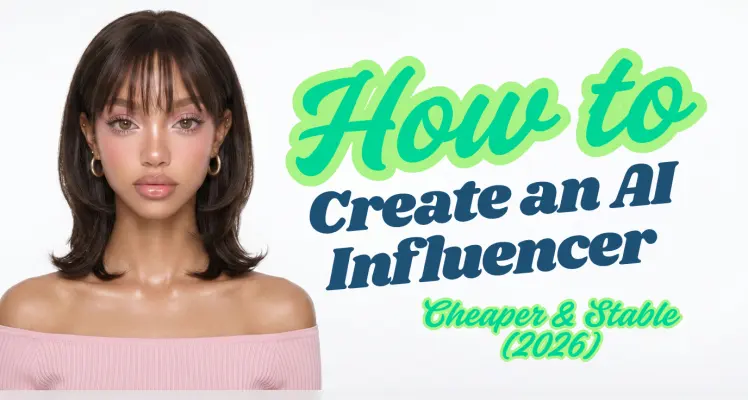
Como criar um influenciador gerado por IA com uma API (e quanto realmente custa mantê-lo)
A maioria dos primeiros influenciadores de IA fracassa na segunda imagem. A primeira renderização parece ótima — um rosto convincente, iluminação razoável. Então você gera a publicação número dois e as maçãs do rosto mudaram, o nariz está mais largo, os olhos têm outra cor. É uma pessoa diferente. A publicação número três é uma terceira pessoa. O que você tem não é um influenciador; é uma pasta de desconhecidos que, por acaso, compartilham a mesma cor de cabelo. As ferramentas sem código que aparecem no topo dessa busca escondem esse problema atrás de um botão. Envie uma foto, clique em gerar, obtenha um resultado. Tudo bem até você querer escalar, mudar o visual ou executar cem publicações em um cronograma — momento em que fica preso a um modelo, um estilo e uma assinatura que geralmente custa entre US$ 19 e US$ 99 por mês, independentemente de você gerar 5 imagens ou 500. Este guia segue o outro caminho: a API. É mais trabalhoso do que clicar em um botão de SaaS — você escreverá algumas linhas de código e gerenciará uma chave de API. Em troca, você controla qual modelo renderiza cada cena, paga por imagem em vez de por mês e pode automatizar todo o pipeline. Ao final, você terá uma identidade fixa, um lote de publicações consistentes, um reel vertical opcional e — a parte que todos os outros guias ignoram — o custo real por publicação. Para contextualizar por que alguém se dá ao trabalho: Aitana López, o modelo de IA criado pela agência barcelonesa The Clueless, ganha até €10.000 por mês e cerca de €3.000 em média, segundo seus criadores conforme reportado pela Euronews . Guarde esse número. Voltaremos a ele quando soubermos quanto a produção realmente custa, porque a diferença entre esses dois valores é o negócio inteiro.
Schuyler Stacy | 2026-06-17