PRICE
Per Time
INPUT
image
OUTPUT
image
The creative world is shifting toward instant iteration, and FLUX Kontext Pro is at the center of this movement. As a massive 12B parameter model, it handles complex visual transformations that smaller systems simply can't touch. I've spent considerable time testing how FLUX Kontext Pro responds to nuanced prompts, and the sheer speed of its output generation is its most striking feature.
When you first fire up FLUX Kontext Pro, the first thing you notice is the lack of lag. Many developers are surprised to see results appearing rapidly, which is a major win for interactive applications. In my experience, FLUX Kontext Pro excels at transforming a scene's atmosphere without losing the core structure of the original image. This speed doesn't come for free, though; the 12B parameter size requires serious backend infrastructure, which is why accessing it via an optimized API is often better than trying to run it on local hardware.
However, the AI community has pointed out that while FLUX Kontext Pro is fast, it can be fickle. Some users report that prompt adherence isn't always 100% consistent. You might ask for a specific detail and find the model interprets it with a bit too much creative liberty. That's why I recommend iterative prompting—start broad and narrow down your requirements as you see how FLUX Kontext Pro reacts to your specific image inputs.
One of the strongest use cases for FLUX Kontext Pro is adding life to vintage media. It does a fantastic job adding color to old black and white images. Unlike older models that often produce muddy or unrealistic skin tones, FLUX Kontext Pro identifies context—hence the name—to apply colors that actually make sense for the era and setting. If you're looking to manage your API billing and start a high-volume restoration project, this model should be your top choice.
The transformation power goes beyond just color. You can instruct the AI to change clothing or environments entirely. For instance, taking a photo of a person and prompting FLUX Kontext Pro to 'give her a red hoodie and blue jeans while she is covered in snow in a snowy place' yields surprisingly coherent results. It manages the lighting transitions between the subject and the new environment with a level of sophistication we haven't seen in previous iterations.
"FLUX Kontext Pro represents a significant step in image-to-image workflows, though its strict safety filters suggest it's built primarily with enterprise-grade brand safety in mind rather than unrestricted artistic experimentation."
I have to address the elephant in the room: censorship. FLUX Kontext Pro is heavily censored compared to some of its contemporaries. If your work involves anything that could be flagged as weaponry or sensitive content, you'll find yourself hitting walls. Any mention of tactical gear or even certain historical artifacts can trigger a block. This is a limitation you need to account for when designing your prompts.
If you find that FLUX Kontext Pro is too restrictive for a specific project, you might want to browse FLUX Kontext Pro and other models on our platform to find a better fit. While the safety filters are great for corporate environments, they can be a hurdle for concept artists working on gritty game assets or cinematic storyboarding.
For those diving into advanced ComfyUI workflows, FLUX Kontext Pro shines when paired with specific nodes. Using an Image Stitch node to combine a person and their pet, then feeding that result into another Image Stitch node to add a third element, is a pro-level move. This multi-stage process helps overcome some of the prompt adherence issues by giving the model smaller, more manageable tasks at each step.
Another expert tip is sketch blending. You can use a hand-drawn sketch to guide the composition. Simply use Image Stitch to blend a photograph and your sketch together within the FLUX Kontext Pro workflow. This gives you much tighter control over where elements end up in the final frame, bypassing the unpredictability of pure text-to-image generation.
| Feature | FLUX Kontext Pro | Standard Image AI |
|---|---|---|
| Parameters | 12 Billion | 2 - 7 Billion |
| Editing Speed | Ultra-Fast | Moderate |
| B&W Colorization | High Fidelity | Variable |
| Censorship Level | Strict/High | Low/Moderate |
| Best Workflow | Image-to-Image / Stitching | Text-to-Image |
It's worth looking at alternatives if you need specific performance traits. Some developers suggest that Qwen Image Edit 2511 has started to replace FLUX Kontext Pro in their daily stack due to better prompt adherence. While FLUX Kontext Pro is a power-house for color and style, Qwen sometimes follows complex instructions more literal. If you are struggling with specific details, I'd suggest testing both via the API to see which fits your aesthetic better.
To get started, you should read the full API documentation to understand how to pass your image buffers correctly. Using the right parameters can significantly reduce the amount of 'guessing' the AI does. Also, you can track your FLUX Kontext Pro API calls in real time to ensure your costs remain within budget while you experiment with these different model versions.
Stability is key for production environments. With our 'No Credits' approach, you don't have to worry about expiring tokens or complex monthly tiers. You can flexible pay-as-you-go pricing to keep your FLUX Kontext Pro integrations running 24/7. This model is expected to be supplanted by even more advanced versions soon, so staying flexible with your API provider is the smartest way to stay ahead of the curve. If you have questions about upcoming updates, you can always stay informed with AI news and trends on our site.

See how FLUX Kontext Pro solves complex creative challenges through specific, actionable scenarios.
A digital library needed to colorize thousands of 19th-century portraits. By using FLUX Kontext Pro, they implemented an automated pipeline that added historically accurate colors to the images in record time, significantly reducing the manual labor costs while increasing the quality of the public collection.
A fashion retailer wanted customers to see clothes in different colors and environments. They integrated the FLUX Kontext Pro API to allow users to upload a photo and instantly see themselves wearing a 'red hoodie and blue jeans' in a snowy setting, providing a highly personalized shopping experience.
A film studio needed to place specific characters into complex environments using rough sketches. By utilizing FLUX Kontext Pro with sketch blending and Image Stitch nodes, they were able to maintain structural control over the scene layout while the AI handled the realistic lighting and texture generation.
Follow these simple steps to set up your account, get credits, and start sending API requests to flux kontext pro via GPT Proto.

Sign up

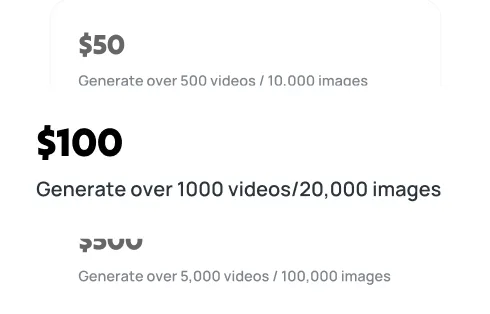
Top up

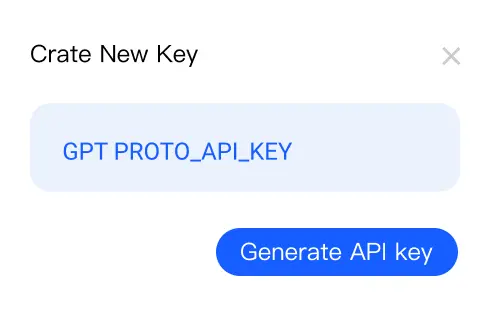
Generate your API key

Make your first API call

Discover how Flux Pro 1.1 is redefining photorealistic AI imagery through its professional-grade API. Learn how to optimize your creative workflow today.

Discover how Flux Kontext is revolutionizing digital creativity. This comprehensive guide covers precision editing, hardware optimization for ComfyUI, and platform comparisons to help you master professional AI image generation and selective retouching with ease.

Discover how to increase resolution of image assets using neural networks and AI models for professional photography, e-commerce, and historical archiving.

Discover how AI and tools like GPTProto are transforming the pro image from a captured moment into a computational masterpiece for modern brands.
What Developers Are Saying About FLUX Kontext Pro