The State of Play for the Best AI for Image Generation
I’ve spent the last year knee-deep in latent space, burning through credits and testing every new model that hits the scene. It’s a wild time to be a creator. We’ve moved past the era of "blobby hands" and entered a phase where the best ai for image generation can fool a professional photographer. But here is the thing: "best" is a moving target.
If you are looking for the best ai for image generation, you probably noticed that the Reddit threads and Discord servers are constantly arguing. One person swears by Midjourney's artistic flair, while another won't touch anything but Stable Diffusion for the control. It’s not just about who has the most parameters anymore. It is about who handles your specific intent without making you jump through hoops.
Finding Your Path with the Best AI for Image Generation
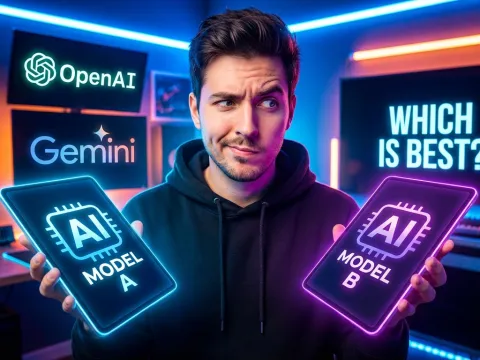
Choosing the best ai for image generation depends entirely on whether you want a "one-click wonder" or a complex workflow. Some of us just want a cool profile picture, while others are building entire brands. The landscape is currently split between closed-source giants like OpenAI and Google, and the open-source rebels who let you run things on your own hardware. That is why I always suggest you explore various models for the best ai for image generation before committing to a single subscription.
We are seeing a massive shift toward structural intelligence. It isn't enough for a model to make a pretty picture; it has to understand where objects go. If I ask for a red ball on a blue cube, I don't want a purple mess. The best ai for image generation needs to respect physics, or at least the appearance of it, while staying fast enough to keep your creative flow alive.
Real-world performance isn't measured in benchmarks; it's measured in how many times you have to click "regenerate" before you get what you actually asked for.
Let's look at the numbers. Most of the top-tier models are now hitting a point where prompt adherence is the primary differentiator. We've seen models like Flux and Ideogram disrupt the old hierarchy by focusing on specific pain points like text rendering. If you've ever tried to get an AI to write a sign that doesn't look like gibberish, you know exactly why this matters for the best ai for image generation.
The Problem with Subscriptions for the Best AI for Image Generation
And then there’s the cost. Managing five different $20/month subscriptions just to test the best ai for image generation is a nightmare. This is where API access and aggregators change the game. Instead of being locked into one ecosystem, you can swap models as easily as changing a lens on a camera. It makes the quest for the best ai for image generation much more affordable.
The API route is especially vital for developers. If you are building an app, you need a stable API that won't break every two weeks. When searching for the best ai for image generation, you have to consider the uptime and the latency of the API. Nobody wants an image generator that takes three minutes to respond while the user is staring at a loading spinner.
Comparing the Best AI for Image Generation Features
When you sit down to compare the heavy hitters, you start to see where the marketing fluff ends and the actual utility begins. The best ai for image generation isn't a monolith. It’s a specialized toolset. Midjourney gives you that cinematic, "expensive" look without much effort. DALL·E 3 is like talking to a very smart assistant who understands exactly what you mean, even if you’re vague.
But then you have Gemini. Google's latest efforts have pushed the boundaries of structural intelligence. If you want to test the best ai for image generation using Gemini 3.1, you’ll see how well it handles multi-subject scenes. It doesn't get confused when you start adding layers of complexity to your prompt, which is a common failure point in this space.
Structural Intelligence in the Best AI for Image Generation
One thing Redditors point out constantly is how Gemini handles spatial positioning. Most models struggle when you say "put the person on the left and the dog on the right." They often flip them or merge them into some horrific hybrid. The best ai for image generation needs to avoid these "logic gaps." Gemini excels here, making it a favorite for complex storytelling visuals.
It’s also surprisingly fast. Speed is a feature, not a luxury. If you’re in a flow state, waiting thirty seconds for a result kills your momentum. Some of the newer flash models are providing near-instant feedback. This speed, combined with a high daily limit for free images, puts it in the running for the best ai for image generation for casual and professional users alike.
| Model |
Primary Strength |
Best Use Case |
| Midjourney |
Cinematic Aesthetics |
Digital Art & Concepting |
| DALL·E 3 |
Prompt Adherence |
Quick, Accurate Visuals |
| Stable Diffusion |
Customization |
Local Power Users |
| Ideogram |
Typography |
Graphic Design & Logos |
Text Accuracy and the Best AI for Image Generation
We have to talk about Ideogram. For the longest time, AI couldn't spell "apple" to save its life. Ideogram changed the conversation. It is currently the best ai for image generation when it comes to text accuracy. If you’re designing a t-shirt or a logo with specific wording, this is the tool you use. It saves hours of Photoshop work that we used to do just to fix typos.
The best ai for image generation should understand the nuances of font and layout. While Midjourney is getting better, Ideogram’s focus on graphic design elements makes it a specialized beast. It’s a great example of how the market is fragmenting. You don’t need one model to do everything; you need the right model for the specific task at hand.
Performance Benchmarks for the Best AI for Image Generation
Let's get technical for a second. Performance isn't just about how "pretty" an image looks; it's about the technical execution. We're looking at things like skin texture, lighting balance, and how a model handles high-frequency details. Flux has recently taken the crown for hyper-realistic output. It’s the best ai for image generation if you want something that looks like it came out of a high-end DSLR.
Flux handles skin textures with a level of realism that makes the old "plastic" look of AI images a thing of the past. It balances natural lighting in a way that feels organic rather than synthesized. When you are looking for the best ai for image generation for portraiture, Flux is the name that keeps coming up in professional circles. It's a massive leap forward for the industry.
Character Consistency in the Best AI for Image Generation
One of the biggest hurdles in AI has always been keeping a character the same across multiple images. If you are a storyteller, you know the pain. You can experience Seedream 5.0 for the best ai for image generation character consistency. In my experience, it handles photo references and character maintenance better than almost anything else on the market right now.
Consistency is the holy grail for the best ai for image generation. If you can’t make the same person appear in three different scenes, you can't make a comic book or a storyboard. This is where specialized models and fine-tuning come into play. Seedream has carved out a niche by focusing on this exact problem, making it an essential tool for digital media creators.
- Hyper-realism: Flux leads the way in skin and light.
- Consistency: Seedream 4.5 and 5.0 are favorites for character work.
- Speed: Flash models like Gemini 1.5 Flash offer the fastest turnaround.
- Precision: DALL·E 3 still holds the line on complex conversational prompts.
The API Advantage for the Best AI for Image Generation
For those of us running workflows, the API is everything. Managing individual API keys for every single model is a recipe for a headache. That’s why unified platforms are becoming the standard. You get access to the best ai for image generation across different providers with a single interface. It simplifies the billing and the technical implementation, which is a godsend for developers.
And let's be real, the cost savings are huge. If you use GPT Proto, you can get up to 70% off mainstream AI APIs. That means you can experiment with the best ai for image generation without worrying about a massive bill at the end of the month. Their smart scheduling even lets you prioritize performance or cost depending on your project needs. It’s the smart way to handle high-volume image generation.
Real User Feedback on the Best AI for Image Generation
I spend a lot of time reading what people actually say on Reddit and Discord. The general consensus is that Midjourney is still the artistic king, but its learning curve is annoying. You have to learn its specific "slang" to get the best results. But if you want a conversational experience, DALL·E 3 is the best ai for image generation because it feels like talking to a person who happens to be a great artist.
Users often suggest that before you jump to an alternative, you should talk to ChatGPT. Tell it what you want to see, give it a reference photo, and ask it to refine your prompt. This collaborative approach often yields the best ai for image generation results. It turns the AI from a simple tool into a creative partner that understands your vision.
Conversational Editing with the Best AI for Image Generation
The ability to refine an image through chat is a game-changer. DALL·E allows you to expand and modify visuals with simple instructions. You can use GPT Image 1.5 Plus for the best ai for image generation and see how natural-language instructions can tweak a visual without restarting from scratch. This iterative process is how real design work happens.
Most models make you start over if the eyes look weird or the background is too busy. The best ai for image generation should let you say, "Make the sun brighter" or "Change the car to a blue one," and actually do it. This conversational editing is why DALL·E remains a top choice despite the fierce competition from more "artistic" models.
"I'd suggest OpenArt or if you aren't afraid of node-based workflows then Weavy," says one power user. It shows that there's a spectrum of complexity depending on your technical comfort level.
For those who want zero filters, the conversation shifts to local models. If you have a decent GPU, running Stable Diffusion locally is the best ai for image generation strategy for total privacy and uncensored creativity. You own the model, you own the hardware, and nobody can tell you what you can or cannot create. It’s the ultimate expression of creative freedom.
The Rise of Uncensored Best AI for Image Generation
We have to address the NSFW elephant in the room. Many users are frustrated by the strict filters on platforms like Midjourney or Gemini. For these creators, models like DarLink AI or local deployments are the best ai for image generation options. They offer high-quality, uncensored images with consistent character faces that mainstream models simply won't touch.
It's not just about adult content; it's about creative liberty. Sometimes a filter blocks a perfectly innocent prompt because it's "too edgy." The best ai for image generation for a horror writer might be a model that isn't afraid of a little blood. This is why the "uncensored" segment of the market is growing so rapidly among serious artists and writers.
Choosing the Best AI for Image Generation by Use Case
So, who should use what? If you are a professional photographer looking for mockups, Flux is your best bet. Its handling of natural lighting is unparalleled. But if you are a social media manager who needs a quick, punchy graphic with text, Ideogram is the best ai for image generation. It all comes down to the "job to be done." Don't use a hammer when you need a screwdriver.
For those of us working in gaming, Leonardo AI is a standout. It offers specialized models tailored for assets and stylized art. It’s the best ai for image generation for creators who need a specific "look" across hundreds of assets. Their platform makes it easy to maintain a cohesive art style, which is notoriously difficult with general-purpose models.
Free Options for the Best AI for Image Generation
If you're on a budget, you don't have to settle for trash. CreateImg.com is a completely free option that doesn't even require a signup. It's the best ai for image generation for someone who just wants to play around without giving up their email address. Perchance.org and Eternal AI also offer solid free tiers that let you create without a subscription.
BudgetPixel AI is another great aggregator. It lets you access most of the popular models at a lower price point. When you are looking for the best ai for image generation via Gemini 3 Pro, using an aggregator can save you the hassle of managing a dozen different accounts. It’s about efficiency as much as it is about quality.
- Concept Art: Midjourney or Leonardo AI.
- Business Presentations: DALL·E 3 (via ChatGPT).
- Brand Marketing: Ideogram for text-heavy visuals.
- Personal Projects: CreateImg.com or Stable Diffusion.
The Best AI for Image Generation for Developers
If you're a dev, your needs are different. You need a unified API platform like GPT Proto. You get access to OpenAI, Google, Claude, and Midjourney through one interface. This is the best ai for image generation approach for building scalable apps. You can monitor your usage in real-time and manage your billing without jumping through hoops.
The flexibility of a pay-as-you-go model is much better than a rigid subscription. You only pay for what you use, and you get the benefit of smart scheduling. Whether you need the absolute peak performance or the most cost-effective generation, a unified API gives you that control. It’s the pro move for anyone serious about AI integration.
The Final Verdict on the Best AI for Image Generation
Here’s my honest take: there is no single "best" model. The best ai for image generation is a stack, not a single tool. I use Midjourney for the initial vibe, Ideogram to fix the text, and maybe a local Stable Diffusion setup to upscale or refine specific parts. The pros don't just use one; they use the right one for the moment.
If you are just starting out, go with DALL·E 3 or Gemini. The ease of use will keep you from getting frustrated. But if you want to push the boundaries of what’s possible, you eventually have to graduate to tools like Flux or Stable Diffusion. The best ai for image generation is whichever one gets you from an idea to a finished visual with the least amount of friction.
Why Multi-Modal Access Matters for the Best AI for Image Generation
The future isn't about choosing one winner; it's about having access to all of them. The best ai for image generation landscape changes every month. A model that is top-tier today might be obsolete by Tuesday. That’s why I advocate for unified platforms. Don't marry a single model; stay flexible and use whatever is currently leading the pack.
By using a service like GPT Proto, you can monitor your API usage and swap between models as they update. It’s the best ai for image generation strategy for anyone who wants to stay on the cutting edge without going broke. You get the best of Google, OpenAI, and more with a single API interface. It’s simpler, cheaper, and more powerful than trying to do it all yourself.
Final Thoughts on the Best AI for Image Generation
At the end of the day, these tools are here to augment your creativity, not replace it. The best ai for image generation still needs a human with a vision to guide it. Whether you’re looking for cinematic quality, hyper-realism, or perfect typography, there’s a model out there for you. Go experiment, break things, and see what you can create.
Ready to level up? You can monitor your API usage in real time as you test these different models. Don't settle for one-size-fits-all. Find the tool that clicks with your workflow and start making something incredible. The world of AI imagery is wide open—go claim your piece of it.
Written by: GPT Proto
"Unlock the world's leading AI models with GPT Proto's unified API platform."