The Brutal Truth About Why You Need To Increase Resolution Of Image
We’ve all been there. You find the perfect shot for a client presentation or a hero image for your blog, but it’s the size of a postage stamp. When you try to scale it up, it looks like a Minecraft screenshot.
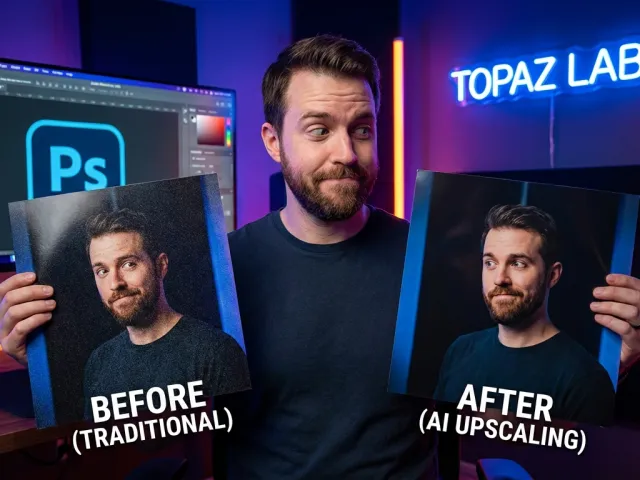
The obsession to increase resolution of image isn't just about making things bigger. It’s about recovering lost detail. In the past, "enhancing" an image was Hollywood fiction. Today, thanks to machine learning, we can actually pull it off with varying degrees of success.
The Real-World Context To Increase Resolution Of Image
Most people want to increase resolution of image because they need to print something. If you have a 72 DPI web image and try to print it on a 24-inch canvas, it’s going to be a disaster. You need density.
Here’s the thing: you aren't just stretching pixels anymore. Modern workflows allow us to use AI to fill in the blanks. This shift has changed the game for photographers and designers who previously had to discard low-quality assets entirely.
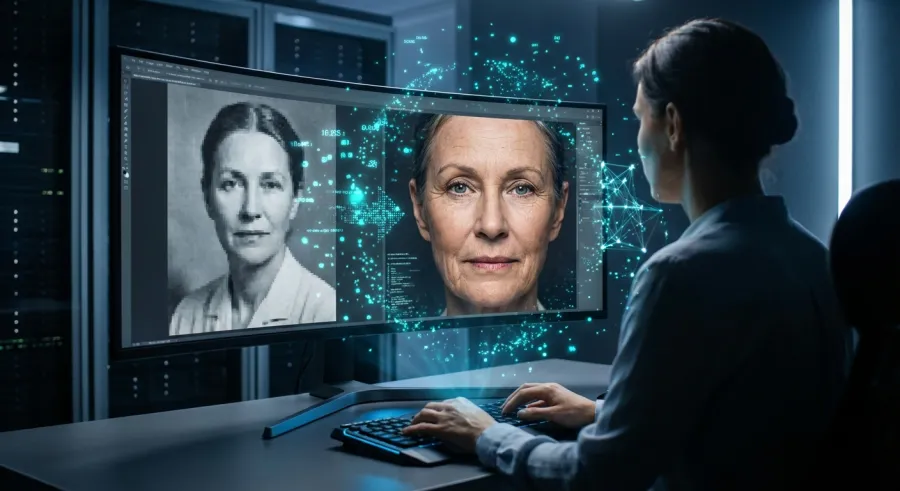
"You can’t magically create data that isn't there, but you can certainly use AI to predict what should be there based on millions of other images."
Whether you're dealing with old family photos or a low-res stock asset, the goal is clarity. But before you go clicking "enlarge," you need to understand that not all upscaling methods are created equal. Some are smart, others are just guessing.
Common Pain Points When You Increase Resolution Of Image
The biggest frustration is the "uncanny valley" effect. You try to increase resolution of image and the subject’s skin starts looking like plastic. Or worse, the AI hallucinates details that weren't in the original photo, like extra fingers or weird textures.
- Blurred edges and loss of contrast.
- Artificial-looking textures (the "oil painting" look).
- Significant file size bloat without actual quality gain.
- High costs for professional software like Topaz.
And let's be real: sometimes you just don't have the time to mess with Photoshop. You want a tool that can increase resolution of image in three clicks. We’re going to look at the best ways to do exactly that without losing your mind.
AI vs. Traditional Methods To Increase Resolution Of Image
In the tech world, we love a good head-to-head battle. When you decide to increase resolution of image, you're usually choosing between "interpolation" and "generative AI." One is math-based; the other is pattern-based. They serve very different purposes.
Traditional interpolation, like Bicubic or Bilinear, simply averages the colors of existing pixels to create new ones. It’s fast but usually results in a soft, blurry mess. AI, on the other hand, looks at the edges and textures to reconstruct them intelligently.
Performance Breakdown To Increase Resolution Of Image
If you need to increase resolution of image for a simple logo, vectorization is your best friend. For photos, AI wins every single time. Here is a quick comparison of how different approaches handle the task of making things bigger.
| Method |
Best For |
Result Quality |
Processing Speed |
| Bicubic Interpolation |
Basic Resizing |
Low (Blurry) |
Instant |
| AI Super Resolution |
Photos/Textures |
High (Sharp) |
Slow (Requires GPU) |
| Vectorization |
Logos/Line Art |
Infinite Scale |
Moderate |
The choice depends on your hardware. AI methods to increase resolution of image require serious processing power. If you’re running an old laptop, you might prefer a cloud-based API solution to handle the heavy lifting for you.
Why Intent Matters To Increase Resolution Of Image
Before you commit to a tool, ask yourself: is this for the web or for print? To increase resolution of image for a 300 DPI print requires much more precision than a 2x boost for a social media post. Use the right tool for the job.
If you're a developer building an app, you might want to explore all available AI models that can handle upscaling at scale. Manually processing a thousand images is a nightmare you want to avoid by using an API.
But for the occasional user, a standalone app or a web tool is plenty. The goal is to increase resolution of image while maintaining the "soul" of the original shot. You want it to look like it was taken with a better camera, not edited by a robot.
The Best Pro Tools To Increase Resolution Of Image
If you talk to any pro photographer on Reddit, the name "Topaz" comes up constantly. Topaz Gigapixel AI is widely considered the gold standard to increase resolution of image. It uses deep learning to recognize faces, landscapes, and architecture to sharpen them specifically.
But Topaz isn't free, and it isn't the only player in the game. Let’s look at some of the heavy hitters that people actually use when they need to increase resolution of image for high-stakes projects.
Top-Tier Software To Increase Resolution Of Image
Let’s Enhance and Upscale.media are great cloud-based alternatives. If you don't want to install 2GB of software to increase resolution of image, these browser tools are surprisingly capable. They offer a balance of simplicity and advanced AI processing.
- Topaz Photo AI: The "set it and forget it" pro choice.
- Let’s Enhance: Excellent for e-commerce and product shots.
- Upscale.media: A solid free option for quick mobile fixes.
- Renderlab.cc: A hidden gem for maintaining image integrity.
When you increase resolution of image with AI, you’re basically letting a neural network hallucinate detail based on its training data. This is why some tools are better at faces while others excel at natural textures like grass or fur.
So, which one should you choose? It depends on your volume. If you have hundreds of assets, you need an API-driven workflow. If you have one wedding photo, Topaz is worth every penny of its license fee.
Free Alternatives To Increase Resolution Of Image
Not everyone has a budget for pro software. You can still increase resolution of image using open-source tools like Real-ESRGAN. These often require a bit of technical knowledge to set up but offer professional-grade results without the subscription fees.
Many of these open-source models are available via a unified API if you don't want to host them yourself. This allows you to increase resolution of image using the latest research models without needing a $2,000 graphics card in your computer.
But be careful with "free" online tools that don't explain their privacy policy. If you increase resolution of image using a random website, you might be giving them the rights to your data. Stick to reputable platforms that respect your privacy.
Using Photoshop To Increase Resolution Of Image
Adobe Photoshop has been the king of photo editing for decades, but for a long time, its upscaling was mediocre. That changed with the introduction of "Preserve Details 2.0." This is Adobe's secret weapon to increase resolution of image without needing third-party plugins.
It’s a bit more manual than a dedicated AI tool, but it gives you much more control. You can adjust the noise reduction to ensure the image doesn't look too "crunchy" after you increase resolution of image.
The Preserve Details 2.0 Workflow To Increase Resolution Of Image
To use this feature, go to Image > Image Size. Make sure the "Resample" box is checked. In the dropdown menu, select "Preserve Details 2.0." This is the most effective native way to increase resolution of image within the Creative Cloud suite.
- Open your image in Photoshop.
- Navigate to Image Size (Ctrl+Alt+I).
- Set your desired dimensions (inches or pixels).
- Select Preserve Details 2.0 from the Resample menu.
- Adjust the "Reduce Noise" slider until it looks natural.
If you're looking for even more dramatic results, you can increase resolution of image and zoom in by combining upscaling with "Content-Aware Fill" to expand edges. This is a pro move for fixing tight crops.
The beauty of Photoshop is the ability to layer your fixes. You can increase resolution of image, then apply a High Pass filter to bring back specific edge details. It’s a craft, not just a button click.
Sharpening Techniques To Increase Resolution Of Image
Sometimes, resolution isn't the problem—sharpness is. After you increase resolution of image, the pixels might be there, but they look soft. Using an Unsharp Mask or Smart Sharpen can help create the illusion of even higher resolution.
"True resolution is about data density, but perceived resolution is about contrast and edge clarity."
But don't overdo it. Over-sharpening is the quickest way to make a professional photo look amateur. When you increase resolution of image, aim for a natural look. If you see white halos around dark edges, you've gone too far.
I always recommend doing your upscaling on a "Smart Object." This lets you tweak the settings to increase resolution of image non-destructively. If you realize later that the noise reduction was too heavy, you can just double-click and fix it.
Advanced Professional Hacks To Increase Resolution Of Image
For the truly desperate (or the truly meticulous), there are ways to increase resolution of image that go beyond simple software sliders. These involve old-school photography techniques combined with modern processing power. They are slow, but the results are unmatched.
One such technique is "Image Stacking." If you have multiple shots of the same static subject, you can stack them to average out the sensor noise. This allows you to increase resolution of image by extracting "sub-pixel" detail that a single frame can't capture.
The Splitting and Stitching Method To Increase Resolution Of Image
If you are trying to create a massive wall mural from a small file, even AI might struggle. A pro tip is to split the image into a grid, increase resolution of image for each tile individually, and then stitch them back together in a program like InDesign.
- Break the image into 4 or 9 overlapping tiles.
- Run each tile through a high-end upscaler like Topaz.
- Reassemble the high-res tiles in a layout tool.
- Blend the seams using masks and soft brushes.
This avoids the "out of memory" errors that happen when you try to increase resolution of image to something like 20,000 pixels wide in one go. It’s a tedious process, but it’s how the big billboards get made from digital assets.
If you're a developer handling this via code, you can read the full API documentation to see how to automate these bulk tasks. Splitting, processing, and merging can all be handled by a smart script using a unified API platform.
Vectorization For Infinite Increase Resolution Of Image
If your image is a logo, icon, or simple illustration, don't bother with pixels. The best way to increase resolution of image for graphics is to convert them to SVG (Scalable Vector Graphics). Once vectorized, an image can be scaled to the size of a planet without a single blur.
Tools like Adobe Illustrator’s "Image Trace" are perfect for this. When you increase resolution of image this way, you are essentially turning it into a set of mathematical paths. It’s the ultimate solution for brand assets that need to go on everything from business cards to blimps.
However, vectorization doesn't work for photos. If you try to vectorize a portrait, it will look like a 1990s posterize filter. For photos, you must stick to pixel-based methods to increase resolution of image properly.
The Verdict: What’s The Best Way To Increase Resolution Of Image?
So, which path should you take? If you're a designer looking for the absolute best quality, Topaz Photo AI or Photoshop’s Preserve Details 2.0 are your best bets. They offer the most control when you need to increase resolution of image for high-end clients.
But for those who value efficiency and cost, using a multi-model API is the smarter move. You can access top-tier upscaling models without the overhead of heavy software licenses. It’s the most scalable way to increase resolution of image for modern digital workflows.
Choosing Based On Your Use Case To Increase Resolution Of Image
It all comes down to the source material. A blurry, out-of-focus photo can only be saved so much. When you try to increase resolution of image, you're working with the "information budget" provided by the original file. Be realistic about the outcomes.
If you need to manage your API billing while experimenting with different models, platforms like GPT Proto make it easy. You can try five different upscaling models on the same image to see which one handles the specific lighting or texture better.
"The best tool is the one that gives you a clean result without making the image look like a deepfake."
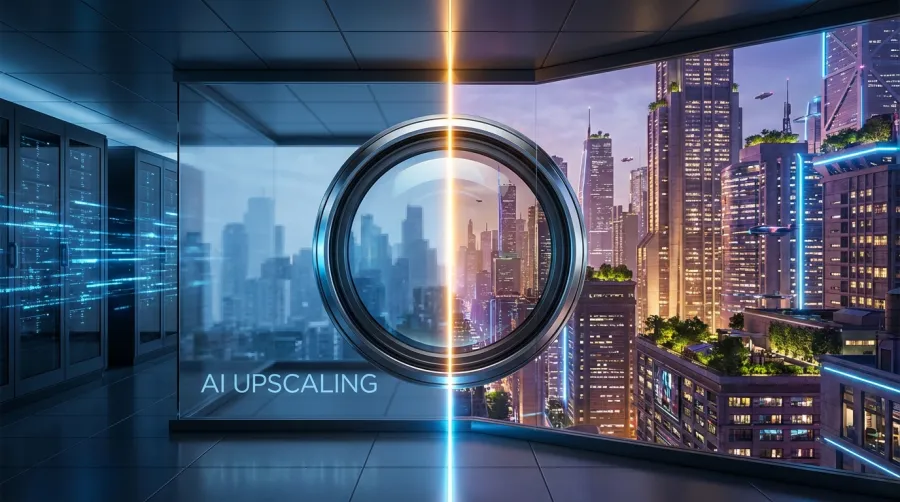
Don't be afraid to experiment. Sometimes a "free" tool like upscale.media will actually outperform Photoshop on a specific type of image. To increase resolution of image is often a process of trial and error until you find the perfect balance of sharpness and realism.
Future Outlook For How We Increase Resolution Of Image
We are moving toward a world where "low resolution" might not even exist. New AI models are being trained to understand context—knowing that a blurry shape in the background is a tree, not just a green blob. This will make it even easier to increase resolution of image in the future.
As these models become more accessible via unified APIs, the barrier to entry is disappearing. You don't need to be a Photoshop wizard to increase resolution of image anymore. You just need the right platform and a bit of patience to get the results you want.
If you're ready to start upscaling, you can learn more on the GPT Proto tech blog about how to integrate these AI tools into your own apps. The tech is moving fast—staying updated is the only way to keep your visuals looking sharp.
Written by: GPT Proto
"Unlock the world's leading AI models with GPT Proto's unified API platform."