INPUT PRICE
Input / 1M tokens
text
OUTPUT PRICE
Output / 1M tokens
text
If you're searching for an AI model that balances raw power with affordable access, browse DeepSeek V3 and other models on our platform to see why this specific architecture is gaining so much traction lately.
I've watched plenty of models hit the market, but DeepSeek V3 feels different. It isn't just another incremental update; it's a statement on efficiency. Most developers are tired of paying massive premiums for API calls that don't always return the precision they need. DeepSeek V3 changes that by offering a fluid, natural dialogue experience that feels more human and less restricted than what you get from the big-name labs. When you use the DeepSeek V3 API, you notice right away that the latency is remarkably low, which is a big deal if you're building real-time chat applications or interactive tools.
One of the biggest draws is how DeepSeek V3 handles instructions. It doesn't lecture you or hide behind excessive safety filters that break your creative flow. Instead, DeepSeek V3 focuses on following the prompt you actually wrote. It's a breath of fresh air for those of us who have spent hours trying to convince an AI to just do its job without complaining. Staying informed with the latest DeepSeek V3 news and updates helps you keep track of how this model continues to outperform its weight class in recent benchmarks.
"DeepSeek V3 represents a shift toward practical AI. It doesn't just offer high-level reasoning; it provides it at a speed that makes it viable for production APIs where every millisecond and every penny counts."
It is important to understand that while DeepSeek V3 is incredibly fast, it often works alongside its "Reasoner" sibling. The standard DeepSeek V3 is your go-to for speed. If you're building a customer service bot or a quick content generator, this is the one you want. It's fluid, doesn't get bogged down in deep "thinking" phases, and responds almost instantly. On the flip side, the Reasoner version uses a chain-of-thought process that makes it better for complex math or logic puzzles, but DeepSeek V3 remains the king of general-purpose tasks.
In my testing, DeepSeek V3 shines when you need to maintain a natural conversation. It doesn't feel robotic. When you track your DeepSeek V3 API calls in our dashboard, you'll see the efficiency firsthand. Here is how it stacks up against other standard options available through our platform:
| Feature | DeepSeek V3 | GPT-4o | Claude 3.5 Sonnet |
|---|---|---|---|
| Response Speed | Ultra-Fast | Fast | Moderate |
| Coding Ability | Excellent | High | High |
| Roleplay Depth | Very High | Moderate | High |
| Cost Efficiency | Highest | Moderate | Lower |
Getting started with the DeepSeek V3 API isn't complicated. Unlike some platforms that force you into a maze of complex documentation, you can get started with the DeepSeek V3 API by simply grabbing an API key and pointing your requests to our endpoint. Because DeepSeek V3 follows standard formatting, you can usually swap it into your existing code with minimal changes. I recommend starting with a low temperature setting if you need factual accuracy, or bumping it up if you're using DeepSeek V3 for creative writing or roleplaying scenarios.
For those worried about stability, our infrastructure ensures that your DeepSeek V3 requests stay online even during peak hours. You can manage your API billing through our simplified center, which avoids the headache of traditional credit systems. We focus on providing a stable bridge to the DeepSeek V3 model so you can focus on building features instead of managing server downtime.
Better is a subjective word in the AI world, but DeepSeek V3 wins on value. If you look at pure logic puzzles, a reasoner model might have the edge, but for 90% of daily tasks—email drafting, code debugging, and general Q&A—DeepSeek V3 is just as capable while being significantly cheaper. Users have pointed out that DeepSeek V3 is particularly good at remembering character details in long-form roleplay, which is often a weak point for other models that "forget" context after a few thousand tokens.
We have also noticed that DeepSeek V3 is less likely to make up locations or facts compared to some of its earlier versions, though it's always smart to verify critical data. If you want to see some cool implementations, you can explore AI-powered image and video creation tools on our site that utilize these advanced models for prompt engineering. The more you use DeepSeek V3, the more you realize it's a tool designed for people who actually use AI every day, not just for flashy demos.
To get the best out of DeepSeek V3, I've found that being specific pays off. Since DeepSeek V3 is less censored, you can give it very direct instructions about tone and style. If you're using it for coding, try to provide snippets of your existing codebase; DeepSeek V3 is great at picking up on your specific style and suggesting fixes that actually fit your architecture. You can also learn more on the GPTProto tech blog where we post deep-dives on prompt engineering specifically for the DeepSeek V3 family.
One "secret sauce" for DeepSeek V3 is the use of long context reminders. If you are working on a massive project, remind DeepSeek V3 of the core goal every few prompts. This keeps the model focused and ensures the output remains top-tier. Don't forget that you can earn commissions by referring friends to use DeepSeek V3 through our platform, making it an even better deal for developers and creators alike.

Discover how businesses and individuals are using DeepSeek V3 to solve complex challenges.
A growing e-commerce startup faced high support costs and slow response times. By integrating the DeepSeek V3 API into their helpdesk, they automated 70% of routine inquiries with human-like accuracy. The result was a 50% reduction in support overhead and significantly higher customer satisfaction scores due to the near-instant response speed of DeepSeek V3.
A software agency struggled with bottlenecked code reviews and debugging. They implemented DeepSeek V3 as a companion tool for their junior devs. DeepSeek V3 provided real-time feedback and fixed bugs that traditional linters missed. This led to a 30% faster sprint completion rate and allowed senior engineers to focus on high-level architecture instead of syntax errors.
An indie game studio needed a way to create dynamic, unscripted NPC dialogues. They used DeepSeek V3 due to its superior roleplay capabilities and low censorship. DeepSeek V3 allowed NPCs to react uniquely to player choices while maintaining consistent lore. The result was a much more immersive game world that players praised for its depth and unpredictability.
Follow these simple steps to set up your account, get credits, and start sending API requests to deepseek v3 via GPT Proto.

Sign up
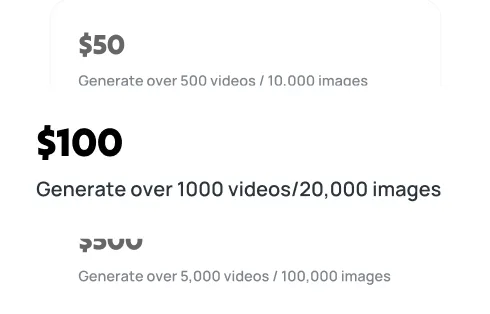
Top up
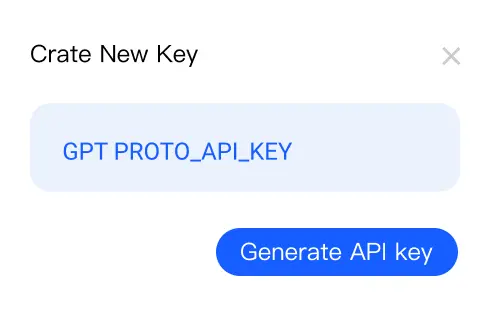
Generate your API key
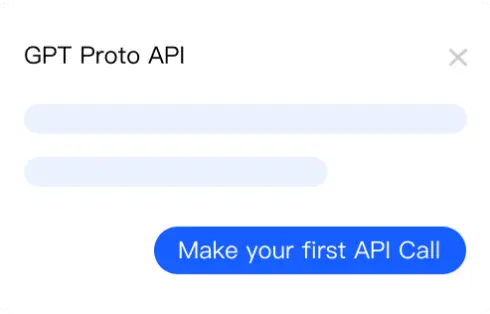
Make your first API call

Analysis of the DeepSeek V3.2 technical report which highlights the widening performance gap between open-source and proprietary AI models like GPT and Gemini, exploring architectural hurdles and reinforcement learning shifts.
Exploring OpenAI's internal assessment of DeepSeek one year after its launch. This report analyzes how open-weight models and cost-effective reasoning are reshaping the competitive landscape between the US and China.
Learn how to get your DeepSeek API key, understand pricing models, calculate costs, and integrate DeepSeek API into your applications. Complete 2026 guide.
DeepSeek V4 is coming in mid-February 2026 with advanced coding capabilities that reportedly surpass Claude and ChatGPT. Discover the release date, features, architecture, and everything about this landmark AI model.
What Developers Are Saying About DeepSeek V3