


Native Multimodal Image & Audio Parsing
Process 4K images or 1-hour audio files directly. This native support simplifies complex workflows by eliminating the need for separate vision or speech models.
text
text
Web Search
curl --request POST "https://gptproto.com/v1/messages" \
  --header "Authorization: Bearer $GPTPROTO_API_KEY" \
  --header "Content-Type: application/json" \
  --header "anthropic-version: 2023-06-01" \
  --data '{
    "model": "claude-haiku-4-5-20251001",
    "max_tokens": 1024,
    "messages": [
      {
        "role": "user",
        "content": "What'\''s the weather in NYC?"
      }
    ],
    "tools": [
      {
        "type": "web_search_20250305",
        "name": "web_search",
        "max_uses": 5
      }
    ]
}'Explore the technical advantages that make Haiku 4.5 the leading model for high-throughput, low-latency AI applications.
Process 4K images or 1-hour audio files directly. This native support simplifies complex workflows by eliminating the need for separate vision or speech models.
With a massive 200,000-token window and 99.5% retrieval accuracy, the model handles dense documentation and long-form code analysis with surgical precision.

Fine-tuned to reduce hallucinated tool parameters, Claude Haiku 4.5 allows AI agents to traverse longer logical chains before requiring human intervention.

Claude Haiku 4.5 is engineered for near-instant execution, outperforming previous iterations in high-throughput environments for seamless real-time interactions.

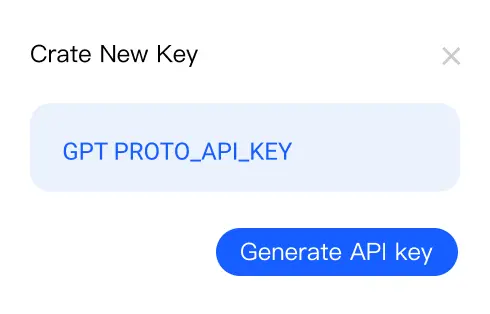
Getting a claude-haiku-4-5-20251001 API key takes four steps and a few minutes. Create a free GPTProto account, add credits, generate your key, and make your first call — at $0.8 / $4 it's a cheaper claude-haiku-4-5-20251001 API key than going direct, and one key works across every model on the platform. Full claude-haiku-4-5-20251001 Documentation is in the docs.

Sign up
Top up
Generate your API key
Make your first API call
Expert answers regarding Claude Haiku 4.5 performance, code capabilities, and technical integration on GPTProto.

Explore the major shifts coming to the AI industry by 2026. From OpenAI's scaling challenges to the rise of autonomous agents and the physical limits of power infrastructure, learn why the next two years will redefine the global tech landscape.
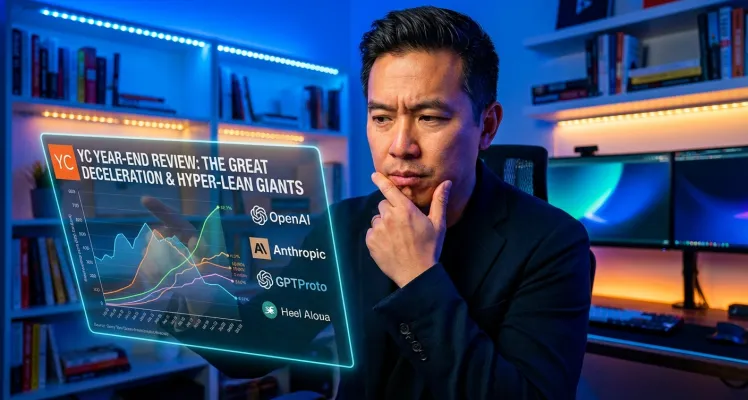
Learn how the AI landscape is maturing in 2025 as developers move beyond OpenAI brand loyalty. This deep dive covers the rise of model orchestration, lean startups achieving massive revenue, and why the transition to a deployment phase is creating new opportunities for builders.

Discover why AI agents powered by OpenAI face massive scaling hurdles. Learn about unit economic traps, latency paradoxes in modern operating systems, and how platforms like GPTProto optimize API costs and memory for enterprise-grade autonomous agents.

Discover how enterprise AI spending surged to $37 billion in 2025. Learn why Anthropic has overtaken OpenAI in the enterprise sector, the rise of AI coding agents, and why startups are currently outperforming tech incumbents in the rapidly evolving application layer.