By 2026, the artificial intelligence landscape will have undergone a radical transformation, moving far beyond the initial excitement of generative chatbots. As the industry matures, OpenAI finds itself at the center of a strategic reset, facing fierce competition from tech titans and the hard limits of physical infrastructure. This analysis explores the seismic shift toward autonomous agents, the emergence of complex world models, and the critical battles over energy and privacy. We delve into how developers and businesses must adapt their strategies to survive in an ecosystem where OpenAI and its rivals are redefining the very nature of digital utility.
Tiffany Layne2026-02-27
OpenAI in 2026: The Great Industry Reset & Future
Explore the major shifts coming to the AI industry by 2026. From OpenAI's scaling challenges to the rise of autonomous agents and the physical limits of power infrastructure, learn why the next two years will redefine the global tech landscape.
Table of contents
The 2026 AI Landscape: Beyond the Hype Cycle
History rarely repeats itself exactly, but the rhythms of technological innovation are undeniable. If 2023 was the explosive inception of generative AI and 2024 defined the era of frantic experimentation, 2026 is poised to be the year of the Great Decoupling. We are currently standing at a precipice where the initial enthusiasm surrounding OpenAI and its contemporaries is colliding with the rigid realities of economic sustainability and physical infrastructure. The digital terrain is shifting beneath our feet, transitioning from simple chat interfaces to a complex world governed by autonomous agents and omnipresent intelligence.
Retracing the trajectory of OpenAI reveals that the company did not merely launch a product; it catalyzed a global arms race that forced every major technology firm to rewrite its genetic code. However, as we approach 2026, the metrics for success are undergoing a fundamental change. It is no longer sufficient for OpenAI to simply unveil a more articulate chatbot. The market now demands concrete answers: Can this technology autonomous run a profitable business? Can it operate sustainably within a global energy crisis? Can OpenAI models function within the strict privacy boundaries of a post-digital-exhaust society? The answers to these questions will determine the victors of this next iterative phase.
To truly grasp the future, we must analyze the players, the plumbing, and the power grid. This narrative extends beyond software; it is a story about the physical limits of silicon and the boundless ambition of human engineering. Whether you are a developer integrating OpenAI APIs or a consumer marveling at the intelligence of your device, the next 24 months will prove to be the most transformative period in the history of computing.

The Titan Tussle: Google, OpenAI, and the Interface War
The rivalry between Google and OpenAI has evolved into a multi-dimensional conflict that transcends the simple search-versus-chat dynamic of previous years. For a significant period, the prevailing narrative suggested that Google was the sluggish incumbent destined for disruption by the nimble OpenAI. However, as 2026 draws near, Google has established a footing that few analysts predicted. By leveraging its dominance in multi-modal tasks—utilizing the camera and sensors in billions of devices—Google has constructed a formidable psychological moat. Users are beginning to realize that while they rely on OpenAI for sophisticated reasoning and text generation, they instinctively turn to Google when interacting with the physical world.
Google’s Gemini has effectively become the default engine for visual intelligence. Whether a user is identifying a rare plant in their garden or troubleshooting complex machinery via live video, Google has seamlessly integrated these capabilities into the Android and Chrome ecosystems. This creates a frictionless experience that OpenAI struggles to replicate without its own proprietary hardware or operating system. Consequently, OpenAI finds itself in a precarious position, needing to maintain its lead in pure reasoning and logic while desperately seeking entry points into the user’s everyday sensory life.
The strategy for OpenAI involves more than just defensive maneuvering. A fascinating "Anti-Google Alliance" is crystallizing within the industry. This coalition, primarily comprising Oracle, Nvidia, and OpenAI, is engineered to dismantle Google’s vertical integration. Google enjoys the luxury of manufacturing its own TPUs, developing its own models, and controlling its own search distribution. To counter this, OpenAI is leaning heavily on Oracle’s robust cloud infrastructure and Nvidia’s cutting-edge Blackwell chips to ensure their next-generation models are not throttled by a lack of compute. In this high-stakes environment, OpenAI acts as the specialized infantry in a massive multi-front war.
Furthermore, the business model driving OpenAI is under intense scrutiny. While their consumer products have reached unprecedented scale, the operational costs of serving those users are astronomical. This economic pressure has triggered a surge in demand for more efficient access methods. Organizations are increasingly seeking unified solutions that bridge the gap between the high-performance reasoning of OpenAI and the cost-effectiveness of alternative providers. The industry is witnessing a decisive shift toward smart orchestration, ensuring that a simple query does not incur the same computational cost as a complex scientific deduction.
The Rise of Anthropic: The Enterprise Fortress
While headlines focus on the clash between Google and OpenAI, Anthropic has quietly constructed a fortress within the enterprise sector. If OpenAI is perceived as the charismatic visionary, Anthropic positions itself as the disciplined engineer. Their commitment to "Constitutional AI" and safety is not merely a marketing tactic; it is a direct response to the requirements of Fortune 500 companies terrified of data leaks or rogue outputs. By 2026, the divergence between consumer-focused AI and enterprise-grade AI will be a vast chasm.
Anthropic has mastered the development of the "scaffolding" toolset. They recognize that a model operating in a vacuum offers limited value to a bank or a hospital. By providing robust tools like the "Skills" feature, they enable businesses to patch the inherent flaws of large language models—such as hallucinations—without requiring deep machine learning expertise. This practical, safety-first approach has made them a preferred partner for corporations that find the rapid, often chaotic release cycle of OpenAI too risky for their compliance profiles.
This competitive pressure is ultimately beneficial for the ecosystem. It forces OpenAI to innovate on reliability and provides Meta with the space to dominate the open-source sector. Mark Zuckerberg’s pivot to open weights is paying dividends, ensuring that even if users aren't utilizing Meta's specific apps, the world is building upon their Llama foundation. This creates a massive data feedback loop, distinct from the closed ecosystem of OpenAI, potentially generating immense value for Meta's advertising engine by 2026.
World Models: The New Frontier of Digital Reality
The concept of the "World Model" is set to become the defining buzzword of 2026, eclipsing the term "Transformer" from 2023. At its core, a World Model is an AI that transcends predicting the next word in a sentence; it understands the physical laws of the universe. Imagine an intelligence that knows a glass will shatter if dropped or that pushing a specific button activates a light. This represents the missing link between the digital intelligence of OpenAI and the physical reality of robotics and autonomous systems.
Meta is approaching this challenge with their "Segment Anything" project, teaching AI to perceive the world as distinct, interacting objects rather than a collection of pixels. Conversely, Google utilizes its massive YouTube library to train models on the flow of time and cause-and-effect. for OpenAI, the challenge is monumental: they must evolve beyond text and code into this rich, multi-dimensional realm of physical understanding. If OpenAI cannot bridge this gap, they risk being confined to the role of a "brain in a jar," brilliant but disconnected from physical reality.
The implications of this shift are massive, particularly for companies like Tesla. While robotics projects have faced delays, the advancement of World Models is the key to making hardware useful. A robot incapable of predicting the physical consequences of its actions is effectively useless. By 2026, we anticipate the arrival of the first true "physical agents" capable of navigating warehouses or kitchens with intuitive grace, powered by the same logical reasoning that makes OpenAI models so compelling in a text interface.
The Death of the App and the Birth of the Agent
Perhaps the most radical disruption arriving by 2026 is the collapse of the traditional application ecosystem. For over a decade, digital lives have been compartmentalized into icons on a screen. However, in the age of high-functioning agents, these silos are becoming obsolete. Why open separate apps for travel, calendaring, and banking when an agent powered by OpenAI can execute the entire itinerary in the background?
This transition represents a cliff-like iteration for the software industry. We are moving toward a paradigm where the Operating System (OS) becomes the only interface that matters. Apple and Google possess a distinct advantage here due to their control over the "plumbing" of devices. Yet, a counter-movement is emerging from companies attempting to create custom hardware or "AI Phones" that bypass traditional OS restrictions, giving agents total control. OpenAI could potentially play a pivotal role in this hardware-agnostic layer, acting as the universal intelligence across devices.
However, the catch is privacy and data sovereignty. As agents integrate deeply into personal lives, they require access to intimate data. Users are increasingly wary of transmitting their personal information to central servers owned by OpenAI or Google. This skepticism is driving a massive push toward "Edge AI"—running models locally on personal devices. In 2026, the most successful AI companies won't just be those with the smartest models, but those that can prove your data never leaves your pocket, forcing OpenAI to adapt its cloud-centric model.
Solving the Cost Paradox: The Rise of Efficient Integration
As the industry dives deeper into this new era, it hits a wall that code alone cannot fix: the cost of intelligence. Running a model as powerful as GPT-4 or its successors from OpenAI requires staggering amounts of electricity and silicon. For many developers and startups, the dream of building the next great application is crushed by the reality of API bills. This is the unacknowledged secret of the AI revolution—intelligence is currently a luxury good.
This economic reality is precisely where the market is innovating. We are witnessing a departure from the "one-model-fits-all" approach. Smart developers are adopting orchestration strategies, using small, local models for routine tasks and only "calling up" to heavy-hitting OpenAI models when high-level reasoning is required. This layered approach is the only viable path to making advanced AI economically sustainable for the mass market.
Platforms that simplify this complexity are becoming the unsung heroes of the industry. The need for a unified standard is paramount. Developers face the challenge of learning different languages for different providers. By creating a single interface for all formats and allowing for smart scheduling between performance-first or cost-first modes, the industry is becoming accessible. Companies can now reduce operational costs by up to 60% by utilizing specialized routing services that automatically switch between a high-cost OpenAI model and a more affordable alternative, democratizing access to top-tier intelligence.
Infrastructure: The Physical Limits of Digital Dreams
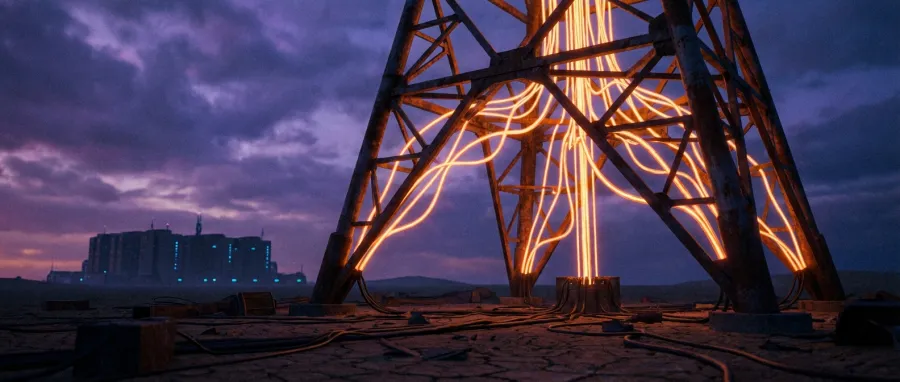
We often discuss AI as if it exists in an ethereal cloud, but that cloud is constructed of steel, glass, and massive quantities of copper. By 2026, the primary bottleneck for OpenAI and the broader industry will not be a lack of data or talent—it will be a lack of power. The sheer volume of electricity required to train and infer on these massive models is straining national grids. In the United States, aging electrical infrastructure is struggling to keep pace with the voracious demands of new data centers hosting OpenAI clusters.
This physical reality is creating a new class of market winners. Companies specializing in power distribution, microgrids, and energy storage are suddenly as integral to the AI narrative as the chipmakers. We are also seeing a shift in the storage market. The demand for DRAM and NAND flash memory is skyrocketing because high-speed AI requires data movement at speeds traditional hardware cannot handle. The transition of storage from a cyclical commodity to a high-growth tech essential is a critical financial story.
Furthermore, the communication methods between data centers are evolving. Optical communication—using light instead of electricity to move data—is experiencing a boom. As the GPU clusters used by OpenAI grow to the size of city blocks, connecting them with copper wires is no longer feasible. This has led to a dramatic increase in the demand for optical modules, making it one of the most inflationary sectors in the tech supply chain.
The Democratization of Specialized AI
By 2026, we will witness the ascendancy of the "Expert Agent." Instead of a generalist like the current iterations of OpenAI models, we will see systems specifically trained for narrow, high-value tasks. Envision a legal agent that has processed every court case in history, or a medical agent that analyzes specific genetic markers to predict health crises. These are not merely chatbots; they are digital professionals operating with superhuman recall.
This specialization is transforming the coding landscape as well. Tools like Cursor have demonstrated that AI can elevate a mediocre coder to a competent one, and a good coder to a great one. By 2026, we may see the first billion-dollar valuation for a company run by a single human and a fleet of agents powered by OpenAI. This shifts the value proposition from "knowing how to do things" to "knowing what needs to be done," positioning the human as the conductor of a digital orchestra.
Even in finance, OpenAI driven agents are changing the game. We are moving away from speculative gambling toward rational risk hedging. Imagine an agent that monitors personal finances—rent, food costs, commute—and automatically executes tiny trades in prediction markets to hedge against inflation. This level of personal financial management, previously reserved for the ultra-wealthy, is being made possible through the scaling of OpenAI technologies.
Regulatory Crossroads and the Compliance Shadow
No technological revolution occurs without a counter-reaction. As AI capabilities expand, the regulatory pressure on OpenAI and its peers is intensifying. We are exiting the "Wild West" phase and entering a period of stringent oversight. Governments worldwide are concerned about issues ranging from election interference to workforce displacement. In 2026, a single high-profile hallucination leading to a real-world disaster could trigger a "Black Swan" regulatory crackdown on OpenAI.
This risk is spawning a new market for "Compliance Infrastructure." Enterprises are seeking assurance that their utilization of OpenAI is safe, ethical, and legal. We may see the rise of state-authorized filtering APIs—essentially a "sanitized" version of the internet for AI consumption. Large tech incumbents like Microsoft are well-positioned to become the referees of this era, providing the safety nets that allow other companies to build on OpenAI without fear of litigation.
The tension between innovation and safety will define the political landscape of the late 2020s. OpenAI has attempted to preempt this by forming safety boards and publishing research, but as the technology becomes more autonomous, assigning responsibility for errors becomes complex. The question of liability—whether it lies with the developer, the user, or OpenAI itself—will be the subject of intense legal debate.
Conclusion: Embracing the Agentic Future
As we look toward 2026, the roadmap is undeniable. The era of the "toy AI" has concluded. We are entering the era of the "utilitarian AI." Whether through the continued dominance of OpenAI or the rise of specialized competitors, this technology is becoming an invisible, essential layer of our reality. The most successful individuals and businesses will be those who cease fighting the change and begin learning how to orchestrate it.
The journey from 2023 to 2026 has been a whirlwind, but the substantial work is just beginning. We have constructed the brains; now we are building the nervous system and the muscles. It is a daunting prospect, but for those who can navigate the complexities of cost, infrastructure, and ethics, the opportunities are unprecedented. The cliff is approaching, but with the right tools from OpenAI and the broader ecosystem, it is not a fall—it is a launchpad.

Related models
All models

