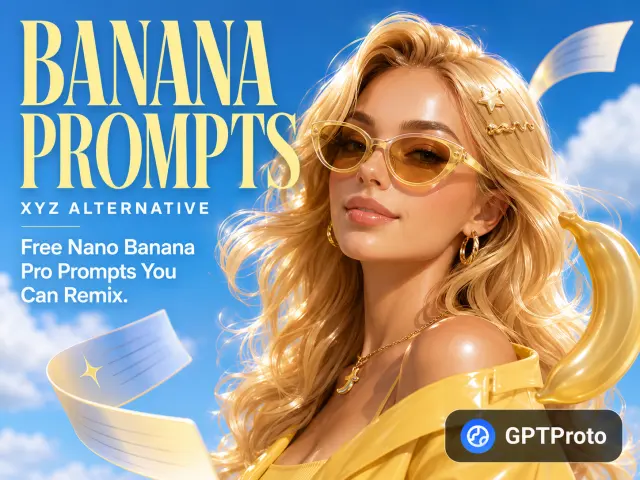
Banana Prompts XYZ Alternative: Free Nano Banana Pro Prompts You Can Remix

Need a Banana Prompts XYZ alternative? Browse free Nano Banana Pro prompts, remix them in GPTProto, or send the prompt through the API.

Banana Prompts XYZ Alternative: Free Nano Banana Pro Prompts You Can Remix

If you searched for a Banana Prompts XYZ alternative, you probably do not need another article praising “better prompts.” You need somewhere to see the output, open the full prompt, change it, and generate an image without rebuilding the idea from scratch.

GPTProto’s Nano Banana Pro prompt gallery is a practical fit. You can browse and copy prompts without an account, sort examples by Featured, Newest, or Popular, and move an idea into the generator with Use Idea. Signing in is required when you generate, and generation may consume credits.

Already deciding whether the original library is worth using? Read the separate Banana Prompts XYZ review. This page focuses on the alternative workflow.

目次

Quick verdict

Use Banana Prompts XYZ when you want to explore its community and its mix of image and video prompt pages. Use GPT Proto’s gallery when you want Nano Banana Pro examples that lead directly into editing, generation, and an API workflow.

That convenience has a cost. Browsing and copying are free, but generation consumes credits. A copied prompt also does not guarantee an identical image; model sampling, reference images, settings, and later model updates all affect the result.

Banana Prompts XYZ vs. the GPT Proto prompt gallery

What matters Banana Prompts XYZ GPT Proto Nano Banana Pro prompts
Main job Discover community image and video prompts Find Nano Banana Pro examples and move them into generation
Browsing style Gallery and creator-led exploration Visual cards with Featured, Newest, and Popular sorting
Cost to browse and copy Check the current site terms Free; no account needed to browse or copy
Editing path Copy and adapt in your chosen tool Open an example, select Use Idea, then edit it in GPT Proto
Model discovery Centered on the library’s own prompt ecosystem Tabs currently cover Nano Banana Pro plus other image and video models
Developer route Not the main reason to use the site Documented REST request and result-query endpoints
Main limitation A large gallery can still leave you guessing which variables matter Generation needs credits, and the gallery is narrower than the entire web

My judgment: the GPT Proto page is the better alternative for people who want a short path from inspiration to a generated asset. It is not a replacement for every community feature or every video prompt on the original site.

What makes this alternative useful

The prompt and the output stay together

A text-only prompt list makes you imagine what each phrase might do. The GPT Proto gallery keeps the visual example attached to the idea. That makes it easier to judge composition, typography, lighting, and subject placement before spending a generation.

The visible collection covers portraits, posters, advertisements, product mockups, infographics, typography, architecture, character designs, localized graphics, 3D scenes, and reference-based edits. That range matters more than a headline promising thousands of prompts. A smaller set that matches your task is usually faster to use than a giant archive you cannot filter.

“Use Idea” turns inspiration into an editable starting point

Open an example to reveal the complete prompt. Select Use Idea, then replace the person, product, brand, wording, language, location, style, or references. A completed image can also become the starting point for an image-to-video workflow.

This is the real difference from a static roundup: the article does not have to carry hundreds of copied prompts. The live prompt collection can change while this guide explains how to judge and adapt what you find.

There is an API path when the workflow becomes repeatable

Manual generation is sensible while you are testing an idea. Once you have a prompt template that works for product variants, localized posters, or recurring character scenes, sending the same structured input through an API is easier to maintain.

GPT Proto also keeps the image model catalog close to the prompt workflow, so you can compare another supported image model instead of treating one gallery as the only option.

How to use the GPT Proto gallery in four steps

  1. Open the Nano Banana Pro prompts page and choose Featured, Newest, or Popular.

  2. Pick an example whose layout already resembles the output you need. Matching the composition first is more useful than matching a vague visual mood.

  3. Open the example, select Use Idea, and replace every project-specific noun, text string, location, brand reference, and input-image role.

  4. Generate one draft, inspect the failure, and change one variable group at a time. Do not rewrite the entire prompt after every run or you will not know what fixed the result.

No account is required for browsing or copying. GPT Proto asks you to sign in when you generate, and that generation may consume credits.

Rewrite the template before you generate

Google identifies Nano Banana Pro as Gemini 3 Pro Image. Its official prompting guidance recommends being specific about five basics:

  • Subject: who or what appears;

  • Composition: framing and viewpoint;

  • Action: what is happening;

  • Location: where the scene takes place;

  • Style: the intended visual treatment.

Then add only the controls your task needs: camera position, lighting, aspect ratio, exact on-image text, factual constraints, and the role of each reference image.

A reusable structure looks like this:

Create [asset type] featuring [subject] performing [action] in [location].
Frame it as [composition] in [style].
Use [lighting and camera details].
Render the exact text "[COPY]" as [font, weight, color, and placement].
Use Reference A for [identity or product shape] and Reference B for [pose, palette, or background].
Preserve [non-negotiable details]. Do not add [known failure or unwanted element].
Output: [aspect ratio and intended use].

This is a scaffold, not a magic string. If the template contains a person, product, or brand you do not own, replace it. If it asks for factual diagrams, verify the facts outside the image model.

Three starter templates to remix

These are original starting points, not copies from another prompt library.

Product poster

Create a vertical product-launch poster featuring a matte white insulated bottle on a pale stone pedestal. Frame it as a low-angle studio shot with soft side lighting and a restrained blue-and-silver palette. Render the exact headline "COLD FOR THE LONG HAUL" in bold white sans-serif type at the top. Keep the bottle label unchanged from Reference A. Leave clean space beneath the product for a price block. Output: 4:5.

Character reference sheet

Create a four-panel character reference sheet for the person in Reference A. Preserve face shape, hairstyle, age, freckles, and jacket design. Show front portrait, three-quarter portrait, full-body standing pose, and profile view on a neutral gray studio background. Use the same soft key light in every panel. Do not change clothing colors or add accessories. Output: 4:3.

Localized infographic

Create a clean 3:4 infographic explaining a three-step recycling process. Use flat vector shapes, high contrast, and one icon per step. Render these exact Spanish labels: "SEPARA", "LIMPIA", and "RECICLA". Keep each label on one line and leave generous spacing around small text. The process order must remain 1, 2, 3. Output: 3:4.

Expect to correct small text, factual diagrams, translated copy, complex blends, or identity drift. Google’s own guidance notes those limitations. The honest workflow is generate, inspect, and make a targeted edit—not assume that a long prompt will remove every failure.

Run the prompt through the API

The following cURL flow follows GPT Proto’s current Gemini 3 Pro Image documentation. It requires curl and jq. The /api/v3/ request uses the raw API key in the Authorization header; do not add Bearer.

export GPTPROTO_API_KEY="YOUR_API_KEY"

submission=$(curl --fail --silent --show-error --location \
  'https://gptproto.com/api/v3/google/gemini-3-pro-image-preview/text-to-image' \
  --header "Authorization: ${GPTPROTO_API_KEY}" \
  --header 'Content-Type: application/json' \
  --data '{
    "prompt": "Create a vertical product-launch poster featuring a matte white insulated bottle on a pale stone pedestal. Use soft side lighting and render the exact headline COLD FOR THE LONG HAUL at the top.",
    "output_format": "png",
    "aspect_ratio": "4:5",
    "size": "1K",
    "enable_base64_output": false,
    "enable_sync_mode": false
  }')

result_id=$(printf '%s' "$submission" | jq -r '.data.id')
if [ -z "$result_id" ] || [ "$result_id" = "null" ]; then
  printf 'No prediction id returned:\n%s\n' "$submission" >&2
  exit 1
fi
printf 'prediction id: %s\n' "$result_id"

curl --fail --silent --show-error --location \
  "https://gptproto.com/api/v3/predictions/${result_id}/result" \
  --header "Authorization: ${GPTPROTO_API_KEY}" \
  --header 'Content-Type: application/json'

The submission response can also provide data.urls[0].get, which is the ready-to-use result URL. Production code should handle pending states, 401 authentication errors, 403 permission or balance errors, 429 rate limits, and server errors.

What does generation cost?

Browsing and copying the prompt gallery costs $0. Generation uses credits. On August 5, 2026, GPT Proto’s model page showed these per-generation prices:

Output size Displayed price per run
1K $0.0804
2K $0.0804
4K $0.1440

Prices can change, so check the live model interface before budgeting a batch. The tradeoff is straightforward: the library removes the cost of browsing and copying, not the compute cost of making the image.

Who should switch?

Choose the GPT Proto prompt gallery if you want to:

  • browse Nano Banana Pro examples without creating an account;

  • copy a prompt and edit it in the same workflow;

  • move from one-off images to a repeatable API request;

  • compare other supported image models from the same model collection.

Stay with Banana Prompts XYZ if its creator community, image-and-video mix, or a particular collection is the reason you visit. An alternative should solve your next step, not force a switch for its own sake.

If the GPT Proto workflow fits, start with the Nano Banana Pro prompt gallery. For the broader platform and account entry point, visit the GPT Proto homepage.

Frequently asked questions

Is the GPTProto Nano Banana Pro prompt gallery free?

Browsing and copying prompts are free, and no account is needed for those actions. You need to sign in when you generate an image, and generation may consume credits.

Is Nano Banana Pro the same as Gemini 3 Pro Image?

Yes. Google uses Nano Banana Pro as the product name for Gemini 3 Pro Image.

Will a copied prompt reproduce the example exactly?

No. The prompt is only one input. Model sampling, reference images, settings, safety behavior, and model updates can change the result. Treat the example as a starting point and preserve the details that matter to your project.

Can I use these prompts through an API?

Yes. GPTProto documents a text-to-image endpoint for `gemini-3-pro-image-preview` and a separate prediction-result endpoint. The example above shows the two-call flow.
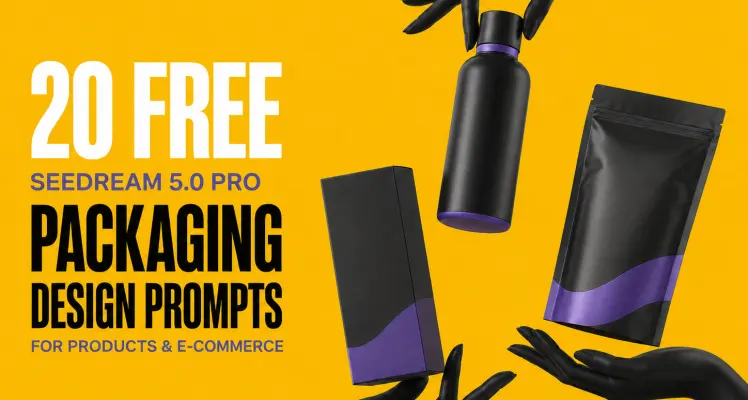
20 Free Seedream 5.0 Pro Packaging Design Prompts for Products and E-commerce

20 Free Seedream 5.0 Pro Packaging Design Prompts for Products and E-commerce

Most packaging prompt lists stop after generating a good-looking bottle or box. That is only the first deliverable. A real product launch may also need a label revision, multiple SKUs, a shipping box, a marketplace hero image, a shelf mockup, and campaign visuals. The 20 free Seedream 5.0 Pro packaging design prompts below follow that wider workflow—from the first packaging concept to the images shoppers eventually see. Each prompt is ready to copy. Replace the details in square brackets with your own product, brand, colors, and copy. “Free” refers to the prompts themselves; image generation may still use credits depending on where you run the model. TL;DR Seedream 5.0 Pro is a good fit for packaging concepts because it can combine typography, material cues, structured layouts, reference images, and realistic product lighting in one image. Use it to explore a design direction, revise an existing label, build a product family, or turn a package into e-commerce creative. Treat the result as a concept or mockup, though—not a print-ready production file. Dielines, legal copy, barcodes, bleed, color separation, trapping, and final proofs still require professional checks.

Schuyler Stacy | 2026-07-28

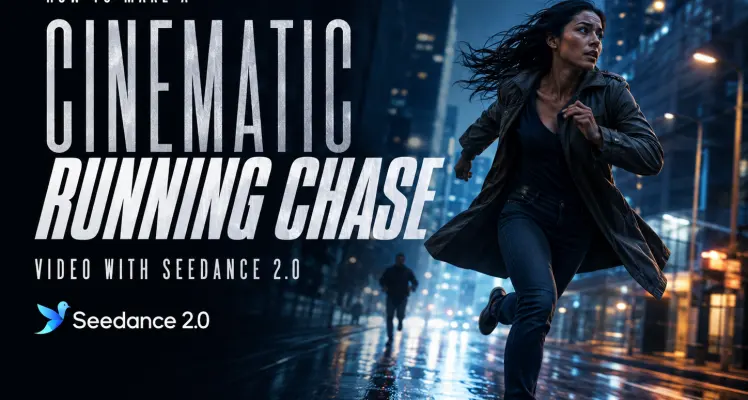
How to Make a Cinematic Running Chase Video with Seedance 2.0 (Prompt + API)

How to Make a Cinematic Running Chase Video with Seedance 2.0 (Prompt + API)

TL;DR To make a cinematic running chase video with Seedance 2.0, describe the scene as one physical timeline rather than a collection of style words. Lock the runner, pursuers, obstacles, and destination; organize the action into three continuous beats; keep handheld lateral tracking as the dominant camera movement; and direct focus and sound to leave the runner briefly before returning to her. For the example below, use a 15-second, 720p, 16:9 generation with audio enabled and `camera_fixed: false`. The article includes a copy-paste prompt, a failure-diagnosis table, and cURL and Python examples for submitting and polling the job through the GPTProto API .

Tiffany Layne | 2026-07-27

Seedream 5.0 Pro Prompt Guide: Stop Prompting Edits Like New Images

Seedream 5.0 Pro Prompt Guide: Stop Prompting Edits Like New Images

A Seedream 5.0 Pro prompt should do one of two jobs. It should either describe the entire image you want to generate, or identify the exact change you want to make to an existing image. Mixing those jobs is why a simple background edit can unexpectedly change the face, lighting, or product shape. The practical rule is short: describe the whole frame for generation; describe the target, change, and protected details for editing. The 17 copy-ready prompts below apply that rule to realistic portraits, product photography, retouching, background replacement, multilingual posters, and multi-reference work.

Tiffany Layne | 2026-07-24

Banana Prompts XYZ Review: What It Does, Where It Helps, and Its Limits

Banana Prompts XYZ Review: What It Does, Where It Helps, and Its Limits

TL;DR Banana Prompts XYZ is a prompt discovery library for AI images and videos. It is not an image model, and it does not make an inconsistent generator deterministic. Its practical value is simpler: you can start from a visible example instead of describing a scene from a blank page. That distinction matters. A gallery can save time when you need a portrait composition, a lighting reference, or a camera-movement idea. Copying its text without checking the original model, inputs, and settings can waste just as much time. My verdict: use the site as a visual reference shelf and a way to study prompt structure. Do not treat any prompt as a guaranteed recipe.

Tiffany Layne | 2026-03-14