The Top Chinese LLM Providers at a Glance
The table uses the Arena Chinese Labs leaderboard dated October 2, 2026 as an independent preference signal. It contained 656,874 votes across 28 labs. The Arena column identifies the model behind each lab’s position because several entries lag the newest release from that company.
| Rank |
Provider |
Arena Chinese Labs signal |
Best for |
Open-weight position |
Example API price, input/output per 1M tokens |
Main catch |
| 1 |
Alibaba / Qwen |
#4, Qwen3.8 Max |
Best overall provider |
Broad family; license varies by model |
$1.80 / $5.40 on GPT Proto for Qwen3.8-Max-0902 |
Dense model, region, and version matrix |
| 2 |
DeepSeek |
#8, V4.1 Flash Max |
Value and API migration |
Strong open-weight record |
$0.30 / $1.20 on GPT Proto for DeepSeek Flash |
Alias changes and reasoning-field differences |
| 3 |
Z.ai / GLM |
#7, GLM-5.3 Max |
Open-weight coding and agents |
GLM-5.3 weights under a custom license |
$0.15 / $0.50 on GPT Proto for GLM-5.3 Flash |
International, China, and hosted routes differ |
| 4 |
Moonshot AI / Kimi |
#3, Kimi K3 Max |
Premium quality and long agents |
Kimi K3 weights under a custom license |
$2.70 / $13.50 on GPT Proto for Kimi K3 |
High API price and a 1.56 TB weight repository |
| 5 |
MiniMax |
#17, MiniMax M3 |
Multimodal product ecosystem |
M3 weights under MiniMax Community License |
$0.48 / $0.96 on GPT Proto for MiniMax M3 |
Commercial-license conditions need review |
| 6 |
Tencent / Hunyuan |
#11, Hy3 |
Open long-context model and Tencent stack |
Hy4 Preview is Apache 2.0 |
$0.7923 / $2.376 on GPT Proto for Hy4 Preview |
Preview model; very large self-hosted footprint |
| 7 |
ByteDance / Doubao |
#14, Dola/Seed 2.0 Pro |
Volcengine-native products |
Mixed, platform-led ecosystem |
¥6 / ¥30 official Seed 2.1 Pro list price |
Overseas onboarding is less direct |
| 8 |
Xiaomi / MiMo |
#9, MiMo V2.5 Pro |
Emerging open-model challenger |
MiMo V2.6 weights available |
Check current access route |
Younger API and production ecosystem |
| 9 |
Baidu / ERNIE |
#12, ERNIE 5.1 |
Baidu Cloud, search, and China enterprise |
Primarily platform-led |
Check Qianfan deployment |
Public API availability can lag model announcements |
Price note: the first six prices are GPT Proto route prices checked on October 9, 2026. They are not the providers’ official list prices. ByteDance’s figure comes from Volcengine’s official price table and is shown in Chinese yuan. Prices, aliases, and promotions can change; verify the live page before budgeting.
What Counts as a Chinese LLM Provider?
Many Chinese AI models lists mix four different products into one table:
Provider or lab: Alibaba, DeepSeek, Z.ai, Moonshot AI, MiniMax, Tencent, ByteDance, Xiaomi, or Baidu.
Model family or release: Qwen, DeepSeek V4.1 Flash, GLM-5.3, Kimi K3, MiniMax M3, or Hy4 Preview.
Official API platform: Alibaba Model Studio, Tencent TokenHub, Volcengine, Baidu Qianfan, or a lab’s direct endpoint.
Unified API: a separate service that exposes supported models from several providers behind one account, key, and balance.
This page ranks the first layer. API platforms and models matter because they determine whether a provider is useful, but a unified gateway is not the model creator and should not be ranked as one.
The distinction also prevents keyword overlap. If you need a model-by-model decision specifically for programming, read 5 Best Chinese LLM Models for Coding in 2026. The list below answers a different question: which company and ecosystem should a developer build around?
How We Ranked the Providers
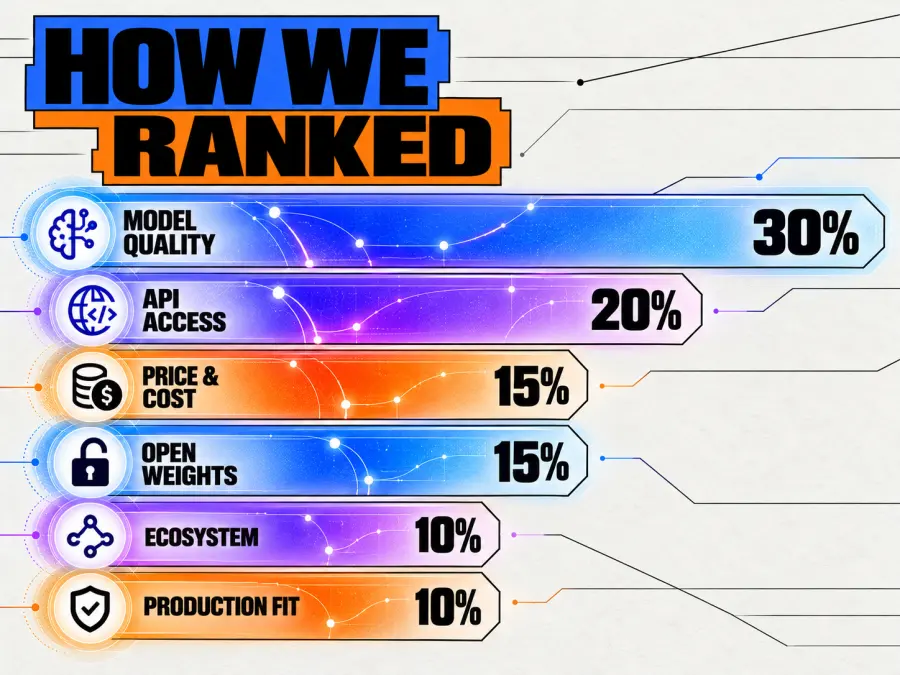
I used six criteria. The weights make the editorial judgment visible rather than pretending the order came from one universal benchmark.
| Criterion |
Weight |
What it covers |
| Flagship model quality |
30% |
Arena signal, difficult-task performance, and current competitiveness |
| API and international access |
20% |
Regions, documentation, account friction, SDK compatibility, and endpoint maturity |
| Price and practical task cost |
15% |
Token rates plus retries, failed calls, latency, and migration work |
| Open weights and license |
15% |
Weight access, commercial terms, and realistic self-hosting requirements |
| Model and modality ecosystem |
10% |
Text, code, vision, audio, video, and agent coverage |
| Production fit |
10% |
Version stability, structured output, tools, observability, and retirement policy |
Arena is useful, but it is only the 30% quality input. Its October 2 Chinese table places Moonshot third overall and first among the Chinese labs in this article, followed by Alibaba at fourth, Z.ai at seventh, and DeepSeek at eighth. The table’s confidence intervals also overlap in places. Treating those lab positions as exact, permanent truth would overstate what the data says.
Ecosystem adoption changes the picture. Hugging Face’s State of Open Models: Summer 2026 counted 151,448 Qwen-derived repositories, 2.6 times Meta’s total footprint. It also found that 59% of the 178 Chinese releases above 20B parameters carried Apache 2.0 and 22% carried MIT, while warning that some very large flagships had moved to custom terms.
One more boundary matters: open weight is not automatically open source. A downloadable checkpoint can still have attribution, revenue, usage, or service-provider conditions. Read the exact license for the exact model—not a family-level label copied from a leaderboard.
1. Alibaba / Qwen: Best Overall Chinese LLM Provider
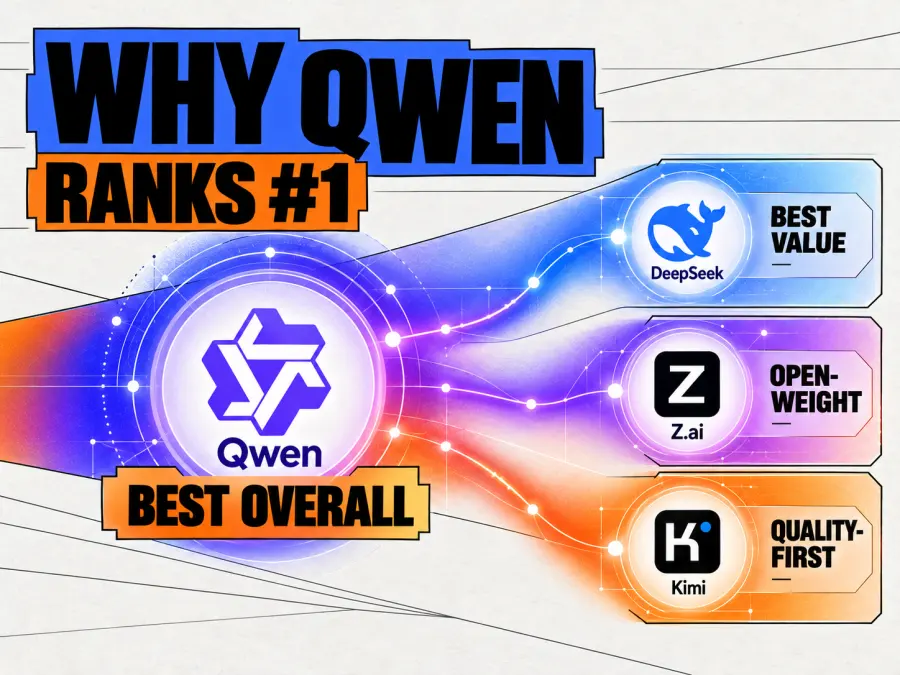
Alibaba/Qwen takes first place because it is the easiest provider here to recommend without knowing a team’s exact workload. Qwen3.8 Max is competitive at the frontier, while the wider family covers smaller deployment sizes, multimodal input, coding, reasoning, and enterprise work.
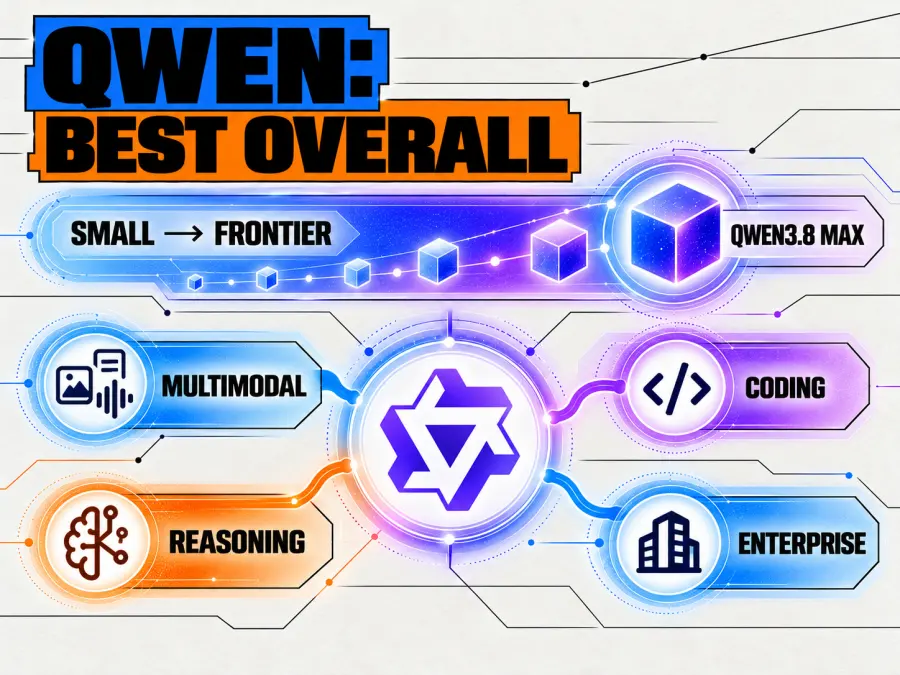
Alibaba’s Qwen3.8 Max documentation lists a 1,000,000-token context window. Model Studio has documented China and international deployment scopes, including Singapore, Frankfurt, Tokyo, and Virginia. That regional coverage matters to international developers who do not want their entire plan to depend on a single China-only console.
The open ecosystem is Qwen’s harder-to-copy advantage. Hugging Face’s derivative count suggests developers are not merely testing Qwen; they are fine-tuning, quantizing, and building on it. But do not carry a license assumption from one Qwen model to another. The hosted Qwen3.8 Max flagship and downloadable Qwen variants can have different terms.
Best for: teams that want one provider spanning premium hosted models, smaller open models, multimodal work, and several deployment regions.
The catch: Qwen’s product matrix is busy. Region, dated snapshot, thinking mode, price, and license can all change what a familiar-looking model name actually means.
My verdict: Qwen is the best default provider, not the cheapest provider. On GPT Proto, the Qwen3.8 Max 0902 API was $1.80 per million input tokens and $5.40 per million output tokens when checked for this guide.
2. DeepSeek: Best Value and API Starting Point
DeepSeek is the provider I would test first for a cost-sensitive coding or reasoning workload. Its current deepseek-flash alias calls DeepSeek V4.1 Flash, and the official model list reports a 1,048,576-token context window. DeepSeek also documents OpenAI Chat Completions, Responses, and Anthropic-style access patterns.
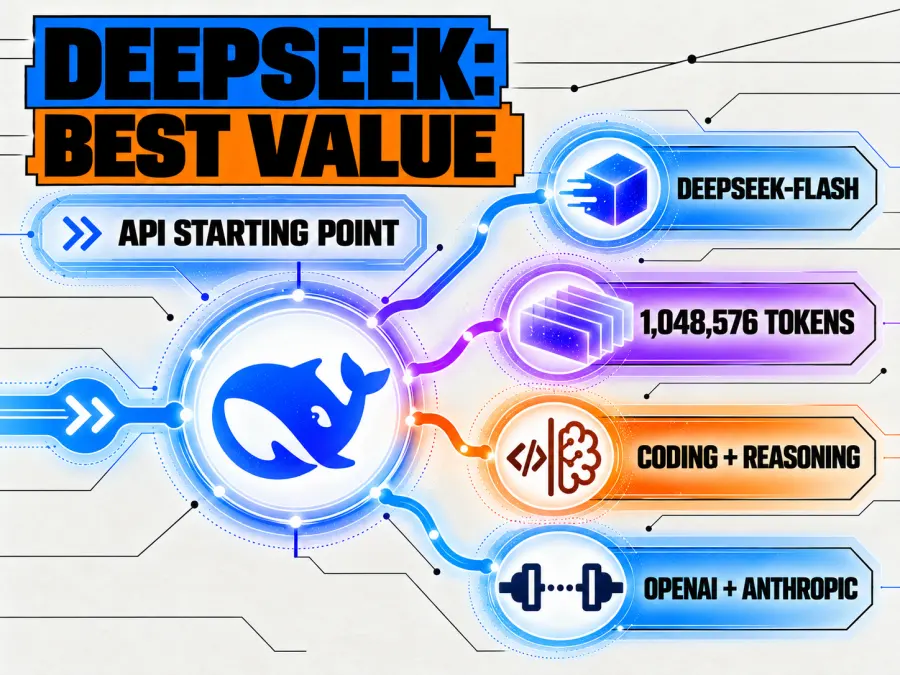
The price is difficult to ignore. The DeepSeek Flash API on GPT Proto was $0.30 input and $1.20 output per million tokens on October 9. That does not prove it is the lowest-cost model for your application. A cheaper token can become an expensive task if the agent retries three times or produces an invalid tool call. Still, it is a strong starting point.
DeepSeek’s open releases, technical reports, and base models also earn trust with developers. A highly upvoted LocalLLaMA discussion praised the company for releasing weights and explaining architecture rather than offering only a hosted black box. That is community evidence, not a benchmark, but it helps explain DeepSeek’s mindshare.
Best for: value-first coding, reasoning, and teams moving an existing OpenAI-style client.
The catch: compatible does not mean identical. An OpenAI Codex issue documents a 400 error when DeepSeek’s required reasoning_content was not preserved in assistant history. That is one integration report, not proof of a universal failure. It is enough to justify a regression test for multi-turn tools.
My verdict: DeepSeek is the most practical first API test on this list. Just pin the model behavior you validated and monitor alias changes.
3. Z.ai / GLM: Best Open-Weight Provider for Coding and Agents
Z.ai ranks third because GLM combines a strong independent quality signal with weights developers can inspect and serve. In Arena’s Chinese Labs snapshot, GLM-5.3 Max placed seventh overall and third among the providers in this article.
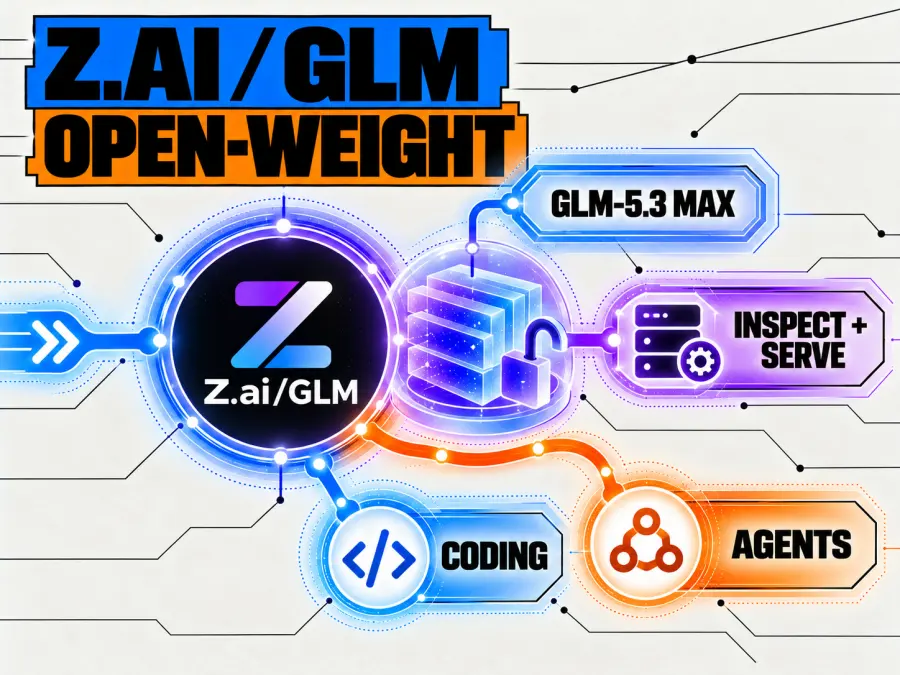
The licensing detail deserves care. The actual GLM-5.3 license broadly permits use, modification, distribution, and commercial deployment. It is not simply the standard MIT text. It adds a security-review condition for a Model-as-a-Service business whose affiliated revenue exceeds $10 billion over a consecutive 12-month period.
Access is the messy part. Z.ai’s international API, the China-facing BigModel platform, downloadable weights, and third-party hosted routes are different products. Document the route, model ID, license, and data path your team actually uses.
Best for: developers who want a competitive coding or agent model with downloadable weights and a credible hosted alternative.
The catch: the best-scoring Arena entry is GLM-5.3 Max, while the inexpensive GPT Proto route below is GLM-5.3 Flash. Do not transfer a Max leaderboard score to Flash.
My verdict: Z.ai is the best open-weight provider for coding and agents in this ranking. The GLM-5.3 Flash API was $0.15 input and $0.50 output per million tokens on GPT Proto, making it the lowest listed route price among the six APIs tested later.
4. Moonshot AI / Kimi: Best Premium Chinese Model Provider
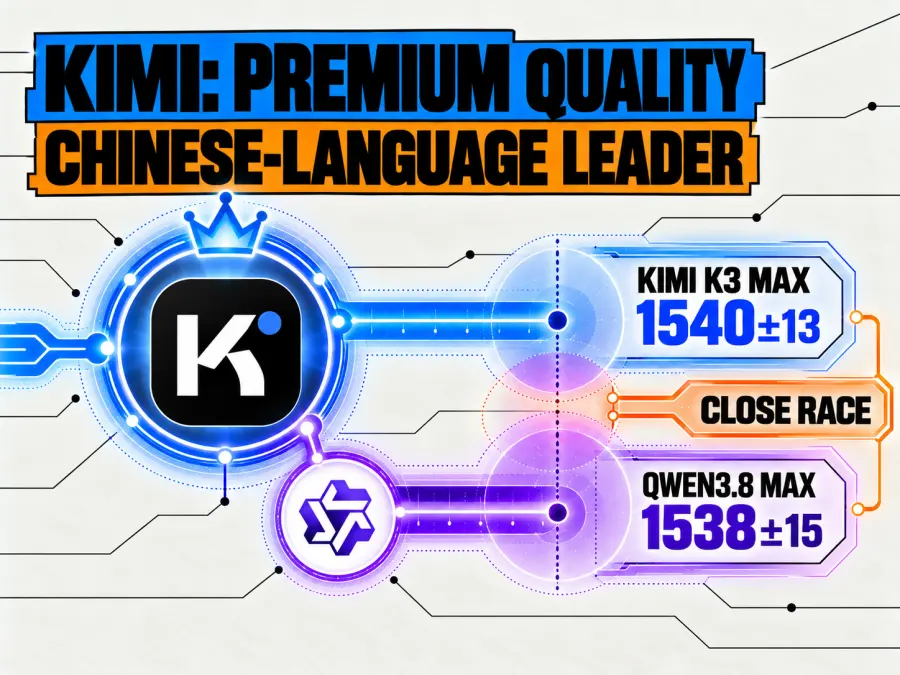
If this were a pure Chinese-language model preference ranking, Moonshot would be first. Kimi K3 Max scored 1540±13 in Arena’s October 2 Chinese table, ahead of Qwen3.8 Max at 1538±15. The overlapping intervals are a reminder that “two points ahead” is not a decisive universal win, but Moonshot’s quality signal is real.
Kimi K3 accepts text and image input, supports long-context work, and can be served through OpenAI-compatible vLLM or SGLang endpoints. Its Hugging Face repository is 1.56 TB. That single number explains the gap between “weights available” and “easy to self-host.” A serious local deployment needs storage, accelerator memory, serving expertise, monitoring, and a plan for upgrades.
Moonshot’s Kimi K3 model guidance says multi-turn tool conversations should pass the complete assistant message back, including reasoning and tool-call fields. That is the sort of provider-specific detail a generic compatibility badge hides.
Best for: quality-first long-context research, coding, and agent runs where a higher output rate is acceptable.
The catch: price and infrastructure. The Kimi K3 API was $2.70 input and $13.50 output per million tokens on GPT Proto—the highest output price among the six stocked routes in this article.
My verdict: choose Kimi when you can show that it completes your difficult tasks more reliably. Do not pay the premium merely because it leads one snapshot.
5. MiniMax: Best Multimodal Provider Ecosystem
MiniMax’s lab rank is lower than the four providers above it, but the company is broader than a text leaderboard suggests. Its portfolio spans language, image/video understanding, video generation, speech, voice, and music workflows. That makes it a better provider choice for a product roadmap that will cross modalities.
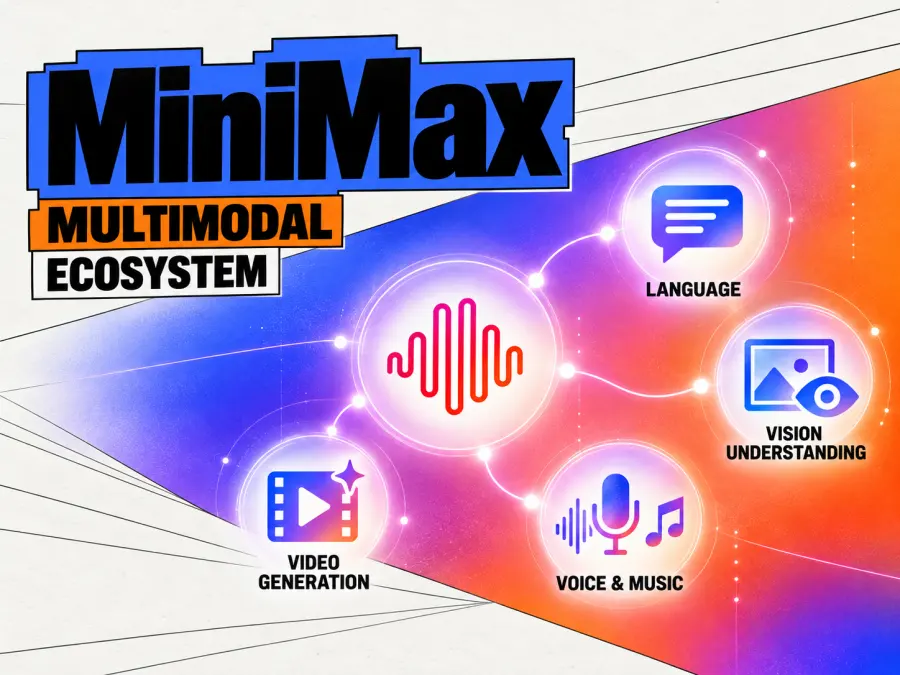
MiniMax M3 is a native multimodal model with a 1M context window, about 428B total parameters, and about 23B active parameters, according to its official model card. It also supports enabled, adaptive, and disabled thinking modes.
The license is usable, but it is not “no conditions.” The MiniMax Community License requires a “Built with MiniMax M3” notice for commercial use. Products or services generating more than $20 million in annual revenue need prior written authorization; smaller commercial users must send a one-time notice.
Best for: teams that want one Chinese company covering text agents plus media-generation and speech products.
The catch: product breadth creates documentation and licensing work. Confirm the rules and request format for the particular MiniMax model, not the brand as a whole.
My verdict: MiniMax is the best multimodal provider ecosystem here. GPT Proto’s MiniMax model collection lists MiniMax M3 at $0.48 input and $0.96 output per million tokens.
6. Tencent / Hunyuan: Best Open Long-Context Option for Tencent Users
Tencent’s current Hy4 Preview is more interesting than the Hy3 model behind its eleventh-place Chinese Arena lab position. The Hy4 repository documents 770B total parameters, 49B active parameters per token, 78 backbone layers, and a 1M-token context window. Tencent publishes both the main and FP8 weights under Apache 2.0.
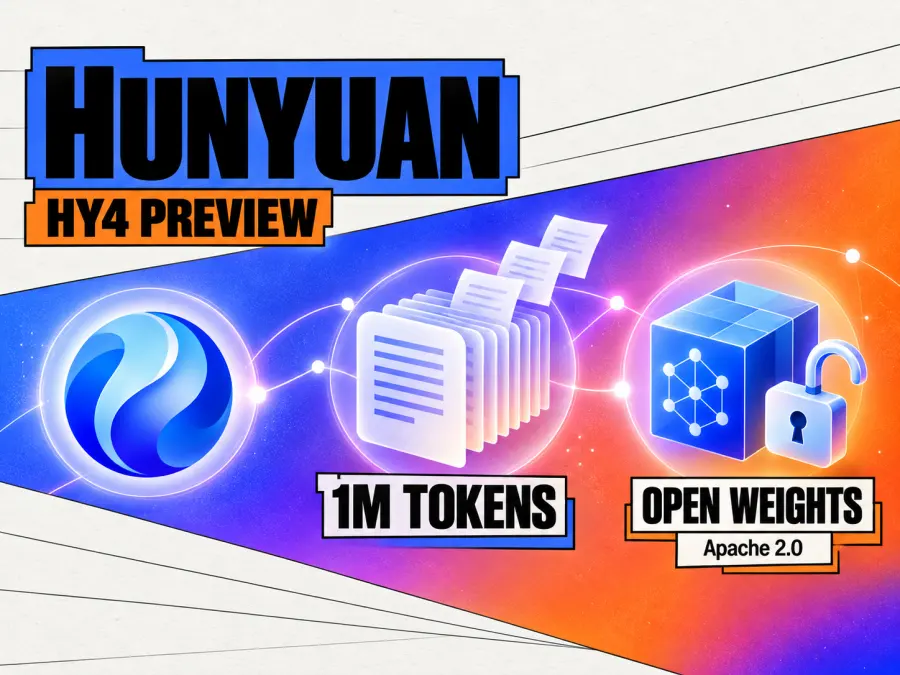
Official Tencent TokenHub documentation lists hy4-preview across OpenAI Chat Completions, OpenAI Responses, and Anthropic Messages protocols. That gives teams several migration paths. It does not erase model-specific behavior, so tool, reasoning, and streaming tests still belong in the release checklist.
Hy4 is text-to-text. Tencent has other image, video, and 3D systems, but assigning those family capabilities to Hy4 would be inaccurate.
Best for: Tencent Cloud users, long codebases, multi-document analysis, and teams that want an Apache 2.0 flagship.
The catch: the word Preview matters. Tencent itself notes that Hy4 can reason longer than necessary and over-verify its work. The model is also far beyond casual self-hosting.
My verdict: Hy4 is a credible open long-context option, especially inside Tencent’s ecosystem. The Hy4 Preview API was $0.7923 input and $2.376 output per million tokens on GPT Proto.
7. ByteDance / Doubao: Best for Volcengine-Native Applications
ByteDance belongs on a top Chinese LLM companies list even without a current GPT Proto link for its newest flagship. Doubao Seed 2.1 Pro supports text generation, multimodal understanding, GUI tasks, tool use, and structured output. Volcengine’s model documentation lists a 1,024K context window, up to 1,024K input, and up to 256K for an answer or chain of thought.
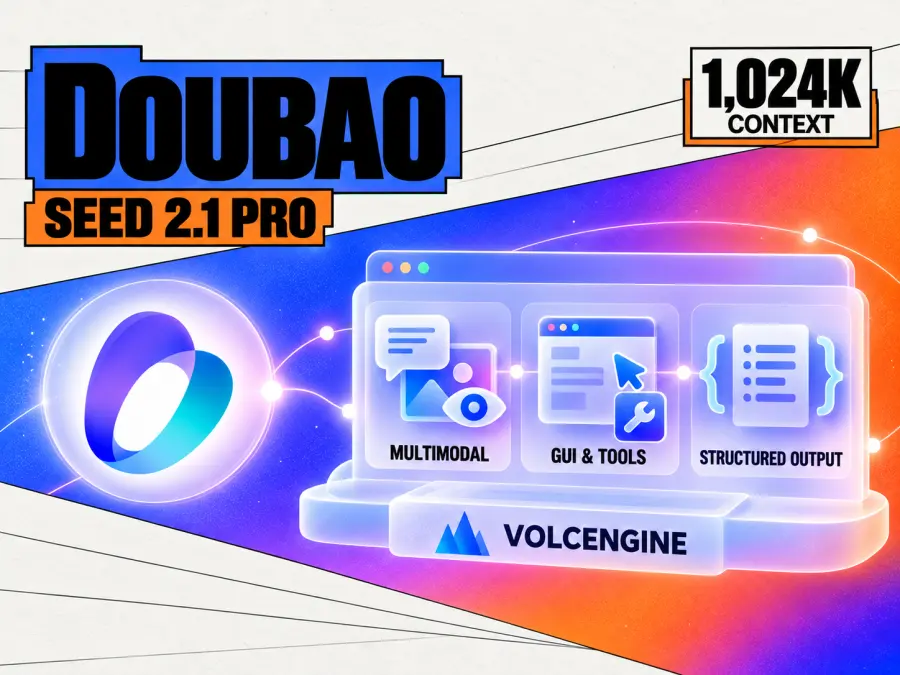
Official Volcengine pricing listed ¥6 per million input tokens, ¥30 per million output tokens, and ¥1.2 per million cache-hit tokens when checked. The platform also retired Seed 2.0 Pro and Seed 2.0 Code on August 8, 2026. That retirement is not a footnote: it shows why provider lifecycle policy belongs in an API decision.
The Arena Chinese Labs snapshot still uses Dola/Seed 2.0 Pro for ByteDance’s fourteenth-place signal. It does not independently prove Seed 2.1 Pro’s relative quality.
Best for: products already using Volcengine, Doubao services, or a China-centered cloud stack.
The catch: account setup, regional deployment, and English-language developer access are less direct than Qwen’s international Model Studio path.
My verdict: ByteDance is a strong ecosystem choice inside Volcengine. I would not make it the default recommendation for an overseas team starting from zero.
8. Xiaomi / MiMo: Strongest Emerging Challenger
Xiaomi is the provider most generic lists are likely to miss. The reason to include it is not brand size; it is current model evidence. Xiaomi ranked ninth in the October 2 Chinese Labs table with MiMo V2.5 Pro, then seventh in Arena’s October 8 overall lab view with MiMo V2.6 Pro.
The official MiMo V2.6 releases include weights and local serving options. More unusually, Xiaomi documented a flaw instead of hiding it. Its MiMo V2.6 MOPD model card says the model could repeat the same or similar tool calls, wasting time and context, and provides a mitigation checkpoint.
That disclosure is valuable production evidence. It tells an agent developer what to test: duplicate-call detection, iteration limits, progress checks, and fallback behavior.
Best for: teams evaluating newer open Chinese models and willing to do more of the serving and integration work themselves.
The catch: Xiaomi’s API ecosystem and international developer mindshare are less mature than Qwen, DeepSeek, or GLM.
My verdict: MiMo is the strongest emerging challenger on this list. It deserves a pilot, not automatic production traffic.
9. Baidu / ERNIE: Best for Baidu Cloud and China Enterprise Workloads
Baidu’s advantage is not one token-price row. It is the combination of ERNIE with Qianfan’s enterprise development stack.
Baidu officially released ERNIE 5.1 in May 2026. The company reported a score of 1,223 and fourth place globally on Arena Search on May 9. That was a dated, vendor-selected snapshot. In the independent October 2 Chinese Labs table used here, ERNIE 5.1 ranked twelfth. Both can be true because the dates and leaderboard categories differ.
Qianfan is the practical reason to choose Baidu. Its platform covers model access, agents, RAG knowledge bases, MCP tools, monitoring, logs, audit, and identity controls. For a China-based enterprise already using Baidu Cloud, those operational features can outweigh a modest gap in a public model ranking.
Best for: Baidu Cloud customers, search-oriented applications, internal knowledge systems, and China enterprise governance.
The catch: public API catalogs and international documentation can lag model announcements. Baidu’s international Qianfan model list, for example, still showed ERNIE 5.0 when checked during research.
My verdict: Baidu is an ecosystem-specific choice. It ranks ninth for a general international developer, but it can rank much higher inside an existing Baidu Cloud deployment.
Which Chinese LLM Provider Should You Choose?
The overall order is less useful than a workload-specific shortlist.
| Your priority |
Start with |
Why |
| Best overall provider package |
Alibaba / Qwen |
Strong model, broad family, international regions, and the largest derivative ecosystem |
| Lowest-cost first API test |
Z.ai GLM-5.3 Flash or DeepSeek Flash |
The two lowest GPT Proto route prices in this comparison |
| Value plus familiar API migration |
DeepSeek |
Strong price/quality position and documented OpenAI-style access |
| Open-weight coding and agents |
Z.ai / GLM |
Competitive quality signal plus downloadable weights |
| Premium difficult tasks |
Moonshot / Kimi |
Highest Chinese-lab position in the cited Arena snapshot |
| Multimodal product portfolio |
MiniMax |
Text, image/video understanding, video, speech, voice, and music products |
| Open 1M-context Tencent model |
Tencent / Hunyuan |
Apache 2.0 Hy4 weights and TokenHub access |
| Volcengine-native workload |
ByteDance / Doubao |
Native model and cloud application stack |
| Emerging open-model experiment |
Xiaomi / MiMo |
Strong current Arena signal and transparent tool-call research |
| Baidu Cloud enterprise stack |
Baidu / ERNIE |
Qianfan operations, RAG, agents, audit, and IAM |
My three-step selection rule is simple:
Eliminate providers that do not fit your deployment region, data rules, or license.
Run the same representative prompts, documents, and tool schemas against two or three finalists.
Compare cost per accepted task, not cost per token. Include retries, invalid tool calls, latency, and human repair.
Official APIs vs. One Unified Chinese LLM API
Use an official API when you need the provider’s newest native features, direct enterprise support, or a specific data-residency arrangement. You also get the cleanest path to provider-specific controls.
The trade-off is operational duplication. Six providers can mean six accounts, balances, key formats, consoles, model-lifecycle policies, and slightly different interpretations of an OpenAI-style request.
A unified API is useful when the immediate job is comparison, fallback, or routing. GPT Proto currently exposes supported Qwen, DeepSeek, GLM, Kimi, MiniMax, and Hunyuan routes through one account and shared balance. You can compare current route costs on GPT Proto Pricing.
The trade-off? A third-party route may not expose every native feature on day one. Its price is a route price, not the provider’s official price. Its data handling, rate limits, aliases, and supported fields still require review.
My preference is pragmatic: use one interface to run the first cross-provider evaluation, then decide whether the winning workload needs a direct provider contract. There is no virtue in opening nine accounts before you have evidence that nine providers matter.
Test Six Chinese LLM Providers With One GPT Proto Key
The following Python script sends the same evaluation prompt to six live GPT Proto model IDs. It uses the OpenAI SDK and the Chat Completions endpoint shown on the model pages.
Install the SDK:
pip install --upgrade openai
export GPTPROTO_API_KEY="your_api_key_here"
Save this as compare_chinese_llms.py:
import os
from openai import OpenAI, APIError, APITimeoutError, RateLimitError

api_key = os.environ.get("GPTPROTO_API_KEY")
if not api_key:
    raise RuntimeError("Set GPTPROTO_API_KEY before running this script.")

client = OpenAI(
    api_key=api_key,
    base_url="https://gptproto.com/v1",
    timeout=120.0,
    max_retries=1,
)

models = {
    "Qwen3.8 Max 0902": "qwen3.8-max-0902",
    "DeepSeek V4.1 Flash": "deepseek-flash",
    "GLM-5.3 Flash": "glm-5.3-flash",
    "Kimi K3": "kimi-k3",
    "MiniMax M3": "MiniMax-M3",
    "Hunyuan Hy4 Preview": "hy4-preview",
}

evaluation_prompt = """You are reviewing an API incident.
Return exactly three sections:

1. Root cause hypothesis

2. Two diagnostic checks

3. A safe retry policy

Incident: A tool-using support agent succeeds on single-turn chat but
occasionally repeats a tool call or returns an empty final answer after a
multi-turn reasoning step. Keep the response under 180 words.
"""

for provider_name, model_id in models.items():
    print(f"\n{'=' * 18} {provider_name} {'=' * 18}")
    try:
        response = client.chat.completions.create(
            model=model_id,
            messages=[{"role": "user", "content": evaluation_prompt}],
        )
        content = response.choices[0].message.content
        print(content if content else "[No text content returned]")
    except RateLimitError as exc:
        print(f"Rate limited: {exc}")
    except APITimeoutError as exc:
        print(f"Timed out: {exc}")
    except APIError as exc:
        print(f"API error: {exc}")
Run it with:
python compare_chinese_llms.py
This is a smoke test, not a quality benchmark. A real evaluation should use several prompts drawn from your workload, fixed tool schemas, repeated runs, expected-answer checks, latency capture, token usage, and a pass/fail rule set before results are compared.
The six live destinations used above are:
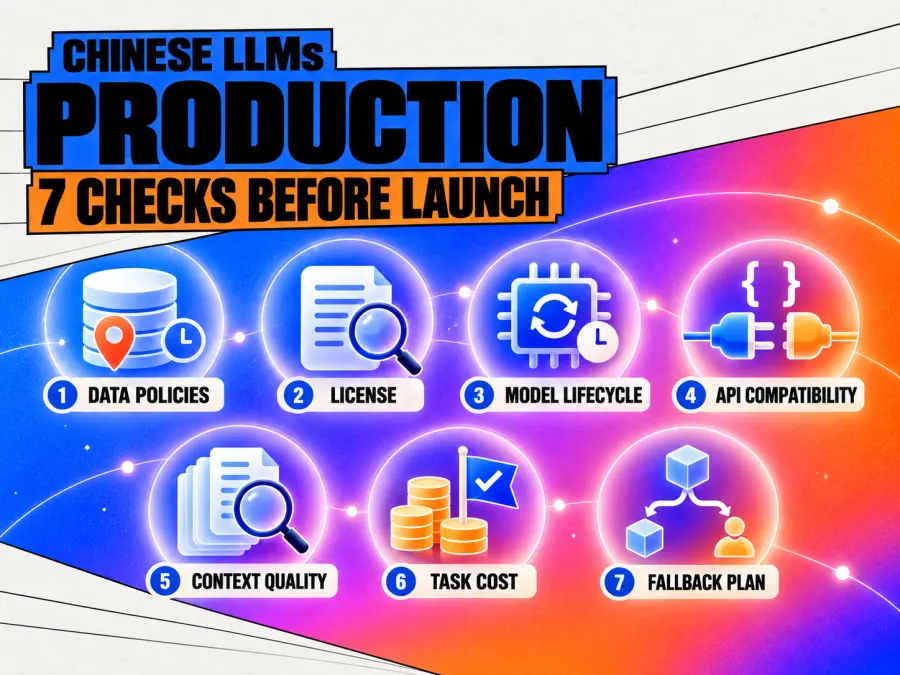
What to Check Before Putting a Chinese LLM Into Production
1. Data residency and retention
Confirm where prompts are processed, how long logs are retained, whether data is used for training, and which terms apply when a gateway sends the request upstream. Do this for the exact route, not merely the provider’s home jurisdiction.
2. The exact license
Separate three agreements: hosted API terms, downloadable-weight license, and any application-specific policy. GLM-5.3, Kimi K3, MiniMax M3, and Hy4 Preview do not share one “Chinese open-source license.”
3. Model lifecycle
Record the model ID returned by the page or models endpoint. Monitor retirement notices and alias changes. DeepSeek’s older V4 Flash and Vision Exp names can route to V4.1 Flash; ByteDance retired earlier Seed 2.0 routes. Silent behavior changes are more dangerous than an obvious 404.
4. Compatibility beyond the request shape
Test multi-turn reasoning fields, tool-call arguments, structured JSON, streaming termination, usage accounting, and error codes. The DeepSeek issue above shows why preserving reasoning history can matter. A separate Kimi K3 issue records repeated tool-call reports. These are test leads, not verdicts on every request.
5. Effective context, not advertised context
A 1M-token limit tells you what a route accepts. It does not prove equal retrieval quality at token 10,000 and token 900,000. Test where the necessary evidence appears, how output quality changes, and whether retrieval is cheaper than sending the full source set.
6. Cost per completed task
Track input, cached input, reasoning, output, retries, timeouts, invalid tools, and human correction. A model charging twice as much per output token can still be cheaper if it finishes in one pass.
7. Fallback behavior
Define what triggers a retry, a smaller model, a stronger model, or a human review. Put a hard ceiling on tool iterations and duplicate calls. A fallback is part of the application, not a property the model supplies for you.
Final Verdict
Alibaba/Qwen is the best Chinese LLM provider overall in 2026. Its combination of model quality, international Model Studio access, family breadth, and community ecosystem is the strongest default package.
The scenario winners differ. Choose DeepSeek for a value-first API starting point, Z.ai/GLM for open-weight coding and agents, Moonshot/Kimi for premium difficult tasks, MiniMax for a multimodal provider portfolio, and Tencent/Hunyuan for an open long-context model in the Tencent stack. ByteDance, Xiaomi, and Baidu remain credible choices when their ecosystems match the deployment.
Do not select from the ranking alone. Take two or three finalists, run the same real tasks, and measure accepted results. For the six providers available through GPT Proto, one key makes that initial comparison faster. The evidence from your own workload should make the final decision.