Defining the Vibe Coding Revolution
We are standing at the precipice of a new era in technology, one where the barrier between a human idea and a digital reality is thinner than ever before. This shift is best described by the term Vibe Coding. Unlike traditional programming, which demands a mastery of complex languages and syntax, Vibe Coding relies on natural language, context, and intent. It is the process of telling a computer not just what to do, but what you want to achieve and how you want it to feel.
For decades, software development was an exclusive club. To build a tool, you needed to speak the machine's language—C++, Python, or JavaScript. If you couldn't write the code, your idea remained just an idea. Vibe Coding dismantles this gatekeeping. It empowers the machine to understand human language, effectively turning every conversation into a potential compilation process. The user supplies the vision—the "vibe"—and the AI handles the heavy lifting of engineering.
This is not merely a faster way to write code; it is a fundamental reimagining of the creation process. By abstracting away the tedious mechanics of syntax, Vibe Coding allows creators to focus entirely on the logic and the user experience. It creates a direct pipeline from the brain to the browser, fostering a level of creativity that was previously stifled by technical limitations.
The Democratization of Software Creation
To understand the magnitude of Vibe Coding, we must look at parallel industries. Consider what digital cameras and YouTube did for video production. Before them, video was the domain of professional studios with expensive equipment. Afterward, anyone with a smartphone became a broadcaster. Vibe Coding is the "YouTube moment" for the software industry.
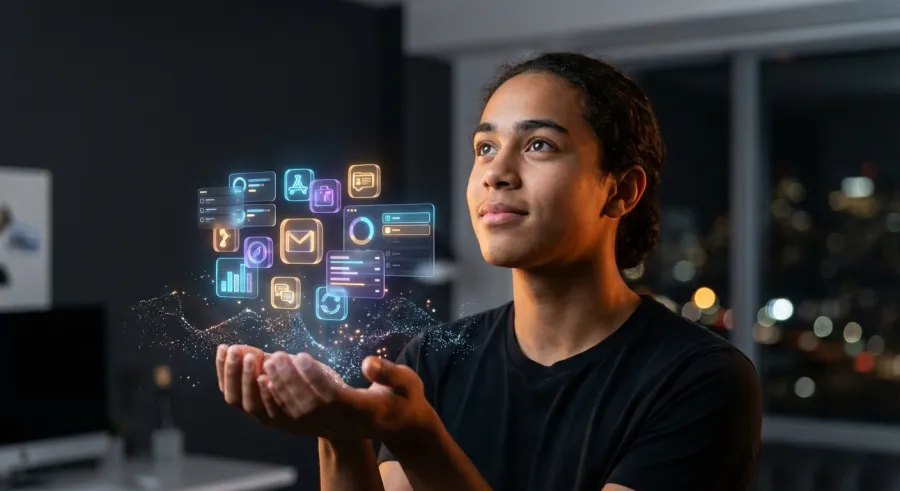
We are moving from a world where software is produced by large engineering departments to a world where it is created by individuals to solve immediate, personal problems. This democratization means that the definition of a "developer" is expanding. A teacher creating a custom quiz app for their class is using Vibe Coding. A baker building a specific inventory tracker for their unique ingredients is using Vibe Coding.
This shift leads to the rise of hyper-personalized software. In the past, we relied on mass-market SaaS (Software as a Service) products designed to satisfy the average user. These tools were often bloated, containing features we didn't need while lacking the specific nuance we craved. Vibe Coding allows for the creation of "micro-apps"—disposable, bespoke tools tailored to a single user's context for a specific moment in time.
Disrupting the Traditional SaaS Model
The implications of Vibe Coding for the traditional software market are profound. The current economic model of SaaS relies on retention, long-term subscriptions, and vendor lock-in. Companies build "moats" around their products to keep users inside their walled gardens. However, Vibe Coding renders these walls permeable.
Why would a user pay a monthly subscription for a generic project management tool when they can use Vibe Coding to generate a tailored workflow manager in minutes? The value proposition of standalone, single-function apps is collapsing. If a utility can be replicated by a simple prompt, its market value approaches zero. The power is shifting from the tool providers to the infrastructure providers.
To survive in a Vibe Coding world, modern platforms must evolve. They cannot just offer a static interface; they must offer the raw materials—the APIs and data connectors—that allow users to build their own experiences. The successful platforms of the future will be those that facilitate Vibe Coding rather than resisting it.
Infrastructure: The Backbone of Vibe Coding
While the concept of Vibe Coding is magical, the reality requires robust infrastructure. Generating functional software on the fly demands intense computational power and constant communication with high-performance Large Language Models (LLMs). For an individual creator, the costs of these API calls can quickly become prohibitive, acting as a new barrier to entry.
This is where solutions like GPT Proto become critical. By acting as a unified interface for AI development, GPT Proto addresses the economic challenges of Vibe Coding. It optimizes the connection between the user's intent and the model's execution, slashing API costs by up to 60%. This efficiency is vital because Vibe Coding is inherently iterative.
When you are "vibing" with an AI to build an app, you don't just prompt once. You iterate, refine, and tweak. You might ask the model to "make the button pop more" or "change the logic for the Tuesday report." Each interaction consumes tokens. Without cost-effective infrastructure like GPT Proto, the Vibe Coding workflow becomes too expensive for the average user. Furthermore, by aggregating access to models from OpenAI, Google, and Anthropic, GPT Proto allows developers to route specific tasks to the most capable model, ensuring the best possible output.
Software as Content: A New Paradigm
As Vibe Coding matures, we are witnessing the emergence of "Software as Content." Just as we scroll through feeds of videos, images, and tweets, we will soon browse feeds of functional micro-apps. Software is becoming a medium for expression rather than just a utility.
Imagine an influencer sharing a workout routine. Currently, they might post a video or a PDF. In the near future, they will share a link to a custom workout tracker they built using Vibe Coding. Their followers can clone this app, tweak the "vibe" to match their own fitness level, and start using it immediately. The app becomes the message.
This transition removes the friction of distribution. Vibe Coding enables the instant sharing of logic and functionality. Communities will form not just around shared interests, but around shared tools that they collectively refine and evolve. In this ecosystem, the ability to articulate a clear vision—to define the vibe—becomes the most valuable skill.
Evolution of Input: Voice and Context
If the goal of Vibe Coding is to capture human intent with high fidelity, the traditional keyboard and mouse may be insufficient. Typing is slow and often fails to convey emotional nuance. Consequently, we are seeing a resurgence in advanced input methods, specifically voice-to-code interfaces, as the primary driver for Vibe Coding.
Voice is a high-bandwidth channel for conveying "vibes." When we speak, we naturally include context, urgency, and tonal preferences that text prompts often lack. Advanced AI models are learning to interpret these acoustic cues, translating a frustrated sigh or an excited pitch into specific design decisions within the code.
The future input method for Vibe Coding will likely be an omnipresent assistant that lives across your operating system. It will understand your historical data, your writing style, and your current project goals. When you say, "Build me a dashboard for this project," the AI won't just build a generic dashboard. It will use Vibe Coding principles to build your dashboard, populated with the data you care about, styled in a way you find pleasing, and structured to answer the questions you usually ask.
Architecting Malleable Software
The rise of Vibe Coding necessitates a change in how we architect software systems. We are moving away from monolithic, static applications toward a "malleable software" model. In this framework, the user interface is not a fixed asset but a dynamic suggestion that can be reshaped in real-time.
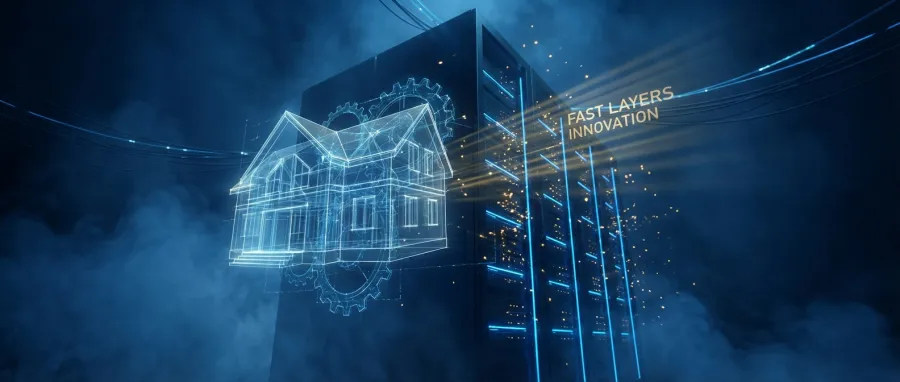
This architecture relies on a strict separation of concerns. The foundational layers—database integrity, security protocols, and core APIs—must remain stable and robust ("slow layers"). However, the presentation layer and the specific business logic ("fast layers") become fluid, generated on demand via Vibe Coding.
Stewart Brand's concept of shearing layers in buildings is perfectly applicable here. Just as a building has a structure that lasts centuries and furniture that moves daily, software must have a solid core and a fluid interface. Vibe Coding operates in the fluid layers, constantly rearranging the digital furniture to suit the user's immediate needs without compromising the structural integrity of the system.
The User Experience of Vibe Coding
Designing for a Vibe Coding world means moving beyond the simple chat interface. While text prompts are the current standard, they can be limiting. Developers and UX designers are exploring new ways to make the interaction more tactile and intuitive.
We are beginning to see the introduction of "qualitative sliders" in AI tools. Instead of typing a prompt to change a design, a user might drag a slider labeled "Professional" vs. "Playful." The Vibe Coding engine interprets this input and adjusts the code accordingly. This allows for rapid, intuitive adjustments that feel more like tuning an instrument than writing a program.
Another key element is "interactive latency." Large models take time to think. In a Vibe Coding workflow, this pause shouldn't be a blank screen. It is an opportunity for the AI to ask clarifying questions. "You asked for a chart, but did you mean a bar graph or a pie chart?" This active inference turns the delay into a productive part of the creation process, ensuring the final output matches the user's intent.
Economic Efficiency and Workflow
The economic viability of Vibe Coding hinges on the cost of intelligence. Unlike traditional search, which is effectively free for the user, generative coding costs money for every token generated. For Vibe Coding to become the standard, the return on investment for these tokens must be high.
| Metric |
Traditional Development |
Vibe Coding (Standard) |
Vibe Coding (with GPT Proto) |
| Time to Market |
Weeks or Months |
Hours |
Minutes |
| Development Cost |
$$$ (Developer Salaries) |
$$ (High API Usage) |
$ (Optimized API Cost) |
| Flexibility |
Low (Rigid Codebase) |
High (Iterative) |
Maximum (Continuous Iteration) |
Efficient Vibe Coding requires smart routing. Not every task needs the smartest, most expensive model. A simple UI tweak can be handled by a smaller, cheaper model, while complex logic generation requires a flagship LLM. Platforms like GPT Proto automate this decision-making process, ensuring that developers can maintain a high-frequency Vibe Coding workflow without blowing their budget.
The Trust Gap in AI Development
Despite its potential, Vibe Coding faces a significant hurdle: trust. If an AI writes the code, how can the user be sure it is secure, efficient, and bug-free? The "black box" nature of LLMs can be unsettling for mission-critical applications.
Overcoming this requires transparency and sandboxing. Vibe Coding platforms must provide safe environments where generated code can be tested without risk to the core system. Furthermore, the AI must prove its reliability over time. As a user engages in Vibe Coding, the system learns their specific preferences and standards.
Eventually, the trust gap closes through personalization. When the AI stops making generic guesses and starts anticipating your specific needs based on past Vibe Coding sessions, it transitions from a tool to a partner. The goal is a symbiosis where the user trusts the AI's execution, and the AI accurately interprets the user's vibe.
Strategic Implications for Startups
For startups, the Vibe Coding revolution presents both a massive opportunity and an existential threat. The barrier to entry for building a software product has never been lower. However, this means that competitors can arise overnight. The competitive advantage is no longer the software itself.
In a Vibe Coding ecosystem, the true moat is data and user experience. Startups must build "Vibe-to-Value" pipelines—workflows that allow users to get value from the product faster than anyone else. It is not about providing a finished tool; it is about providing the best environment for users to build their own tools.
Startups that position themselves as "possibility providers" will thrive. They will offer the sturdy foundations upon which users can exercise Vibe Coding to construct their digital homes. Those that try to lock users into rigid workflows will find themselves outpaced by flexible, AI-driven alternatives.
Conclusion: The Future is Fluid
The transition to Vibe Coding is more than just a technological upgrade; it is a cultural shift in how we relate to machines. We are moving from a command-and-control relationship to a collaborative partnership. This evolution promises to unleash a wave of creativity and productivity by making software development accessible to billions.
However, this future relies on accessibility and infrastructure. Tools that democratize access to powerful models—like the cost-optimized API solutions from GPT Proto—are the unsung heroes of this movement. They ensure that the power of Vibe Coding is not reserved for the few but is available to anyone with an idea.
Whether you are a seasoned engineer looking to multiply your output or a creative thinker with no coding experience, Vibe Coding invites you to participate in the creation of the digital world. The only limit remaining is the clarity of your intent. The future of software is not written in code; it is spoken in vibes.
Original Article by GPT Proto
"We focus on discussing real problems with tech entrepreneurs, enabling some to enter the GenAI era first."