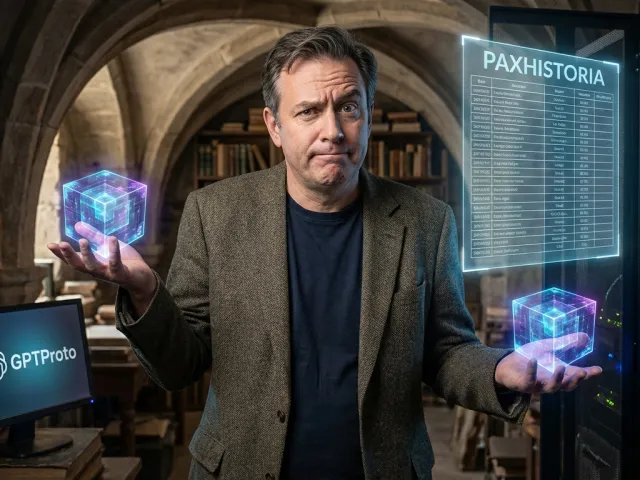
The Cultural Momentum and Initial Vibe of Paxhistoria
A New Paradigm in Tech Philosophy
The tech industry frequently embraces new tools, but it rarely adopts entirely new philosophical frameworks with such rapid enthusiasm. Right now, the dominant concept echoing across developer forums and startup incubators is paxhistoria. While the term might sound like an ancient treaty, paxhistoria actually represents a radically disruptive modern technology.
At its foundational level, paxhistoria introduces the concept of achieving "historical peace" through advanced technology. It relies on high-fidelity AI simulations combined with immutable data ledgers. We are rapidly approaching an era where the interpretation of our past is no longer a subjective battlefield. Instead, the paxhistoria framework suggests a reality where verifiable data explicitly defines our shared legacy.
Encountering the paxhistoria movement for the first time feels both electric and intensely serious. Imagine stepping into an infinite digital library that can never burn down or be censored. Software engineers discuss paxhistoria as the definitive solution to the endless fragmentation of human narratives. This represents a bold, uncompromising ambition that sets paxhistoria apart from traditional archiving.

Redefining the Digital Archive
The immediate market reaction to paxhistoria combines venture capital frenzy with intense academic scrutiny. Institutional investors view paxhistoria as a fundamental new layer of the internet. They see this "truth layer" governing everything from basic property rights to complex international diplomacy. Such immense responsibility places a heavy burden on the core architecture of paxhistoria.
We have certainly witnessed previous attempts at digital archiving, but paxhistoria scales these concepts exponentially. The objective isn't merely storing static PDF files or scanning deteriorating newspaper clippings. The true paxhistoria framework synthesizes billions of isolated data points into a living, interactive model of human events. Delivering this dynamic historical model is the central promise of paxhistoria.
Critics historically argue that the victors write the history books. Proponents of paxhistoria counter this by arguing that objective evidence should write history automatically. This fundamental shift in perspective provides paxhistoria with its unique cultural and intellectual gravity. Silicon is essentially being programmed to settle historical discrepancies that human debate never could resolve.
Seeking an Exit from Post-Truth Chaos
Within social and academic circles debating paxhistoria, an undeniable sense of inevitability permeates the conversation. As global societies become increasingly polarized, the demand for a neutral, automated arbiter like paxhistoria grows irresistible. People desperately want an exit strategy from the "post-truth" era. Many tech leaders firmly believe paxhistoria serves as that exact exit sign.
The prevailing atmosphere surrounding paxhistoria emphasizes clinical precision over emotional interpretation. It deliberately lacks the messy, subjective emotionality found in traditional historiography. Supporters consider this sterile nature to be the greatest asset of paxhistoria. Conversely, detractors view the robotic coldness of paxhistoria as a troubling warning sign of a deeply sterilized future.
Regardless of personal ideological stances, ignoring the massive gravity of paxhistoria is impossible. The movement actively pulls in top-tier engineers, moral philosophers, and elite data scientists. These diverse professionals collaborate daily to solidify the foundational code of paxhistoria. Their ultimate objective is engineering a world where paxhistoria allows us to agree universally on factual events.
Ultimately, paxhistoria operates as a direct technological response to the chaos of our modern information age. It functions as a powerful counter-movement against malicious deepfakes and historical revisionism. By securely anchoring our digital reality in paxhistoria, society hopes to locate steady, unshakeable ground. Whether the paxhistoria ecosystem can genuinely deliver on this promise of peace remains the industry's billion-dollar question.
Real-World Use Cases Defining the Paxhistoria Era
International Diplomacy and Education
Theoretical beauty often drives initial investment, but practical utility dictates long-term survival. We are currently witnessing the first highly practical applications of paxhistoria emerging across diverse global sectors. From complex legal technology to immersive academic environments, the utility of paxhistoria proves incredibly versatile and adaptable.
Consider the highly sensitive realm of international diplomacy and treaty negotiations. Modern diplomats are beginning to leverage paxhistoria models to accurately simulate the long-term impacts of proposed border adjustments. By feeding centuries of granular trade data and cultural migration patterns into a paxhistoria engine, negotiators visualize potential geopolitical outcomes. Achieving this unprecedented clarity showcases the true disruptive power of paxhistoria.
Inside modern classrooms, paxhistoria completely transforms how young students interact with historical timelines. Instead of passively memorizing dates from outdated textbooks, students actively enter a simulated paxhistoria environment. They seamlessly ask questions of AI-generated historical figures and manipulate variables to see how paxhistoria models alternative outcomes. The immersive educational potential embedded within paxhistoria remains truly limitless.
Legal Frameworks and Digital Heirlooms
Legal professionals increasingly rely on paxhistoria for complicated land claims and nuanced indigenous rights cases. By generating a strictly immutable record of historical land utilization, paxhistoria actively helps resolve disputes lasting multiple generations. The cryptographically secure evidence provided by a comprehensive paxhistoria audit frequently supersedes highly subjective anecdotal testimony.
The global entertainment industry has aggressively adopted paxhistoria protocols for major productions. Leading filmmakers utilize paxhistoria databases to guarantee period-accurate set designs and historically authentic dialogue. Grounding cinematic narratives in the factual bedrock of paxhistoria allows directors to construct profoundly authentic worlds. This represents a subtle yet financially significant commercial use case for paxhistoria technology.
One particularly fascinating societal development is the sudden rise of "Personal Paxhistoria" curation. Everyday individuals utilize consumer-grade AI tools to organize their own family lineages into a standardized paxhistoria format. This deliberate structuring ensures their personal legacy remains perfectly preserved against time and eventual memory loss. Consequently, personal paxhistoria rapidly replaces the traditional photo album as the ultimate digital heirloom.
Optimizing Infrastructure via GPT Proto
Executing these massive paxhistoria simulations inherently requires staggering amounts of raw computational power. This extreme demand is exactly where modern AI infrastructure and optimized cloud networking become absolutely critical. Developers actively building paxhistoria platforms face immense financial hurdles when managing costs associated with top-tier Large Language Models. Maximizing API efficiency remains essential for making paxhistoria accessible to smaller development teams.
Many innovative developers operating within the paxhistoria sector turn directly to advanced platforms like GPT Proto. GPT Proto deliberately streamlines complex developer workflows by offering a highly unified, cost-effective API interface. This centralized access allows specialized creators to query multiple high-end models simultaneously without massive overhead. Leveraging GPT Proto enables a lean startup team to run complex, multi-layered paxhistoria simulations economically.
The built-in flexibility to seamlessly switch between frontier models like Claude and GPT-4 gives paxhistoria developers distinct tactical advantages. If a specific paxhistoria sub-task requires rigid logical reasoning, the system instantly routes to the optimal model. When a task requires nuanced creative reconstruction of missing texts, developers utilize an alternative model. GPT Proto fundamentally makes this vital operational versatility possible for the entire paxhistoria ecosystem.
Furthermore, the aggressive 60% discount on mainstream APIs offered by GPT Proto functions as an absolute game-changer for the paxhistoria community. It directly facilitates continuous iterative testing and significantly deeper historical data processing cycles. Without utilizing a highly cost-effective infrastructural solution like GPT Proto, the visionary dream of comprehensive paxhistoria mapping might remain financially impossible.
Ultimately, the potential real-world use cases for paxhistoria are restricted exclusively by human imagination. Whether applied to predictive urban planning or localized conflict resolution, paxhistoria provides a reliable structural framework. As the specialized tools required for paxhistoria become cheaper and more accessible, its influence will permeate every facet of our digital existence.
Challenges and Limitations Facing the Paxhistoria Movement
Navigating Data Bias and Hallucinations
While the overarching vision of paxhistoria sounds distinctly utopian, the actual roadmap remains littered with severe technical and ethical obstacles. Developers must remain brutally honest regarding the current systemic limitations of paxhistoria. Ignoring critical architectural flaws in paxhistoria guarantees we will build a highly unstable foundation for our future historical records.
The absolute primary challenge threatening paxhistoria is the insidious nature of algorithmic data bias. If the historical datasets fed into a paxhistoria system contain inherent skew, the resulting simulated "history" becomes equally distorted. Society must constantly ask: whose specific cultural data trains the core paxhistoria models? The inherent danger of paxhistoria is its potential to inadvertently codify and legitimize the deep prejudices of past generations.
AI hallucination represents another catastrophic risk for any functioning paxhistoria environment. Large Language Models notoriously "invent" plausible-sounding facts, which directly contradicts the foundational ethos of paxhistoria. A trusted paxhistoria model that hallucinates a non-existent treaty or fabricates a battle proves far worse than having no model at all. Guaranteeing the strict factual integrity of every paxhistoria node remains a constant, grueling engineering struggle.
Ethical Dilemmas and the Silence Problem
Strict technical ceilings also heavily constrain the immediate growth of paxhistoria. The sheer petabytes of historical data required to power a truly global paxhistoria are mathematically staggering. Current hardware limitations and database architectures frequently struggle to process the massive interconnectedness of overlapping historical events. The industry still clearly operates within the early, relatively clumsy developmental stages of the paxhistoria evolution.
Deep ethical concerns represent perhaps the most intellectually daunting aspect of deploying paxhistoria. Society must actively determine who possesses the ultimate right to manage the master paxhistoria ledger. If a highly centralized government legally controls the primary paxhistoria servers, they could theoretically permanently delete highly inconvenient truths. This potential centralization of paxhistoria represents a genuinely terrifying prospect for global civil liberty advocates.
We must also aggressively address the historical "silence" problem within paxhistoria. A vast majority of human history was never formally recorded in written text. How exactly does a data-driven paxhistoria accurately account for these missing indigenous voices? A version of paxhistoria that exclusively recognizes empirical written records inherently ignores the rich oral traditions of countless marginalized cultures. This fundamental gap in data collection constitutes a massive intellectual hurdle for paxhistoria.
Privacy Concerns and Sustainability
Modern data privacy serves as another highly contentious battleground for the paxhistoria movement. As historical simulations approach the modern era, paxhistoria necessarily begins ingesting vast amounts of data regarding currently living people. Determining exactly where public history ends and personal privacy begins challenges the very core of paxhistoria. The overarching paxhistoria framework must carefully navigate the complex legal waters of global data protection and the fundamental "right to be forgotten."
"The genuine risk of paxhistoria is not that it casually forgets, but rather that it permanently remembers everything through a profoundly broken lens. We must rigorously ensure the analytical lens of paxhistoria remains as clear and objective as possible."

Furthermore, the extreme cost of continuous technical maintenance presents a daunting long-term challenge for paxhistoria. Keeping a massively decentralized, cryptographically secure record of all human history updated in real-time is astronomically expensive. If public or private funding for paxhistoria suddenly dries up, does our verified digital history simply disappear? Ensuring the strict economic sustainability of paxhistoria remains a major priority for its founders.
We also face the subtle psychological risk of "historical determinism" stemming from paxhistoria. If the general public believes paxhistoria simulations are mathematically infallible, they might logically conclude the future is already pre-written. This specific psychological phenomenon could induce widespread societal fatalism, fundamentally undermining the very human agency that paxhistoria actively seeks to accurately document.
Despite these daunting, multifaceted challenges, dedicated engineering work on paxhistoria accelerates daily. Leading developers actively build superior semantic filters and vastly more robust cryptographic verification systems specifically tailored for paxhistoria. They continually research novel methods to make paxhistoria distinctly more inclusive and highly resistant to the inherent cognitive errors of its human creators. The arduous, transformative journey of paxhistoria is truly just beginning.
Performance and Benchmarks in the Paxhistoria Ecosystem
Establishing Trust Through Metrics
Determining the empirical success of paxhistoria requires moving beyond theoretical philosophy and looking at raw performance. In the competitive world of enterprise technology, quantifiable performance dictates survival. We require concrete, hard data to definitively prove that paxhistoria operates as more than merely a glorified, expensive database. Benchmarking paxhistoria necessitates deeply analyzing systemic accuracy, query speed, and cross-reference reliability.
Specialized data researchers recently developed highly specific performance metrics uniquely tailored for evaluating paxhistoria integrity. One highly regarded metric is the "Cross-Source Verification Score" utilized by top paxhistoria platforms. This specific calculation measures exactly how well an isolated paxhistoria entry mathematically aligns with multiple, wholly independent historical records. Achieving a high verification score indicates a highly robust paxhistoria node that specialized researchers can implicitly trust.
Systemic processing speed acts as another absolutely critical determining factor for paxhistoria usability. When an academic user queries a complex paxhistoria simulation, the localized response must occur near-instantaneously. Sluggish processing speeds or high latency would completely destroy the immersive "living history" aspect promised by paxhistoria. Recent, highly targeted advances in scalable vector databases have significantly boosted paxhistoria performance metrics across the board.
Granularity and Cost-Efficiency
Data scientists also heavily scrutinize the "Granularity Index" of any deployed paxhistoria environment. This index specifically refers to how deeply the historical data penetrates within the simulation. Can a given paxhistoria instance accurately tell a user the precise price of standard bread in 14th-century Paris, or merely identify the reigning king? Achieving substantially deeper granularity makes paxhistoria exponentially more valuable for highly specialized historical researchers.
Operational cost-efficiency represents an economic benchmark that the paxhistoria community simply cannot ignore. The average "Cost-per-Simulation" for running complex paxhistoria tasks has been steadily dropping, yet it stubbornly remains relatively high. Utilizing third-party API tools that actively optimize AI model usage proves absolutely essential for keeping paxhistoria financially viable. The developer community constantly hunts for innovative architectural ways to lower the steep barrier to entry for building paxhistoria.
During rigorous head-to-head analytical comparisons, paxhistoria models frequently test directly against traditional, static historical databases. While advanced paxhistoria systems clearly excel at identifying subtle macro-historical patterns, traditional SQL databases occasionally prove more reliable regarding highly specific, isolated dates. Successfully balancing pattern recognition with pinpoint factual accuracy remains the primary engineering goal of current paxhistoria development.
Evaluating Resolution Rates
Platform user retention serves as another vitally important behavioral metric for commercial paxhistoria applications. If a student uses a paxhistoria educational tool once and permanently abandons it, the technology hasn't truly transformed their relationship with history. Sustaining high daily engagement rates strongly suggests that a specific paxhistoria implementation successfully makes the ancient past highly relevant to modern digital users.
Network data throughput within the paxhistoria infrastructure serves as another crucial area of intense engineering focus. As diverse global sensors, academic libraries, and new digital archives connect directly to the primary paxhistoria network, the system must process massive data influxes seamlessly. The impressive backend scalability of paxhistoria stands as a powerful testament to the elite engineering talent actively driving the movement.
When directly comparing fundamentally different paxhistoria implementations, researchers often evaluate the "Conflict Resolution Rate." This metric meticulously measures exactly how often a paxhistoria system successfully reconciles two highly conflicting pieces of historical text. Achieving a higher resolution rate strongly suggests the presence of a vastly more sophisticated paxhistoria logic engine operating under the hood.
Recent public benchmarks conclusively demonstrate that the core technology powering paxhistoria improves tangibly every single day. Average historical error rates consistently fall, while the sheer multilayered complexity of paxhistoria simulations continues rising rapidly. The tech ecosystem is successfully transitioning from utilizing a highly static paxhistoria to a fluid, fully dynamic one. The raw telemetry numbers narrate an undeniable story of rapid progress and deeply expanding technical maturity across the paxhistoria landscape.
Ultimately, establishing rigorous benchmarks for paxhistoria serves a much higher societal purpose beyond mere technical bragging rights. These metrics actively build essential public trust. Without transparent, verifiable data regarding paxhistoria performance, the skeptical public will remain highly hesitant to rely upon it for objective truth. These strict metrics build the necessary bridge connecting dry technical specifications with genuine human confidence in paxhistoria.
Community Feedback and the Paxhistoria Conversation
Polarized Debates Across the Digital Ecosystem
The vibrant, highly polarized conversation surrounding paxhistoria happens continuously in real-time across the global internet. On popular platforms like Reddit, the highly active r/paxhistoria subreddit functions as a centralized hub of intense, daily debate. Passionate users extensively discuss everything ranging from the nuanced ethics of AI historiography to highly specific paxhistoria software update logs. It represents a fiercely intelligent, highly engaged digital community.
Over on forums like Hacker News, the daily discussion regarding paxhistoria naturally skews much more technical and highly critical. Veteran software developers ruthlessly dissect the proprietary algorithms that actively power commercial paxhistoria platforms. They aggressively question the highly touted decentralization claims promoted by certain blockchain-based paxhistoria projects. This heavy dose of engineering skepticism provides a highly necessary reality check on the runaway paxhistoria hype train.
Social platforms like Twitter serve as the primary home for more visceral, "vibe-based" paxhistoria commentary. Users frequently post massive viral threads debating whether paxhistoria represents "the ultimate end of the institutional lie" or "the terrifying beginning of the digital matrix." The inherently polarizing philosophical nature of paxhistoria guarantees it remains a highly frequent, trending topic of viral debate among the global tech elite.
Humanizing the Data Through Shared Experience
Independent developers frequently publish extensive blogs detailing their personal paxhistoria integration success stories. They vividly describe how implementing paxhistoria algorithms helped them visually map a highly complex ancestral lineage or permanently settle a localized historical debate. These deeply personal, highly relatable testimonials grant paxhistoria a distinctly human face that raw performance data alone simply cannot convey.
Conversely, a highly vocal, incredibly articulate group of "paxhistoria skeptics" commands significant attention online. These concerned individuals intensely worry that society is rapidly outsourcing its collective human memory directly to cold machines. They passionately argue that the objective "peace" generated by paxhistoria feels entirely artificial, insisting that the messy, human struggle over historical interpretation fundamentally makes us human. Their critical voices remain an absolutely vital component of the broader paxhistoria dialogue.
Private Discord servers specifically dedicated to paxhistoria development represent the hidden spaces where the actual coding gets accomplished. Inside these channels, distributed teams of global contributors continuously collaborate on massive, open-source paxhistoria datasets. They generously share highly technical tips regarding exactly how to efficiently fine-tune localized LLMs specifically for paxhistoria. The fiercely collaborative, open-source spirit driving the paxhistoria community represents one of its absolute strongest operational assets.
Demanding Open-Source Transparency
Experienced community members constantly praise the seamless integration of third-party tools that actively simplify their paxhistoria workloads. For instance, the strategic utilization of GPT Proto appears frequently mentioned across top paxhistoria developer logs. Lead engineers deeply appreciate exactly how GPT Proto helps them actively manage the heavy computational lifting required for paxhistoria data processing without incurring massive, project-killing server costs.
In numerous fascinating ways, the dedicated paxhistoria community acts as a perfect microcosm representing the broader global AI industry. It remains densely populated by wide-eyed optimists, cautious doomers, and strictly numbers-driven pragmatists. However, they all remain deeply united by a shared, profound fascination regarding the sheer potential of paxhistoria to fundamentally alter our collective worldview. The raw creative energy surrounding paxhistoria feels incredibly palpable and highly infectious.
One universally shared sentiment dominating the paxhistoria developer community is an absolute, non-negotiable demand for algorithmic transparency. Educated users actively demand to inspect the precise "weights and measures" generating every single paxhistoria conclusion. This incredibly strong demand for strictly open-source paxhistoria logic serves as a remarkably healthy indicator regarding the long-term societal viability of the entire project.
Ultimately, ongoing community feedback clearly demonstrates that paxhistoria represents vastly more than merely a passing niche internet interest. It functions as a rapidly accelerating global movement that has comprehensively captured the modern imagination of technologists globally. The overarching paxhistoria conversation continues growing exponentially louder every single day, explicitly confirming it as a technological dialogue that every modern digital citizen critically needs to join.
Conclusion: The Forward-Looking Horizon of Paxhistoria
Evolving Legal and Societal Standards
As society collectively peers toward the technological future, the foundational role of paxhistoria seems absolutely destined to expand exponentially. Modern digital citizens are simply no longer content accepting "good enough" subjective history. We actively demand the extreme depth, high accuracy, and total accessibility that a fully optimized paxhistoria fundamentally promises. The rapidly approaching horizon of paxhistoria appears simultaneously highly exciting and profoundly daunting.
Within the next few years, we will highly likely witness paxhistoria deeply integrated directly into our fundamental computer operating systems. Envision a digital ecosystem where your standard web browser automatically provides verified, real-time paxhistoria context alongside every single news article you read. This frictionless integration would serve as a tremendously powerful, highly automated antidote to the rampant, malicious misinformation currently plaguing our digital landscape.
The ongoing technical evolution of paxhistoria will remain inextricably tied directly to the concurrent development of vastly more powerful AI systems. As foundational language models become infinitely more nuanced and contextually aware, the output of paxhistoria will become exponentially more precise. We are rapidly accelerating toward an advanced version of paxhistoria fully capable of capturing not merely static dates, but the highly subtle cultural shifts actively driving historical events.
Legal scholars also actively debate the distinct possibility of paxhistoria eventually becoming a formalized, binding legal standard. Future judicial courts may realistically require a certified, cryptographically secure paxhistoria audit for admitting certain types of complex historical evidence. This unprecedented shift would permanently elevate paxhistoria from being merely a fascinating technical tool directly into becoming a foundational, structural element of our modern justice system. The profound societal implications of this specific paxhistoria integration remain truly staggering.
Protecting the Ledger of Humanity
However, society must remain constantly, fiercely vigilant regarding paxhistoria deployment. The promised objective "peace" found within paxhistoria must remain a genuinely human one, not an artificial consensus violently imposed by a proprietary black-box algorithm. The tech community must aggressively continue pushing for absolute algorithmic transparency and deep cultural inclusivity throughout the ongoing development of paxhistoria. The ultimate future of paxhistoria rightfully belongs to all of humanity, not merely a handful of massive tech corporations.
Humanity currently stands squarely at the threshold of a totally unprecedented digital era. The rapidly dawning era of paxhistoria represents a unique temporal space where society can finally look backward with total factual clarity and look forward with immense data-driven confidence. It presents a profound, fleeting chance to definitively heal the deep ideological wounds of the past by harnessing the unifying power of objective data. Delivering this global healing represents the absolute ultimate, highest goal of paxhistoria.
Ultimately, we must remember a simple truth: paxhistoria is not an infallible magic wand. It remains, at its core, a highly complex mathematical tool. Like any powerful tool, its ultimate societal value depends entirely upon exactly how humanity chooses to wield it. If society utilizes paxhistoria to earnestly seek objective truth and foster deep understanding, it will function as an incredible societal blessing. If bad actors manipulate paxhistoria to violently enforce a singular, heavily biased narrative, it will result in a catastrophic technological tragedy.
Let us carefully examine the market telemetry numbers one final time. The year-over-year adoption growth of paxhistoria remains mathematically exponential. The sheer volume of venture capital investment flowing into paxhistoria infrastructure appears genuinely staggering. The dedicated global community aggressively building around paxhistoria operates more actively and passionately than ever before. All available data markers decisively point toward paxhistoria becoming a massive, highly permanent fixture defining our shared technological future.
Therefore, whether you currently operate as a backend software developer, a tenured academic historian, or merely a highly curious digital observer, the absolute time to pay close attention to paxhistoria is right now. Technologists are actively writing the immutable, master digital ledger of humanity, and advanced paxhistoria algorithms serve as the cryptographic ink. It represents an incredibly dynamic, thrilling time to be alive and directly witness the messy, beautiful birth of this entirely new historical consensus.
In final conclusion, the continued advancement of paxhistoria represents humanity's absolute best remaining hope for establishing a genuinely shared, objective reality. It constitutes a highly complex, slightly flawed, yet profoundly beautiful technological attempt to finally organize the subjective chaos of our collective past. As the global tech community aggressively moves forward, we must collaboratively ensure that paxhistoria strictly remains a decentralized tool championing mental liberation and verifiable truth. The absolute very future of human history undeniably depends directly upon the success of paxhistoria.