The Sudden Rise of Nano Banana in the Creative World
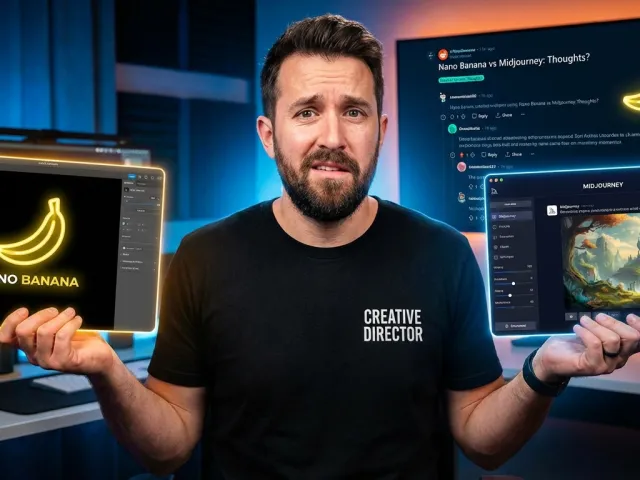
Technology moves at a breakneck speed that often leaves us breathless. Just when we think we have mastered one tool, another emerges. Recently, a specific name has been circulating through the digital hallways of Reddit and Discord. That name is Nano Banana, a tool redefining visual creation.
At its core, Nano Banana represents a new wave of generative art. It is not just another filter or a simple photo editor. Instead, it is a sophisticated engine capable of interpreting human imagination. Designers and hobbyists alike are currently grappling with its immense potential and its curious quirks.
The conversation surrounding Nano Banana is polarized but passionate. Some see it as the ultimate partner for creative directors. Others view it as a disruptive force that challenges the very definition of artistry. Regardless of where you stand, ignoring its influence is no longer an option in today's market.
To understand the impact of Nano Banana, we must look at the current landscape. We are living in a post-photographic era where the line between reality and pixels is blurring. This tool is at the absolute forefront of that shift, offering realism that was previously thought impossible.
Why Nano Banana is Capturing the Professional Imagination
The primary draw of Nano Banana is its uncanny ability to produce photorealistic results. Unlike earlier iterations of AI models that produced "uncanny valley" faces, this tool hits the mark. Users often report that the textures and lighting feel physically accurate, which is a massive leap forward.
Beyond simple beauty, Nano Banana excels at following complex instructions. If you ask for a specific lighting setup, it delivers. This granular control is what separates it from more chaotic models. It allows a creator to act more like a director and less like a gambler.
Many professionals have noted that Nano Banana handles brand integrity with surprising grace. In a world where corporate identity is king, maintaining consistency is vital. Early tests suggest that this tool respects the "soul" of a brand better than many of its high-profile competitors.
Consider the task of creating marketing materials for a new product. Usually, this requires expensive shoots and hours of retouching. With Nano Banana, a designer can generate high-fidelity mockups in minutes. This speed does not come at the cost of quality, which is the holy grail of design.
The Technical Mastery Behind Nano Banana Features
What makes Nano Banana technically impressive is its understanding of depth and volume. This is particularly evident when users attempt to translate 2D characters into 3D spaces. It bridges the gap between a flat sketch and a tangible-looking figure with ease.
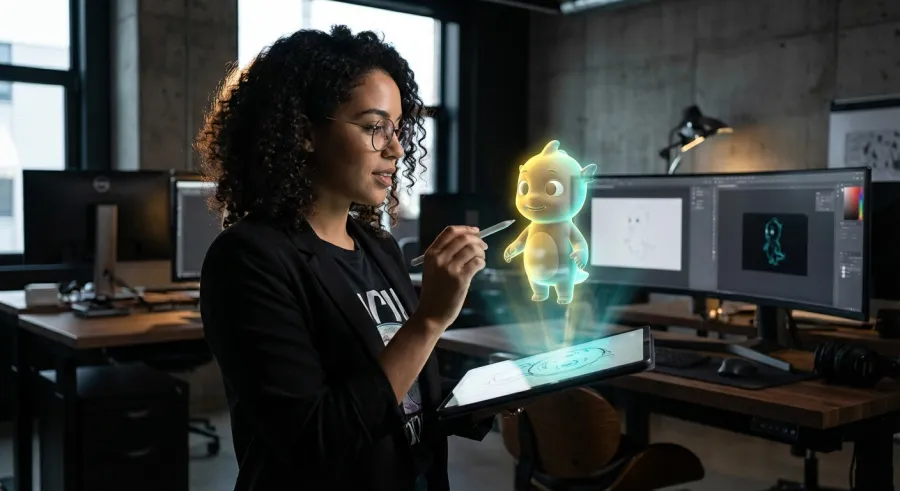
The underlying architecture of Nano Banana allows it to parse language with high precision. It doesn't just look for keywords; it looks for the relationship between objects. This spatial awareness ensures that a cat sitting on a chair looks natural, rather than floating awkwardly in space.
Let’s look at a comparison of how Nano Banana stacks up against other industry standards:
| Feature Set |
Nano Banana |
Traditional Competitors |
| Photorealism |
High (Studio Quality) |
Variable (Painterly) |
| Prompt Fidelity |
Deep Understanding |
Keyword Heavy |
| Brand Integrity |
Strong Retention |
Moderate Drift |
| 2D to 3D Translation |
Excellent |
Limited |
As seen above, Nano Banana fills a specific niche for those who need precision. While other tools might be better for abstract art, this engine is built for realism. It serves the needs of those who require their digital assets to look like they exist.
Nano Banana and the Evolution of Prompt Engineering
Learning to talk to Nano Banana is an art form in itself. The community has discovered that segmenting prompts leads to the best results. By breaking down a scene into layers, you can guide the Nano Banana engine toward a perfect output.
For example, instead of asking for a "cityscape," a user might describe the moisture in the air. They might specify the exact color of the neon signs reflecting on the pavement. Nano Banana thrives on these small, human details that add layers of believability to an image.
This interaction creates a unique feedback loop between the human and the machine. The user provides the soul and the context, while Nano Banana provides the technical execution. It is a collaborative process that feels more like a conversation than a command-line prompt.
However, mastering Nano Banana requires patience and a bit of trial and error. The model can sometimes be sensitive to word order. A small change in the beginning of a sentence can drastically alter the final result of the Nano Banana generation.
Real-World Use Cases for Nano Banana in 2024
In the world of marketing, Nano Banana is becoming a go-to for background elements. Imagine needing a photo of a cozy cafe in Paris for a social media post. Instead of buying a stock photo, a marketer can generate a unique one using Nano Banana.
- Creating hyper-realistic product mockups for e-commerce.
- Developing character concepts for video games and 3D modeling.
- Generating environmental backgrounds for film and animation.
- Prototyping brand logos and visual identity systems.
One fascinating use case involves using Nano Banana for 3D model generation. Creators use the 2D outputs from the tool as blueprints for character statues. The detail provided by Nano Banana makes the transition to a 3D mesh much smoother for artists.
Storytellers are also finding a home with Nano Banana. Writers can now see their characters come to life before a single word is published. This visual aid helps in world-building and ensures that the narrative remains consistent across different media formats.
Addressing the Inconsistencies of Nano Banana
No technology is perfect, and Nano Banana is no exception to this rule. One of the most common complaints involves consistency across multiple generations. While the first image might be perfect, getting a second image of the same character can be difficult.
This "character drift" is a hurdle that Nano Banana developers are likely working to solve. For now, users must rely on clever prompt tricks to keep their subjects looking the same. It requires a level of persistence that can be frustrating for those new to Nano Banana.
"The old Nano Banana felt faster, but the new pro version has better logic, even if it struggles with multi-turn consistency."
Another quirk is that Nano Banana sometimes forgets instructions after the first attempt. If you try to modify an image, the tool might ignore previous parameters. This makes iterative design a bit of a challenge for power users of the Nano Banana platform.
The Challenge of Low Resolution in Nano Banana
While the images produced by Nano Banana are beautiful, they often lack the resolution needed for print. Most outputs are optimized for web use, meaning they look great on a screen but pixelated on a poster. This is a significant bottleneck for professional photographers using Nano Banana.
To overcome this, many users have integrated third-party upscalers into their Nano Banana workflow. They take the raw output and run it through another process to increase the pixel count. It is an extra step that adds time to the creative process.
However, the detail present in a low-res Nano Banana image is still impressive. Even at smaller sizes, the "texture" of the image remains high-quality. This suggests that the core engine of Nano Banana is capturing more information than it currently displays.
We expect future updates to Nano Banana to address this resolution gap directly. As compute power becomes more accessible, the ability to generate 4K or 8K images will likely arrive. Until then, Nano Banana remains a tool primarily for digital-first creators and concept artists.
The Ethics and Privacy Concerns of Nano Banana
As with any powerful AI, Nano Banana raises significant ethical questions. The realism it offers can be a double-edged sword. There is a valid concern about the tool being used to generate likenesses of real, living people without their consent.
The potential for misuse in creating misleading content is a shadow over the Nano Banana project. If an image looks indistinguishable from a photo, how can we trust what we see? This is a societal challenge that goes far beyond the technical specs of Nano Banana.
Privacy laws are still catching up to the capabilities of tools like Nano Banana. Different jurisdictions have different rules regarding AI-generated content. Creators using Nano Banana must stay informed about these regulations to avoid legal pitfalls in their professional work.
There is also the impact on the job market to consider. Will Nano Banana replace entry-level graphic designers or photographers? While it automates many tasks, it also creates new roles for those who can curate and direct the Nano Banana outputs effectively.
How GPT Proto Simplifies Access to Nano Banana and More
For developers and businesses looking to integrate these capabilities, costs can quickly spiral out of control. This is where a platform like GPT Proto becomes essential for managing tools like Nano Banana. GPT Proto offers a unified interface for various top-tier AI models.
One of the biggest advantages of using GPT Proto is the significant cost efficiency. Users can save up to 60% on API costs compared to standard rates. This makes experimenting with Nano Banana much more sustainable for small startups and independent creators.
Furthermore, GPT Proto provides multi-modal access, meaning you aren't limited to just one type of output. You can jump between text, image, and audio models seamlessly. This flexibility is perfect for those who want to use Nano Banana alongside other powerful engines.
The smart scheduling feature of GPT Proto also allows you to choose between performance and cost. If you need a quick Nano Banana mockup, you can prioritize speed. If you are doing a massive batch, you can switch to a cost-optimized mode to save your budget.
Optimizing Your Workflow with Nano Banana Integration
Integrating Nano Banana into a professional pipeline requires a strategic approach. It is not about replacing human creativity, but rather augmenting it. The most successful teams use Nano Banana to handle the "grunt work" of visual brainstorming and prototyping.
By using GPT Proto to access Nano Banana, teams can standardize their API calls. This reduces the technical debt associated with managing multiple different AI providers. A single interface means less time coding and more time creating with Nano Banana.
Consider a marketing agency that needs to produce fifty different ad variations. Manually creating these would take weeks. By leveraging Nano Banana through an efficient API, they can generate these variations in a single afternoon, allowing for rapid A/B testing.
This level of efficiency is what defines the modern creative era. The combination of Nano Banana’s visual power and GPT Proto’s logistical ease is a game-changer. It lowers the barrier to entry for high-quality production across the entire industry.
Nano Banana and the Future of Visual Storytelling
Where does Nano Banana go from here? The trajectory suggests a move toward even greater interactivity. We might soon see a version of Nano Banana that can generate short video clips or consistent character sheets across multiple scenes.
The community's feedback is the fuel for this evolution. Developers are closely watching how people use Nano Banana to solve real-world problems. Every "failed" prompt and every "perfect" generation helps the Nano Banana model learn and grow for the future.
We are also seeing a trend toward "local" versions of these models. While Nano Banana currently thrives in the cloud, there is a push for privacy-focused, on-device processing. This would solve many of the ethical and privacy concerns currently surrounding Nano Banana usage.
Ultimately, Nano Banana is a testament to human ingenuity. We have built a tool that can "see" our thoughts and render them in high definition. It is a mirror of our collective imagination, reflecting both our creativity and our complexities through the lens of Nano Banana.
Mastering the Nano Banana Learning Curve
If you are just starting with Nano Banana, don't be discouraged by initial results. The first few attempts might feel a bit off. However, as you learn the nuances of Nano Banana, you will find that it is a remarkably rewarding tool to master.
Focus on being descriptive but concise. Nano Banana responds well to clear, visual language. Think about the "who, what, where, and when" of your scene. This structured approach helps Nano Banana understand exactly what you are trying to achieve in your art.
Sharing your results with the Nano Banana community is also a great way to learn. There are thousands of other creators figuring out the same problems. By sharing your Nano Banana "recipes," you contribute to a growing library of collective knowledge that benefits everyone.
The era of AI-assisted design is just beginning. Nano Banana is one of the first major milestones in this journey. Whether you use it for work or play, Nano Banana offers a window into a future where the only limit is your own imagination.
The Economic Impact of Nano Banana on Freelancers
Freelance designers are finding that Nano Banana changes their business model. Instead of charging by the hour, many are moving toward value-based pricing. Because Nano Banana allows them to work faster, they can take on more clients without burning out.
However, this also means that the "floor" for quality has been raised. Clients now expect a level of polish that Nano Banana makes possible. To stay competitive, freelancers must embrace Nano Banana rather than fear it, using it to enhance their unique artistic voice.
This shift is not unique to Nano Banana; it's happening across all creative sectors. But because Nano Banana is so accessible, the change is happening faster than many expected. It is a "sink or swim" moment for many in the traditional graphic design space.
Those who succeed will be the ones who treat Nano Banana as a high-powered brush. It is a tool that requires a skilled hand to guide it. In the hands of a master, Nano Banana can produce works of art that are truly breathtaking and commercially viable.
Comparing Nano Banana with Midjourney and DALL-E
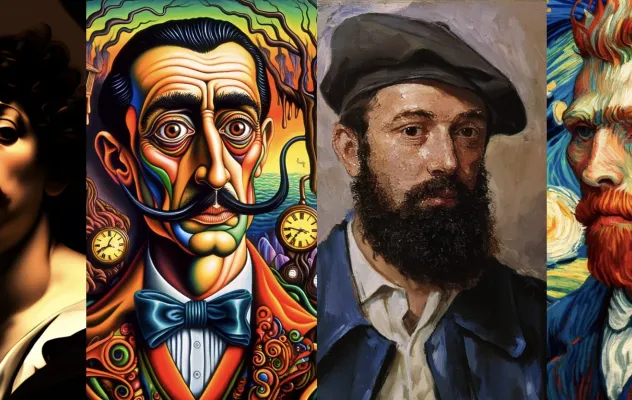
When comparing Nano Banana to giants like Midjourney, the differences are subtle but important. Midjourney is known for its artistic, often surreal style. In contrast, Nano Banana leans heavily into the "photographic" look, making it better for real-world applications.
DALL-E 3 is excellent at following instructions but sometimes lacks the "texture" of Nano Banana. Many users find that Nano Banana images have a certain "weight" to them. They feel more like they were shot on a real camera with real glass lenses.
Choosing between these tools often comes down to the specific project. For a fantasy book cover, you might stick with Midjourney. But for a corporate brochure or a realistic character mockup, Nano Banana is often the superior choice for modern professionals.
Having access to all these models through a single source like GPT Proto is the best strategy. You don't have to choose just one. You can use Nano Banana for your realistic backgrounds and another model for your stylized icons, all within the same workflow.
Conclusion Nano Banana
Nano Banana is more than just a passing trend in the tech world. It represents a fundamental shift in how we create and consume visual media. Its ability to turn text into reality is a superpower that we are only just beginning to understand.
While challenges like consistency and resolution remain, the foundation of Nano Banana is incredibly strong. It has already changed the workflows of thousands of designers and marketers. As the technology matures, Nano Banana will likely become a standard tool in every creative toolkit.
The journey of Nano Banana is also a reminder of the importance of ethical development. As we push the boundaries of what is possible, we must also protect what is human. Nano Banana is a tool for us to express ourselves, not a replacement for our human perspective.
In the end, the success of Nano Banana depends on the people who use it. It is our creativity that brings the pixels to life. As we move forward, let’s use Nano Banana to build a more beautiful, imaginative, and visually rich world for everyone.
Original Article by GPT Proto
"We focus on discussing real problems with tech entrepreneurs, enabling some to enter the GenAI era first."