The Dawn of the Claude Code Era
Technology moves in waves that often feel like a gentle tide until they suddenly become a tsunami. We spent the last two years talking to our computers, amazed that they could answer back. We treated AI like a very smart, slightly eccentric librarian. But everything changed with the arrival of Claude Code.
We are no longer just chatting with machines; we are delegating our entire workflows to them. The transition from "conversation" to "action" marks the most significant shift in computing history. This isn't just about a better chatbot. It is about the rise of the autonomous agent, a tool that does the work for you.
When we look at the trajectory of software development, we see a clear breaking point. Before this moment, humans wrote every line of logic. Now, with Claude Code, the machine is starting to take the wheel. It isn't just suggesting the next word; it is architecting the next system.
This shift is being led by Anthropic, a company that has focused intensely on the reliability of their models. Their latest breakthroughs have turned the abstract promise of AI into a tangible reality. Developers are finding that Claude Code is more than a helper; it is a full-fledged partner in the creative process.
Why GitHub is Being Taken Over by Claude Code
The numbers coming out of the developer community are nothing short of staggering. In just over a year, the volume of work being done by autonomous tools has exploded. Specifically, we are seeing Claude Code account for a massive share of new code contributions across the internet.
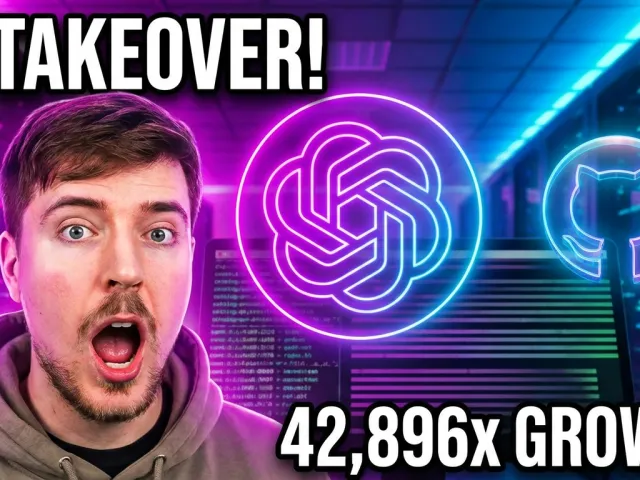
Recent data suggests that nearly 4% of all public GitHub commits are now generated by this technology. That might sound like a small number at first glance. However, when you consider the growth rate, it is terrifyingly fast. We have seen a 42,896-fold increase in just thirteen months.
At this pace, the landscape of software will be unrecognizable by the end of next year. Predictions show that over 20% of all public code will be authored by Claude Code by 2026. This isn't a gradual trend; it is a vertical line on a graph representing a total takeover.
- March 2024: Negligible automated commits.
- September 2025: Viral growth begins as agents stabilize.
- January 2026: Claude Code reaches 135,000+ commits per day.
- Future Projection: Massive displacement of manual coding tasks.
- Market Saturation: Automated logic becomes the global standard.
The speed of this adoption tells us that the friction of using AI is disappearing. Developers are trusting Claude Code to handle complex pull requests and bug fixes. The time spent on "boilerplate" is vanishing, replaced by high-level oversight and strategic planning.
Moving Beyond Chat with Claude Code
To understand why this is happening, we have to look at the evolution of the interface. We can compare the early days of AI to Web 1.0. Back then, you asked a question and got an answer. It was a static, one-to-one exchange of information, much like reading a basic webpage.
The new era, powered by Claude Code, is more like Web 2.0. It is dynamic, interactive, and agentic. Instead of just answering a question, the agent sets a goal. It creates a plan, executes the steps, and then verifies the result against the original objective.
This loop of "Plan-Execute-Verify" is what makes Claude Code so different from a standard chatbot. It doesn't just give you a snippet of code and leave you to figure it out. It enters your environment, runs the tests, and fixes its own mistakes before you even see them.
We are moving from a world that sells tokens to a world that sells orchestration. It is no longer about how many words the AI can produce. It is about how many complex tasks Claude Code can complete without human intervention. This is the definition of true productivity.

The Orchestration Loop in Claude Code
The magic happens in the background. When you give a command to Claude Code, it doesn't just guess. It breaks the problem into sub-tasks. It looks at your file structure, understands the dependencies, and writes a temporary script to test its theories.
If the test fails, the agent doesn't give up or ask you for help. It analyzes the error log, adjusts its approach, and tries again. This self-correcting behavior is the hallmark of the Claude Code experience. It mirrors the way a senior human engineer actually works.
This level of autonomy requires a massive amount of context. The model needs to "see" the whole project, not just a single file. By integrating deeply with the terminal and the file system, Claude Code provides a level of service that was previously impossible for an AI.
Understanding Vibe Coding Through Claude Code
A new term has emerged in the tech corridors: Vibe Coding. It sounds casual, but it represents a profound psychological shift in how we build things. As Andrej Karpathy noted, humans are starting to see their manual coding skills atrophy while using Claude Code.
Vibe Coding is when a programmer stops writing every line of syntax and starts managing the "vibe" of the project. You describe the feeling, the function, and the goal. Then, you let Claude Code handle the grueling details of the implementation.
"The era of humans writing code is over. We are now managers of intelligence, not writers of logic."
Ryan Dahl, the creator of NodeJS, has echoed similar sentiments. He suggests that the traditional way of building software is dead. If you are still typing out every function by hand, you are essentially working in the stone age. Claude Code is the new industrial machinery.
This doesn't mean humans are useless. It means our roles are shifting. We are moving from being construction workers to being architects. We provide the vision, and Claude Code provides the labor. The result is a massive acceleration in how quickly we can turn ideas into reality.
The Efficiency Frontier of Claude Code
In the world of AI, performance isn't just about being smart. It is about the ratio of performance to cost. We call this the efficiency frontier. While some models are incredibly powerful, they are too "noisy" or too expensive to run at scale within Claude Code.
The latest benchmarks show that Anthropic's models are leading the pack in signal-to-noise ratio. This is critical for agentic work. If an agent makes a small mistake early in a process, that error compounds. Claude Code relies on the high precision of the Opus 4.5 and Sonnet 4.5 models.
| Model Type |
Performance Score |
Token Cost (Avg) |
Signal-to-Noise |
| Claude Opus 4.5 |
78% |
12K |
Highest |
| GPT-5.2 |
70% |
40K |
Medium |
| Gemini 3 Pro |
64% |
24K |
Low |
| Kimi K2.5 |
66% |
22K |
Medium |
As the table shows, Claude Code is built on a foundation that prioritizes accuracy over brute force. Using 40,000 tokens to solve a problem is inefficient if a more precise model can do it in 12,000. This efficiency is why Anthropic is winning the developer market.
Why Accuracy Reshapes Claude Code Results
Why does a 5% difference in accuracy matter so much? It comes down to error propagation. If an agent takes twenty steps to complete a task, a 90% accuracy rate sounds good. But 0.90 raised to the power of 20 is a disaster.
By the 20th step, an average model only has a 12% chance of having a perfect result. However, Claude Code uses models with 95% accuracy. At that level, the cumulative success rate after 20 steps is three times higher than the competition. This is the secret sauce.
If the agent fails frequently, the human has to step in and fix it. This defeats the purpose of an agent. Because Claude Code is so precise, it can run longer, more complex chains of logic without breaking. This reliability is what allows for true automation of knowledge work.
Expanding Horizons with Claude Code and Cowork
While coding is the "beachhead" for this technology, the goal is much larger. Anthropic has introduced a concept called Cowork. Think of it as a general-purpose version of Claude Code designed for every office task imaginable. It is the evolution of the operating system.
Cowork was built by just four engineers in ten days using the Claude SDK and the Model Context Protocol (MCP). It can automatically process receipts, organize files, and draft reports. It uses the same underlying logic as Claude Code but applies it to business operations.
This is where the "Model Context Protocol" becomes vital. It allows the AI to talk to your existing tools—your email, your calendar, your database. Instead of you moving data between apps, Claude Code moves through the apps for you. It is the ultimate digital assistant.
We are seeing the birth of the "Sub-agent." One master agent might oversee five smaller agents, each handling a specific part of a project. This hierarchy of intelligence, managed via Claude Code, is how we will handle the $15 trillion knowledge work market.
The Trillion-Dollar Market for Claude Code
The economic implications of this are difficult to wrap our heads around. Every sector that involves processing information is about to be disrupted. From healthcare administration to legal services, the addressable market for Claude Code and its variants is gargantuan.
In healthcare, billions of dollars are spent on administrative tasks. These tasks follow a simple pattern: Read, Think, Write, and Verify. This is the exact workflow that Claude Code has mastered in the software world. Applying this logic to medical records will save billions.
As Claude Code gets better at verifying "truth\" in other domains, it will swallow those markets too. We are witnessing the automation of the middle class.

- Healthcare Admin: $1.5 Trillion market potential.
- Legal Services: $1.05 Trillion market potential.
- Software Development: $570 Billion beachhead market.
- Financial Services: $600 Billion automation target.
- Customer Support: $340 Billion direct displacement.
The reason software was the first target is simple: code is easy for machines to verify. If the code runs, it's probably correct. As Claude Code gets better at verifying "truth" in other domains, it will swallow those markets too. We are witnessing the automation of the middle class.
Comparing Human Costs to Claude Code
When we talk about business, we eventually have to talk about the bottom line. The cost of a human knowledge worker in a developed country is roughly $350 to $500 per day. This includes salary, benefits, office space, and taxes.
An AI agent powered by Claude Code costs between $6 and $7 per day. Even if the agent can only do a fraction of what a human can do, the ROI is impossible to ignore. We are looking at a 10-30x return on investment immediately.
This cost collapse is why companies like Accenture are already training 30,000 employees to use Claude. They aren't doing it because they love technology. They are doing it because they cannot compete with firms that have 30x lower labor costs for information processing.
For businesses looking to scale these savings, platforms like GPT Proto offer a critical advantage. By providing unified access to high-performance models at up to 60% off mainstream prices, GPT Proto allows companies to deploy Claude Code at a fraction of the standard API cost. Their smart scheduling ensures you always use the most efficient model for the task.
How Claude Code Kills Traditional SaaS
For a decade, the software-as-a-service (SaaS) model has been king. Companies like Salesforce and Zendesk charged "per seat." You paid for every human who logged into the system to click buttons and move data. But Claude Code is ending the era of button-clicking.
If an AI agent can talk directly to the database, why do we need a colorful user interface? The "UI Layer\" of many SaaS companies is becoming a bottleneck rather than a feature. We are moving toward a \"Data Layer\" world where agents interact with raw information.
This puts 75% of the gross margins of the SaaS industry at risk. If you sell a tool that humans use to do work, you are in trouble. If you sell the work itself, you are the future. Claude Code is the bridge to this \"work-as-a-service\" future.
Investors are starting to realize that \"seats\" are a dying metric. The new metric is \"tasks completed.\" Companies that adapt to this will thrive. Those that try to protect their old per-user licensing models will be bypassed by agents like Claude Code that don't need a login or a mouse.
The Strategic Power Shift Driven by Claude Code
This technological shift is creating a massive headache for the old giants of tech. Take Microsoft, for example. They have a brilliant business renting out GPUs via Azure. But to grow that business, they must rent those GPUs to \"barbarians\" like Anthropic.
The problem is that these barbarians are building tools like Claude Code that destroy Microsoft's other castle: Office 365. If Claude Code can write your reports and manage your emails, do you really need a $30-a-month subscription for every employee to use Word and Excel?
Microsoft is essentially renting the weapons to the people who are coming to burn down their fortress. It is a classic innovator's dilemma. If they don't rent the GPUs, someone else will. If they do, they accelerate the demise of their own productivity software dominance.
Anthropic vs. the Titans via Claude Code
The revenue data suggests that this shift is already happening. While OpenAI had a massive head start, Anthropic's revenue growth is now starting to accelerate faster in the enterprise space. The \"Claude Code Moment\" has arrived, where business-centric reliability wins over consumer-centric hype.
Anthropic is adding more annualized revenue per quarter than many of its rivals combined. This is because they have focused on the \"Enterprise & Agents\" niche. They aren't trying to make a toy; they are trying to make a tool. Claude Code is the sharpest tool in their shed.
By prioritizing a high signal-to-noise ratio and developer-friendly protocols like MCP, they have made themselves the default choice for serious automation. The market is rewarding this focus on stability and precision over the flashy, often hallucination-prone features of competitors.
Conclusion Claude Code
As we look toward 2026, the competitive landscape is settling into three distinct pillars. Google dominates the consumer and image space. OpenAI is chasing the general intelligence wave but faces infrastructure risks. Anthropic, however, has claimed the throne for the enterprise and agentic world through Claude Code.
The \"Era of Agents\" isn't a future prediction anymore; it is the current reality. We have moved past the era of benchmarks. It doesn't matter who wins the latest math test. What matters is who can orchestrate the most tokens to solve the most problems. Claude Code is currently the king of orchestration.
For developers and business leaders, the message is clear: the manual writing of logic is a shrinking field. The management of automated intelligence is the growth sector of the decade. Embracing tools like Claude Code is no longer optional for those who want to stay relevant.
The task horizons are doubling every few months. Today, Claude Code can handle a four-hour refactoring job. In two years, it might handle a month-long audit. The collapse of intelligence costs is the most significant economic event of our lifetimes. Don't blink, or you'll miss the transition to the agent-driven world.
Original Article by GPT Proto
"We focus on discussing real problems with tech entrepreneurs, enabling some to enter the GenAI era first."