


Near-Zero Hallucination Rate
Claude features state-of-the-art refusal mechanisms for out-of-distribution queries, making Claude suitable for legal and medical synthesis.

text
text
Web Search
curl --request POST "https://gptproto.com/v1/messages" \
  --header "Authorization: Bearer $GPTPROTO_API_KEY" \
  --header "Content-Type: application/json" \
  --header "anthropic-version: 2023-06-01" \
  --data '{
    "model": "claude-opus-4-1-20250805",
    "max_tokens": 1024,
    "messages": [
      {
        "role": "user",
        "content": "What'\''s the weather in NYC?"
      }
    ],
    "tools": [
      {
        "type": "web_search_20250305",
        "name": "web_search",
        "max_uses": 5
      }
    ]
}'Claude 4.1 Opus provides industry-leading benchmarks and features for developers and researchers requiring elite AI performance.
Claude features state-of-the-art refusal mechanisms for out-of-distribution queries, making Claude suitable for legal and medical synthesis.
Claude manages multi-file refactoring and architectural planning, reaching 54.0% on SWE-bench Verified for elite software engineering.

Claude analyzes complex charts, architectural blueprints, and sequential video frames with high spatial accuracy for multimodal projects.

Claude achieves 91.2% on MMLU, outperforming competitors in logical deduction and multi-step problem solving for high-stakes enterprise tasks.

Getting a claude-opus-4-1-20250805 API key takes four steps and a few minutes. Create a free GPTProto account, add credits, generate your key, and make your first call — at $12 / $60 it's a cheaper claude-opus-4-1-20250805 API key than going direct, and one key works across every model on the platform. Full claude-opus-4-1-20250805 Documentation is in the docs.

Sign up
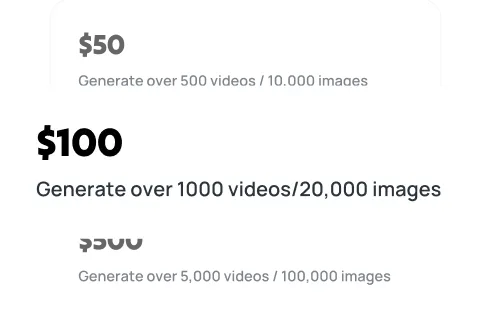
Top up
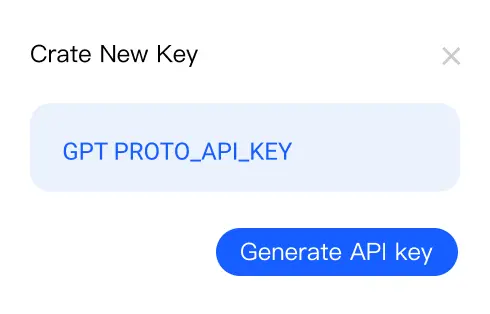
Generate your API key
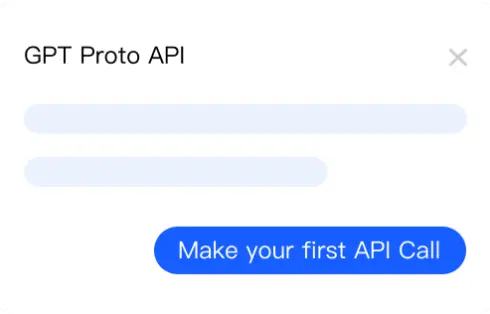
Make your first API call
Common questions regarding the Claude 4.1 Opus model, its coding capabilities, and how Claude handles complex agentic workflows.

Discover how Claude Opus 4.6 is revolutionizing AI development with its massive 1-million-token context window and record-breaking agentic performance benchmarks. Learn how to leverage agent-teams for autonomous coding and complex problem-solving workflows.
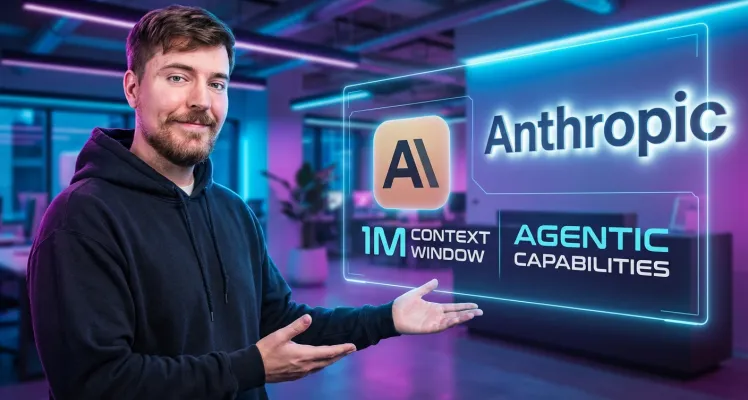
Explore how Claude Opus 4.6 revolutionizes software architecture with a 1M context window and agentic capabilities. Discover its true coding power today!

Discover how Claude Code is reshaping GitHub commits and the software landscape. Explore the shift toward agentic computing, token efficiency, and why Anthropic is leading the race against tech giants like Microsoft.

Discover how Claude Opus 4.6 successfully built a complex C compiler autonomously. Learn about the shift from manual coding to agentic teams and the future of scalable AI-driven software development.