Gemini 4 Argon vs GPT-6 Astra vs Claude Opus 5.5: The Short Verdict
The three models have different strengths, not one universal winner. Gemini 4 Argon combines broad document input with configured long decode. GPT-6 Astra focuses on demanding reasoning and tool-driven professional workflows. Claude Opus 5.5 is built for long-running coding and knowledge work. Their practical value depends on completed-task quality and total cost, not token price alone.
Official Standard rates differ: Argon’s introductory price is $2/$10 per 1M input/output tokens through November 30, 2026, Opus 5.5 is $4/$20, and Astra is $10/$50 for prompts with up to 272K input tokens. These are provider list prices, not GPT Proto billing quotes. See the comparison table for dates and conditions.
OpenAI reports Astra at 72.6% on OSWorld 2.0’s offline set using partial scoring. The score measures that specific computer-use evaluation rather than every automation workload. Opus 5.5 and Argon also support official computer-use tools. OpenAI’s launch report describes the evaluation conditions.
You can compare Gemini 4 Argon, GPT-6 Astra, and Claude Opus 5.5 through GPT Proto with one platform key and a shared balance. Routing is controlled by application logic or a configured routing feature; tools, parameters, and endpoints remain model-specific.
At-a-Glance Comparison: Gemini 4 Argon vs GPT-6 Astra vs Claude Opus 5.5
The table summarizes official model specifications and Standard direct-provider token rates. The models occupy similar context tiers but differ in output configuration, tool interfaces, and price. Context capacity, output configuration, and token rates describe different aspects of the service; they are not interchangeable measures of model quality.
| Model |
Maker |
Official Standard price: input / output per 1M tokens |
Listed context window |
Official maximum output |
Ongoing free API tier |
Primary use cases |
| Gemini 4 Argon |
Google |
$2 / $10 through Nov 30, 2026; $4 / $20 from Dec 1 |
1,048,576 tokens shared across input, thinking, and output |
65,536 by default for synchronous requests; configured long decode uses the remaining shared budget |
No |
Long-form generation, document analysis, and coding tasks requiring substantial context |
| GPT-6 Astra |
OpenAI |
$10 / $50 for prompts up to 272K input tokens |
1,050,000 tokens; maximum input 922,000 |
128,000 tokens |
No ongoing free access listed for this model |
Demanding reasoning, coding, research, and tool-driven professional workflows |
| Claude Opus 5.5 |
Anthropic |
$4 / $20 |
1,000,000 tokens |
128,000 standard; up to 300,000 through Anthropic’s Message Batches beta |
No ongoing free tier; introductory API test credits are separate |
Long-running coding agents, refactoring, and knowledge work |
Checked against official documentation on October 14, 2026 UTC. Prices are in USD. Official list rates are reference figures, not GPT Proto billing quotes. The linked GPT Proto model pages show the platform’s current displayed rates and model-specific request guidance.
Billing and output conditions: Argon bills thinking tokens at its output rate and shares one context budget across input, thinking, and generated output. Astra prompts exceeding 272K input tokens use 2× input/cache rates and 1.5× output rates for the entire request. Opus’s 300K output requires Anthropic’s Message Batches beta with its specific beta header; that native-provider beta is not a standard-output specification for GPT Proto text calls. Caching, processing modes, tool charges, and retries affect the final task cost.
How This Comparison Was Prepared
This comparison uses official specifications, provider-reported evaluations, and GPT Proto’s public model pages. It is not a controlled GPT Proto benchmark. Published scores describe the evaluation harness, reasoning effort, and tool configuration used by the reporting provider.
The comparison covers five factors:
Coding: reported software and agent benchmarks, plus the tools needed to evaluate changes in a real repository.
Reasoning: task-specific evaluations rather than a single overall intelligence ranking.
Cost: token rates, cache behavior, processing modes, and total cost per accepted result.
Context and output: usable token budgets, output configuration, and the need for continuation or background execution.
API integration: request formats, model-specific parameters, and feature support on GPT Proto.
The available sources do not provide a like-for-like GPT Proto latency or production-reliability comparison across all three models. Those factors therefore remain separate from the published benchmark scores.
The Three Models Compared
Gemini 4 Argon
Google positions Argon for complex software engineering, mathematical and scientific reasoning, and multi-step agents. Its distinctive output feature is long decode within a shared 1,048,576-token input, thinking, and output window. Official input types include text, images, video, audio, and PDF, with text output.
The Gemini 4 Argon API guide covers the model listing and input-specific routes. Native Google fields and long-running execution options are not automatically interchangeable with an OpenAI-compatible request body.
GPT-6 Astra
Astra supports text and image input with text output and is designed for demanding reasoning, coding, research, and computer use. OpenAI lists a 1.05M-token context window, 128K maximum output, and tools available through the Responses API. Tool-driven workflows still need an application that runs the tool calls and validates their results.
The GPT-6 Astra API guide provides model-specific integration guidance. Compatible text calls and tool-driven agent workflows have different endpoint and request-format requirements.
Claude Opus 5.5
Anthropic positions Opus 5.5 for long-running agentic coding and knowledge work. It accepts text and images, provides a 1M-token context window, and supports 128K standard output. Adaptive thinking is always on, with medium effort as the default.
Opus 5.5 also supports computer use through Anthropic’s current toolset; it is not limited to static vision. The Claude Opus 5.5 API guide distinguishes standard text access from specialized tools and model-specific thinking fields.
Benchmark & Reasoning Face-Off: Coding, Math, Long-Context, Multimodal
Results vary by task. Google’s October 2026 Argon model card reports the following scores for the three models. They are provider-reported evaluations, not GPT Proto tests.
| Evaluation in Google’s model card |
Gemini 4 Argon |
GPT-6 Astra |
Claude Opus 5.5 |
| DeepSWE v1.1 |
77.9% |
74.1% |
74.2% |
| FrontierSWE v2 |
55.0% |
65.5% |
62.3% |
| Terminal-bench 4.0 |
57.4% |
58.2% |
66.4% |
| GraphWalks 256K–1M BFS F1 |
84.2% |
71.8% |
66.8% |
| Chartography |
71.6% |
71.0% |
66.3% |
Source: Google’s Gemini 4 Argon model card. Scores use that report’s conditions and should not be silently mixed with figures from another provider’s setup.
Reasoning and Math
No single score establishes the best model for every analytical task. In the same Google report, Astra leads the listed Terminal-Bench Science 0.1 result, while Argon leads LABBench 2 and RiemannBench. Mathematical reasoning, scientific tool use, and evidence-backed research are different tasks; a lead on one does not establish a lead on all three.
Coding
The coding rows show different leaders: Argon on DeepSWE, Astra on FrontierSWE, and Opus on Terminal-bench in this report. Repository refactoring also depends on file access, shell tools, tests, and the agent harness. A model’s output limit does not establish whether it will complete a particular refactor in one response.
Long-Context Recall
Argon leads the reported GraphWalks 256K–1M BFS F1 result. That is evidence for a specific retrieval task, not proof that Argon has the largest context window or always recalls compliance clauses better than the other models. GraphWalks tests a defined graph-retrieval workload rather than every form of long-document analysis.
Multimodal and Computer Use
Argon accepts a broader set of native input types; Astra and Opus list text and image inputs. All three have official computer-use capabilities. Astra uses OpenAI’s Responses tools, Opus uses Anthropic’s current computer toolset, and Argon lists computer use as Preview. A native tool’s availability does not by itself establish support through every GPT Proto endpoint.
Why Benchmark Conditions Matter
OpenAI reports Astra at 72.6% on OSWorld 2.0’s offline set with partial scoring. Anthropic reports Opus 5.5 on OSWorld 2.1, which is a different evaluation version. The different versions prevent a direct score-for-score ranking. Likewise, reasoning effort and harness differences can change same-named benchmark results.
Coding Performance: Agentic Work & Code Generation
Coding performance includes accepted changes, passing tests, and the cost of reaching a working result. Repository snapshots, permitted tools, reasoning effort, and acceptance criteria all influence the outcome alongside model capability.
Opus 5.5’s positioning centers on long-running coding and knowledge work. Argon adds substantial code context and configured long outputs, while Astra combines coding with difficult reasoning and professional tools. Their reported coding results vary across DeepSWE, FrontierSWE, and terminal-agent tasks.
The model and agent environment are distinct components. File access, shell execution, browser control, and test execution come from the harness and available tools; comparing one model in a specialized coding agent with another in a different desktop setup does not isolate model quality.
Repository-agent tools and multi-step completion are also covered in the Claude Opus 5.5 vs GPT-6 Sol coding-agent comparison.
Opus’s official $4/$20 input/output rates are 60% lower than Astra’s $10/$50 base rates. That is a token-rate comparison, not a guarantee of 60% lower cost for every refactor. Cache hits, output length, retries, and tool usage also affect the bill.
Pricing Face-Off: API Rates & Cost per Completed Task
Among these three models, Argon has the lowest introductory official Standard input/output rates through November 30, 2026. From December 1, its official $4/$20 rates match Opus 5.5’s base rates. Astra’s Standard $10/$50 rates apply up to 272K input tokens, with higher full-request rates beyond that threshold. See the comparison table for sources and conditions.
Caching and Total Task Cost
All three offer official cache pricing. Argon supports implicit caching only, currently at $0.10 per million cached input tokens during its introductory period. Astra lists cached input at $1 per million; Opus 5.5 lists cache reads at $0.20 per million. Cache writes, minimum eligible prefixes, processing modes, and endpoint support differ.
A lower token price is useful, but the better production choice is the one that meets your quality target at a lower total cost. Include output and thinking tokens, retries, tools, long-context rates, and cache behavior in the comparison. Google’s pricing, Astra’s official specifications, and Claude’s pricing explain their respective rates.
The affordable LLM APIs for AI agents guide extends this cost-per-result approach to lower-priced models, including routing, cache usage, and recovery calls.
Other Models for Different Cost and Capability Needs
The wider GPT Proto catalog includes alternatives for simpler or higher-volume tasks:
GPT-5.6 Sol: another OpenAI option for coding, analysis, and existing integrations.
Claude Sonnet 5.5: a speed-and-cost-oriented Claude option for everyday coding and document work.
Claude Haiku 5.5: a starting point for routing, classification, and extraction.
Gemini 3.1 Pro Preview: a multimodal alternative. Google’s official Standard rates are $2/$12 per 1M input/output tokens for prompts up to 200K input tokens and $4/$18 above that threshold.
Claude Fable 5.1 is a higher-priced alternative for demanding reasoning, not a budget tier. Its role is demanding reasoning at a higher price point, rather than routine cost reduction.
Within the Claude family, the Opus 5.5 vs Sonnet 5.5 comparison covers the trade-off between long-running work and faster, lower-cost coding tasks.
Consumer subscriptions and API usage are separate products. Consumer-plan fees do not include GPT Proto API usage. Official list prices and GPT Proto’s displayed model rates are separate pricing references.
Context Window, Output Length, Latency & Rate Limits
All three models offer roughly one million tokens of context. Astra’s listed 1,050,000-token window is slightly larger than Argon’s 1,048,576; Opus 5.5 lists 1,000,000. These totals are not interchangeable with maximum input length. Astra separately lists 922,000 maximum input tokens, while Argon shares one budget across input, thinking, and generated output.
Argon’s distinctive feature is configured long decode: its synchronous default is 65,536 output tokens, with longer execution using the remaining shared budget. Astra and Opus list 128K standard maximum output. Opus’s 300K option is specific to Anthropic’s Message Batches beta. Native long-output modes and gateway endpoint capabilities are separate specifications.
Latency depends on prompt size, output length, reasoning effort, tools, processing mode, and load. The official pages do not establish which of these three is consistently fastest or slowest under identical GPT Proto conditions. Time to first token and time to a completed result also measure different parts of a workflow.
Rate limits depend on account, endpoint, and service tier, not simply on a model’s enterprise positioning. GPT Proto integration limits determine concurrency and retry behavior independently of native-provider quotas.
Accessing the Models Through GPT Proto
GPT Proto lists all three models for API access with one platform key and shared balance. The corresponding Argon, Astra, and Opus 5.5 pages provide the model IDs and request guidance.
For compatible text requests, changing the model ID can be a starting point. Advanced workflows need additional checks: Astra’s tool use is associated with Responses, Opus has model-specific thinking and toolset requirements, and Argon’s long decode needs suitable execution settings. A shared platform key does not make the native-provider interfaces identical.
Production integrations have four model-specific components:
The exact model ID and endpoint shown in GPT Proto’s API Usage guidance.
Required tools, thinking controls, input formats, and output limits.
Multi-turn state, timeouts, continuation, and retry behavior.
Current pricing and total cost per accepted result.
Model selection is controlled by your application or an explicitly configured routing feature. A shared key does not create an autonomous agent or automatically select the best model for each task.
Direct-provider APIs and consumer apps are separate access options. Their documentation remains useful for understanding native specifications, but their subscription plans are not included in GPT Proto API access. GPT Proto’s Introduction provides platform-level integration context.
Safety, Reliability & Known Limitations
All three models can make errors, and tool-driven workflows introduce additional risk. Provider safety reports describe specific evaluations; they do not establish a cross-provider ranking of GPT Proto production reliability, refusal frequency, or customer churn.
Gemini 4 Argon
Google positions Argon for complex coding, enterprise knowledge work, and cybersecurity defense. Its model card identifies hallucinations and occasional slowness or timeouts among its limitations. That positioning does not make every deployment compliant: regulated workflows still require checks on data handling, permitted use, and the chosen platform’s controls.
GPT-6 Astra
Astra supports computer and browser tools in an appropriately configured agent environment. Tool permissions, consequential-action controls, and result validation sit in the surrounding application. Human review can reduce risk, but does not eliminate it.
Claude Opus 5.5
Opus 5.5 supports coding, knowledge work, and computer use with Anthropic’s current toolset. Always-on adaptive thinking and changed tool requirements affect integration. The selected endpoint determines how these fields are handled; neither model capability nor a lower token rate guarantees successful completion.
Production reliability depends on the model, application, tools, and operating conditions together. The sources used here do not establish a comparable production-safety or customer-churn ranking for the three models.
Model Fit by Workload
Each model’s fit follows from the workload, output requirements, tool interface, and price structure.
Coding and Refactoring
Opus 5.5 is built for long-running coding and knowledge work. Argon and Astra also cover repository tasks, with different results on the reported software benchmarks. Passing tests and accepted changes describe coding quality more directly than an unsupported predictability ranking.
Long Documents and Large Outputs
Argon’s configured long decode and broad input support fit document-heavy work and large text deliverables. Its shared budget still limits what can fit in one task. A model’s cybersecurity positioning does not establish regulatory compliance or a procurement-ready data-handling guarantee.
Computer Use and Professional Workflows
Astra’s tools and reasoning support demanding professional workflows; Opus and Argon also have official computer-use capabilities. Endpoint support, the execution environment, permissions, and verification matter as much as the model name.
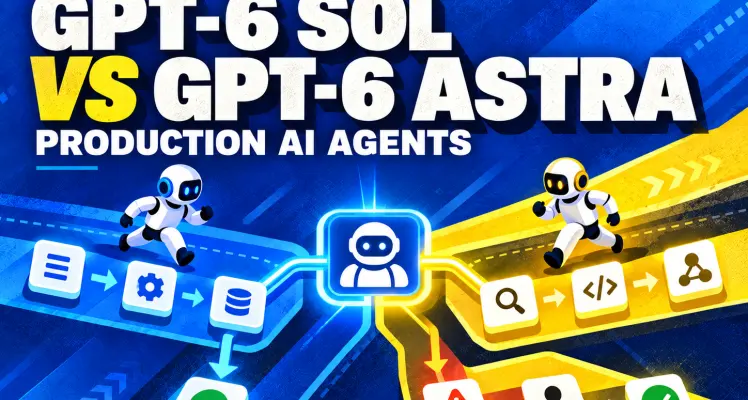
The GPT-6 Sol vs GPT-6 Astra production-agent comparison examines this balance through tool calling, multi-step recovery, latency, and cost per completed task.
Budget-Conscious Teams
Lower-priced models reduce the cost of tasks they complete successfully. More expensive models can still be economical when they reduce retries, supervision, or failed work. The relevant measure is total cost per accepted result, not a blanket distinction between routine and difficult tasks.
Comparing the Three on GPT Proto
GPT Proto’s shared key and balance let you compare supported routes without maintaining a separate platform balance for each model. The Argon, Astra, and Opus 5.5 pages connect each model to its platform-specific integration details.
GPT Proto uses pay-as-you-go billing with no required subscription. Unused credits do not expire or reset each month. GPT Proto’s pricing and billing details and model catalog list the supported routes, billing units, and displayed rates.
| Workload |
Model fit |
Integration factors |
| Long-running coding and refactoring |
Opus 5.5, Argon, and Astra |
Accepted patches, passing tests, tool configuration, total cost |
| Document-heavy work and long outputs |
Argon for long decode; Astra and Opus for standard long output |
Input format, shared budget, output settings, long-running endpoint support |
| Computer-use automation |
Astra, Opus 5.5, Argon Preview |
Toolset support, execution environment, permissions, task completion |
| Routine, high-volume tasks |
GPT-5.6 Sol, Sonnet 5.5, Haiku 5.5, Gemini 3.1 Pro Preview |
Task quality, latency, and total platform cost |
| Multi-model applications |
Supported GPT Proto routes |
One key/shared balance; application routing and endpoint compatibility |