The landscape of digital productivity is undergoing a seismic shift, moving away from rigid, code-heavy structures toward fluid, intuitive systems. Leading this revolution is the Vibe Workflow, a paradigm-shifting model pioneered by Refly AI. Unlike traditional automation tools like n8n or Zapier, which demand a developer's mindset to navigate complex logic gates, the Vibe Workflow prioritizes human intent and seamless execution. By transforming static nodes into autonomous, intelligent agents, this approach allows non-technical users to harness the full power of Large Language Models (LLMs) like GPT-4o. This guide dives deep into how the Vibe Workflow is redefining the workplace, turning chaotic tasks into streamlined, self-correcting processes that evolve alongside your needs.
Vibe Workflow: The Future of AI Automation & Agents
Discover how Refly AI is simplifying complex automation through the Vibe Workflow model. Learn why top investors are betting on this human-centric alternative to n8n and traditional agent platforms for the modern workplace.
The Evolution of Automation: Entering the Vibe Workflow Era
For decades, the promise of automation has been reserved for the technical elite. If you could write Python or manage cron jobs, you could automate your life. Then came the "no-code" revolution, bringing tools that promised to democratize this power. Platforms like Zapier and n8n allowed users to connect apps visually. However, they introduced a new kind of friction. To build a robust system, you still needed to think like a computer programmer. You had to handle API errors, map JSON fields, and construct elaborate if-then-else logic trees. This complexity created a ceiling for adoption. Enter the Vibe Workflow.
The Vibe Workflow represents the next logical step in this evolution. It is not merely a tool; it is a philosophy that rejects the "wiring" mentality of traditional software. In a legacy workflow, the process is fragile. If a single variable is missing, the entire chain breaks. A Vibe Workflow, conversely, operates on intent. It mimics human flexibility. It understands that the goal is the output—the "vibe" of the result—rather than the strict adherence to a syntax path.
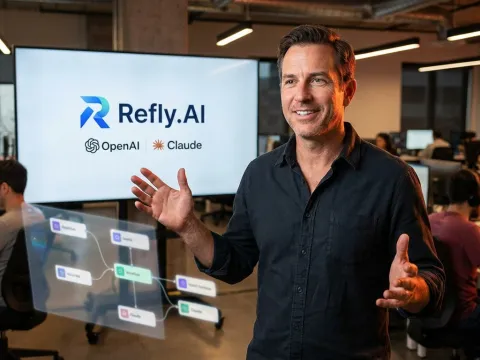
Refly AI, the company spearheading this movement, recognized that the bottleneck wasn't technology; it was the interface. Huang Wei, the founder, saw that users were abandoning powerful tools because the learning curve was too steep. By shifting the focus to the Vibe Workflow, Refly AI has created a bridge between raw AI capability and everyday human utility. This shift is akin to moving from MS-DOS to Windows; suddenly, the power of the machine is accessible to everyone.
Deconstructing the Vibe Workflow Architecture
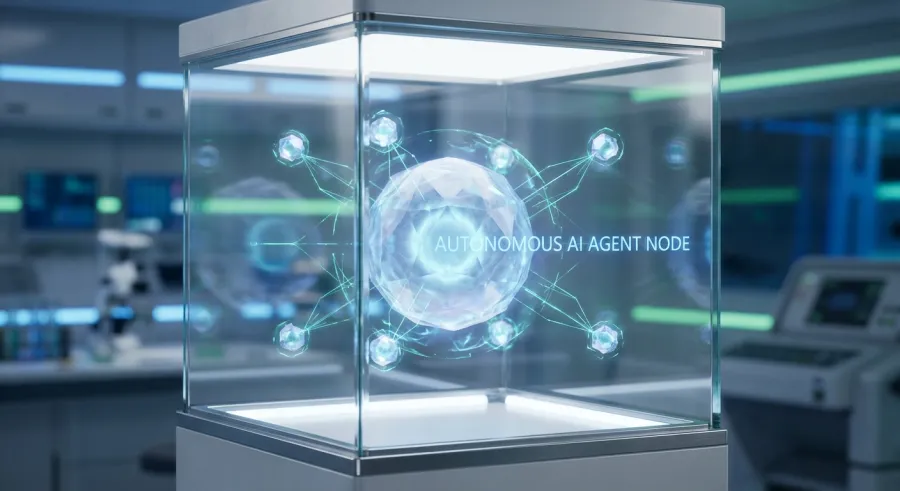
To truly appreciate the innovation behind the Vibe Workflow, we must look under the hood. Traditional automation relies on linear progression: Step A triggers Step B. If Step B encounters an unknown scenario, it fails. A Vibe Workflow replaces these static steps with dynamic, intelligent agents. In this ecosystem, a "node" is not just a command; it is a mini-brain capable of reasoning.
In a Vibe Workflow, a single node might be responsible for "Market Research." In a traditional tool, this would require twenty separate nodes: one to search Google, one to scrape results, one to filter content, and one to summarize it. In the Vibe Workflow model, the node acts as an autonomous agent. It receives the instruction, plans the execution, navigates obstacles (like paywalls or captchas), and returns the polished result. This drastically reduces the visual complexity of the workflow.
This architectural change makes the Vibe Workflow incredibly resilient. Because the agents within the workflow have a degree of autonomy, they can self-correct. If a website is down, the agent can look for an alternative source without crashing the entire process. This "fuzzy logic" capability is what separates a brittle script from a robust Vibe Workflow.
The Agent Editor: The Heart of the Vibe Workflow
Central to this experience is the Agent Editor. This is where the user defines the personality and capabilities of the nodes within their Vibe Workflow. Instead of writing code snippets, you converse with the system. You might tell an agent, "You are an expert copywriter. Your tone is professional yet witty. Your goal is to summarize tech news." The Vibe Workflow engine then configures the underlying LLM parameters to match this persona.
The Agent Editor also includes a sandbox environment. This is a crucial feature for enterprise-grade adoption. Before deploying a Vibe Workflow to a live environment, users can test the agents in a safe, isolated space. Here, you can watch the agent "think," viewing its internal monologue and decision-making process. This transparency builds trust. You aren't just trusting a black box; you are verifying the logic of your Vibe Workflow before it touches your data.
Furthermore, the Vibe Workflow allows for multi-modal inputs within the editor. You can upload reference documents, style guides, or even previous examples of good work. The agent digests this context, ensuring that the output aligns perfectly with your brand's voice. This level of customization was previously impossible without fine-tuning custom models, but the Vibe Workflow makes it accessible via a drag-and-drop interface.
Why the Vibe Workflow is the n8n Killer
Comparing n8n to a Vibe Workflow is like comparing a manual transmission to a self-driving car. n8n is powerful, undeniably. For a DevOps engineer who wants granular control over every HTTP header, it is a fantastic tool. But for a marketing manager, a recruiter, or a CEO, n8n is a nightmare of complexity. The Vibe Workflow targets this massive, underserved market of "prosumers" who value output over configuration.
The primary failure mode of n8n for general users is the "blank canvas paralysis." You stare at an empty grid, unsure which of the 300 integrations to choose. The Vibe Workflow solves this through intent-based design. You start with a goal. The system suggests the necessary agents. The friction is removed. You don't need to know what a webhook is to use a Vibe Workflow effectively.
Investors like Hillhouse and Zhu Xiaohu have poured capital into this space precisely because of this distinction. They understand that the next billion users of AI won't be developers. They will be everyday professionals using a Vibe Workflow to multiply their productivity. By lowering the barrier to entry, Refly AI is positioning the Vibe Workflow as the standard operating system for the modern workforce.
The Economics of the Vibe Workflow: Cost & Scaling
One of the hidden challenges of AI automation is cost. Running a complex Vibe Workflow powered entirely by GPT-4o or Claude 3.5 Sonnet can become expensive very quickly. Every API call, every token generated, adds to the bill. Refly AI addresses this through intelligent model routing, a core component of the Vibe Workflow infrastructure.
A smart Vibe Workflow employs a "brain and brawn" strategy. It utilizes a high-intelligence, high-cost model (like GPT-4) for planning and complex reasoning—the "brain." Once the plan is established, the workflow offloads the repetitive execution tasks—the "brawn"—to cheaper, faster models like GPT-4o-mini or open-source alternatives. This tiered approach ensures that the Vibe Workflow remains economically viable at scale.
This is where infrastructure partners like GPT Proto become essential. For heavy users of the Vibe Workflow, accessing models directly via OpenAI or Anthropic can be inefficient. GPT Proto provides an aggregated layer that optimizes token usage and reduces latency. By integrating with such platforms, a Vibe Workflow can access premium models at a fraction of the standard cost, sometimes saving up to 60% on API fees. This economic efficiency is critical for enterprises looking to deploy the Vibe Workflow across entire departments.
Integration and Model Agnosticism
The true power of a Vibe Workflow lies in its neutrality. Big Tech ecosystems try to lock you into their specific models. Microsoft wants you to use Azure; Google wants you on Gemini. A startup-led Vibe Workflow platform is agnostic. It allows you to mix and match. You can use Midjourney for image generation, ElevenLabs for voice synthesis, and OpenAI for text, all within a single Vibe Workflow.
This modularity future-proofs the system. When a new, superior model is released next month, you don't need to rebuild your entire software stack. You simply swap the underlying model in your Vibe Workflow settings. This agility allows users to stay on the bleeding edge of AI capability without technical debt. The Vibe Workflow becomes a wrapper for the best intelligence available globally, regardless of the vendor.
The Data Flywheel: How a Vibe Workflow Learns
Artificial Intelligence is useless without data, but not just any data. While foundation models are trained on the public internet, a Vibe Workflow is trained on *your* actions. This is the concept of the "Action Flywheel." Every time you interact with the system—accepting a draft, tweaking a subject line, rejecting an image—the Vibe Workflow records this preference.
Over time, this accumulates into a unique proprietary dataset. The Vibe Workflow begins to understand your specific definition of quality. It learns that you prefer Oxford commas, or that you like your images to have a cyberpunk aesthetic. This personalization makes the Vibe Workflow feel less like a cold tool and more like a trusted partner.
Refly AI emphasizes that this user-behavior data is the ultimate moat. Competitors can clone features, but they cannot clone the months of interaction history stored within your personalized Vibe Workflow. This leads to predictive capabilities. Eventually, the Vibe Workflow won't just wait for commands; it will anticipate needs. It might draft your morning emails before you even log in, based on patterns it has observed over the last quarter.
Democratizing Expertise via the Vibe Workflow Marketplace
The transition from a single-player "Generative Canvas" to a multiplayer Vibe Workflow ecosystem has unlocked a new economy: the marketplace of expertise. In the past, if you had a brilliant process for SEO optimization, you kept it in your head or wrote a static SOP (Standard Operating Procedure). Now, you can package that process into a shareable Vibe Workflow.
This allows for the rapid dissemination of best practices. A junior employee doesn't need to spend years learning the nuances of a task. They can simply import a Vibe Workflow created by a senior expert and achieve comparable results immediately. This compresses the time-to-value for knowledge work. The Vibe Workflow acts as a container for wisdom, executable by anyone.
We are seeing this emerge in various verticals. Marketing agencies are selling "Content Engine" Vibe Workflow templates. Financial analysts are sharing "Market Sentinel" workflows. This community-driven approach accelerates the platform's development. Refly AI doesn't need to build every use case; the community builds them using the Vibe Workflow framework.
Real-World Use Cases: The Vibe Workflow in Action
To ground these concepts, let's examine how the Vibe Workflow transforms specific industries.
Content Creation and Media
For a digital publisher, a Vibe Workflow can automate the entire pipeline. A "Trend Watcher" agent monitors social media for viral topics. Once a topic is identified, it triggers a "Researcher" agent to gather facts. A "Writer" agent then drafts an article, while an "Artist" agent generates a thumbnail. Finally, an "Editor" agent reviews the content for SEO keywords. The human user simply logs in to approve the final package. The Vibe Workflow handles the coordination, allowing the creator to focus on strategy.
Software Development
Developers are using the Vibe Workflow to automate code reviews and documentation. An agent can watch a GitHub repository. When a pull request is opened, the Vibe Workflow triggers a code analysis agent to check for security vulnerabilities and style violations. It can even draft the documentation for the new feature automatically. This reduces the administrative burden on engineering teams, freeing them to write complex logic.
Education and Training
In the ed-tech space, the Vibe Workflow is enabling hyper-personalized learning. Teachers can run a workflow that analyzes a student's recent test scores, identifies weak points, and generates a custom lesson plan and quiz specifically for that student. This level of individual attention was previously impossible at scale. The Vibe Workflow makes it feasible by automating the content generation and analysis steps.
Conclusion: Embracing the Vibe Workflow Revolution
The shift from rigid programming to the fluid Vibe Workflow is more than a trend; it is a fundamental restructuring of how we interact with computers. We are moving from a command-line interface to an intent-based interface. Refly AI is at the forefront, championing a future where technology adapts to the user, not the other way around. The Vibe Workflow empowers us to be architects of our work rather than laborers in the machine.
As AI models continue to advance in speed and capability, the utility of the Vibe Workflow will only grow. It will become the central hub of the modern desktop—the place where human creativity meets machine efficiency. Whether you are a solo entrepreneur or a corporate executive, integrating the Vibe Workflow into your daily operations is the key to staying competitive in an increasingly automated world. Stop fighting with syntax and start flowing with the vibe.

Original Article by GPT Proto
"We focus on discussing real problems with tech entrepreneurs, enabling some to enter the GenAI era first."