TL;DR
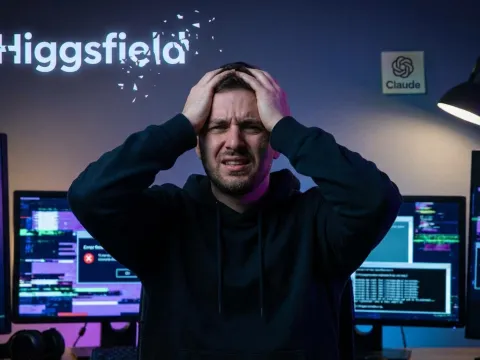
Software startups routinely overstate what their generative tools can actually achieve in production environments. The recent aggressive marketing campaign behind higgsfield vibe motion perfectly illustrates this massive disconnect between public relations hype and technical reality.
Motion designers require exact temporal consistency and precise easing curves to deliver commercial work. Instead of providing reliable structural controls, this platform outputs unpredictable, jittery visuals that demand endless hours of manual tweaking just to salvage.
You cannot replace deliberate animation skills with a random probability engine. We stripped away the corporate messaging to compare this tool's actual performance against established open-source alternatives that cost a fraction of the price.
The Current AI Motion Landscape & Higgsfield Vibe Motion
The artificial intelligence industry loves overpromising. Generative video tools often showcase spectacular demo reels. Reality rarely matches these curated highlights. Professional motion designers understand the massive gap between random pixel generation and deliberate animation.
Enter Higgsfield Vibe Motion. This platform recently launched with aggressive marketing campaigns. Promising instant text to motion capabilities, the tool targeted frustrated creators. High-end animation previously required years of After Effects experience. Now, a simple text prompt supposedly handles the heavy lifting.
But skepticism remains high among actual practitioners. Motion design requires extreme precision. Temporal consistency matters. Easing curves dictate physics. An ai video generator cannot simply guess these parameters. When the underlying logic fails, the resulting animation looks completely unnatural.
Recent community discussions confirm these suspicions. Professional creators tested the higgsfield motion generator extensively. Their findings paint a concerning picture regarding performance. Aggressive marketing tactics created massive expectations. The actual software delivery fell drastically short.
We need to evaluate the facts objectively. Replacing traditional workflows requires flawless execution. Flawed software only creates more work. Let’s dissect exactly what Higgsfield Vibe Motion offers compared to established open-source competitors.
Head-to-Head Breakdown: Vibe Motion Graphics Features
Marketing pages feature bold claims. Technical reality demands intense scrutiny. We must examine the core mechanics powering this specific ai video generator.
Text To Motion Generation Capabilities
Turning words into kinetic energy sounds magical. You write a text prompt. The system generates moving elements. Higgsfield Vibe Motion handles this exact workflow.
Users input descriptive scene commands. The platform processes these text instructions. Video output follows shortly after. But translating abstract concepts into spatial coordinates proves difficult. Words lack mathematical precision. “Bounce happily” means nothing to a rendering engine without strict parameters.
The platform attempts real-time editable motion tweaks. Adjusting parameters without restarting generation saves time theoretically. However, unpredictable outputs negate this advantage. Tweaking a broken baseline only yields modified garbage. Quality vibe motion graphics require solid structural foundations.
The Claude Reasoning Model Integration
Raw pixel generation lacks logic. Movement requires contextual understanding. Higgsfield tackled this by integrating Anthropic’s Claude reasoning model. This integration acts as the brain behind the visual engine.
Claude parses complex user instructions. It breaks down spatial relationships before rendering begins. Better prompt comprehension theoretically yields better temporal consistency. This partnership aims to bridge the gap between human intent and machine execution.
Developers building custom solutions understand this architecture well. Routing prompts through advanced LLMs ensures structured output. Smart teams often
read the full API documentation to orchestrate similar multi-model pipelines. Unified platforms handle these API integrations effortlessly.
Yet, despite Claude's heavy lifting, the final render relies on the video generation layer. Strong reasoning cannot fix poor pixel rendering. The integration improves intent matching but fails to salvage bad visual fidelity.
Performance & Pricing: The Real Cost Of AI Motion
Evaluating software requires looking past the feature list. Time equals money for professional designers. Inefficient tools drain both resources rapidly.
Higgsfield Vibe Motion demands massive user effort. Getting acceptable results requires endless tweaking. Prep time balloons out of control. One Reddit user summarized the friction perfectly.
"The amount of effort, tweaking, and prep time used to get it do what you want makes it hard to justify."
Billable hours vanish during this tweaking phase. Traditional keyframing often proves faster. Predictable workflows beat AI slot machines every single time. When an ai video generator requires fifty prompt variations, the automation loses all value.
Pricing models compound this frustration. Locked subscription tiers trap users. Many higgsfield alternatives offer better flexibility. Scam allegations frequently surface regarding their billing practices. Rigid refund policies leave unsatisfied customers entirely stranded.
Transparency matters in software pricing. Developers and studios prefer consumption-based models. Paying for exact usage prevents wasted budget. Teams scaling visual production should
manage your API billing through transparent pay-as-you-go providers instead.
Real User Experiences: The Reddit Backlash
Community sentiment provides the ultimate reality check. Real users test tools under actual deadlines. Their unvarnished opinions cut through corporate public relations.
Reddit discussions regarding Higgsfield Vibe Motion skew heavily negative. Users report extreme disappointment. Influencer shilling created artificial hype. The actual software experience triggered massive backlash. Quality issues dominate these community threads.
Output consistency remains a massive failure point. Motion graphics demand crisp edges and logical physics. The higgsfield motion generator frequently outputs blurry, jittery messes. One vocal professional shared a brutal assessment online.
"Was scared to see you shill until I saw this video‘s content. Absolute garbage borderline scammy platform, stay away from them."
Marketing practices receive equal criticism. Aggressive social media campaigns misrepresent actual capabilities. This nasty marketing alienates the exact professionals they aim to attract. Trust takes years to build. Deceptive advertising destroys that trust instantly.
Lack of professional utility represents the biggest hurdle. High-end motion design requires deliberate control. Generative AI fundamentally operates on probability. Probability cannot replace intent. Most motion designers agree this tool cannot handle commercial client work.
Best Fit by Use Case: Higgsfield Alternatives
Smart creators pivot quickly when tools fail. The open-source community moves faster than proprietary startups. Several reliable video tools offer superior control mechanisms. Exploring these vibe motion alternatives saves time and money.
Open-Source AI Video Generator Options
Local processing guarantees total control. Open-source communities build robust, transparent workflows. You own the software entirely.
ComfyUI dominates the node-based generation space. Users connect individual processing modules visually. This modular approach allows exact motion control via ControlNet integrations. Quality surpasses proprietary tools easily.
InvokeAI Community Edition handles complex prompting beautifully. Krita AI merges manual painting with generative filling. Shifting from Adobe to entirely open-source workflows is entirely possible now. Many professionals already made this jump successfully.
| Tool Name |
Primary Capability |
Cost Structure |
Professional Utility |
| Higgsfield Vibe Motion |
Text to motion graphics |
Locked Subscription |
Very Low |
| ComfyUI |
Node-based visual control |
Free (Local Processing) |
Extremely High |
| Krita AI |
Generative canvas painting |
Free (Open Source) |
High |
| BudgetPixel |
Cloud video rendering |
Pay-As-You-Go |
Medium |
Budget-Friendly Motion Graphics Tools
Local processing demands expensive hardware. Cloud rendering remains necessary for many freelancers. BudgetPixel offers cheaper video models for basic tasks.
Aggregated API platforms provide incredible value here. Accessing multiple models through one interface prevents vendor lock-in. Smart developers
explore all available AI models before committing infrastructure code. Testing different video generation backends ensures optimal results.
Cost efficiency scales with smart architecture. Switching video models shouldn't require rewriting application logic. Unified API structures allow seamless model swapping. You can
monitor your API usage in real time while comparing different motion generation outputs.
The Verdict: Is Higgsfield Vibe Motion Worth It?
Final assessments require brutal honesty. Higgsfield Vibe Motion fails to deliver on its primary promises. The text to motion technology remains fundamentally undercooked.
Professional motion graphics require deliberate control. Generating random, jittery visuals serves no commercial purpose. The integration of Claude reasoning provides good prompt parsing. However, excellent parsing cannot fix terrible video rendering capabilities.
User feedback validates this harsh conclusion. The Reddit community exposed the aggressive marketing tactics. Scam allegations regarding subscriptions highlight serious operational red flags. Trusting production workflows to this specific platform carries massive risk.
Better higgsfield alternatives exist today. Open-source platforms like ComfyUI give absolute control back to the artist. API aggregators provide cheaper cloud access. Exploring reliable video tools ensures your budget actually yields usable results.
Skip the proprietary hype cycle. Demand better performance from your generative software. The current iteration of vibe motion graphics simply cannot compete with established, transparent alternatives.
Written by: GPT Proto
"Unlock the world's leading AI models with GPT Proto's unified API platform."