What Makes GPT-5.1 Radically Different?
The artificial intelligence landscape demands constant innovation, and GPT-5.1 delivers a paradigm shift in how machines process human language. Unlike its predecessors, GPT-5.1 completely reimagines the delicate balance between rapid text generation and deep cognitive processing. Developers and casual users alike have clamored for a system that intuitively knows when to act fast and when to pause and ponder complex logic. GPT-5.1 answers this call beautifully through advanced internal routing protocols. By splitting its core architecture into two specialized sub-models, GPT-5.1 ensures that computational resource allocation is always optimized for the specific task at hand.
The Unprecedented Speed of GPT-5.1 Instant
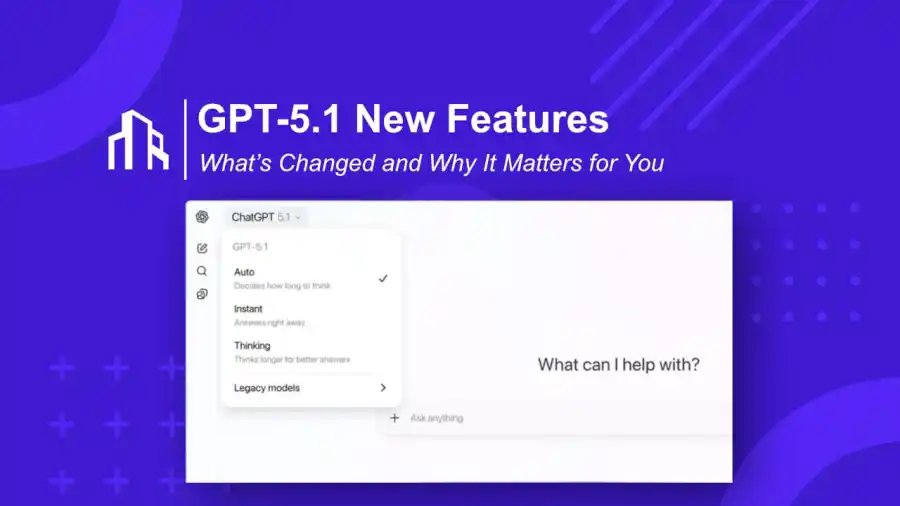
When you need immediate, accurate answers, GPT-5.1 Instant steps up as the ultimate daily driver for daily AI operations. This specific GPT-5.1 variant is engineered explicitly for tasks requiring high-speed text generation and warmer, more accessible conversational tones. GPT-5.1 Instant possesses a dynamic, adaptive reasoning engine that rapidly evaluates the underlying complexity of your prompt upon submission. If GPT-5.1 Instant determines the task is relatively straightforward, it fires back a precise, engaging response in mere milliseconds.
Furthermore, GPT-5.1 Instant drastically reduces server latency for heavily trafficked user-facing applications. Customer service chatbots powered by GPT-5.1 Instant can effortlessly handle thousands of concurrent support queries without breaking a sweat or hallucinating details. The default communication style of GPT-5.1 Instant is noticeably more approachable, effectively bridging the uncanny gap between robotic automation and genuine human empathy. For enterprise businesses scaling their automated operations, deploying GPT-5.1 Instant offers the perfect blend of operational efficiency and unparalleled user satisfaction.
Deep Analysis Powered by GPT-5.1 Thinking
For multifaceted structural problems requiring rigorous, unbreakable logic, GPT-5.1 Thinking formally enters the arena. This advanced GPT-5.1 iteration deliberately slows its processing speed to accurately tackle dense algorithms, complex software architectures, and intricate mathematical proofs. GPT-5.1 Thinking dynamically scales its computational processing time based on the exact, calculated difficulty of the user's prompt. This means GPT-5.1 Thinking operates roughly twice as fast on simple tasks compared to older legacy models, yet it will happily spend double the time untangling truly difficult, multi-step scenarios.

The hard separation between these two distinct GPT-5.1 models prevents the frustrating "overthinking" problem notoriously seen in previous AI generations. You no longer have to wait ten excruciating seconds for a simple local weather update. Conversely, when you ask GPT-5.1 Thinking to optimize a massive, nested database query, it intelligently allocates the massive computational power required to get the code perfectly right on the first try. This dual-pronged approach makes the GPT-5.1 ecosystem an incredibly versatile and powerful toolset.
Mastering Instruction Following with GPT-5.1
One of the most persistent, glaring frustrations in modern prompt engineering has always been uncontrolled model drift. Past software iterations often ignored strict formatting rules or word counts, but GPT-5.1 practically eliminates this irritating issue entirely. The native instruction-following capabilities embedded deep within GPT-5.1 represent a massive leap forward for structured enterprise data generation. When you clearly tell GPT-5.1 to output exactly six words, GPT-5.1 delivers exactly six words, with absolutely no exceptions or extra filler text.
Eliminating Model Drift in GPT-5.1
Model drift typically occurs when an artificial intelligence wanders away from the core constraints of an initial prompt. GPT-5.1 aggressively tackles this by maintaining a rigid, unbreakable adherence to the initial system instructions throughout the entire conversation lifecycle. Content creators relying on GPT-5.1 for automated SEO outlines or strict character-limit social media posts will find this pinpoint accuracy utterly life-changing. GPT-5.1 deeply understands and respects negative constraints—meaning when you tell GPT-5.1 exactly what not to do, it actually listens and obeys.
For high-level enterprise developers, the precision of GPT-5.1 drastically reduces the necessity for complex, multi-shot prompt engineering tactics. You no longer need to write exhaustive paragraphs of context just to force an AI into outputting a simple JSON schema. GPT-5.1 natively grasps rigid structural requirements on the very first try without requiring aggressive course correction. Because GPT-5.1 rarely hallucinates outside of its defined systemic boundaries, businesses can safely automate highly sensitive document generation pipelines.
Real-World Examples of GPT-5.1 Instruction Adherence
Imagine asking a legacy AI model to write a short poem without ever using the letter 'e' anywhere in the text. Older systems would inevitably fail within the first two lines, forgetting the primary rule. GPT-5.1, however, executes this complex constraint flawlessly every single time. This seemingly trivial party trick represents a massive, undeniable leap in cognitive control. GPT-5.1 thoroughly analyzes the negative constraint, builds a localized vocabulary matrix, and generates the pristine output without ever triggering the forbidden parameters.
For working data scientists, GPT-5.1 makes large-scale data extraction an absolute breeze. You can feed a messy, unformatted PDF transcript directly into GPT-5.1 and demand the output strictly in a comma-separated format with highly specific headers. GPT-5.1 will not add annoying conversational filler like "Here is the data you requested!" before printing the output. GPT-5.1 simply provides the exact code string requested, allowing GPT-5.1 to pipe directly into downstream automated databases without requiring human review.
Eight Distinct Personality Modes of GPT-5.1
The humanization of digital intelligence reaches startling new heights with the eight customizable personality modes integrated natively into GPT-5.1. Recognizing that context heavily dictates appropriate tone, OpenAI equipped GPT-5.1 with highly diverse voices suitable for absolutely any scenario. Whether you are coding a sarcastic video game NPC or building a highly formal corporate legal assistant, GPT-5.1 adapts to your needs seamlessly.
Breaking Down the GPT-5.1 Personalities
Let us thoroughly explore the specific communication personas GPT-5.1 now offers to users. The Default GPT-5.1 mode provides a highly balanced, objective tone that is absolutely perfect for general academic research. If you quickly switch GPT-5.1 to Professional mode, the vocabulary immediately shifts to polished, board-room-ready language that excludes colloquialisms. For customer-facing retail bots, the Friendly GPT-5.1 mode utilizes warm, highly approachable phrasing that instantly puts hesitant users at ease.
When you demand absolute transparency, the Candid GPT-5.1 mode strips away all corporate fluff for direct, sometimes blunt honest feedback. Creative writers will undoubtedly adore the Quirky GPT-5.1 setting, which masterfully injects imaginative flair and unexpected, colorful metaphors into the generated text. For busy developers in a rush, Efficient GPT-5.1 cuts straight to the chase, delivering brutal facts with zero filler words. The Nerdy GPT-5.1 mode provides obsessively detailed, highly enthusiastic technical deep-dives into niche subjects. Finally, the Cynical GPT-5.1 mode is perfect for critical business analysis, effectively stress-testing your startup ideas with a highly skeptical, questioning lens.
Real-Time Customization Impact in GPT-5.1
What makes these distinct GPT-5.1 personalities truly revolutionary is their immediate, frictionless application. If you change the GPT-5.1 personality mid-conversation, the underlying tone shifts instantly without ever requiring a hard chat reset. GPT-5.1 flawlessly maintains the historical context of the entire discussion while seamlessly adopting the new required voice. This fluid, uninterrupted adaptability makes interacting with GPT-5.1 feel remarkably organic and human.

Furthermore, GPT-5.1 demonstrates profound contextual awareness during long interactions. If you explicitly ask GPT-5.1 to "be much more concise" or "explain this advanced concept like I am five," GPT-5.1 will proactively offer to permanently update your global personality preferences. This means GPT-5.1 actively learns how you prefer to communicate over time and molds itself to match your unique daily workflow perfectly.
Technical Leaps: How GPT-5.1 Empowers Developers
Behind the highly polished, user-friendly interface, GPT-5.1 is an absolute computing powerhouse for seasoned software engineers. The official benchmark scores for GPT-5.1 on rigorous industry tests like AIME 2025 and Codeforces showcase a truly dominant lead over all legacy systems. GPT-5.1 does not just write basic script kiddie code; it natively architects comprehensive, scalable software solutions from scratch.
Advanced Mathematical and Coding Mastery
When professional developers leverage GPT-5.1 for daily programming tasks, they immediately notice a drastic, measurable reduction in syntax errors and hidden logical flaws. GPT-5.1 excels at complex multi-language translation, effortlessly porting messy Python scripts into highly optimized, lightning-fast Rust binaries. Because GPT-5.1 inherently understands the broader context of an entire enterprise codebase, its targeted debugging suggestions are incredibly precise and actionable.
GPT-5.1 Thinking is particularly adept at strategic resource allocation for complex, multi-threaded algorithms. When you feed a massive, unstructured dataset into GPT-5.1 and ask for optimization strategies, it breaks the overwhelming problem down into manageable computational chunks. GPT-5.1 actively anticipates potential edge cases and proactively writes robust unit tests to cover them completely. This elite level of foresight makes GPT-5.1 feel significantly less like an autocomplete tool and much more like a dedicated senior staff engineer.
Translating Complex Jargon with GPT-5.1
Another massive technical improvement explicitly found in GPT-5.1 is its unparalleled ability to demystify complex industry jargon. When GPT-5.1 explains advanced machine learning concepts or dense cryptographic protocols, it purposefully avoids unnecessary gatekeeping terminology. GPT-5.1 naturally and smoothly weaves plain-English definitions into its core explanations, ensuring that junior developers can follow along easily without getting lost.
This high level of clarity makes GPT-5.1 an absolutely unparalleled tool for drafting technical documentation. You can comfortably feed messy, convoluted legacy code into GPT-5.1, and it will automatically generate pristine, easily digestible read-me files for your repository. By perfectly balancing deep technical accuracy with highly accessible language, GPT-5.1 drastically accelerates technical knowledge transfer within growing engineering teams.
Navigating the GPT-5.1 Rollout and API Access
Thoroughly understanding the deployment timeline is absolutely crucial for technical teams planning to integrate GPT-5.1 into production. OpenAI has purposefully adopted a highly calculated, heavily phased approach for the global GPT-5.1 rollout. This conservative strategy ensures the underlying GPT-5.1 server infrastructure remains stable as millions of eager users transition to the new advanced architecture simultaneously.
Phased Deployment Strategies for GPT-5.1
Paid premium subscribers gain immediate, unfettered access to the GPT-5.1 ecosystem today. If you are currently operating on a Pro, Plus, Go, or Business tier, GPT-5.1 is already waiting for you in your primary model dashboard. Enterprise and Educational users feature a unique seven-day early-access toggle for GPT-5.1, allowing internal network administrators to fully vet the model's safety before executing a company-wide push. Free users will eventually gain access to GPT-5.1 once the initial rollout stabilizes and server loads balance out.
Legacy AI systems will remain available temporarily to prevent broken workflows, but the writing is permanently on the wall: GPT-5.1 is the undisputed new standard. Forward-thinking organizations should enthusiastically begin their migration to GPT-5.1 immediately to capitalize on the massive performance gains. The gradual, steady rollout allows the GPT-5.1 engineering team to actively monitor API server loads and patch any unforeseen edge cases in real-time without disrupting global service.
Integrating the GPT-5.1 API
For dedicated software teams, the GPT-5.1 API represents the undisputed holy grail of modern conversational AI integration. GPT-5.1 Instant is available to query right now under the specific `gpt-5.1-chat-latest` endpoint. The mathematically heavier GPT-5.1 Thinking model will seamlessly join the public API ecosystem shortly after. Both distinct GPT-5.1 models maintain strict backward compatibility with existing API formatting structures, making the enterprise upgrade process remarkably frictionless.
When you actively switch your backend API calls to GPT-5.1, you instantly inherit the coveted adaptive reasoning and strict instruction-following capabilities. GPT-5.1 fundamentally reduces the token overhead required for extensive prompt engineering, which directly and positively translates to lower monthly operational costs. By tapping directly into the GPT-5.1 API, agile developers can rapidly prototype next-generation SaaS applications without ever needing to rebuild their underlying network infrastructure.
Cost Management and Token Efficiency in GPT-5.1
When actively upgrading a tech stack to GPT-5.1, strict financial forecasting remains a critical step for modern CTOs. Because GPT-5.1 is vastly superior at fundamentally understanding brief instructions, you save massive amounts of input tokens immediately. You no longer have to feed GPT-5.1 a dense ten-page stylistic guide to get good results. A quick, highly focused two-sentence directive is more than enough for GPT-5.1 to capture your brand voice perfectly.
Furthermore, the output tokens generated by the GPT-5.1 Efficient mode are naturally concise and tightly packed. By aggressively forcing GPT-5.1 to eliminate rambling explanations, you actively cut your API billing costs down significantly. GPT-5.1 proves unequivocally that fundamentally smarter models can actually be much cheaper to operate at scale if utilized correctly. The immense ROI of migrating your platforms to GPT-5.1 becomes completely undeniable when you factor in these compounding token savings.
Essential Safety Guardrails in GPT-5.1
With great conversational power comes the absolute, critical need for robust digital safety mechanisms. While GPT-5.1 is incredibly capable and fluid, it introduces unique psychological challenges that dedicated safety researchers are actively monitoring around the clock. Deeply understanding the ethical limitations of GPT-5.1 is highly vital for responsible corporate deployment.
Addressing Emotional Reliance on GPT-5.1
One of the most fascinating societal challenges surrounding GPT-5.1 is its unprecedented emotional resonance. Because GPT-5.1 is so profoundly warm, friendly, and human-like in its delivery, there is a genuine risk of vulnerable users forming unhealthy emotional attachments to it. The GPT-5.1 architecture is so highly convincing that it can easily blur the established line between standard software utility and perceived human interaction.
OpenAI is actively and continuously developing new metrics to monitor potential mental health impacts caused by prolonged GPT-5.1 usage. Organizations actively deploying GPT-5.1 in health, wellness, or therapy contexts must be acutely aware of this psychological phenomenon. You must implement strict UI guardrails to explicitly remind your users that GPT-5.1 is an artificial construct. Balancing the highly engaging nature of GPT-5.1 with responsible user psychology is a highly delicate tightrope walk.
Balancing Warmth and Security in GPT-5.1
Furthermore, early testing of GPT-5.1 has shown slight statistical regressions in highly specific, rigid safety benchmarks. The nuanced, highly flexible nature of GPT-5.1 sometimes struggles with the rigid filtering of disallowed content compared to older, more heavily censored baseline models. Relentless hackers and bad actors will inevitably try to jailbreak GPT-5.1 using complex psychological framing prompts.
Enterprise users must legally layer their own strict security protocols directly on top of the GPT-5.1 API. Do not ever rely solely on the native GPT-5.1 network filters if you are actively operating in highly regulated industries like global finance or healthcare. By deeply understanding these potential edge-case vulnerabilities, you can safely and legally harness the immense processing power of GPT-5.1 while heavily protecting your end-users from harm.
The Legal Landscape Surrounding GPT-5.1
Leading tech companies are currently navigating incredibly complex legal waters with the widespread release of GPT-5.1. The highly engaging nature of GPT-5.1 has sparked fierce global debates regarding digital sentience laws and core consumer protection. International lawmakers are closely scrutinizing how GPT-5.1 actively handles emotionally charged prompts from vulnerable demographic groups.
Corporate compliance officers must treat GPT-5.1 interactions with the same regulatory respect as a human employee communication. If your bespoke application uses GPT-5.1 to provide preliminary financial or medical advice, you must ensure your system prompts explicitly forbid GPT-5.1 from making definitive, legally binding diagnoses. GPT-5.1 is an immensely powerful tool, not a licensed medical professional, and your user interface must clearly and constantly communicate this boundary.
Accelerating GPT-5.1 Integration via GPT Proto
Manually managing multiple API keys, aggressively monitoring usage limits, and constantly updating backend endpoints for GPT-5.1 can quickly become a logistical nightmare for development teams. This is exactly where GPT Proto fundamentally changes the game. GPT Proto acts as the ultimate, highly optimized unified gateway for GPT-5.1 and other leading AI models on the market.
Why Use GPT Proto for GPT-5.1?
When you strategically route your GPT-5.1 server requests heavily through GPT Proto, you entirely eliminate major integration complexity. GPT Proto gracefully provides a single, perfectly unified API interface for your applications. This means you can easily query GPT-5.1, instantly evaluate the response, and actively compare it against other top-tier models without writing extensive custom code for each provider. The very moment GPT-5.1 Thinking hits the open market, GPT Proto users gain automatic, unhindered access.
Moreover, GPT Proto offers incredibly transparent, highly predictable pay-as-you-go pricing for all GPT-5.1 API interactions. Businesses can often secure immediate access to premium GPT-5.1 capabilities at a massive fraction of the standard operational cost through optimized server routing. For lean startups aggressively bootstrapping their AI infrastructure, accessing GPT-5.1 via the GPT Proto platform is undeniably the most financially viable long-term strategy.
Enterprise Reliability for GPT-5.1 Deployments
GPT Proto effectively ensures that your GPT-5.1 software integrations boast uncompromising, enterprise-grade reliability metrics. With advanced low-latency network routing and guaranteed high uptime Service Level Agreements, your GPT-5.1 applications will aggressively remain fast and responsive even during peak global traffic hours. You do not have to constantly worry about strict OpenAI API rate limits unfairly bottlenecking your core GPT-5.1 operational workflows.
Whether you are a solo indie developer building a niche productivity app or a Fortune 500 company completely overhauling your big data analytics pipeline, GPT Proto dramatically streamlines your journey with GPT-5.1. It is the absolute smartest way to reliably future-proof your expanding tech stack and strongly ensure you are always leveraging the absolute best version of GPT-5.1 currently available.
The Future of Conversational AI with GPT-5.1
The highly publicized release of GPT-5.1 is not just a standard incremental update; it is a fundamental, sweeping re-imagining of how humans naturally interact with complex computing machines. By actively and humbly listening to harsh user feedback, OpenAI has masterfully crafted GPT-5.1 to be exactly what the commercial market demanded: an AI that is both relentlessly intelligent and deeply intuitive to operate.
Transforming Global Industries with GPT-5.1
We are currently about to watch GPT-5.1 utterly transform every major global industry from the ground up. In early education, GPT-5.1 will serve as a hyper-personalized, endlessly patient tutor that dynamically adapts its personality to fit the specific learning style of every individual student. In modern healthcare, the meticulous, error-free reasoning of GPT-5.1 Thinking will greatly assist doctors in diagnosing rare genetic diseases by analyzing massive volumes of medical literature in mere seconds.
Corporate legal professionals will heavily use GPT-5.1 to instantly summarize dense, hundred-page business contracts, highly confident that the strict instruction-following capabilities of GPT-5.1 will prevent critical legal details from being accidentally omitted. The massive economic ripple effects of the GPT-5.1 release will be strongly felt across digital marketing, global finance, retail customer service, and commercial software development for many years to come.
How GPT-5.1 Redefines Search and Discovery
Traditional, link-based search engines are rapidly losing massive ground to conversational interfaces, and GPT-5.1 radically accelerates this unstoppable trend. Instead of tediously sifting through ten blue links on a page, users now directly turn to GPT-5.1 for synthesized, highly definitive answers. GPT-5.1 instantly cross-references vast amounts of internal training knowledge to deliver highly comprehensive summaries instantly, completely bypassing traditional search paradigms.
Web publishers and SEO professionals must aggressively adapt their strategies to the expanding GPT-5.1 ecosystem. Optimizing digital content for GPT-5.1 involves structuring core data so the AI can easily parse, digest, and accurately cite it. As GPT-5.1 quickly becomes the primary research tool for millions of working professionals, being accurately understood by the GPT-5.1 neural network will undoubtedly be the supreme new benchmark for digital visibility.
Final Thoughts on the GPT-5.1 Era
As we confidently step into this bold new era, your personal ability to fully master GPT-5.1 will directly dictate your future competitive advantage in the marketplace. The brilliant dual architecture, highly customizable personalities, and unyielding logical accuracy make GPT-5.1 the most powerful commercial AI product ever released to the public. It is finally time to stop wrestling with stubborn, highly uncooperative legacy algorithms.
Embrace the massive GPT-5.1 revolution today, integrate it highly intelligently through reliable platforms like GPT Proto, and watch your daily operational efficiency absolutely skyrocket. The new GPT-5.1 standard is firmly here, and it is fully ready to work tirelessly for you.