The era of simple chatbots is drawing to a close. As we look toward the technological landscape of 2026, the artificial intelligence industry is rallying around a transformative new paradigm: Next-State Prediction. Unlike traditional models that merely guess the next word in a sentence, Next-State Prediction empowers systems to forecast the future physical state of reality. This shift is the missing link between digital reasoning and physical action. It is driving the development of sophisticated world models, autonomous robotics, and scientific breakthroughs, effectively bridging the gap between narrow AI and true General Intelligence.
Schuyler Stacy2026-03-01
Next-State Prediction: The Future of AGI & World Models
Explore how Next State Prediction is revolutionizing AI. From world models to embodied robotics and scientific discovery, learn why this shift is the cornerstone of the 2026 tech landscape and the journey toward true general intelligence.
Table of contents
Beyond Text: The Rise of Next-State Prediction
For the past decade, the AI revolution has been dominated by Large Language Models (LLMs) trained on the objective of next-token prediction. These systems excelled at processing text, generating code, and mimicking human conversation. However, they possessed a fundamental flaw: they understood syntax but lacked a grounding in physical reality.
We are now witnessing a pivot toward Next-State Prediction. This approach represents a profound evolution in machine learning architecture. Instead of predicting the next syllable in a string of text, models are now being trained to predict the next frame in a video, the next reaction in a chemical process, or the next movement of a robotic arm.
Next-State Prediction is not just about generating pixels; it is about simulating physics. By understanding the laws of cause and effect, these models build internal representations of the world—often called "World Models." This capability allows AI to reason about objects, permanence, gravity, and time in ways that text-based models never could.
This transition marks the cornerstone of the 2026 tech landscape. We are moving away from stochastic parrots that regurgitate data and toward agents capable of planning and reasoning through Next-State Prediction.
The Mechanics of World Models
To grasp the significance of Next-State Prediction, one must understand the concept of a World Model. A World Model is an AI system that maintains a dynamic simulation of its environment. It uses this simulation to test hypotheses and predict outcomes before taking action in the real world.
Leading research labs, including OpenAI with its Sora model and emerging startups like World Labs, are spearheading this frontier. While Sora appears to be a video generation tool, it is fundamentally a physics engine powered by Next-State Prediction. When asked to generate a video of a glass falling, the model doesn't just animate a picture; it calculates the trajectory, impact, and shattering based on learned physical data.
Key Capabilities Unlock by Next-State Prediction
- Spatial and Temporal Consistency: Objects retain their properties over time. If a car drives behind a building, the model knows it still exists and predicts its re-emergence accurately.
- Causal Reasoning: The system understands that dropping a match in dry grass causes a fire. Next-State Prediction allows the AI to foresee consequences without needing to experience them.
- Counterfactual Simulation: World models can imagine "what if" scenarios, allowing for safe testing of dangerous strategies in a virtual environment.
This capability is the bedrock of future AGI. A machine cannot be considered intelligent if it cannot predict the consequences of its actions. Next-State Prediction provides the foresight necessary for intelligent decision-making.
Embodied AI and the Robotics Revolution
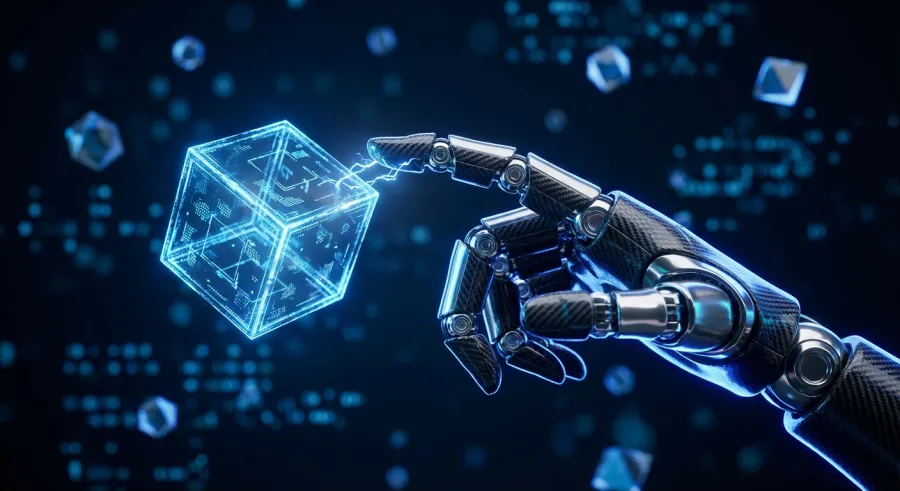
The robotics industry has long suffered from the Moravec Paradox: high-level reasoning is easy for computers, but low-level sensorimotor skills are incredibly hard. Next-State Prediction is finally solving this paradox, ushering in the age of "Embodied AI."
In 2024, robotic demonstrations were often teleoperated or strictly hard-coded. Today, companies like Tesla (with Optimus) and Physical Intelligence are deploying robots that learn through observation. These machines utilize Vision-Language-Action (VLA) models grounded in Next-State Prediction logic.
When a robot approaches a door handle, it doesn't run a script. It observes the current state of the door, predicts the Next-State Prediction required to open it (rotation, pressure, pull), and executes the motor commands to achieve that state. If the door is stuck, the model updates its prediction and adjusts its force in real-time.
From Rigid Scripts to Fluid Adaptability
The industrial implications are staggering. Traditional automation required expensive, rigid programming. If a box on a conveyor belt was misaligned by an inch, the system failed. With Next-State Prediction, robots possess the adaptability of biological systems.
Consider the manufacturing floor. A robot equipped with Next-State Prediction capabilities can handle variations in lighting, object placement, and unexpected obstacles. It continuously predicts the flow of the assembly line and proactively corrects errors before they cascade.
| Operational Aspect | Traditional Robotics | Next-State Prediction AI |
|---|---|---|
| Programming | Explicit Code / Scripts | Imitation Learning / Observation |
| Adaptability | Brittle; breaks on variance | Fluid; adjusts to new states |
| Environment | Structured / Cage-bound | Unstructured / Human-centric |
| Learning | Offline updates | Real-time Next-State Prediction |
This shift from programming to learning allows for the deployment of general-purpose robots in homes and hospitals, environments previously deemed too chaotic for automation.
Multi-Agent Systems and Cognitive Architecture
The influence of Next-State Prediction extends beyond physical robots to digital agents. The future of enterprise productivity lies in multi-agent systems—swarms of specialized AI workers collaborating to solve complex tasks.
In a multi-agent workflow, coordination is the bottleneck. How does a "Coder Agent" know when the "Reviewer Agent" is ready? They rely on Next-State Prediction protocols. Each agent predicts the workflow state required by its peers, ensuring seamless handoffs and minimizing latency.
Protocols like Anthropic’s Model Context Protocol (MCP) are emerging as the TCP/IP of this new agent economy. They provide a standardized language for agents to share their Next-State Prediction data, allowing a research agent to perfectly anticipate the data format needed by an analysis agent.
The Wisdom of the Synthetic Crowd
Diversity enhances the accuracy of Next-State Prediction. When multiple agents with different specialized training data analyze a problem, their aggregate prediction is statistically more likely to be correct. This "Ensemble Learning" mimics human organizational structures but operates at the speed of silicon.
Companies are leveraging this to automate entire business verticals. A marketing department might consist of five agents: one for copy, one for design, one for analytics, and a manager agent. The manager uses Next-State Prediction to forecast campaign performance and allocate resources dynamically across the swarm.
Accelerating Science with Physics-Aware Models
Perhaps the most noble application of Next-State Prediction is in the realm of scientific discovery, often termed "AI for Science" (AI4S). Here, the "states" being predicted are not video frames, but molecular configurations and biological interactions.
Traditional drug discovery is a game of trial and error, taking decades and billions of dollars. AI Scientists powered by Next-State Prediction can simulate the interaction between a drug candidate and a protein target in silico. By predicting the stability of chemical bonds and the folding pathways of proteins, these models filter out failures before a single test tube is used.
We are seeing the emergence of "Science Foundation Models." These massive neural networks are trained on genomic sequences, weather patterns, and particle physics data. Their sole purpose is to master Next-State Prediction at a fundamental level, allowing researchers to compress centuries of experimentation into weeks.

The Global Race for Scientific Dominance
Nations recognize that Next-State Prediction in science is a matter of national security and economic supremacy. Projects like the "Genesis Mission" in the West and similar initiatives in China aim to create closed-loop laboratories where AI defines the hypothesis, runs the experiment, and analyzes the results autonomously.
From designing new alloys for fusion reactors to predicting climate patterns with unprecedented accuracy, Next-State Prediction is becoming the operating system for the scientific method. It allows us to navigate the vast search space of potential discoveries with a compass rather than a blindfold.
The Economic Reality: Scaling with GPT Proto
While the promise of Next-State Prediction is limitless, the computational cost is high. Simulating physics and running multi-agent swarms requires significantly more inference compute than simple text generation. For startups and enterprises, this creates a barrier to entry.
Efficiency is no longer a luxury; it is a survival metric. Developers must balance the accuracy of their Next-State Prediction models with the cost of running them. This is where infrastructure becomes the competitive advantage.
GPT Proto has positioned itself as a critical enabler in this ecosystem. By acting as a unified gateway to top-tier models from OpenAI, Anthropic, and Google, GPT Proto allows developers to route their Next-State Prediction tasks to the most cost-effective provider instantly.
With savings of up to 60% on mainstream API prices, GPT Proto makes it economically feasible to move from simple prototypes to high-volume production. Whether you are running a fleet of robots or a swarm of research agents, the ability to access affordable, high-performance compute is essential for scaling Next-State Prediction applications.
Overcoming the Trough of Disillusionment
The AI industry is currently navigating the classic "Trough of Disillusionment." Early adopters realized that simple chatbots could not solve complex, multi-step problems. The solution is not to abandon AI, but to deepen it with Next-State Prediction.
Businesses are shifting their focus from "Chat" to "Work." They are replacing conversational interfaces with autonomous agents that deliver results. This transition relies entirely on the reliability provided by Next-State Prediction. When a system can accurately forecast the outcome of its work, humans gain the trust required to step back and let the AI take the wheel.
By 2026, we anticipate a massive rebound in AI ROI. This "V-shaped" recovery will be driven by practical, physics-aware applications that solve tangible problems in logistics, healthcare, and manufacturing—all powered by the robust logic of Next-State Prediction.
Conclusion: The Era of Prediction
The shift from next-token to Next-State Prediction is the defining technological narrative of our time. It marks the maturation of artificial intelligence from a digital curiosity into a physical force. We are no longer just teaching computers to speak; we are teaching them to understand the world.
For entrepreneurs, developers, and enterprises, the mandate is clear: adopt Next-State Prediction strategies or risk obsolescence. Whether it involves upgrading robotic fleets, deploying agentic workflows, or leveraging AI for R&D, the ability to simulate and predict future states is the new competitive moat.
As we embrace this future, platforms like GPT Proto will remain essential, providing the accessible infrastructure needed to power the engines of Next-State Prediction. The journey toward General Intelligence is paved with accurate predictions, and we are just taking our first confident steps.
Related models
All models


