Why This Matters Now: The High Stakes of the Google Veo 3.1 API
Understanding the Market Position of the Google Veo 3.1 API
The arrival of the google veo 3.1 api marks a significant shift in how we think about generative video. It isn't just another model; it's Google’s play for the professional creative market. While hobbyists play with web interfaces, the real work happens through the google veo 3.1 api.
But here's the reality: the industry is skeptical. Early users have had mixed results. Some developers see the google veo 3.1 api as the gold standard for vertical social content. Others look at the bill and wonder if the google veo 3.1 api is worth the premium pricing.
We are currently in a "video arms race." Every major AI player is dropping models weekly. The google veo 3.1 api needs to prove it can handle more than just 2D-style animations. It needs to show it can provide real utility for businesses that need consistent output.
The google veo 3.1 api isn't just about making pretty pictures move; it's about whether an API can finally replace a junior editor for social media ad creative.
The Cost Factor Impacting the Google Veo 3.1 API Users
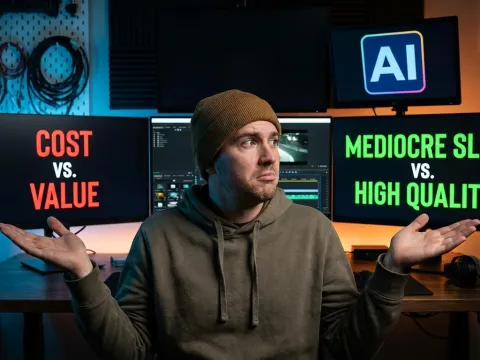
Let's talk about the elephant in the room: the cost. I’ve seen developers burn through fifteen dollars in minutes testing the google veo 3.1 api. For a single minute of 720p video, that price tag feels heavy to many early adopters.
Video generation is resource-intensive, and the google veo 3.1 api reflects that in its credit consumption. If you are used to the pennies-per-request model of text LLMs, the google veo 3.1 api will give you sticker shock. It requires a different budget strategy.
Is it a "ripoff"? Not necessarily. But the google veo 3.1 api is definitely not for casual experimentation without a clear ROI. You need to know exactly what you are building before you start hammering the google veo 3.1 api endpoints with test requests.
High costs mean the stakes for successful generations are higher. When each call to the google veo 3.1 api costs significant money, you can't afford "mediocre 2D slop." You need the google veo 3.1 api to hit the mark on the first or second try.
Core Concepts Explained: How the Google Veo 3.1 API Operates
The "Ingredients to Video" Logic in the Google Veo 3.1 API
One of the most impressive parts of the google veo 3.1 api is what Google calls "Ingredients to Video." Most models just take a text string. The google veo 3.1 api allows you to provide reference images to anchor the generation process.
This is a massive deal for brand consistency. If you use the google veo 3.1 api to create a series of ads, you can feed it a product photo. The google veo 3.1 api then ensures the product looks the same across different scenes.
Without this image-to-video capability, the google veo 3.1 api would just be another toy. But by allowing visual references, the google veo 3.1 api moves into the territory of professional production. It’s about control, not just randomness.
Think of it as giving the AI a storyboard instead of just a script. The google veo 3.1 api interprets the visual cues from your "ingredients" to maintain style, lighting, and character features. This is where the google veo 3.1 api pulls ahead of simpler tools.
Table 1: Input Methods for the google veo 3.1 api
| Input Type |
Benefit for the google veo 3.1 api |
Best Use Case |
| Pure Text |
Maximum creativity |
Abstract backgrounds or concept art |
| Image Reference |
Visual consistency |
Product demos and brand ads |
| Style Transfer |
Uniform aesthetic |
Creating themed content series |
Vertical Video Native Support in the Google Veo 3.1 API
Social media runs on vertical video, and the google veo 3.1 api knows it. Unlike older models that forced you to crop 16:9 shots, the google veo 3.1 api can generate native 9:16 content. This is a huge time-saver.
When you call the google veo 3.1 api for a TikTok or Reel, you don't lose the edges of your composition. The google veo 3.1 api composes the scene specifically for the vertical frame. This results in much more natural-looking social content.
Using the google veo 3.1 api for vertical content means you aren't fighting the AI's natural tendencies. Many models default to cinematic wide shots. The google veo 3.1 api is flexible enough to understand the requirements of different platforms.
This native support is why digital marketers are flocking to the google veo 3.1 api. It reduces the post-processing work. You get a file from the google veo 3.1 api that is essentially ready to upload to a social campaign.
Step-by-Step Walkthrough: Getting Started with the Google Veo 3.1 API
Setting Up Your First Request with the Google Veo 3.1 API
To start using the google veo 3.1 api, you first need to authenticate. Like most Google Cloud services, the google veo 3.1 api requires a service account with the proper permissions. Don't skip the security setup here.
Once you have your credentials, you can make your first call. Most users start with a simple prompt to test the google veo 3.1 api's latency. You'll quickly notice that video generation via the google veo 3.1 api isn't instantaneous.
You can test the fast preview version of the google veo 3.1 api if you need quicker iterations during development. This helps you refine your prompts without waiting several minutes for each high-res render from the google veo 3.1 api.
The request body for the google veo 3.1 api typically includes your prompt, the aspect ratio, and any reference images. Pay close attention to the parameters. Small changes in the google veo 3.1 api settings can lead to vastly different video results.
- Initialize your Google Cloud environment for the google veo 3.1 api.
- Prepare your reference images and text prompt.
- Choose between the fast or standard preview in the google veo 3.1 api.
- Execute the generation and poll for completion.
- Download the resulting MP4 from the google veo 3.1 api storage.
Monitoring Your Usage of the Google Veo 3.1 API
Because the google veo 3.1 api is expensive, monitoring is critical. You should always track your google veo 3.1 api calls through a centralized dashboard. This prevents billing surprises at the end of the month.
Setting up alerts for the google veo 3.1 api consumption is a best practice. If a script goes rogue and starts looping google veo 3.1 api requests, you could lose hundreds of dollars in an hour. This is a common pitfall for new teams.
And since costs are a concern, many teams are looking at aggregators. You can manage your API billing more effectively by using platforms that offer tiered pricing or discounts for models like the google veo 3.1 api.
Managing the google veo 3.1 api at scale requires a robust logging system. You want to know which prompts are producing the best results and how much each successful video is costing you. The google veo 3.1 api provides metadata for this analysis.
Common Mistakes & Pitfalls: What to Avoid with the Google Veo 3.1 API
The Struggle with Prompt Adherence in the Google Veo 3.1 API
A recurring complaint about the google veo 3.1 api is that it sometimes ignores specific instructions. You might ask for a red car, and the google veo 3.1 api gives you a blue one. This can be incredibly frustrating for precision work.
The "Ingredients to Video" feature helps, but the google veo 3.1 api still relies heavily on the text prompt. If your prompt is too vague, the google veo 3.1 api fills in the gaps with its own training data, which might not match your vision.
I have found that the google veo 3.1 api performs better with descriptive, sensory language. Instead of "a forest," tell the google veo 3.1 api about "sunlight filtering through pine needles." Detail is the best way to get the google veo 3.1 api to listen.
And don't over-complicate things. Giving the google veo 3.1 api too many conflicting commands in one prompt often leads to "slop." The google veo 3.1 api tries to do everything and ends up doing nothing well. Simplicity often wins.
When the google veo 3.1 api fails to follow a basic prompt, it's usually because the prompt structure was too complex for the current model weights to resolve.
Overestimating the Realism of the Google Veo 3.1 API
While the google veo 3.1 api is capable, it isn't always photorealistic. There is a "uncanny valley" effect that can occur in videos generated by the google veo 3.1 api. Faces might slightly morph, or physics might look a bit off.
Expecting the google veo 3.1 api to match the quality of a high-end CGI studio is a mistake. It is an AI tool, and it has limitations. If you need 100% anatomical accuracy, the google veo 3.1 api might not be your first choice yet.
Many users have compared the google veo 3.1 api to competitors like Sora or Kling. While Sora might have an edge in pure realism, the google veo 3.1 api is often more accessible for actual development. But don't expect miracles from the google veo 3.1 api.
The trick is to use the google veo 3.1 api for what it's good at: stylized content, motion graphics, and background elements. Using the google veo 3.1 api for close-up human dialogue is still a very risky move for a professional project.
Expert Tips & Best Practices: Mastering the Google Veo 3.1 API
Optimizing Your Prompts for the Google Veo 3.1 API
To get the most out of the google veo 3.1 api, you need to think like a cinematographer. Describe the camera movement. Tell the google veo 3.1 api if you want a pan, a zoom, or a static shot. This helps the AI structure the motion.
Also, utilize the reference images to their full potential. If you are using the google veo 3.1 api for a brand, upload a high-quality logo or product shot. The google veo 3.1 api will use those pixels as the foundation for the entire video.
Check the standard preview of the google veo 3.1 api to see how it handles complex lighting. If the lighting looks flat, add "dramatic shadows" or "golden hour" to your prompt. The google veo 3.1 api responds well to lighting-specific keywords.
Iteration is key. Use the fast preview of the google veo 3.1 api to get the motion right, then switch to the high-quality mode once the prompt is dialed in. This saves you a fortune in the google veo 3.1 api credits during the creative phase.
Table 2: Keyword Modifiers for the google veo 3.1 api
| Category |
Keywords for the google veo 3.1 api |
Visual Result |
| Camera |
Dolly zoom, aerial drone, handheld |
Improved motion dynamics |
| Lighting |
Volumetric fog, neon glow, soft focus |
Atmospheric depth |
| Quality |
8k resolution, cinematic color grade |
Professional finish |
Strategic Cost Management with GPT Proto and the Google Veo 3.1 API
If you are planning to run a high-volume operation with the google veo 3.1 api, you need a strategy to keep costs down. Using a service like GPT Proto can be a literal lifesaver here. They offer significant discounts on mainstream AI APIs, including Google's lineup.
By using GPT Proto's unified API interface, you can access the google veo 3.1 api alongside other models like Midjourney or Claude. This allows you to generate your "ingredients" in one model and feed them into the google veo 3.1 api through the same platform.
The smart scheduling feature of GPT Proto is particularly useful for the google veo 3.1 api. You can choose "Cost-first" mode when you are doing batch generations that aren't time-sensitive. This helps you get the most out of every dollar spent on the google veo 3.1 api.
And let's be honest, the google veo 3.1 api is pricey. Getting up to a 70% discount on these types of high-end APIs through GPT Proto makes the difference between a viable product and a failed experiment. It’s the smart way to build with the google veo 3.1 api.
What's Next: The Future Outlook for the Google Veo 3.1 API
The Impending Release of the Next Google Veo 3.1 API Version
There is constant talk about "Veo 4" on the horizon. While the current google veo 3.1 api is powerful, everyone knows Google is working on something faster and more accurate. The google veo 3.1 api is just a milestone, not the destination.
Future versions will likely address the current pain points of the google veo 3.1 api, such as prompt adherence and cost. We expect the next iteration to be more "compute-efficient," which could finally bring the price per minute down for the google veo 3.1 api users.
Staying updated with the latest AI industry updates is essential. When a new version of the google veo 3.1 api drops, you’ll want to be the first to test if it solves the "2D slop" issues reported by the community.
And as models improve, the integration between the google veo 3.1 api and other Google services like YouTube will likely tighten. We might soon see the google veo 3.1 api built directly into creator tools, making it even more ubiquitous for the average developer.
Final Verdict on the Google Veo 3.1 API Landscape
Is the google veo 3.1 api the best tool on the market right now? It depends on your needs. For social media marketers who need vertical video and brand consistency, the google veo 3.1 api is hard to beat. The "ingredients" logic is a winner.
But for those on a tight budget, the google veo 3.1 api is a tough sell. You have to be prepared for the expense and the occasional prompt failure. It’s a tool for practitioners who have the patience to master the google veo 3.1 api's quirks.
I recommend starting small. Use the google veo 3.1 api for specific, high-value assets rather than trying to generate your entire video library with it. As you get a feel for how the google veo 3.1 api handles different prompts, you can scale up your usage.
The google veo 3.1 api is a glimpse into the future of content creation. It’s not perfect, it’s not cheap, but it is incredibly capable. If you're serious about AI video, you can't afford to ignore what the google veo 3.1 api is bringing to the table.
Written by: GPT Proto
"Unlock the world's leading AI models with GPT Proto's unified API platform."