The Dawn of the Autonomous AI Agent in Enterprise
The technological ground beneath modern enterprises is shifting. We are rapidly moving away from the era of static software and simple chatbots into a dynamic new world defined by the autonomous AI Agent. This transition represents perhaps the most significant leap in operational productivity since the widespread adoption of cloud computing.

In the innovation hubs stretching from Silicon Valley to Beijing, the narrative has evolved. Investors and CTOs are no longer impressed by conversational algorithms that simply mimic human speech. They are actively seeking a robust AI Agent capable of solving tangible business problems with precision, reliability, and autonomy.
As we navigate through 2024, the focus has narrowed considerably. The initial hype surrounding general artificial intelligence is maturing into a practical appreciation for the specialized AI Agent. These tools are fast becoming the backbone of the modern digital workforce, fundamentally transforming how organizations conceptualize labor and task execution.
To fully grasp this shift, one must look at the capital allocation data. Enterprises are moving away from broad, horizontal platforms. Instead, they are pouring resources into deploying a vertical AI Agent tailored for specific, high-stakes industries such as legal discovery, medical diagnostics, or high-frequency financial consulting.
Defining the Architecture of a Modern AI Agent
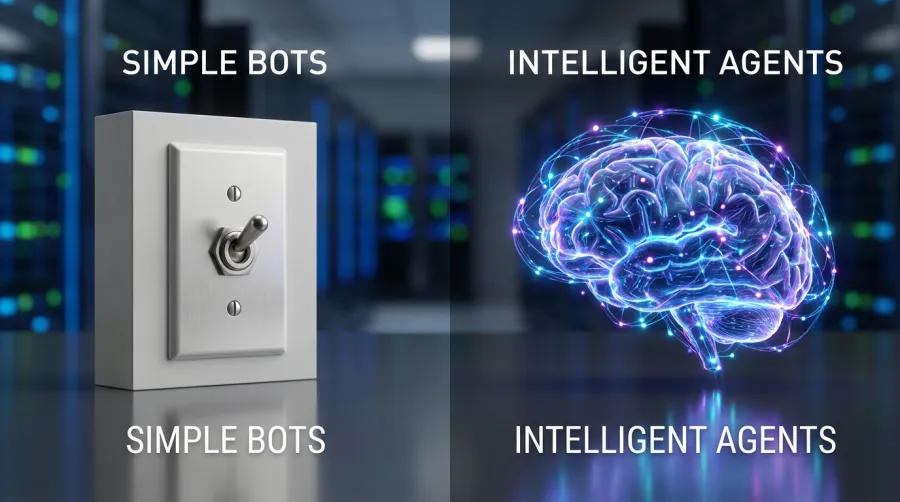
What differentiates a standard Large Language Model (LLM) wrapper from a true AI Agent? The distinction lies in agency and architecture. While a chatbot waits for a prompt to generate text, an AI Agent perceives a goal, breaks it down into actionable steps, and executes them iteratively.
The architecture of a sophisticated AI Agent involves a complex loop of perception, planning, action, and reflection. It does not just output data; it interacts with other software, calls APIs, and manipulates files. This ability to use tools is what separates a passive assistant from an active digital employee.
The Shift from Reactive to Proactive
In the early days of generative AI, the industry faced a stability crisis. Early iterations of the AI Agent would often hallucinate or freeze when confronted with non-linear tasks. This created a significant trust gap between enthusiastic developers and pragmatic enterprise buyers who demanded "five-nines" reliability.
Today, the narrative has shifted toward "enterprise-grade" stability. A modern AI Agent is judged by its ability to handle edge cases gracefully. It must maintain high accuracy while operating strictly within the security perimeters of a Fortune 500 infrastructure. The shift is psychological as well: we are moving from an assistant that asks, "How can I help?" to an agent that states, "I have completed the task."
How the AI Agent Redefines the B2B Landscape
The Business-to-Business (ToB) sector serves as the primary laboratory for AI Agent deployment. In markets like North America, where labor costs are a significant line item, the drive for efficiency is relentless. Every hour of human labor saved by an AI Agent translates directly into improved gross margins.
Contrast this with the consumer market (ToC), where apps focus on entertainment or personal convenience. The enterprise AI Agent is focused strictly on Return on Investment (ROI). This clear financial incentive explains the massive influx of venture capital into autonomous B2B tools.
We are witnessing the rise of the "Prosumer Bridge." Many professionals start using a personal AI Agent to manage their schedules or draft emails. They quickly realize the immense power of the tool and introduce it into their professional workflows, eventually forcing their organizations to adopt site-wide licenses. This bottom-up adoption strategy is creating a viral loop for AI Agent software.
Key Differences: Chatbots vs. Agents
To understand the value proposition, we must compare the legacy technology with the new wave of innovation:
| Feature |
Standard Chatbot |
Modern AI Agent |
| Autonomy |
Low (Requires constant prompting) |
High (Goal-Oriented Execution) |
| Task Complexity |
Single-turn conversations |
Multi-step, Long-horizon Workflows |
| Tool Usage |
Limited or None |
Extensive (API, Web, Database) |
| Learning |
Static per session |
Adaptive Feedback Loops |
The Economic Challenge: Compute and Cost
A significant hurdle for any developer building a robust AI Agent is the cost of compute. Running complex reasoning chains—where the agent must "think" before it acts—consumes massive amounts of tokens. This reality makes model selection a life-or-death decision for startups and enterprise IT departments alike.
Many developers are discovering that a single model cannot do it all efficiently. A multi-modal AI Agent needs to switch dynamically between different providers to remain cost-effective. It might utilize a high-performance model like GPT-4 for complex reasoning and planning, while delegating simpler data extraction tasks to a faster, cheaper model like Claude Haiku or a specialized open-source variant.
Leveraging GPT Proto for Infrastructure Efficiency
This is where infrastructure platforms like GPT Proto become essential components of the stack. For a team building a scalable AI Agent, managing multiple API keys, fluctuating rate limits, and varying cost structures is a logistical nightmare. GPT Proto offers a unified interface that allows an AI Agent to access OpenAI, Claude, Gemini, and other leading models seamlessly through a single gateway.
By utilizing GPT Proto, developers can reduce their aggregate API costs by up to 60%. This saving is crucial for an AI Agent that runs thousands of background processes daily. Lowering the marginal cost per task makes the entire business model sustainable, allowing companies to offer their agents at competitive price points.
Why Every AI Agent Needs Smart Scheduling
Building a high-performing AI Agent is not just about writing the best logic; it is about resource management. In a real-world enterprise scenario, not every task requires Ph.D.-level intelligence. Assigning a top-tier model to a basic formatting task is akin to hiring a senior engineer to organize files.
GPT Proto provides a "Smart Scheduling" feature designed specifically for this dilemma. It allows the system to route requests intelligently, switching between "Performance-First" and "Cost-First" modes automatically based on the complexity of the prompt. This ensures that the AI Agent delivers a premium user experience where it matters, without bankrupting the developer on backend costs.
Furthermore, the unified standard provided by GPT Proto ensures redundancy. If one model provider experiences downtime—a common occurrence in this rapidly scaling industry—the AI Agent does not fail. It simply reroutes the request to a backup model. This level of reliability is non-negotiable for mission-critical enterprise applications.
The AI Agent and the Scaling Law Ceiling
There is a growing consensus among researchers that we may be hitting a plateau with traditional Scaling Laws. Simply throwing more data and more GPUs at a base model is beginning to yield diminishing returns. This realization puts the spotlight back on the architecture of the AI Agent itself.
If the underlying models are not getting exponentially smarter every month, the AI Agent must get better at utilizing existing intelligence. This involves better memory management, more efficient tool use, and sophisticated planning algorithms (like Chain-of-Thought or Tree-of-Thoughts) that can navigate around model limitations.
The next frontier for the AI Agent involves fine-tuning on specialized, proprietary data. A generalist model knows a little about everything, but a specialized AI Agent knows everything about a specific company's documentation, history, and internal processes. We are seeing startups succeed not by building the largest model, but by building the most context-aware agent.
Investing in the Future: The AI Agent Economy
From a venture capital perspective, the profile of a successful founder is evolving. In the past, the focus was often on viral growth hacks. Today, the most successful creators of an AI Agent are often deep-domain experts who understand the nuanced pain points of a specific industry, be it logistics, healthcare, or legal tech.
The valuation metrics for an AI Agent company are also shifting. Investors are moving away from traditional SaaS metrics like simple Annual Recurring Revenue (ARR). Instead, they are scrutinizing the "gross margin per task" to understand the efficiency of the underlying infrastructure. A startup that uses GPT Proto to optimize its token usage will often present a much healthier balance sheet.
The ultimate goal for any founder in this space is to create an AI Agent that does not merely assist a human but replaces a specific, high-cost function. When a sales team can point to a direct reduction in headcount requirements or a massive increase in throughput, the product sells itself.
Global Nuances in AI Agent Adoption
The adoption trajectory of the AI Agent varies significantly between the East and the West. In China, there is a strong cultural push toward consumer-facing agents that handle a wide array of lifestyle tasks—from shopping to personal scheduling—often integrated into massive "super-apps.”
In the United States and Europe, the AI Agent is more likely to be a standalone, laser-focused B2B tool. It does one thing perfectly, such as automating QA testing or drafting patent applications. This "unbundled" approach allows for deeper integration into existing professional software stacks like Salesforce or Jira.
However, convergence is inevitable. Developers in all regions are realizing that an effective AI Agent must be interoperable. The siloed approach is obsolete. The future belongs to the agent that can communicate with your email, your CRM, and your Slack channels simultaneously to execute complex cross-platform workflows.
Ethical Implications and the Digital Workforce
As we delegate more authority to the AI Agent, we must grapple with serious ethical and legal consequences. What happens when an autonomous agent makes a mistake that leads to a significant financial loss? Who is liable: the developer, the model provider, or the enterprise user?
Transparency is becoming a core feature requirement. Users need to see the "thought process" of the AI Agent. They need audit logs that explain why a certain decision was made and what data was accessed. This "Explainable AI" is crucial for regulatory compliance in sectors like banking and healthcare.
Labor market shifts are also imminent. While some fear that the widespread adoption of the AI Agent will lead to unemployment, a more optimistic view suggests it will eliminate the drudgery of modern work. By automating repetitive cognitive tasks, the AI Agent frees humans to focus on high-level strategy, creative problem-solving, and relationship building.
Building a Moat Around Your AI Agent
In a world where everyone has access to the same powerful foundation models via API, how does a company build a sustainable competitive advantage? For an AI Agent startup, the moat is no longer just the code—it is the data and the user feedback loop.
Every time a user corrects an AI Agent, that feedback is a valuable data point that should be used to improve the system. Over time, the agent becomes uniquely tailored to that specific user or company, creating a high switching cost. This stickiness is what protects the business from generic competitors.
Another defensible moat is deep integration. If an AI Agent is deeply embedded in a company's unique workflows and connected to their internal APIs, it becomes part of the institutional memory. Finally, cost efficiency acts as a moat. Providing a superior AI Agent at a lower price point—enabled by backend optimization tools like GPT Proto—allows a company to outmaneuver rivals who are overpaying for raw compute.
Technical Hurdles for the Next Generation
Despite rapid progress, the AI Agent still faces technical barriers. Long-term memory remains a significant challenge. An effective agent needs to recall a conversation or a project detail from three months ago to be truly useful in a long-term management role.
Another hurdle is the accuracy of tool use. An AI Agent might understand the intent of a task but struggle with the specific syntax required to execute a command in a third-party application. Improving the "handshake" between natural language and rigid API protocols is a top priority for developers.
We are also seeing a critical need for self-correction mechanisms. A sophisticated AI Agent should be capable of metacognition—recognizing when it has gone off-track and restarting the process without human intervention. This capability is the hallmark of true autonomy.
The Role of GPT Proto in Scaling
As user bases grow, the complexity of managing AI Agent infrastructure scales exponentially. Developers must handle rate limits, manage disparate model versions, and keep a close watch on burn rates. GPT Proto simplifies this entire process, acting as the middleware layer for the AI economy.
By providing a single interface for all major LLMs, GPT Proto allows engineering teams to focus on building unique features rather than managing plumbing. You can easily test how your AI Agent performs on a new model release—like Llama 3 or Claude 3.5—with just a few lines of code changes.
In the high-stakes world of AI entrepreneurship, speed and efficiency are everything. GPT Proto gives developers the tools to move faster and stay leaner than the competition, ensuring their AI Agent has the best possible chance of achieving market dominance.
Conclusion: A World Managed by the AI Agent
Looking a decade into the future, the AI Agent will likely be as ubiquitous as the smartphone is today. We will each command a personal fleet of agents managing our calendars, finances, travel, and professional development. The line between software and employee will blur, requiring a fundamental shift in organizational structure.
The companies that thrive in this new era will be those that embrace the AI Agent early. They will be the organizations that understand how to integrate these autonomous systems into their core business processes to drive unprecedented levels of efficiency. We are at the dawn of this journey; the AI Agent is in its infancy, but its potential is limitless.
For those building in this space, the mandate is clear: focus on reliability, embrace unified platforms to control costs, and never stop iterating. The era of the autonomous AI Agent is here, and it promises to amplify human potential in ways we are only just beginning to imagine.
Original Article by GPT Proto
"We focus on discussing real problems with tech entrepreneurs, enabling some to enter the GenAI era first."