概要:
2025年4月に発表されたGPT-Image-1は、GPT-4oを基盤とするOpenAIのマルチモーダル画像生成モデルです。テキストプロンプトからフォトリアルな画像やスタイライズされた画像を作成でき、テキスト描画、指示への忠実な対応、反復編集に優れています。API料金は画像1枚あたり0.01~0.17ドルから利用できます。
OpenAIのGPT-Image-1を使ったプロフェッショナルな画像生成方法を解説します。包括的なガイドで、テキストから画像への生成、インペインティング、API統合を習得しましょう。

2025年4月に発表されたGPT-Image-1は、GPT-4oを基盤とするOpenAIのマルチモーダル画像生成モデルです。テキストプロンプトからフォトリアルな画像やスタイライズされた画像を作成でき、テキスト描画、指示への忠実な対応、反復編集に優れています。API料金は画像1枚あたり0.01~0.17ドルから利用できます。
When OpenAI released GPT-Image-1 in March 2025 as a ChatGPT feature, the response was overwhelming. In just the first week, over 130 million users generated more than 700 million images—so many that OpenAI's infrastructure strained under the load. Sam Altman famously tweeted that their GPUs were "melting" from unprecedented demand. By April 23, 2025, OpenAI made the model available through the API, democratizing access for developers and businesses worldwide.
GPT-Image-1 represents a fundamental shift in image generation technology. Unlike previous models such as DALL-E 3 that relied on diffusion-based architecture, GPT-Image-1 uses a natively multimodal design integrated with the GPT-4o framework. This architectural choice delivers faster generation, better instruction adherence, and the ability to handle complex editing tasks that previously required regenerating entire images.
For content creators, product designers, marketing teams, and developers, GPT-Image-1 has become an essential tool for rapid visual creation. This guide walks you through what makes GPT-Image-1 special, how to use it effectively, how to integrate it into your workflow, and how to streamline deployment with advanced platforms like GPT Proto AI API Platform. Whether you're building your first image generation feature or scaling production systems, you'll find practical strategies for success.
Tips: OpenAI has officially launched GPT-Image-1.5, arriving just months after the original GPT-Image-1 debut in April 2025. This latest model represents a significant leap forward in the competitive AI image generation landscape, offering faster performance, better instruction following, and more reliable editing than its predecessors.
GPT-Image-1 is a natively multimodal generative transformer developed by OpenAI that understands both text and images as native inputs. It's built directly on the foundation of GPT-4o, OpenAI's multimodal flagship model, rather than being a standalone system bolted onto a language model.
The distinction matters. Traditional image generators accept text prompts and generate images in isolation. GPT-Image-1 processes both text instructions and reference images simultaneously within the same neural network architecture, enabling deeper understanding of visual context and more nuanced outputs.
OpenAI's image generation journey evolved through clear stages. DALL-E (2021) pioneered the text-to-image capability. DALL-E 3 (2023) refined this with better prompt adherence and safety guardrails. GPT-Image-1 represents a fundamental architectural reimagining: instead of treating image generation as a separate task, it integrates image creation into the broader multimodal GPT framework.

This integration means GPT-Image-1 benefits from GPT-4o's extensive world knowledge, better understanding of complex instructions, and stronger visual reasoning abilities. The model understands historical contexts, geographic locations, cultural nuances, and real-world concepts in ways previous diffusion-based models couldn't match.
GPT-Image-1 uses an autoregressive architecture rather than diffusion. This means it generates images sequentially, predicting visual tokens one at a time, similar to how language models predict words. This approach contrasts sharply with diffusion models that iteratively refine noisy images.
The practical benefit: autoregressive models often generate faster and maintain better consistency throughout image composition. The model's visual tokens are processed through attention layers that understand spatial relationships, color harmony, and textual integration from the beginning of generation, not as an afterthought.
Understanding how GPT-Image-1 generates images helps you craft better prompts and anticipate the model's behavior. The process unfolds in distinct stages.
When you submit a text prompt, GPT-Image-1 tokenizes your natural language description. This isn't simple keyword extraction. The model deeply analyzes your prompt's semantic meaning, identifying the primary subject, compositional intent, stylistic preferences, and spatial relationships.
If you provide a reference image, the model processes it through visual token embeddings—a specialized layer that converts visual information into the same token space as text. This allows the model to understand "apply the lighting from this reference" or "maintain the style but change the subject" with remarkable precision.
The model constructs an internal representation of what your requested image should contain. It determines:
Primary and secondary subjects and their spatial relationships
Lighting conditions and atmospheric effects (golden hour glow, harsh studio light, moonlight)
Artistic style and medium (photorealism, watercolor, 3D render, oil painting)
Color palette and composition (rule of thirds, centered focus, diagonal lines)
Textual elements and their placement if you've requested embedded text
This stage leverages GPT-4o's world knowledge extensively. If you request "a 1920s art deco speakeasy interior," the model understands the historical aesthetics, period-appropriate furnishings, and lighting typical of that era—without you specifying every detail.
Rather than progressively refining noise, GPT-Image-1 predicts image tokens directly. The model generates visual information in a sequence, maintaining consistency across the entire composition. Token predictions account for previously generated areas, ensuring that subjects don't suddenly change appearance mid-generation and that spatial layouts remain coherent.
The output supports three native resolutions: 1024×1024 (square), 1024×1536 (portrait), and 1536×1024 (landscape). Each resolution generates an image with equivalent visual information—higher pixel density in portrait/landscape modes allows for greater detail.

GPT-Image-1's most distinctive feature is its ability to parse and execute complex, multi-faceted instructions. Previous models struggled with compound instructions like "generate a photograph of a woman in a red dress, standing in a sunlit garden, holding a vintage camera, with soft bokeh background, shot with 50mm lens, golden hour lighting, film grain effect."
GPT-Image-1 dissects this instruction into components and faithfully renders each element. More impressively, if instructions conflict (like requesting both sharp detail and motion blur), the model intelligently interprets your intent rather than averaging both effects.
Developers have tested this with hundreds of detailed prompts. The model maintains consistency even with instructions specifying multiple conditions: specific object quantities, precise color ranges, spatial positioning, and stylistic requirements simultaneously.
One of the most historically difficult tasks for image generators has been rendering readable text. Early models produced illegible scribbles. DALL-E 3 improved this but remained unreliable for dense text.
GPT-Image-1 excels here. It can generate:
Readable signage and labels with proper letter formation
Magazine covers with legible headlines and article titles
Infographics with clear, properly positioned text
Posters and announcements with multiple text sizes maintaining hierarchy
Product packaging with functional label text
The model understands typography conventions—it knows titles should be larger than body text, that text colors should contrast with backgrounds, and that text orientation matters. For marketing materials, product mockups, and educational content, this capability alone justifies using GPT-Image-1.
GPT-Image-1 generates across an impressive spectrum of artistic approaches:
| Style Category | Applications | Typical Use |
| Photorealistic | Product photos, architectural renderings, portraits | E-commerce, real estate, professional portfolios |
| Illustration | Watercolor, oil paintings, line drawings, sketches | Publishing, editorial, fine art |
| Digital Art | 3D renders, concept art, fantasy imagery | Gaming, entertainment, design prototypes |
| Graphic Design | Flat design, vector-style art, minimalism, bold graphics | Web design, branding, social media |
| Photography Styles | Film noir, vintage stock, HDR, documentary | Creative projects, artistic exploration |
| Anime & Animation | Character designs, Studio Ghibli-inspired visuals | Notably went viral upon release |
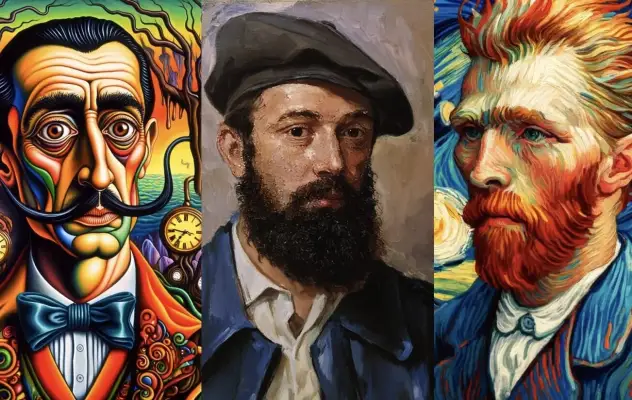
Beyond aesthetic styles, the model understands medium-specific qualities. "A charcoal sketch" produces something distinctly different from "a pencil drawing"—the model understands the inherent characteristics of each medium. This specificity makes GPT-Image-1 invaluable for creative professionals who understand how material choice affects visual outcomes.
GPT-Image-1 leverages GPT-4o's training across billions of text-image pairs to understand real-world contexts. This enables:
Historical accuracy: Generate period-appropriate scenes from any era with authentic details
Geographical authenticity: Create landscape scenes with regionally appropriate flora, architecture, and lighting
Cultural appropriateness: Generate culturally specific imagery without offensive stereotypes
Scientific accuracy: Create scientifically correct diagrams, anatomical illustrations, and technical visualizations
Contemporary knowledge: Generate images incorporating current fashion trends, modern architecture, and current events context
For professional use cases—textbooks, educational materials, documentary-style content—this world knowledge becomes a significant advantage over models trained purely on images without deep semantic understanding.
GPT-Image-1 supports four distinct editing modes beyond simple generation:
Text-to-Image Editing: Describe changes to an existing image using natural language. Rather than regenerating the entire image, GPT-Image-1 applies focused modifications, preserving unchanged areas.
Image-to-Image Transformation: Upload an image and request a transformation. The model can change artistic style, adjust composition, or reimagine the subject while maintaining elements you specify.
Inpainting: Specify a region (via bounding box or mask) for modification while the model regenerates only that area, maintaining coherence with surrounding content.
Outpainting: Expand an image beyond its original boundaries, extending compositions with contextually appropriate content.
These editing capabilities open workflows impossible with single-generation models. A designer can iterate rapidly, testing multiple variations of a single base image without starting from scratch each time.
OpenAI prices GPT-Image-1 using its standard token-based system. This approach provides transparency and scales based on actual usage:
Text Input Tokens: $5 per 1 million tokens (your prompt text)
Image Input Tokens: $10 per 1 million tokens (if you provide reference images)
Image Output Tokens: $40 per 1 million tokens (the generated image)
In practical terms, a simple prompt (50-100 tokens) contributes negligibly to costs. Image outputs dominate pricing, varying by resolution and quality settings.
While token pricing provides the technical structure, understanding per-image costs helps budget planning:
| Resolution | Standard Quality | High Quality |
| 1024×1024 (Square) | $0.01 | $0.17 |
| 1024×1536 (Portrait) | $0.02 | $0.26 |
| 1536×1024 (Landscape) | $0.02 | $0.26 |
Standard quality handles most use cases: social media content, presentations, drafts, and iterations. High quality justifies its premium for final deliverables, large prints, and professional applications.
Small Creator Budget (10-20 images/month)
Estimated monthly cost: $0.50-$1.00
Perfect for: Hobby use, experimentation, personal projects
Content Creator Workflow (100-200 images/month)
Mix of standard/high quality: $2-$5/month
Suitable for: Blog illustrations, social media content, creative exploration
E-Commerce Business (5,000 images/month)
Mostly standard quality with selective high-quality final outputs: $40-$60/month
Use cases: Product variations, lifestyle photography, catalog imagery
Enterprise Production Pipeline (50,000+ images/month)
Optimized mix strategy with smart quality selection: $400-$600/month
Applications: Large-scale content generation, continuous production workflows
To begin using GPT-Image-1 programmatically:
Create an OpenAI account at platform.openai.com
Verify your organization (required in some regions)
Set up billing with a valid payment method
Generate an API key from your account dashboard
Store your API key securely as an environment variable (never hardcode it in scripts)
New accounts receive $5 in free credits, sufficient for extensive experimentation—approximately 500 standard-quality square image generations.
The simplest implementation requires just a few lines of code. Here's the essential pattern using Python:
import requests
import json
api_key = "your-api-key-here"
headers = {
"Authorization": f"Bearer {api_key}",
"Content-Type": "application/json"
}
payload = {
"model": "gpt-image-1",
"prompt": "A serene mountain landscape at sunrise, misty valleys, golden light, oil painting style",
"size": "1024x1024",
"quality": "standard",
"n": 1
}
response = requests.post(
"https://api.openai.com/v1/images/generations",
headers=headers,
json=payload
)
result = response.json()
image_url = result['data'][0]['url']
print(f"Generated image: {image_url}")
The API returns URLs to generated images, valid for 60 days. Download and store images permanently if you plan to use them beyond this window.
Effective prompts follow a consistent structure that provides context without overwhelming the model:
Structure: [Subject] + [Setting/Context] + [Style/Medium] + [Lighting/Mood] + [Technical Details]
Weak Prompt: "A cat"
Effective Prompt: "A fluffy orange tabby cat sitting attentively on a wooden fence post, countryside setting, overcast afternoon light, professional wildlife photography, shallow depth of field, natural colors"
Key practices:
Be specific about quantities: "Three apples" not "some apples"
Describe spatial relationships: "On the left side," "in the background," "surrounding the subject"
Specify lighting explicitly: Instead of vague "good lighting," describe "warm golden hour sunlight" or "cool blue moonlight"
Name artistic references: "In the style of Studio Ghibli" or "like a Renaissance painting" provides stronger guidance than generic "artistic"
Mention technical photography terms if appropriate: "Shot with 85mm lens," "cinematic depth of field," "RAW color grading"
Pro tip: Longer prompts (200-500 tokens) typically yield more detailed results than minimalist descriptions. The model excels at parsing detailed specifications and rarely ignores well-articulated instructions.
While DALL-E 3 remains functional, GPT-Image-1 supersedes it across nearly all dimensions:
| Dimension | DALL-E 3 | GPT-Image-1 | Winner |
| Architecture | Diffusion-based | Autoregressive/Multimodal | GPT-Image-1 |
| Text Rendering | Limited, unreliable | Excellent, production-ready | GPT-Image-1 |
| Generation Speed | Moderate (20-30s typical) | Faster (10-20s typical) | GPT-Image-1 |
| Editing Precision | Poor (requires regeneration) | Excellent (targeted edits) | GPT-Image-1 |
| Instruction Following | Good | Superior | GPT-Image-1 |
| World Knowledge Integration | Limited | Extensive (GPT-4o based) | GPT-Image-1 |
| API Pricing | $0.02-$0.20 per image | $0.01-$0.17 per image | GPT-Image-1 |
For new projects, GPT-Image-1 is the recommended choice. DALL-E 3 remains available for legacy applications or specific aesthetic requirements, but development focus has shifted entirely to GPT-Image-1.
Midjourney excels in artistic aesthetics and community-driven exploration. It produces images with a distinctive, often ethereal quality that appeals to digital artists and creative professionals. Its Discord-based interface fosters an active creator community.
GPT-Image-1 targets different priorities: API integration, production reliability, instruction adherence, and enterprise deployment. It's deterministic (consistent results from identical prompts), includes robust safety guardrails, and integrates seamlessly into applications.
Choose Midjourney if: You prioritize artistic flexibility, community exploration, and aesthetic variety.
Choose GPT-Image-1 if: You need programmatic integration, instruction-following precision, production reliability, and text rendering.
Google released Imagen 3, a diffusion-based model emphasizing photorealistic outputs and nuanced lighting control. It's available through Google's Gemini and Vertex AI platforms.
Nano Banana Pro, Google's latest iteration, combines diffusion-based generation with post-production editing features, offering competitive iteration capabilities.
OpenAI's response: GPT-Image-1's multimodal foundation provides advantages in semantic understanding and world knowledge integration that pure diffusion models struggle to match. Its API availability across platforms (OpenAI, Azure, and third-party AI API providers) exceeds Imagen's more limited distribution.
Tips: For more differences please read GPT Image vs Nano Banana.
GPT-Image-1 performs best on single subjects and clear composition. Complex scenes with many objects or multiple interacting subjects sometimes show inconsistencies. The model remains challenged by:
Multiple human faces: Generating scenes with multiple people can produce inconsistent facial structures
Complex hand positions: Hands remain notoriously difficult (a challenge for all image generation models)
Small, detailed text: While text rendering is excellent, extremely small text in dense layouts may require iteration
Extremely specific brand logos: The model avoids reproducing copyrighted content precisely
Analysis of GPT-Image-1 outputs reveals subtle characteristics:
A slight warm color bias in many outputs (affects some landscape and portrait photography)
Premature cropping of composition in some configurations (generally addressed in GPT-Image-1.5)
Occasional challenges with specific art styles where few training examples exist
These limitations aren't failures but rather areas requiring prompt adjustment or iterative refinement. Most production workflows involve 2-3 iterations anyway; understanding these biases helps you prompt more effectively.
For developers and businesses looking to integrate cutting-edge AI capabilities, GPT Proto offers a comprehensive solution that goes beyond image generation. This powerful platform provides access to the latest AI models, including support for ChatGPT 4.1 variants such as gpt-4.1, gpt-4.1-nano, and gpt-4.1-mini.
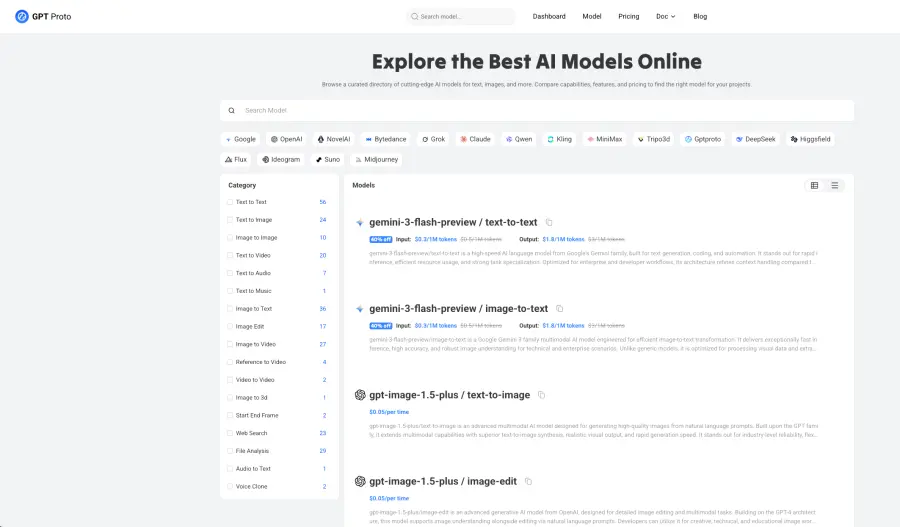
GPT Proto serves as a unified AI API platform that connects you with the world's most advanced AI models, all in one convenient location. Instead of managing multiple API providers, you can access GPT, Claude, Gemini, Midjourney, and other leading models through a single, pay-as-you-go service.
Built by developers for developers, the platform features clean, well-documented APIs that make integration straightforward, whether you're building applications or testing prototypes. With globally distributed and highly optimized API endpoints, your applications maintain fast response times for generating text, images, music, or video content.
The platform continuously adds the latest models like Grok, Runway, and Kling, ensuring you stay ahead without switching platforms. As an AI Model aggregator, GPT Proto welcomes feedback from independent developers and teams to shape their roadmap and build a community that pushes the boundaries of AI possibilities.
GPT-Image-1 represents a paradigm shift in AI-powered image generation, combining advanced multimodal architecture with enterprise-grade reliability to deliver photorealistic and artistically diverse outputs at scale. From its superior text rendering and instruction-following capabilities to flexible pricing and seamless API integration, GPT-Image-1 empowers content creators, businesses, and developers to streamline visual creation workflows while maintaining production consistency. Whether you're generating marketing assets, product mockups, educational content, or exploring creative possibilities, GPT-Image-1's native multimodal design, world knowledge integration, and iterative editing capabilities establish it as the definitive choice for professionals seeking precision, scalability, and rapid visual deployment. For teams seeking a unified AI platform that consolidates access to GPT-Image-1 alongside other leading models, GPT Proto AI API offers a comprehensive solution with optimized API endpoints, simplified integration, and cost-effective deployment—enabling developers to scale image generation workflows without managing multiple service providers, making it an invaluable infrastructure choice for enterprises building next-generation AI applications in 2026 and beyond.
TL;DR: GPT Image 1.5は、従来モデルより4倍高速で、APIコストを20%削減したOpenAIの最新画像生成モデルです。高度な編集機能、優れたテキスト描画、指示への追従性の向上を特徴としています。ChatGPTとAPIから利用でき、進化を続けるAI画像生成市場でGoogleのNano Banana Proと直接競合します。
Tiffany Layne | 2026-02-03
OpenAIは、 GPT-5 Image のリリースにより、生成アートの世界を一新しました。これは単なる段階的なアップデートではなく、人工知能が視覚的な意図を解釈し実行する方法を根本から変えるものです。高度な画像生成を通常のチャットの制約から切り離すことで、 GPT-5 Image は驚異的な92%のプロンプト精度と、プロフェッショナル向け8K解像度を実現します。本記事では、 GPT-5 Image が企業やクリエイティブの専門家にとって新たな標準になりつつある理由を詳しく解説し、中核機能、料金体系、従来のマルチモーダルシステムに対する独自の優位性を検証します。
Schuyler Stacy | 2026-03-02
要約 人工知能の分野は、目新しさのための実験からプロフェッショナルな実用性へと急速にシフトしています。クリエイターがより高い忠実度とより深い文脈理解を求める中、期待される「 Gemini 3 イメージジェネレーター 」は、業界を再定義する態勢を整えています。この次世代モデルは、永続的なAIの課題を解決し、ハイパーリアリスティックなビジュアル、完璧なタイポグラフィ、直感的なマルチモーダルコラボレーションを実現すると予測されています。先代モデルの堅牢なアーキテクチャを基盤に、Gemini 3 イメージジェネレーターは、デジタルデザイン、マーケティング、コンテンツ制作へのアプローチを変革し、高度な芸術表現を誰もが利用できるようにするでしょう。
Michael Johnson | 2026-03-02