For years, RapidAPI was the default answer whenever a developer typed "how do I find an API for X." It earned the nickname "the Amazon of APIs" by putting tens of thousands of APIs behind a single key and a single bill.
But the market has shifted. Since Nokia's acquisition, a growing share of developers on Reddit, Hacker News, and indie forums have started asking the same question: is there a better RapidAPI alternative? The complaints are consistent — a 20–25% marketplace commission, 80,000+ APIs with no real standardization, opaque billing, and monitoring that stops at surface-level metrics.
Here's the thing most "RapidAPI alternatives" listicles miss: if you're building with AI, you probably don't need another marketplace at all. You need a unified AI gateway — one key that routes to GPT, Claude, Gemini, Midjourney, and 200+ other models. That's a different category, and it's where the biggest savings actually live.
This guide compares 7 genuine alternatives across three distinct models, so you can pick the right fit instead of just swapping one marketplace for another.
Building an AI product? Skip the marketplace maze and browse 200+ models on one API →
Why Developers Are Looking for RapidAPI Alternatives
Before the list, it helps to be precise about why people leave. These are the five pain points that come up over and over.
High marketplace fees and payout delays
RapidAPI typically retains around 20% of paid subscription revenue (some providers report effective rates closer to 25% once payment processing is factored in). For API providers, payouts can be delayed, and PayPal-based withdrawals add another layer of fees. If you're a consumer, that commission is quietly baked into the price you pay.
Discovery fatigue: 80K+ APIs, no standardization
More isn't always better. With over 80,000 APIs and minimal vetting or consistency, finding a reliable tool for a specific job means wading through abandoned, broken, or duplicate listings. Quality varies wildly because most APIs are third-party submissions.
Opaque billing and no spend caps
Concepts like "billing objects" aren't standardized across the platform, and developers frequently report surprise overages or plan changes. Critically, there are no strong guardrails: you can't easily set hard spend limits or restrict usage by IP or domain, which makes runaway costs a real risk.
Thin observability
Monitoring covers top-line usage but lacks the depth needed for real debugging — no error-type breakdowns, no tail-latency metrics (p95/p99), and no per-request logs. Diagnosing why calls fail often means building your own monitoring layer on top.
An extra gateway hop
Because RapidAPI proxies every request through its own infrastructure, you inherit an additional network hop. That can add latency and, when something breaks, makes it harder to tell whether the problem is your code, the provider, or the marketplace in between.
Quick Comparison: 7 RapidAPI Alternatives at a Glance
| Platform |
Best for |
Model type |
Pricing |
Standout strength |
Watch out for |
| RapidAPI (baseline) |
General API discovery |
Marketplace |
Market-based, ~20% fee |
Largest catalog |
Fee, clutter, billing surprises |
| gptproto |
AI / LLM API access |
Unified AI gateway |
Pay-as-you-go |
One key → 200+ AI models |
AI-focused, not general-purpose |
| Apify |
Web scraping & automation |
Marketplace + infra |
Pay-as-you-go + sub |
10,000+ ready scrapers |
Scraper-centric, compute billing |
| APILayer |
Curated, quality-first APIs |
Curated marketplace |
Tiered subscription |
Vetted, consistent quality |
Smaller catalog |
| Postman |
Testing & team collaboration |
API network / tool |
Freemium + sub |
Best-in-class testing UX |
Not a purchase marketplace |
| Kong |
High-performance gateway |
API gateway |
Open source / enterprise |
Speed & governance |
A gateway, not a marketplace |
| Azure API Management |
Enterprise security |
Gateway / management |
Subscription |
Identity & compliance |
Best value for Azure shops |
| AWS API Gateway |
AWS-native teams |
Gateway / marketplace |
Per-call metered |
Unified AWS billing |
Steep learning curve |
The takeaway: marketplaces (APILayer, Apify) still make sense for general-purpose utility APIs. But for AI work, a unified gateway removes the discovery problem entirely — which is exactly the pain that sends people looking for a RapidAPI alternative in the first place.
The 7 Best RapidAPI Alternatives in 2026
Each option below follows the same structure: what it is, who it's for, the strengths, and an honest limitation.
1. gptproto — The Unified AI API Gateway
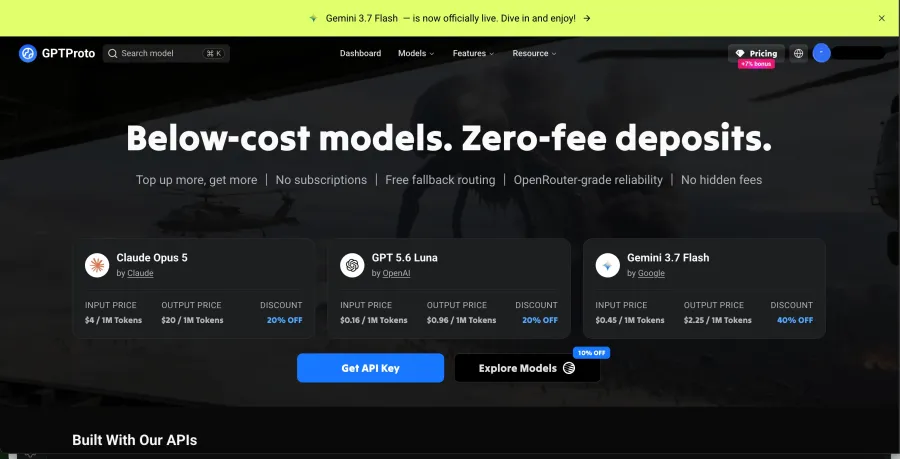
gptproto isn't just a like-for-like RapidAPI alternative. It represents a different approach: instead of browsing a marketplace of disconnected APIs, you get one API key and one bill that route to 200+ AI models — GPT, Claude, Gemini, Midjourney, and more — through a single, consistent interface.
For teams building AI features, this reframes the whole problem. You're no longer comparing thousands of marketplace listings or juggling separate accounts, keys, and invoices per model provider. You integrate once and switch models by changing a parameter.
Strengths
Meaningful cost savings — in many common scenarios, consolidated access can reduce costs by roughly 40% versus paying each provider's list price separately (based on public list-price comparison; your savings depend on usage mix).
One integration, many models — a single authentication flow and a unified billing dashboard instead of registering with every provider.
Built for low latency and high availability across the model catalog.
No PayPal-style extra withdrawal or processing fees layered on top.
Honest limitations
It's purpose-built for AI/LLM APIs, not general utility APIs (weather, currency, etc.).
The platform is newer than legacy marketplaces.
There's a short learning curve to its authentication flow if you're used to RapidAPI's.
Best for: AI application developers and teams that need to call or switch between multiple large models without managing a pile of separate accounts.
Explore 200+ AI models → | Start free →
2. Apify — Best for Web Scraping & Automation
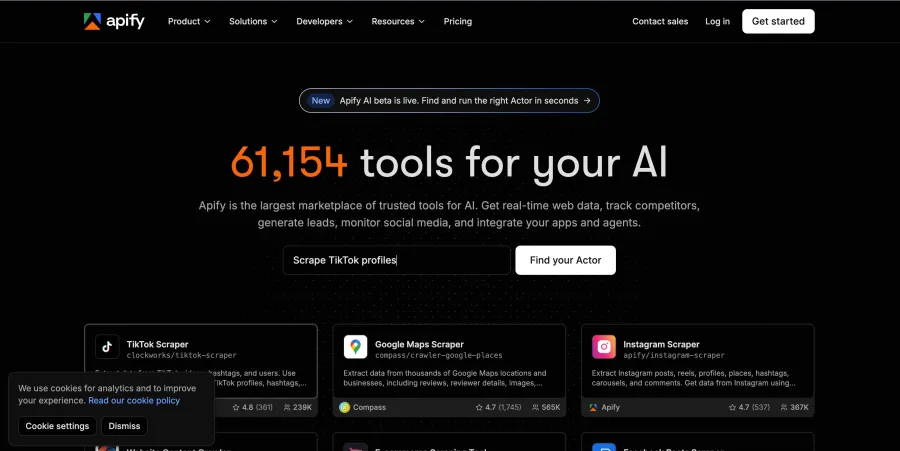
Apify turns websites into APIs. It offers an open-source SDK, a store with 10,000+ ready-made scrapers ("Actors"), and a managed cloud runtime with scheduling, proxy rotation, and monitoring built in.
Strengths: ready-made scrapers you can run instantly, infrastructure included (no self-hosting), built-in monetization if you publish your own Actors.
Limitation: it's scraper- and automation-centric; APIs outside that domain aren't its focus, and compute-based billing can be confusing to estimate.
3. APILayer — Best Curated, Quality-First Marketplace
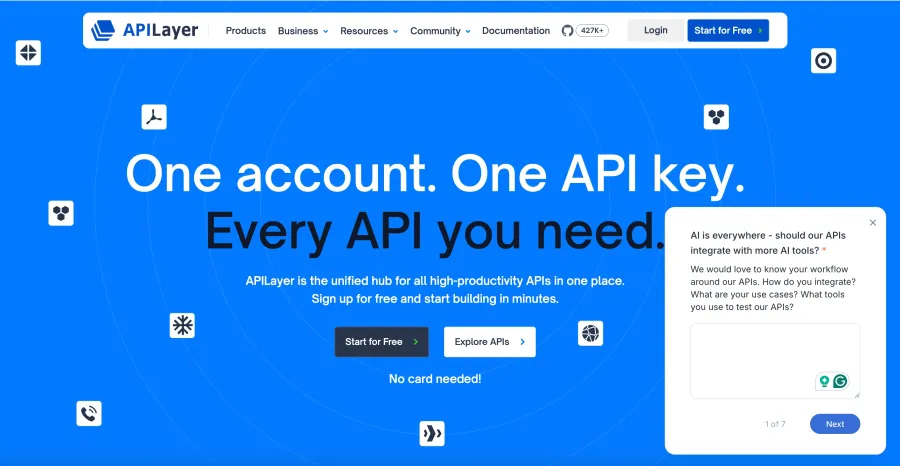
APILayer takes the opposite bet from RapidAPI: a smaller, tightly curated catalog of proprietary utility and data APIs (geolocation, currency, validation, finance) with standardized authentication and unified billing.
Strengths: consistent quality, clean documentation, transparent tiered pricing, strong uptime SLAs.
Limitation: far less variety — you won't find the niche, long-tail APIs a giant marketplace hosts.
4. Postman (Public API Network) — Best for Testing & Collaboration
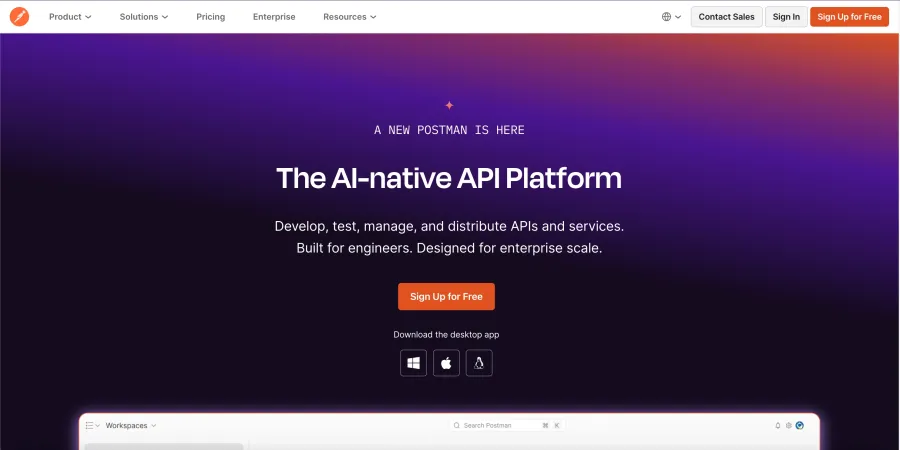
Postman evolved from a testing tool into a broad ecosystem. Its Public API Network is arguably the best place to evaluate an API hands-on before committing, thanks to "Run in Postman" and world-class documentation rendering.
Strengths: best-in-class testing UX, huge community, seamless import into your workspace.
Limitation: it's a directory and testing environment, not a transactional marketplace — purchases and billing happen on the provider's own site.
5. Kong — Best High-Performance API Gateway
Kong is a cloud-native, open-source API gateway built for managing traffic across distributed systems and microservices. Its Konnect catalog lets large organizations run a private, RapidAPI-like hub for internal or partner APIs.
Strengths: extremely high throughput, a rich plugin ecosystem, strong governance controls.
Limitation: it's a gateway, not a discovery marketplace — it manages APIs you already have rather than helping you find new ones, and enterprise features sit behind premium plans.

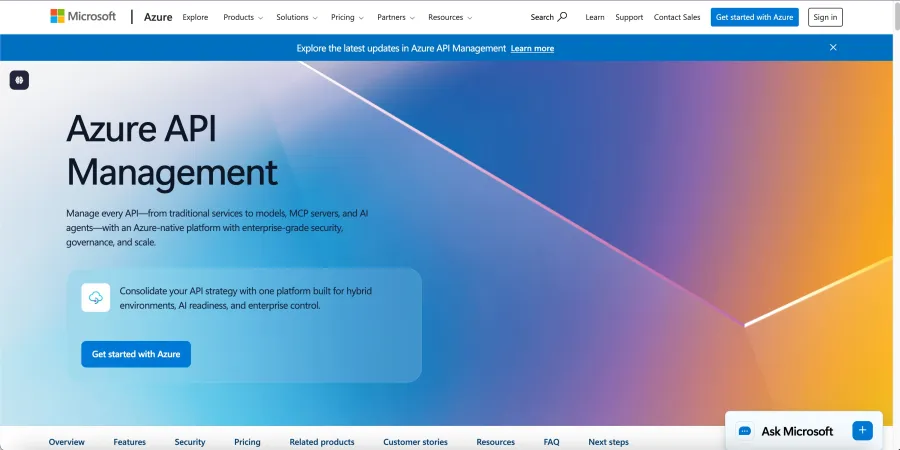
6. Microsoft Azure API Management — Best for Enterprise Security
Azure API Management (APIM) is a full lifecycle management layer with deep Active Directory integration, robust security and governance, and hybrid-cloud deployment options.
Strengths: enterprise-grade compliance and identity management, competitive tiered pricing for existing Azure customers.
Limitation: setup is complex, and the value proposition is strongest if you're already invested in the Microsoft/Azure ecosystem.
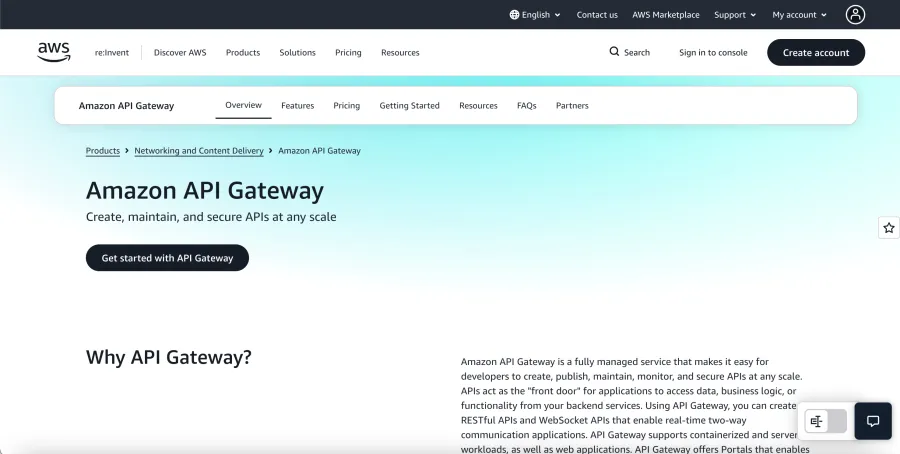
7. AWS API Gateway / Marketplace — Best for AWS-Native Teams
For teams already on AWS, the combination of API Gateway and AWS Marketplace offers metered, enterprise-grade API delivery with consolidated billing on your existing AWS invoice and tight IAM integration.
Strengths: unified AWS billing and procurement, fine-grained metering, enterprise reliability.
Limitation: a steep learning curve, generally B2B/enterprise price points, and most useful only if you're already in the AWS ecosystem.
Marketplace vs. Gateway vs. Unified AI Gateway: Which Model Fits You?
The single most useful thing you can do is match the category to your actual need — because "RapidAPI alternative" lumps together three very different tools.
API marketplaces (RapidAPI, APILayer, Zyla) solve discovery and billing. Use one when you need to find and pay for general-purpose, third-party utility APIs.
API gateways (Kong, Azure APIM, AWS API Gateway) solve traffic management and governance for APIs you already own. They don't help you discover new AI models.
Unified AI gateways (gptproto) solve a newer problem: giving AI teams one key to call many models, with a single bill and a consistent interface. If your workload is AI, this category eliminates the discovery problem rather than just reorganizing it.
A quick rule of thumb:
General utility APIs → a marketplace
Managing your own API traffic → a gateway
Building with AI / LLMs → a unified AI gateway
How to Choose the Right RapidAPI Alternative
When you're comparing options, weigh these factors in order of impact:
Category fit — does it actually cover the API category you need?
Billing transparency and spend caps — can you set hard limits and predict costs?
Latency and availability — is there an extra proxy hop adding delay?
Migration cost — how much rework does switching require?
Pricing model — pay-as-you-go vs. subscription, and which matches your usage pattern.
For AI projects specifically, put one question at the top of the list: "Can I reach multiple models through a single interface?" If the answer is no, you'll end up managing the same sprawl you were trying to escape.
Switching from RapidAPI to gptproto: What It Looks Like
If your main use case is AI, migration is simpler than a typical marketplace swap:
Get your API key — one key covers the whole model catalog, so there's no per-provider registration.
Point your client at the unified endpoint — swap the base URL and authentication; the request/response shape stays consistent across models.
Make your first call — pick a model, send a request, and switch models later by changing a single parameter rather than re-integrating.
No juggling separate accounts. No surprise per-provider bills. One dashboard for usage and cost.
Get your API key → | Browse the model catalog →
Conclusion
There's no single "RapidAPI killer," because the right alternative depends on what you're actually building. If you need general utility APIs, a curated marketplace like APILayer is a cleaner experience. If you're governing internal traffic, Kong, Azure APIM, or AWS API Gateway fit better.
But if you're building with AI — which increasingly describes most new projects — the smarter move isn't another marketplace. It's a unified AI gateway. gptproto gives you one key, one bill, and 200+ models, removing the discovery clutter and fee drag that made you look for an alternative in the first place.
Start building → | Explore 200+ models →