Claude vs ChatGPT для программирования: краткий вердикт
Лучший выбор зависит от того, как вы пишете код и какую часть задачи вы хотите, чтобы ИИ выполнил самостоятельно.
| Задача программирования |
Лучшая отправная точка |
Почему |
| Небольшие функции и скрипты |
Ничья |
Качество промпта и уровень модели обычно важнее, чем провайдер |
| Интерактивное парное программирование |
Claude Code |
Быстрая обратная связь и глубокая настройка терминала |
| Длительные автономные задачи программирования |
Codex |
Сильные рабочие процессы делегирования с проверкой и фоновой работы |
| Генерация фронтенда и UI |
Claude |
Небольшое качественное преимущество для визуальной реализации и итераций |
| Отладка с интенсивным использованием терминала |
ChatGPT/Codex |
GPT-5.6 Sol немного лидирует в общем сравнении Terminal-Bench |
| Рефакторинг по всему репозиторию |
Claude Opus 5 |
Сильная производительность при миграции кода и инженерной работе с несколькими файлами |
| Разработка на Python |
Ничья |
Победитель меняется в зависимости от задачи, библиотек, тестов и доступа к репозиторию |
| Большие кодовые базы |
Claude, небольшое преимущество |
Сильное рассуждение по репозиторию, хотя оба семейства теперь поддерживают очень большие контексты |
| Начальная подписка для программирования |
ChatGPT Plus |
Его опубликованный лимит Codex в целом легче оценить и растянуть |
| Развёртывание через API |
Зависит от уровня модели |
Стоимость за принятый результат важнее, чем стоимость самого дешёвого отдельного запроса |
Выбирайте Claude для тесного сотрудничества и крупных взаимосвязанных изменений. Выбирайте ChatGPT с Codex, когда предпочитаете делегировать и проверять. Командам, работающим с API, следует оценивать отдельные модели, а не рассматривать любого из провайдеров как один фиксированный продукт.
Что мы сравниваем: Claude, ChatGPT, Claude Code или Codex?
Разница между Claude и ChatGPT начинается с продукта как интерфейса.
Claude.ai и ChatGPT — это универсальные приложения для объяснения, генерации и проверки кода. Claude Code и Codex — это агенты для программирования, которые могут исследовать репозитории, редактировать файлы, запускать команды и тесты и исправлять ошибки. Это меняет задачу с «написать код» на «создать и проверить рабочее изменение».
API — это ещё один слой: окружающее приложение выбирает файлы и инструменты, запускает команды, возвращает ошибки и решает, когда работа завершена. Поэтому модель, которая пишет корректную функцию в чате, может вести себя иначе внутри агента. Справедливое сравнение Claude AI и ChatGPT должно оценивать и модель, и среду её работы.
Актуальные модели Claude и GPT для программирования
Актуальное руководство по Claude vs ChatGPT для программирования должно сравнивать эквивалентные уровни моделей. Anthropic рекомендует Claude Opus 5 для большинства сложных рабочих нагрузок и Fable 5.1 для особенно требовательной долгосрочной работы. OpenAI позиционирует GPT-5.6 Sol как свой флагман для сложного программирования, а Terra и Luna — для более лёгких рабочих нагрузок.
| Модель |
Лучшее применение для программирования |
Контекстное окно |
Основной компромисс |
| Claude Fable 5.1 |
Требовательное длительное агентное программирование |
1M токенов |
Самая высокая цена API Claude и более высокая задержка |
| Claude Opus 5 |
Сложное программирование, миграции и работа с репозиторием |
1M токенов |
Дороже моделей среднего уровня |
| Claude Sonnet 5 |
Повседневное программирование с меньшей задержкой |
1M токенов |
Более низкий потолок на самых сложных инженерных задачах |
| GPT-5.6 Sol |
Сложное программирование, агенты и работа в терминале |
1.05M токенов |
Более высокая стоимость и задержка, чем у меньших моделей GPT |
| GPT-5.6 Terra |
Повседневная разработка и производственные задачи |
1.05M токенов |
Менее способна, чем Sol, на самой сложной работе |
| GPT-5.6 Luna |
Сфокусированные скрипты и крупномасштабные преобразования |
1.05M токенов |
Не предназначена для самых неоднозначных инженерных задач |
Вы можете посмотреть текущее семейство моделей Claude и семейство моделей OpenAI на GPT Proto. Для сложных задач программирования наиболее релевантные отдельные страницы: Claude Fable 5.1, Claude Opus 5 и GPT-5.6 Sol. Для рутинной производственной работы GPT-5.6 Terra — более экономичная точка сравнения.
Подбирайте модели по рабочей нагрузке, затем измеряйте общую стоимость, необходимую для получения приемлемого результата.
Что на самом деле показывают бенчмарки для программирования
Текущие данные бенчмарков не подтверждают универсального победителя. Claude лидирует в некоторых оценках по репозиториям и генерации кода, тогда как GPT-5.6 Sol немного лидирует в общем терминальном бенчмарке.
| Бенчмарк |
Результат Claude |
Результат GPT |
Что это говорит |
| Terminal-Bench 2.1 |
Fable 5.1: 85.02% |
GPT-5.6 Sol: 85.77% |
GPT имеет небольшое преимущество в агентных задачах на основе терминала |
| SWE-bench Verified |
Opus 5: 97.00% |
GPT-5.6 Sol: 96.20% |
Оба очень конкурентоспособны на реальных задачах из репозиториев |
| Vibe Code Bench |
Fable 5.1: 90.26% |
GPT-5.6 Sol: 80.50% |
Claude показывает преимущество в сквозной генерации приложений |
| LiveCodeBench |
Fable 5.1: 90.52% |
— |
Сильное решение задач по коду, но не полное сравнение продуктов |
Эти результаты взяты из оценок Vals для Claude Fable 5.1, Claude Opus 5 и GPT-5.6 Sol, но они всё ещё требуют контекста.
Например, Fable 5.1 оценивалась с серверными резервными вариантами Claude для отказов. Vals сообщает, что её результат Terminal-Bench 2.1 падает с 85.02% до 79.03%, когда задачи с поддержкой резервного варианта считаются неудачами. Настройки оценки также различаются: Fable 5.1 и GPT-5.6 Sol использовали максимальное усилие, тогда как Opus 5 использовала высокое усилие для Terminal-Bench.
Claude особенно хорошо показывает себя в оценках генерации кода, миграции и создания приложений. GPT-5.6 Sol близок по решению задач из репозиториев и немного впереди в общем терминальном бенчмарке. Эти разрывы могут измениться при других агентах, инструментах или кодовых базах.
Claude против ChatGPT для генерации кода
Для небольших, чётко определённых задач по генерации кода Claude и ChatGPT настолько близки, что нет надёжного универсального победителя. Оба могут создавать функции, преобразования данных, обработчики API, тестовые примеры и небольшие приложения, когда в запросе есть соответствующие требования.
Claude — хорошая отправная точка для планирования реализации и координации работы с несколькими файлами. ChatGPT столь же практичен для узконаправленных скриптов, структурированных результатов и задач с точным определением готовности. В Codex модели GPT могут реализовывать и проверять изменения, а не только предлагать код.
Сравнивая Claude или ChatGPT для программирования, дайте обоим одинаковые версии языка и зависимостей, редактируемые файлы, ожидаемое поведение, ограничения совместимости и необходимые тесты. Более короткий ответ всё равно может быть лучше, если код проходит с первой попытки. Оценивайте принятый результат, а не то, насколько впечатляюще выглядит ответ.
Claude против ChatGPT для отладки
Claude против ChatGPT для отладки — это не одно сравнение. Отладка вставленной трассировки стека отличается от поиска регрессии, разбросанной по незнакомому репозиторию. 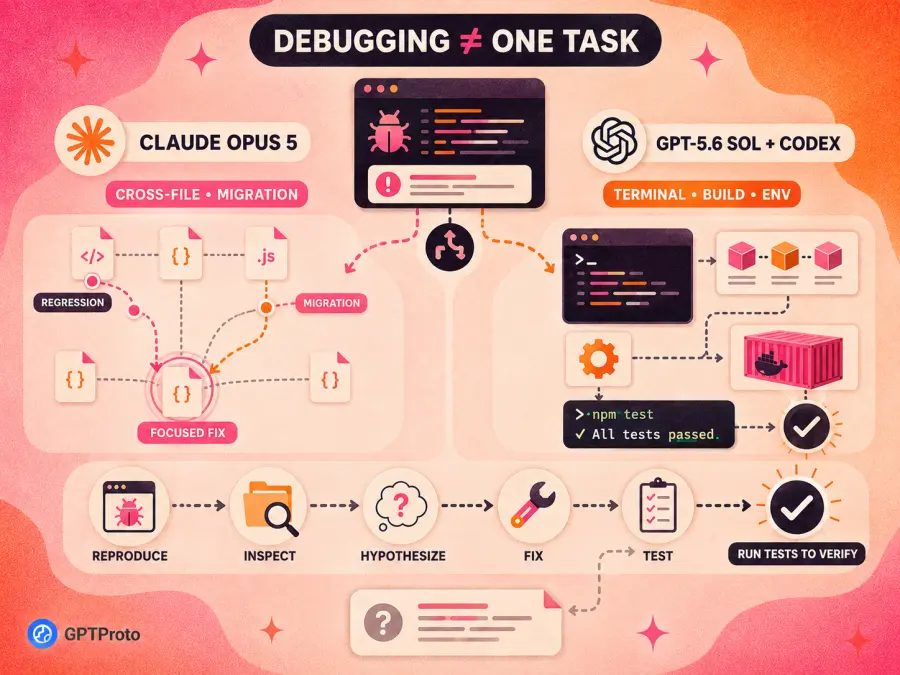
Для одного сообщения об ошибке оба продукта обычно могут объяснить вероятные причины и предложить проверки. Результат во многом зависит от того, включает ли пользователь окружающий код, версию среды выполнения, версии зависимостей, входные данные и полную ошибку, а не только её последнюю строку.
Для проблем с терминалом, зависимостями, сборкой и окружением GPT-5.6 Sol с Codex — сильная отправная точка. Его небольшое преимущество в Terminal-Bench указывает на силу в задачах, требующих взаимодействия из командной строки, хотя разница с Fable 5.1 составляет менее одного процентного пункта при заявленных настройках.
Для логических ошибок между файлами, миграций и архитектурных регрессий Claude Opus 5 — разумный первый выбор. Его сильные результаты по работе с репозиториями и миграции кода указывают, что он может быть эффективен, когда исправление зависит от понимания связей между несколькими модулями.
На практике качество отладки зависит от того, может ли агент воспроизвести сбой, изучить соответствующие файлы, сформулировать проверяемую гипотезу, применить точечное исправление и запустить затронутые тесты. Если у него нет доступа к окружению, относитесь к его ответу как к гипотезе — а не проверенному исправлению.
Claude против ChatGPT для фронтенд-разработки
У Claude небольшое качественное преимущество во фронтенд-разработке, особенно когда задача включает преобразование визуального замысла в компоненты, макеты, адаптивное поведение, анимации или интерактивные состояния. Ранние отчёты о Claude Opus 5 также отмечали улучшения в создании full-stack приложений, включая визуальную и интерактивную работу.
Это не значит, что каждый результат Claude будет выглядеть отполированным. Оба продукта могут скатываться к типовым карточкам, градиентам и макетам с приоритетом десктопа, когда задание расплывчато. Дайте им одинаковый дизайн-референс, размеры вьюпорта, фреймворк, правила бренда, интерактивные состояния, требования доступности и критерии приёмки.
Ни одна модель не должна судить о своём визуальном результате только по исходному коду. Производительность улучшается, когда агент может запустить страницу, изучить скриншоты, сравнить их с референсом и доработать CSS. Claude может дать лучшую первую попытку; лучший рабочий процесс — тот, что включает визуальную проверку.
Claude против ChatGPT для Python
Нет общего победителя в сравнении Claude и ChatGPT для Python, потому что «программирование на Python» охватывает всё: от скрипта из десяти строк для переименования файлов до большого сервиса на Django или конвейера машинного обучения.
| Задача на Python |
Лучшая отправная точка |
| Небольшой скрипт автоматизации |
Claude или ChatGPT |
| Очистка и преобразование данных |
Сбалансированная модель, например Sonnet 5 или GPT-5.6 Terra |
| Крупный рефакторинг Python-приложения |
Claude Opus 5 |
| Устранение неполадок CLI, пакетов или окружения |
GPT-5.6 Sol с Codex |
| Длинное объяснение в ноутбуке |
За Claude часто проще следить |
| Повторяющееся преобразование большого объёма |
Меньшая, более дешёвая модель после валидации |
Оценивайте оба в одинаковом окружении и проверяйте совместимость зависимостей, граничные случаи, работу с файлами, проверки типов, линтинг и pytest результаты. Аккуратное объяснение значит меньше, чем проверенное поведение.
Claude против ChatGPT для больших кодовых баз
Claude — более сильный первый выбор для многих анализов всего репозитория, миграций кода и скоординированных изменений в нескольких файлах. Claude Opus 5 показывает сильные результаты в бенчмарках по миграции кода и работе с репозиториями, а Fable 5.1 предназначен для требовательной, длительной агентной работы.
Однако один только размер контекстного окна не устанавливает это преимущество. Текущие флагманские модели Claude предлагают контекстное окно до 1 млн токенов, а семейство GPT-5.6 — примерно 1,05 млн токенов. Оба достаточно велики, чтобы вместить значительный объём кода, но слепое добавление всего репозитория может расходовать токены впустую и скрывать релевантные зависимости.
Производительность на больших кодовых базах зависит от того, может ли агент составить карту репозитория, найти релевантные файлы, следовать инструкциям проекта, сохранять интерфейсы и проверять свои изменения. Эффективный отбор и сжатие контекста могут значить больше, чем заявленный максимум.
Выбирайте Claude Opus 5, когда задача включает масштабную миграцию, архитектурные рассуждения или скоординированные изменения в взаимосвязанных модулях. Выбирайте GPT-5.6 Sol с Codex, когда задача хорошо определена, требует активной работы в терминале и подходит для более длительного автономного прогона. Для любого варианта делите очень большие изменения на проверяемые этапы и требуйте тесты на каждой границе.
Claude Code против Codex: агент может значить не меньше, чем модель
Claude Code и Codex различаются по рабочему процессу ещё до учёта их моделей по умолчанию.
| Критерий |
Claude Code |
Codex |
| Типичный рабочий процесс |
Интерактивная разработка в терминале |
Делегирование, запуск и проверка |
| Инструкции репозитория |
CLAUDE.md |
AGENTS.md |
| Кастомизация |
Глубокие хуки, навыки и конфигурация агента |
Больше управляемых значений по умолчанию и контроля песочницы |
| Стиль обратной связи |
Быстрый и интерактивный |
Более обдуманный и автономный |
| Хорошо подходит |
Разработчикам, которые остаются активно вовлечёнными |
Фоновая работа, проверка и параллельные задачи |
| Главный компромисс |
Сложные сессии могут быстро исчерпывать лимиты |
Некоторые задачи выполняются дольше |
Полезный сторонний тест от Composio помогает отделить обвязку от базовой модели. Оценщик запустил одну и ту же модель DeepSeek V4 Flash через Claude Code и Codex, используя 30 идентичных задач с несколькими приложениями, одинаковую размещённую конфигурацию MCP, максимальный уровень рассуждений и лимит 900 секунд на задачу.
| Результат |
Claude Code |
Codex |
| Пройдено задач |
16/30 |
16/30 |
| Медианное время выполнения |
122.7 секунды |
245.0 секунды |
| Вызовы инструментов |
358 |
448 |
| Оценочная общая стоимость |
$3.116 |
$1.294 |
| Стоимость за успешный результат |
$0.195 |
$0.081 |
Две обвязки достигли одинакового числа пройденных задач. Claude Code завершил работу примерно за половину медианного времени, тогда как Codex стоил примерно на 58% меньше. полное сравнение Composio поддерживает узкий вывод: Claude Code обеспечивал более быструю обратную связь в этой конфигурации, а Codex позволял растянуть бюджет дальше. Это не доказывает, что модели Claude умнее, поскольку в тесте использовалась одна и та же сторонняя модель в обоих инструментах.
Сравнение норм использования Claude Pro и ChatGPT Pro
Нормы использования Claude Pro по сравнению с ChatGPT Pro часто описывают с помощью вводящих в заблуждение фиксированных количеств сообщений. Оба провайдера варьируют потребление в зависимости от выбранной модели, длины контекста, усилий на рассуждения, инструментов и сложности задачи.
Наиболее близкое текущее сравнение цен:
| Месячная цена |
Тариф Anthropic |
Тариф OpenAI |
| $20 |
Claude Pro |
ChatGPT Plus |
| $100 |
Claude Max 5x |
ChatGPT Pro 5x |
| $200 |
Claude Max 20x |
ChatGPT Pro 20x |
Использование Claude распределяется между Claude.ai, Claude Desktop и Claude Code. Его тарифы сочетают пятичасовые лимиты сессий с недельными лимитами; пользователи могут дождаться сброса, перейти на более высокий тариф или включить отдельно оплачиваемые кредиты на использование.
ChatGPT Work и Codex также совместно используют применимый бюджет использования. OpenAI публикует широкие оценки для локальных сообщений Codex за пятичасовое окно. Для GPT-5.6 Sol текущие диапазоны составляют примерно 10–100 на Plus, 50–500 на Pro 5x и 200–2,000 на Pro 20x. Облачные задачи могут потреблять больше, чем локальные сообщения, и две внешне похожие задачи могут использовать разный объём.
Это диапазоны для планирования, а не гарантии. Одна длинная задача по репозиторию может израсходовать больше ёмкости, чем несколько точечных правок. За $20 ChatGPT Plus обычно является более безопасной отправной точкой для постоянного использования агентов; интенсивным пользователям Claude Code может потребоваться ёмкость Max или кредиты на использование. При $100 и $200 предпочитаемый рабочий процесс важнее заявленного множителя.
API Claude против ChatGPT для разработчиков
Тарифы по подписке предназначены для тех, кто работает внутри продуктов Claude или ChatGPT. Разработчикам, создающим приложение, следует вместо этого сравнивать API-модели и оплату по фактическому использованию.
| Рабочая нагрузка |
Вариант Claude |
Вариант GPT |
| Самая сложная долгосрочная агентная работа |
Claude Fable 5.1 |
GPT-5.6 Sol |
| Сложное ежедневное программирование |
Claude Opus 5 |
GPT-5.6 Sol |
| Сбалансированная продакшен-нагрузка |
Claude Sonnet 5 |
GPT-5.6 Terra |
| Массовые сфокусированные задачи |
Claude Haiku 4.5 |
GPT-5.6 Luna |
Официальные цены на токены могут помочь выбрать начальную модель, но они не раскрывают полную стоимость рабочего процесса программирования. Более способная модель может завершить работу с меньшим числом повторных попыток. Более дешёвая модель может быть экономичной для повторяющихся задач, но дорогой, если инженерам приходится многократно исправлять её результат.
На собственном наборе задач отслеживайте завершение с первой попытки, пройденные тесты, повторные попытки, вмешательства человека, неудачные вызовы инструментов, общее число токенов, время и стоимость на принятый результат. Победитель может меняться в зависимости от этапа: Claude может заниматься анализом репозитория, GPT — реализацией с интенсивным использованием терминала, а меньшая модель — повторяющимися преобразованиями.
Можно ли использовать модели Claude и GPT вместе?
Вам не нужно выбирать одного провайдера для каждой задачи программирования. Приложения могут маршрутизировать задачи по сложности, задержке, стоимости или типу инженерной работы.
GPT Proto предоставляет доступ к семействам моделей Claude и GPT через один API-ключ и общий баланс. Это упрощает отправку одинаковых оценочных задач обоим провайдерам, сравнение качества и стоимости, а также переключение моделей без ведения отдельных биллинговых аккаунтов у провайдеров.
Это не означает, что ключ GPT Proto заменяет подписку Claude или ChatGPT во всех нативных клиентах для программирования. Разработчики могут вызывать поддерживаемые API Claude и GPT из своих приложений; совместимость клиента по-прежнему зависит от поддержки пользовательских эндпоинтов и схемы запросов.
Claude или ChatGPT для программирования: окончательное решение
Выбирайте Claude, если вы проводите большую часть времени в интерактивном терминальном рабочем процессе, вам важна реализация фронтенда или нужна модель, способная рассуждать по большому и взаимосвязанному репозиторию. Claude Opus 5 — разумная отправная точка для большинства сложных задач разработки, тогда как Fable 5.1 предназначена для самых сложных долгосрочных задач.
Выбирайте ChatGPT с Codex, если предпочитаете рабочие процессы с делегированием и проверкой, автономные задачи с интенсивным использованием терминала или доступ к программированию, интегрированный с более широкой подпиской ChatGPT. GPT-5.6 Sol — самый сильный вариант GPT для сложной работы, тогда как Terra и Luna могут снизить стоимость для более простых и повторяющихся задач.
Для разработки через API принимайте решение между Claude и ChatGPT для программирования на основе собственных приёмочных тестов. Запускайте одинаковые задачи, инструменты и тесты на сопоставимых уровнях, затем измеряйте успешные результаты, исправления, задержку и стоимость. Публичные данные показывают два высококонкурентных семейства — а не одного постоянного чемпиона.