Exploring What a Modern Image Splitter Can Actually Do
Most people think a tool to split photos is just about cutting a square into smaller squares. That's a rookie perspective. In the real world, an image splitter is a specialized engine for productivity. It takes massive, unwieldy files and turns them into digestible assets.
Whether you're dealing with high-resolution scans or complex design mockups, you need speed. Manually cropping 50 photos from a single flatbed scan is a nightmare. A proper image splitter solves this by identifying boundaries and automating the chop. It’s about saving your wrists from repetitive strain.
Why a Basic Image Splitter Isn't Enough Anymore
The standard crop tool in your phone’s gallery doesn't qualify as a real image splitter for pros. Professionals need to handle batch processes. If you have 1,000 files, you can't click "save as" 1,000 times. You need a systematic image splitter that understands logic and coordinates.
I’ve seen designers try to manually slice assets for web headers. It’s a mess of mismatched pixels and broken grids. A dedicated image splitter ensures that every piece fits perfectly back together. This precision is non-negotiable when you’re building responsive web layouts or large-scale print graphics.
How AI is Changing the Image Splitter Game
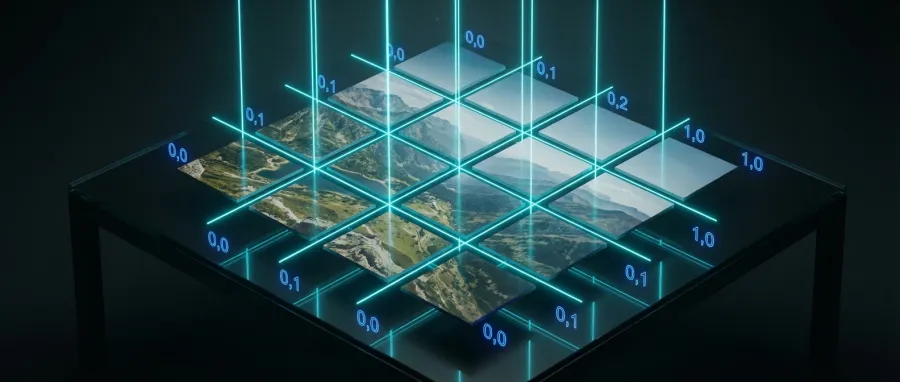
We're moving past simple coordinate-based cutting. An AI-enhanced image splitter can now "see" what it’s cutting. It identifies the subject and ensures the split doesn't happen right through someone's face. This level of smart content awareness is a massive leap for the humble image splitter.
Integrating an AI model via a unified API allows developers to build custom splitting logic. For example, GPT Proto offers access to multi-modal models that can analyze an image before the split happens. This ensures your image splitter makes logical, rather than just mathematical, decisions.

How to Get Started with Your First Image Splitter
Getting started doesn't require a computer science degree. Most users begin with simple web-based tools. You upload a file, choose your grid, and download a zip. This is the entry-level image splitter experience. It’s fine for a one-off Instagram grid, but it scales poorly.
If you’re doing this for work, you need a local image splitter setup. This could be a dedicated app or a plugin for your existing design suite. The key is understanding how the tool handles file naming. A good image splitter will let you define a prefix and numbering system automatically.
Setting Up Your Workflow for an Image Splitter
Before you run your image splitter, organize your source files. Don't work on the originals—ever. Create a dedicated "Input" and "Output" folder. This simple habit prevents you from accidentally overwriting a 2GB scan with a bunch of tiny thumbnails. It's a lifesaver.
Next, determine your target dimensions. A professional image splitter usually asks for either the number of rows and columns or the specific pixel width. If you're building a website, your image splitter should match your CSS grid units. Precision at this stage prevents blurry rendering later on.
The Easiest Image Splitter Options for Beginners
For those who hate installing software, web-based tools like AutoCropper are fantastic. This specific image splitter is great for scanned photos. You throw a bunch of childhood pictures on a scanner, and the tool finds the edges for you. It’s fast, free, and surprisingly accurate.
If you're already in the Adobe ecosystem, the slice tool is your built-in image splitter. It’s been around for decades because it works. You literally "draw" where you want the cuts to be. It’s an old-school way to use an image splitter, but the control is unmatched.
Advanced Feature Walkthrough of a Pro Image Splitter
When you move into the professional tier, an image splitter becomes a programmable asset. We’re talking about command-line tools and scripting. This is where tools like ImageMagick shine. It’s the ultimate image splitter for developers who need to process thousands of assets in the background.
You can even use an AI to help you write the logic for these tools. I often use ChatGPT to generate the specific ImageMagick commands for a complex image splitter task. It’s faster than digging through documentation for an hour. The AI makes the tool accessible.
Master the Slice Tool in a High-End Image Splitter
In software like Affinity Photo or Photoshop, the "Slice" function is the core image splitter feature. You can create user slices or let the software generate "Auto Slices." Pro tip: use the "Divide Slice" command to create perfectly even grids. It’s a mathematical image splitter dream.
Once your slices are set, you can name them individually. This is why a pro image splitter is so powerful. You can export "header_left," "header_center," and "header_right" all at once. This saves you from the tedious "Export Selection" dance that kills your creative flow.
Programmatic Control via an Image Splitter API
For software developers, the best image splitter is one that lives inside your code. By using an API, you can trigger splits based on user behavior. Imagine a user uploads a profile picture, and your image splitter automatically generates five different sizes.
Using GPT Proto's unified API interface makes this incredibly easy. You can use their high-performance AI models to determine where a split should occur based on the "interesting" parts of a photo. It’s not just an image splitter anymore; it’s an intelligent asset management system.
Solving Hard Problems with a Real-World Image Splitter
Let’s talk about screen printing. This is a classic "hard" problem. You have a full-color design, but you need to split it into CMYK layers. A specialized image splitter or technique in Illustrator handles this. It separates the colors so you can burn individual screens.
Without a precise image splitter for this task, your colors won't register. If your "Cyan" layer is off by even a millimeter, the whole print looks blurry. This is where the accuracy of a digital image splitter becomes a physical necessity for high-quality production.
Using an Image Splitter for Professional Screen Printing
When you use an image splitter for CMYK separation, you’re essentially splitting the file by color channels rather than spatial grids. Each channel becomes its own black-and-white image. These represent the ink density for each pass on the press. It’s a unique way to use an image splitter.
Experienced printers also use an image splitter to create "registration marks." These are small crosses on the corners of every split piece. They ensure that when you layer the colors back together, they line up perfectly. A manual image splitter process here requires a very steady hand.
Batch Processing Scans Using an Automated Image Splitter
We’ve all been there: a shoebox full of old photos and a flatbed scanner. Scanning them one by one takes forever. A smart image splitter allows you to put four or five photos on the glass at once. The software then detects the gaps and splits them.
Pro tip: When using an image splitter for scans, leave at least half an inch of space between photos. This gives the AI-driven image splitter enough "white space" to clearly identify where one photo ends and the next begins.
Tools like SnipTag or AutoCropper are built specifically for this. They don't just act as an image splitter; they also auto-rotate and color-correct. If you’re archiving family history, this kind of specialized image splitter is worth every penny of the subscription fee.
Honest Limitations of the Typical Image Splitter
No tool is perfect. One big issue with a generic image splitter is compression. If you split a JPEG and save it as a JPEG, you’re compressing it twice. This "generational loss" can make your split images look grainy. A pro image splitter should work with lossless formats.
Another catch is metadata. Many image splitter tools strip out the EXIF data—the date the photo was taken or the GPS coordinates. If you're splitting a large archive, losing that data is a disaster. Always check if your image splitter preserves metadata before doing a batch of 500.
When an Image Splitter Breaks Your Workflow
The biggest headache occurs when an image splitter doesn't handle transparency well. If you have a PNG with a clear background, some tools will fill that space with white or black. This ruins the asset for web design. You need a high-quality image splitter that respects alpha channels.
There's also the "off-by-one" pixel error. If your math isn't perfect, your image splitter might leave a tiny 1-pixel gap between pieces. When you put them back together on a website, you’ll see a faint line. A professional image splitter prevents this by using sub-pixel precision.
Comparing a Manual vs Automated Image Splitter
Manual splitting gives you total control, but it’s slow. Automated tools are fast, but they make mistakes. The sweet spot is a tool that lets you review the "cuts" before hitting save. This hybrid approach is the hallmark of a great image splitter for professional use cases.
| Feature |
Manual Image Splitter |
AI Image Splitter |
| Speed |
Slow (minutes per file) |
Fast (seconds per batch) |
| Accuracy |
High (user defined) |
Variable (needs review) |
| Ease of Use |
Requires skill |
Plug-and-play |
Final Verdict: When to Invest in an Image Splitter
So, do you actually need a dedicated image splitter? If you're doing this once a year for a social media post, just use a free web tool. But if you’re a developer, designer, or archivist, you need a systematic image splitter. It’s an investment in your time and sanity.
For those building apps, leveraging an API to handle these tasks is the smart move. It allows you to focus on the user experience while the backend handles the heavy lifting of the image splitter logic. Plus, with AI, these tools are only getting smarter.
Choosing the Right Image Splitter for Your Business
Look for a tool that supports your specific file formats. If you work in RAW or TIFF, a browser-based image splitter probably won't cut it. You’ll need something like ImageMagick or a dedicated desktop app. Don't compromise on file quality for the sake of a simpler interface.
Also, consider the price. Some tools charge a subscription, while others are open-source. For heavy lifting, an API-based image splitter often provides the best ROI. It scales with your needs without requiring you to maintain a massive local server for image processing.
Future Proofing Your Content with an AI-Powered Image Splitter
The future of the image splitter is context-aware. Imagine a tool that knows you're splitting an image for a mobile screen and automatically adjusts the crop to keep the most important part of the photo centered. That's where we're heading. AI is the driver here.
If you're looking to explore all available AI models to power your next project, platforms like GPT Proto offer the infrastructure you need. They provide the unified access required to build the next generation of image splitter tools. It's an exciting time to be in the tech space.
Whether you're using a simple command-line script or a high-end AI API, the right image splitter makes all the difference. It turns a tedious chore into a background process. Stop manual cropping today and let the machines do what they do best: repetitive, precise work.
Written by: GPT Proto
"Unlock the world's leading AI models with GPT Proto's unified API platform."