TL;DR
The upcoming deepseek v4 release promises a massive leap to 1 trillion parameters and a 1-million token context window, fundamentally shifting how developers handle complex reasoning.
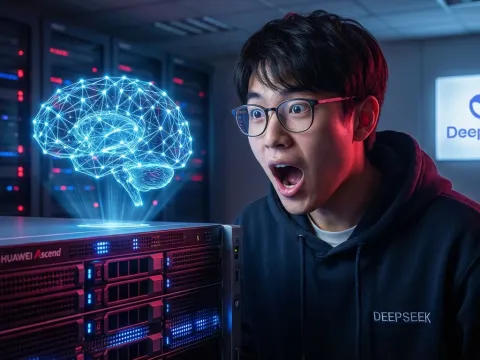
Rumors surrounding the next iteration of DeepSeek are reaching a fever pitch. Developers anticipate an architecture that abandons isolated vision and text models for a unified neural pathway. This shift means faster processing and lower compute costs across text, images, and video. You no longer have to string together fragmented systems to get enterprise-grade performance.
Scaling to this magnitude introduces severe hardware challenges. The engineering team is actively building custom memory retrieval systems like Engram and DeepSeek Sparse Attention to prevent structural collapse. While community whispers point to an April 2026 launch, compiling on custom silicon takes time. Preparing your data payloads now ensures you avoid integration headaches when the new endpoints finally go live.
Why DeepSeek V4 Matters Now
The AI industry loves a good rumor. Right now, the noise surrounding the upcoming DeepSeek V4 release is deafening. Earlier models shook the tech world, forcing competitors to rethink their hardware costs. Now, developers expect the next version to completely rewrite the rules of inference economics.
Here is the thing. Moving from the current 3.2 version to a massive new architecture changes everything. We are looking at a rumored 1 trillion parameters. That number alone shifts the conversation from basic chatbot deployment to enterprise-grade reasoning engines.
You hear developers talking about getting Opus-level performance at a fraction of the cost. That is the core promise. If the new DeepSeek API delivers top-tier intelligence without the massive billing overhead, every startup will migrate their workloads.
The Multimodal Capabilities Shift
Text generation alone no longer impresses anyone. DeepSeek V4 models will reportedly ship with native multimodal capabilities. This means the system understands text, processes images, and potentially analyzes video frames within the same neural pathway.
Native multimodal processing reduces latency. You no longer need separate models for vision extraction and text reasoning. A unified DeepSeek multimodal AI handles the entire prompt simultaneously. This architecture lowers compute overhead while improving contextual accuracy across different data formats.
Disrupting DeepSeek API Pricing
Cost remains the biggest bottleneck in AI application development. DeepSeek historically offered aggressive rates. Industry leaks suggest DeepSeek V4 pricing will continue this trend, undercutting established giants while delivering better reasoning benchmarks.
Look at the projected landscape. If you build heavily reliant autonomous agents, API token costs destroy your margins quickly. Securing a cost-effective DeepSeek API endpoint allows you to scale features previously deemed too expensive.
| Model Version |
Parameter Count |
Context Window |
Core Modality |
Expected Pricing Tier |
| DeepSeek V3.2 |
236 Billion |
128k Tokens |
Text & Basic Code |
Ultra-Low |
| DeepSeek V4 (Rumored) |
1 Trillion |
1 Million Tokens |
Text, Image, Video |
Low-Mid (High Value) |
| Claude 3 Opus |
Undisclosed |
200k Tokens |
Text & Vision |
Premium |
| GPT-4 Omni |
Undisclosed |
128k Tokens |
Native Multimodal |
Medium-High |
Core Concepts Behind DeepSeek V4 Models
Understanding the architecture requires looking past the marketing hype. The engineering choices behind the DeepSeek V4 parameters indicate a complete structural redesign rather than a simple scaling exercise. Let's look at the numbers.
Scaling up always introduces instability. Training massive models often results in catastrophic forgetting or hardware failure. The DeepSeek engineering team apparently solved these bottlenecks using specific structural innovations.
Decoding The 1 Trillion Parameters
Think of parameter count like the density of brain cells in an organic network. Generally speaking, bigger means better reasoning. A 1 trillion parameter model possesses enough internal pathways to memorize vast amounts of edge-case knowledge.
But a trillion parameters require massive VRAM just to load the weights. DeepSeek V4 relies heavily on Mixture-of-Experts (MoE) routing. Only a small fraction of those trillion parameters activate during any single inference request. This keeps the DeepSeek V4 API fast while maintaining deep knowledge retrieval.
The 1 Million Context Window
Context limits dictate how much background information you can feed the system. The rumored 1 million context window changes the game entirely. You can upload entire codebases, multiple legal books, or long video transcripts in a single prompt.
"The 1 million context window plus unlimited chats was already top tier for my use case. If they pull this off efficiently, we rethink document parsing entirely."
Managing a 1 million context window normally destroys attention mechanisms. Compute requirements scale quadratically with sequence length. DeepSeek V4 circumvents this mathematical wall using specialized memory retrieval systems.
Technical Innovations Powering DeepSeek AI
Hardware limitations force software brilliance. The DeepSeek engineering team built several new mechanisms to handle the massive load. These innovations make the DeepSeek V4 API feasible for daily production use.
Let's break down the actual mechanics operating under the hood. These four technologies represent the core upgrades driving the next generation of DeepSeek models.
DeepSeek Sparse Attention (DSA)
Standard attention mechanisms calculate the relationship between every single token. That burns too much compute. DeepSeek Sparse Attention (DSA) solves this. DSA operates as a learned sparse attention mechanism, trained specifically on 2.1 billion tokens.
Instead of checking every token, DSA predicts which tokens matter most. It ignores the irrelevant data points. This drops computational complexity dramatically. DSA ensures the DeepSeek V4 context scales to one million tokens without causing server meltdowns.
The mHC Architecture and Engram
Massive models usually fall apart during training. The gradients explode or vanish. The new mHC architecture prevents this. mHC ensures stable training at massive scales, allowing the DeepSeek V4 parameters to grow without structural collapse.
*
Separate Verifier LLMs: DeepSeek trains separate verifier models. These smaller models evaluate intermediate reasoning steps before the main output generates.
*
Engram Memory Module: Engram acts as a distinct factual storage unit.
*
Constant Time Retrieval: Engram pulls facts in constant time, reportedly achieving 97% accuracy even within a 1 million context window.
This setup splits the workload. The main DeepSeek AI handles creative generation, while the verifier ensures mathematical and logical accuracy. Engram handles pure factual recall.
Common Mistakes When Evaluating DeepSeek V4 Context
Enthusiasm often clouds technical judgment. Developers hear about the 1 trillion parameters and immediately plan massive workflow migrations. You need a reality check before changing your production environment.
Rumors circulate daily. Distinguishing verified engineering facts from wishful community thinking saves you a lot of wasted development hours. Let's address the skepticism surrounding the DeepSeek V4 release.
Falling for Unverified Release Dates
Many users expect an immediate launch. The reality points toward a massive delay. Current industry whispers suggest an April 2026 release date for the full DeepSeek V4 models.
Hardware issues explain this timeline. Training a 1 trillion parameter model requires massive cluster stability. DeepSeek reportedly relied on Huawei Ascend 910B hardware for their training runs.
Custom CUDA kernels failed to converge on the Ascend architecture. When training scripts fail to compile efficiently, the entire schedule shifts backward. Building the best DeepSeek generator takes time when the underlying silicon fights the software.
Confusing App Uptime with API Uptime
Community sentiment swings wildly based on the consumer web interface. DeepSeek experienced noticeable service downtime recently. Users panicked, assuming the models were broken or offline for good.
Here is the technical reality. The DeepSeek API remained perfectly stable during most of these outages. The consumer-facing web and app services crashed under user load, not the inference servers.
If you build production tools, ignore the consumer web interface status. Monitor the specific DeepSeek API endpoints instead. Those remain highly reliable even when the public chat interface struggles.
Expert Tips for Preparing Your DeepSeek V4 API Workflow
You cannot deploy a 1 million context window using your old prompting strategies. Huge context windows require highly structured inputs. If you feed the DeepSeek V4 API messy data, you get expensive, messy outputs.
Start formatting your data payloads using strict JSON schemas. XML tags work incredibly well for partitioning large document dumps. When the DeepSeek V4 models finally launch, your ingestion pipelines must be ready to handle the increased throughput.
Leveraging the GPT Proto Unified Platform
Managing multiple API keys creates administrative nightmares. When the new DeepSeek models launch, pricing models will likely fluctuate. You need a flexible routing setup.
We highly recommend using a unified access provider. You can
explore all available AI models through the GPT Proto platform. This setup provides a single integration point for your entire backend.
*
Cost Reduction: GPT Proto often provides up to a 70% discount on standard API token rates.
*
Smart Scheduling: Route your tasks dynamically. Send heavy reasoning to DeepSeek V4 and basic parsing to cheaper models.
*
Unified Billing: You can easily
flexible pay-as-you-go pricing without juggling multiple vendor accounts.
Integrating early means you secure your infrastructure. You can
monitor your API usage in real time, ensuring your token consumption stays within budget when you test those massive 1 million token prompts.
Always check the integration guidelines. You should
read the full API documentation to prepare your environment for the DeepSeek V4 transition.
What's Next for DeepSeek Multimodal AI
The AI landscape changes weekly, but the fundamental physics of compute remain static. DeepSeek V4 represents a massive gamble on hardware efficiency. If their mHC architecture and DSA implementations work as advertised, they will completely disrupt the enterprise market.
Skepticism remains healthy. There is no definitive proof of the exact feature set until the official documentation drops. Some developers point out that scaling from 236 billion to 1 trillion parameters rarely goes perfectly on the first attempt.
The April 2026 Prediction
If the April 2026 release date holds true, we have time to prepare. The current DeepSeek V3.2 endpoints provide plenty of utility while we wait. Focus on optimizing your current retrieval-augmented generation (RAG) pipelines today.
When DeepSeek V4 arrives, those optimized pipelines will immediately benefit from the upgraded multimodal capabilities. Better reasoning, cheaper API calls, and native image processing will define the next era of development.
Stay grounded in the data. Monitor the official DeepSeek V4 pricing announcements, test the beta API endpoints early, and rely on unified platforms to hedge your infrastructure risks. The next massive shift in artificial intelligence is approaching rapidly.
Written by: GPT Proto
"Unlock the world's leading AI models with GPT Proto's unified API platform."