
We are witnessing the death of traditional software development and the explosive birth of Vibe Coding. This new paradigm allows creators to bypass syntax and manifest digital products through pure intent and natural language. However, this revolution comes with a hidden cost for startups: the concept of permanent Product-Market Fit (PMF) is vanishing. As underlying AI models evolve at breakneck speed, Vibe Coding platforms must re-earn their user base every single quarter. In this volatile landscape, agility is the only currency that matters, and infrastructure strategies—like those offered by GPTProto—are becoming the deciding factor between scaling up or burning out.
2026-03-02
Vibe Coding: The End of Permanent Product-Market Fit
Discover how Vibe Coding is redefining software development and why industry leaders like Lovable claim that product-market fit is now a temporary subscription rather than a permanent achievement in the age of generative AI.
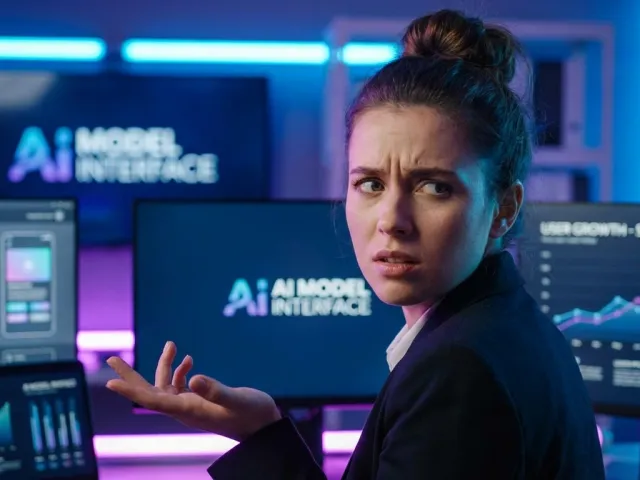
Table of contents
The Dawn of the Vibe Coding Era
The software industry is currently undergoing its most significant transformation since the invention of the compiler. We are moving away from the rigid, syntax-heavy world of traditional programming into the fluid, intent-driven universe of Vibe Coding. In this new reality, the barrier between a human idea and a deployed application is dissolving. Vibe Coding is not merely a feature update or a new framework; it is a fundamental reimagining of how humans interact with machines to create value.
For decades, the "priests" of technology were those who memorized standard libraries and understood memory management. Today, Vibe Coding is democratizing this power, handing it to anyone who can articulate a vision. The cursor on the screen no longer waits for a command; it anticipates a feeling. This shift is exhilarating, but it is also chaotic. The stability that defined the SaaS (Software as a Service) boom of the 2010s is eroding, replaced by a hyper-competitive environment where Vibe Coding tools fight for dominance on a daily basis.

The image above captures the essence of this transition: a seamless flow of creative energy converting directly into digital structure. Yet, behind this magic lies a brutal business reality. Companies that are leading the charge in Vibe Coding, such as Lovable, are discovering that their massive revenue streams do not guarantee long-term survival. The ground beneath them is shifting constantly.
The PMF Paradox in Vibe Coding
Elena Vera, a key growth strategist at Lovable, recently sent shockwaves through the tech community with a candid admission. despite generating millions in revenue and capturing the attention of the developer world, she stated that they have not truly achieved Product-Market Fit (PMF). In the context of Vibe Coding, this statement redefines what success looks like. Traditionally, PMF was a milestone you achieved and then leveraged. You climbed the mountain, planted your flag, and built a fortress.
In the world of Vibe Coding, there is no mountain top. There is only a treadmill. The capabilities of Vibe Coding tools are inextricably linked to the underlying Large Language Models (LLMs) that power them. When OpenAI releases GPT-4o or Anthropic updates Claude, the baseline expectation for every Vibe Coding product shifts instantly. A feature that was a "moat" on Monday becomes a commodity by Friday.
This creates a scenario where Vibe Coding startups are essentially "renting" their product-market fit. They must renew this subscription every month by integrating the latest models, refining their prompt engineering, and improving their user experience (UX). If a Vibe Coding platform stagnates for even a few weeks, users will migrate to a competitor that feels slightly faster or smarter. The loyalty that existed in the era of Adobe or Microsoft does not exist here.
The Treadmill of Innovation
Founders entering the Vibe Coding space must understand that they are entering a war of velocity. The feedback loops are almost instantaneous. In traditional software cycles, you might ship a major version once a year. In Vibe Coding, shipping is continuous. The product you use in the morning might behave differently by the evening.

This relentless pace is driven by the users themselves. The Vibe Coding user base is sophisticated and demanding. They are not looking for a tool that works; they are looking for a tool that wows. When the "wow" factor fades—which happens faster with every cycle—churn increases. To maintain momentum, Vibe Coding companies must treat every week like a new launch week.
Comparison: Traditional SaaS vs. Vibe Coding Dynamics
To visualize the disruption, consider the operational differences between the old world and the new Vibe Coding reality:
- Development Velocity: Traditional SaaS relied on quarterly roadmaps. Vibe Coding relies on daily pivots.
- User Retention: Traditional retention was based on data lock-in and workflow integration. Vibe Coding retention is based on the quality of the immediate output.
- Value Proposition: Traditional software sold "features." Vibe Coding sells "outcomes."
- Infrastructure: Traditional apps had predictable server costs. Vibe Coding apps have volatile token consumption costs that scale with user complexity.
This volatility explains why a company with $100 million in Annual Recurring Revenue (ARR) can feel insecure. In the Vibe Coding sector, revenue is a lagging indicator of success, not a predictor of the future.
Who is the Real Vibe Coding User?
One of the most confusing aspects of this revolution is identifying the customer. Initially, the assumption was that Vibe Coding was for junior developers who needed help with syntax. That hypothesis has been proven incomplete. The true power users of Vibe Coding are shifting rapidly across the spectrum.
The Rise of the Non-Technical Founder
We are seeing a massive influx of "idea-stage" founders who have zero coding background. For them, Vibe Coding is not a productivity booster; it is a life-changing enabler. They are using these tools to build full-stack SaaS applications, marketplaces, and internal tools without hiring a single engineer. This demographic treats the Vibe Coding interface as a co-founder.
The Senior Engineer's Secret Weapon
On the other end of the spectrum, senior engineers are using Vibe Coding to handle boilerplate code, write tests, and refactor legacy systems. For them, the tool is an exoskeleton that multiplies their output. However, their needs are different. They demand precision, clean code, and security. A Vibe Coding tool that hallucinates secure credentials will be abandoned immediately by this group.
This dichotomy forces Vibe Coding platforms to be incredibly versatile. They must be simple enough for a novice to prompt "Build me a clone of Uber," yet robust enough for a senior dev to prompt "Refactor this microservice to use GraphQL." Balancing these "vibes" is the central product challenge of 2024.
The Economic Reality: Tokens, Margins, and GPT Proto
Let’s talk about money. Building a Vibe Coding platform is expensive. Every time a user generates an app, they are consuming thousands, sometimes millions, of tokens. The inference costs for top-tier models like GPT-4 or Claude 3.5 Sonnet are significant. If a startup is not careful, their Vibe Coding tool can become a money pit where the cost of goods sold (COGS) exceeds the subscription revenue.
This is where infrastructure optimization becomes a survival skill. Successful Vibe Coding companies are moving away from direct, retail API usage. They are leveraging aggregators and optimization layers to manage their token spend. This is where platforms like GPT Proto are becoming critical infrastructure.
GPT Proto allows Vibe Coding startups to access major LLMs through a unified, optimized interface. By aggregating volume and offering smart routing, GPT Proto can reduce the effective cost per token by up to 60%. For a high-volume Vibe Coding application, this margin recovery is the difference between profitability and bankruptcy.
Furthermore, GPT Proto enables model switching. In the Vibe Coding world, you never want to be locked into a single model provider. If Google releases a model that is better at Python generation than OpenAI, you need to switch your backend instantly. GPT Proto facilitates this agility, allowing Vibe Coding tools to always offer the "smartest" vibes without rewriting their integration code.
Strategies for Survival in the Vibe Coding Market
If Product-Market Fit is a moving target, how do you hit it? The strategies that worked for Salesforce or Slack will not work for a Vibe Coding startup. The playbook is being rewritten in real-time.
1. The "UnLovable" Audit
Lovable’s internal strategy involves constantly auditing their product for features that are "UnLovable." In the context of Vibe Coding, this means identifying friction. If a user has to correct the AI more than twice, the vibe is broken. Successful teams are obsessive about minimizing the "time to magic." They track metrics like "acceptance rate of generated code" rather than just "daily active users."
2. Community-Led Growth
Marketing Vibe Coding tools is difficult because traditional ads don't convey the experience. The most effective growth channel is the community. When a user builds something incredible in 20 minutes, they share it on X (formerly Twitter) or LinkedIn. This user-generated content acts as social proof. Smart Vibe Coding platforms build features that encourage sharing—like one-click deployment or "remixing" capabilities.
3. Vertical Integration vs. Horizontal Platforms
There is a growing debate about whether Vibe Coding should be a general-purpose tool (horizontal) or specialized for specific industries (vertical). Horizontal tools like GitHub Copilot or Lovable aim to do everything. However, we are starting to see vertical Vibe Coding agents—tools specifically designed for data science, for game development, or for solidity smart contracts. These vertical tools can achieve a "stickier" PMF because they solve deeper, more specific problems.
The Psychology of the Vibe
Why do we call it Vibe Coding? The term implies a feeling. It suggests that the coding process is no longer a logical struggle but an emotional flow. This psychological shift is the hook. Once a developer experiences the "flow state" enabled by Vibe Coding, going back to manual typing feels painful. It feels archaic.
This dependency is powerful, but it is also fragile. If the AI breaks the flow—by hallucinating, refusing a prompt, or crashing—the user's frustration is amplified. The emotional highs of Vibe Coding are higher, but the lows are lower. Therefore, reliability is not just a technical requirement; it is an emotional necessity. The "vibe" must be protected at all costs.
Future Outlook: 2025 and Beyond
As we look toward the future, Vibe Coding will evolve from generating snippets of code to generating entire systems. We are approaching the era of "Software as a Result." In this future, no one cares about the code; they only care about the utility the application provides. Vibe Coding is the bridge to this future.
We will likely see a consolidation of the market. The standalone Vibe Coding wrappers that add little value on top of the raw models will die out. The winners will be the platforms that integrate deep context—understanding the user's entire codebase, their deployment environment, and their business logic. The winners will be the ones who use tools like GPT Proto to manage the economics of scale while delivering magic on the frontend.
In conclusion, the revolution of Vibe Coding is rewriting the rules of engagement for tech startups. Product-Market Fit is no longer a trophy to be won; it is a daily practice. It is a discipline. For those willing to run the treadmill, the rewards are limitless. For those expecting a comfortable climb to the summit, the Vibe Coding era will be unforgiving. The code is dead; long live the vibe.
Grace: Desktop Automator
Grace handles all desktop operations and parallel tasks via GPTProto to drastically boost your efficiency.
Start Creating
Related Models

gemini-3.5-flash/text-to-text
Gemini 3.5 Flash is a high-throughput multimodal model from Google, featuring a 1M token context window and native audio/video reasoning. Built for speed and efficiency, it delivers elite performance for long-document QA and real-time analysis.
$ 5.4
40% off
Market: $ 9
gemini-3.5-flash/image-to-text
The Gemini 3.5 Flash API delivers a massive 1M token context window with native multimodal reasoning. Built for speed, this Gemini 3.5 model excels at video analysis, high-speed document QA, and low-latency agentic workflows at a fraction of the cost.
$ 5.4
40% off
Market: $ 9
gemini-3.5-flash/web-search
google gemini 3.5 flash is a high-throughput multimodal model from google. It features a massive 1M token context window and native audio reasoning, making it the premier choice for fast, cost-effective, and long-form data processing tasks.
$ 5.4
40% off
Market: $ 9
gemini-3.5-flash/file-analysis
The ai gemini 3.5 flash model offers a massive 1M token context window and native multimodal reasoning. Optimized for speed and cost-efficiency, it excels at processing video, audio, and large-scale datasets via our unified API at GPTProto.com.
$ 5.4
40% off
Market: $ 9