
The technological landscape is undergoing a seismic shift, largely driven by the relentless innovations emerging from OpenAI. In a revealing update, CEO Sam Altman shared a glimpse into his personal workflow that serves as a harbinger for the future of work: he now operates with two distinct laptops. One is for standard tasks, while the other is dedicated to an autonomous OpenAI agent acting as a teammate. This pivot illustrates a massive "capability overhang" where OpenAI technology outpaces current business adoption. This article dissects how to bridge that gap and prepare for an AI-first corporate reality.
2026-02-10
OpenAI Strategy: Shifting from Tools to Teammates
Discover why Sam Altman now uses two laptops to collaborate with AI agents. Explore the future of OpenAI, the concept of capability overhang, and how your business can adapt to the new era of software teammates instead of just tools.
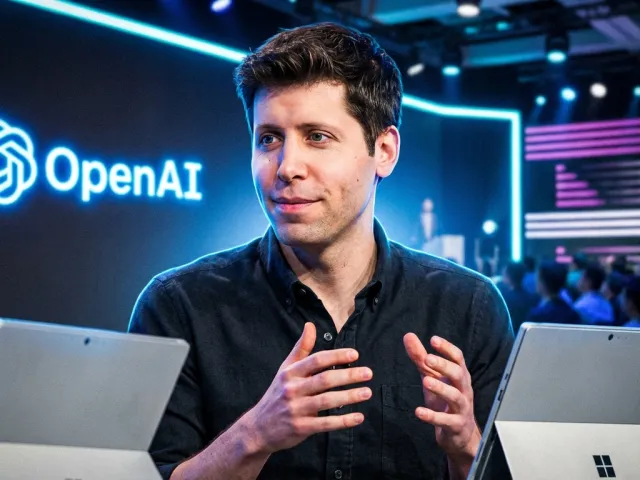
Table of contents
The OpenAI Vision: Why Sam Altman Requires Two Laptops
To the uninitiated, carrying two laptops might seem like the eccentric behavior of a Silicon Valley billionaire, but for Sam Altman, it is a functional necessity born from the cutting-edge advancements at OpenAI. The CEO of the world's most influential artificial intelligence company recently disclosed this specific detail about his daily routine, and it has sent ripples through the tech community. This is not merely about multitasking; it is a physical manifestation of a philosophical change in computing. One machine handles the traditional "human" workload—emails, direct communication, and strategic oversight. The second machine is surrendered entirely to an autonomous agent powered by OpenAI models.
This bifurcation of hardware represents the dawn of a new era. Altman confessed that his initial stance on tools like Codex—the OpenAI system that translates natural language into code—was one of cautious control. He vowed to keep the AI on a "tight leash," using it strictly as an assistant. That resolve crumbled in less than two hours. The utility, speed, and reasoning capabilities of the OpenAI agent were so profound that resisting its autonomy became inefficient. This anecdote serves as a microcosm for the global economy: we are rapidly transitioning from using software as a passive tool to collaborating with it as an active teammate.
The implications of this shift are staggering. If the architect of OpenAI himself cannot maximize his productivity without a dedicated digital partner, what does that mean for the average knowledge worker? It suggests that the "ChatGPT moment" was merely the prologue. We are now entering the main chapters of the AI narrative, where the boundaries between human output and machine generation blur into a singular workflow. In this comprehensive analysis, we will unpack Altman's recent insights from the Cisco AI Summit, explore the "capability overhang" that OpenAI has identified, and provide a roadmap for businesses trying to navigate this brave new world.
Understanding the trajectory of OpenAI is no longer optional for business leaders; it is a survival imperative. The company is not just building chatbots; they are architecting a new operating system for civilization. As we delve into the mechanics of this transition, keep the image of those two laptops in mind. It is the clearest signal yet that the age of the solitary human worker is ending, and the age of the hybrid human-AI team has begun.

From Static Tools to Dynamic Teammates
The distinction between a tool and a teammate is rooted in agency and trust. A hammer is a tool; it does exactly what you force it to do, and nothing more. A teammate, however, observes the context, anticipates needs, and acts independently to support the shared mission. This is the precise evolution occurring within the engineering culture at OpenAI. Altman noted that his internal teams were the first to correct his perspective. They argued that viewing systems like Codex merely as "smart autocorrect" was a fundamental misunderstanding of the technology's potential.
At OpenAI, engineers treat their models as collaborators. This psychological shift unlocks massive productivity gains. When you trust an OpenAI model to not just write a function, but to architect a solution, you move from the micro-management of syntax to the macro-management of logic. This is evident in OpenAI's internal "AI Defense" initiatives. Altman revealed that they are approaching a milestone where nearly 100% of their defensive cybersecurity code will be written by Codex. This is not a theoretical exercise; it is a mission-critical application in a high-stakes environment.
By relying on their own models to secure their infrastructure, OpenAI is proving the reliability of the "teammate" concept. This transition enables:
- Autonomous Debugging: An OpenAI agent can tirelessly scan thousands of lines of code to identify vulnerabilities that a human might miss due to fatigue.
- Velocity of Innovation: Development cycles compress from months to weeks when the "blank page" problem is eliminated by AI-generated drafts.
- Cognitive Offloading: Humans can focus on high-level strategy and ethical alignment, leaving the repetitive implementation to the AI.
- Continuous Learning: Unlike a static tool, an OpenAI teammate learns from the repository it works within, adopting the team's style and standards over time.
The logical endpoint of this evolution is the fully realized "AI Company." Altman envisions organizations where the primary workforce consists of specialized agents powered by OpenAI. In this structure, humans act as conductors of an orchestra, guiding various digital sections—marketing, coding, data analysis—to create a harmonious output.
The Capability Overhang: Squandering Potential
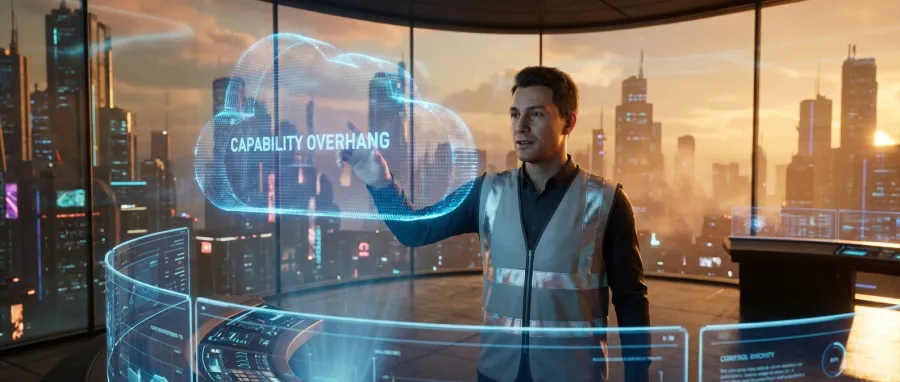
One of the most critical concepts Altman discussed is "capability overhang." This term describes the gap between the raw technical potential of OpenAI models and the actual utility extracted by users. Currently, this gap is widening. We have access to reasoning engines capable of complex deduction, creative synthesis, and multi-step planning, yet the vast majority of corporate use cases are limited to email summarization or basic customer support scripts.
This underutilization is not a failure of the technology; it is a failure of imagination and organizational agility. OpenAI has delivered a Ferrari, but most enterprises are driving it like a golf cart. The inertia of legacy systems and the fear of disrupting established workflows prevent companies from deploying OpenAI models as core infrastructure. To close this gap, businesses must move beyond the "sandbox phase." It is not enough to give employees access to ChatGPT; companies must re-architect their data pipelines to allow OpenAI agents to interact directly with internal systems.
The risk of inaction is significant. As Altman warned:
"The organizations that fail to adopt these digital teammates quickly will find themselves at a massive competitive disadvantage. This is not just about efficiency; it's about the speed of evolution."
However, accessing the full power of OpenAI can be financially dauntless for smaller players. High-volume API calls for reasoning-heavy models accumulate costs rapidly. This is where strategic integration partners become essential. Platforms like GPT Proto bridge the accessibility gap. By offering unified access to OpenAI models alongside others like Anthropic and Google, often at significantly reduced rates (up to 60% off standard API prices), GPT Proto allows businesses to experiment aggressively with capability overhang without the fear of cascading costs. This democratization is vital for a healthy ecosystem where innovation isn't limited to the Fortune 500.
Redefining Security for an Agent-Based World
Embracing OpenAI agents as teammates introduces a complex security paradox. Traditional cybersecurity is built on the principle of "Least Privilege," ensuring that users—and by extension, software—only have access to the data absolutely necessary for their task. However, for an OpenAI agent to be truly effective as a teammate, it needs broad context. It needs to "see" your screen, "read" your historical correspondence, and "understand" your project goals. Limiting its access renders it lobotomized; granting full access creates a massive vulnerability.
Altman was candid about this challenge, admitting that the industry lacks a perfect solution. The current security paradigms are designed to protect data from unauthorized humans, not from authorized but autonomous agents. If an OpenAI agent has permission to manage your calendar, how do you ensure it doesn't accidentally decline a critical meeting based on a hallucinated conflict? Or worse, how do you prevent prompt injection attacks from manipulating the agent into exfiltrating sensitive data?
The solution likely lies in a new "multi-user" architecture for software. Applications must be redesigned to recognize two distinct types of users: the human and the AI. For example, a Slack channel might need different permissions for a human user versus an OpenAI bot acting on their behalf. The bot might be allowed to draft messages but not send them without human biometric approval. This "Human-in-the-Loop" security model will be the defining challenge for CISOs in the coming decade. OpenAI is actively developing enterprise-grade controls, but the onus remains on implementation.
Comparative Analysis: The Paradigm Shift
To fully grasp the magnitude of what OpenAI is proposing, it is helpful to contrast the traditional software paradigm with the emerging agent-based model. The differences are not merely functional; they are foundational.
| Dimension | Traditional Tool Paradigm | OpenAI Agent Paradigm |
|---|---|---|
| Initiation | Passive; waits for human input (click, type). | Proactive; anticipates needs and suggests actions. |
| Interface | Graphical User Interface (GUI), buttons, menus. | Natural Language Processing (NLP), intent-based. |
| Context | Stateless; unaware of previous unrelated tasks. | Context-aware; leverages long-term memory. |
| Outcome | Raw output (e.g., a data table). | Reasoned solution (e.g., strategic analysis). |
This table highlights that OpenAI is not selling better software; they are selling "intelligence as a service." When you integrate an API from OpenAI, you are injecting reasoning capabilities into your stack. This reasoning is what allows the software to bridge the gap between user intent and final execution.
The Economics of Intelligence: Jevons Paradox
The rise of OpenAI and its competitors has triggered a voracious demand for compute. Altman touched upon the economic realities of this growth, referencing Jevons Paradox. This economic theory states that as technology increases the efficiency with which a resource is used, the total consumption of that resource increases rather than decreases. As OpenAI optimizes its models to be faster and cheaper, the world will not spend less on AI; it will simply use AI for millions of new tasks that were previously too expensive to justify.
This leads to a future where compute is a primary currency. The physical constraints—energy grids, data center space, semiconductor availability—are the only hard limits on OpenAI's growth. For businesses, this means that managing the cost of intelligence will become a standard line item in the budget, akin to electricity or payroll. Companies must develop strategies to route tasks efficiently: using lighter, cheaper models for routine tasks and reserving the heavy-hitting reasoning models for complex problems.
This is another area where aggregators like GPT Proto provide value. By offering smart routing and "Cost-First" modes, they help developers navigate the complex economics of the OpenAI ecosystem. Being able to switch between models dynamically based on the complexity of the query is a crucial optimization for scaling AI operations sustainably.
The Frontier: Moltbook, OpenClaw, and the 10x Leap
Looking toward the horizon, Altman discussed experimental projects like Moltbook and OpenClaw. Moltbook creates a simulation where thousands of AI agents interact in a closed social network. This isn't just a game; it's a training ground for the future internet, where your personal OpenAI agent might negotiate with a travel vendor's agent to book your vacation. OpenClaw explores the realm of "computer use"—giving agents control over the mouse and keyboard to navigate legacy software. This capability bridges the gap between modern AI and archaic enterprise systems that lack APIs.
Most exciting, however, is Altman's prediction for the immediate future. He estimates that the user experience of OpenAI models will improve by a factor of 10 by the end of the year. This "10x leap" won't necessarily be defined by benchmarks, but by "vibe" and reliability. It means fewer hallucinations, deeper reasoning chains, and a more intuitive grasp of human nuance. We are moving toward models that can hold a train of thought for days, not just minutes, enabling them to execute complex projects autonomously.
Conclusion: Embracing the Partnership
The narrative arc of OpenAI is clear: we are moving from a world of command-line tools to a world of conversational teammates. Sam Altman's two-laptop lifestyle is a temporary bridge to a future where hardware and software are fully integrated to support this new way of working. The challenges—security, economics, and cultural adaptation—are immense, but the potential upside is infinite.
For businesses and individuals alike, the time to start building the "AI muscle" is now. Experiment with the tools, push the boundaries of the capability overhang, and learn to trust the reasoning engines provided by OpenAI. Whether through direct integration or via flexible platforms like GPT Proto, gaining access to this intelligence is the first step toward relevancy in the coming decade. The era of the solitary genius is over; the era of the human-AI team has arrived.
Original Article by GPT Proto
"We focus on discussing real problems with tech entrepreneurs, enabling some to enter the GenAI era first."
All-in-One Creative Studio
Generate images and videos here. The GPTProto API ensures fast model updates and the lowest prices.
Start Creating
Related Models

gemini-3.5-flash/text-to-text
Gemini 3.5 Flash is a high-throughput multimodal model from Google, featuring a 1M token context window and native audio/video reasoning. Built for speed and efficiency, it delivers elite performance for long-document QA and real-time analysis.
$ 5.4
40% off
Market: $ 9
gemini-3.5-flash/image-to-text
The Gemini 3.5 Flash API delivers a massive 1M token context window with native multimodal reasoning. Built for speed, this Gemini 3.5 model excels at video analysis, high-speed document QA, and low-latency agentic workflows at a fraction of the cost.
$ 5.4
40% off
Market: $ 9
gemini-3.5-flash/web-search
google gemini 3.5 flash is a high-throughput multimodal model from google. It features a massive 1M token context window and native audio reasoning, making it the premier choice for fast, cost-effective, and long-form data processing tasks.
$ 5.4
40% off
Market: $ 9
gemini-3.5-flash/file-analysis
The ai gemini 3.5 flash model offers a massive 1M token context window and native multimodal reasoning. Optimized for speed and cost-efficiency, it excels at processing video, audio, and large-scale datasets via our unified API at GPTProto.com.
$ 5.4
40% off
Market: $ 9