
The year 2025 will be remembered as the pivotal moment when digital ambition collided violently with physical reality. While Silicon Valley chased the dream of Artificial General Intelligence, the broader economy faced the friction of aggressive tariffs, trade wars, and a shifting labor market. At the center of this storm stood OpenAI, an entity that transformed from a research lab into a global economic force. This deep dive analyzes the charts that defined the year, from the trillion-dollar infrastructure build-out to the consolidation of streaming media. We explore how OpenAI and its peers redefined value, disrupted industries, and forced a global recalibration of what technology costs.
2026-02-03
OpenAI in 2025: Tech Trends & Market Analysis
Explore how OpenAI redefined the 2025 tech scene. From trillion-dollar market caps and the streaming wars to global trade shifts and AI infrastructure, this deep dive analyzes the charts and data that shaped an era of unprecedented disruption and innovation in Silicon Valley.
Table of contents
The Great Recalibration: How OpenAI and Big Tech Reshaped 2025
As the dust settles on 2025, it is clear that we have lived through a historical anomaly. This was not merely another year of technological incrementalism; it was a year of fundamental rewriting. The rules of engagement for business, media, and geopolitics were overhauled by the sheer gravitational pull of artificial intelligence. At the forefront of this shift was OpenAI, a company whose influence has begun to rival that of nation-states. From the skyrocketing valuations of chip manufacturers to the literal gilding of executive offices, the past twelve months have compressed a decade of disruption into a single calendar year.
We navigated a landscape where science fiction concepts—like flying cars and conversational computers—transitioned from R&D labs to regulatory line items. Yet, paradoxically, the cost of digital leisure, such as streaming services, became as volatile as a meme stock. It was a year defined by stark contrasts: Big Tech conglomerates grew larger and more powerful, while the average worker faced rising unemployment and inflation. OpenAI became the ubiquitous tool of the white-collar workforce, even as debates raged over the soul of creativity and the displacement of labor.
To truly understand the trajectory of 2025, one must look beyond the headlines and into the data. The story is best told through the numbers that tracked our changing behaviors. Whether it was the fluctuating price of Bitcoin, the rising cost of API calls to OpenAI models, or the hoarding of pharmaceutical inventory, the trends point to a world in deep transition. This retrospective is not just a list of events; it is a map of new power structures where OpenAI sits as a central pillar, supporting an ecosystem that is both thrilling and terrifyingly fragile.
Financial Gravity: The Trillion-Dollar Club
If the previous year was about the potential of generative AI, 2025 was about the sheer, overwhelming scale of its financial impact. The markets behaved like a rollercoaster engineered by optimists, driven largely by the hardware required to run models from OpenAI and its competitors. We witnessed the birth of the $5 trillion market cap club, a milestone that seemed mathematically impossible just a few years ago. Nvidia and Apple spent the year trading blows for the top spot, proving that in an era defined by software like ChatGPT, hardware remains the kingmaker.
The market's obsession with these giants was not merely a reflection of current earnings. It was a speculative bet on the future infrastructure that OpenAI is currently willing into existence. Investors poured capital into the sector, convinced that the demand for GPU compute is effectively infinite. However, the way we predict these futures also shifted. Prediction markets moved from niche internet corners to the mainstream during the election cycle, providing real-time sentiment analysis that often outpaced traditional polling. The public, increasingly distrustful of old-guard institutions, looked to decentralized markets to gauge the winds of change.
Yet, the financial landscape was not without its pitfalls. Bitcoin experienced a notoriously difficult November, dubbed "Nopevember," reminding investors that digital assets are still prone to liquidity crunches. In a fascinating pivot, retail traders and institutions alike flocked to gold and silver. Spooked by the volatility of the tech sector and the looming threat of international tariffs, money moved into precious metals. This defensive posturing suggests a fear that while OpenAI may build the future, the transition period will be economically rocky.
The Media Landscape: Streaming Wars and Algorithmic Feeds
For the average consumer, the most tangible shift of 2025 occurred on their living room screens. The golden age of cheap, ad-free streaming is officially dead. The industry shifted from a "growth-at-all-costs" mindset to one of survival and extraction. Viewers spent the year counting ads on "premium" tiers of Netflix, Peacock, and Disney+, realizing that they were paying more to be sold to. This "streaming tax" is the result of market saturation; with no new subscribers to acquire, platforms must squeeze more revenue from existing users.
The most shocking development was the $83 billion acquisition of Warner Bros. Discovery assets by Netflix. This move signaled the final consolidation of the industry. Netflix, which once prided itself on disrupting the old studios, admitted that buying history is cheaper than inventing it. This consolidation mirrors the AI sector, where the dominance of OpenAI makes it incredibly difficult for smaller language model providers to compete without massive capital backing. In both media and tech, the big are getting bigger, and the middle class of companies is disappearing.
However, the true threat to these media giants isn't each other; it is the 15-second clip. YouTube continues to dominate the living room, claiming the largest share of TV viewing time. The boundary between professional content and creator content has dissolved. The algorithms that feed us these clips are the first touchpoint most people have with advanced machine learning, creating a feedback loop of consumption that linear TV cannot match. As OpenAI introduces video generation tools like Sora, this line will blur even further, potentially flooding the zone with high-quality, AI-generated entertainment.
The Gilded Economy: Unemployment and Corporate Wealth
While the tech sector celebrated trillion-dollar milestones, the street-level economy felt significantly heavier. The unemployment rate began a slow, steady climb to 4.5%, a figure not seen since the fallout of the Great Recession. This shift represents a "Great Recalibration" of the labor market. Employers, armed with automation tools powered by OpenAI, are rethinking their workforce needs. The efficiency gains promised by AI are beginning to materialize, but they are arriving alongside a cooling job market, creating anxiety for workers across all income brackets.
There is a strange cognitive dissonance in the 2025 economy. We see rising unemployment and cautious consumer spending, yet we also see a literal obsession with gold at the highest levels of power. This was most visible in the Oval Office, where the return of President Trump led to a distinct change in decor. Our visual tracking of the "golden doodads" in the White House—from chalices to medallions—served as a metaphor for the year. It is a gilded age in the most literal sense: performative wealth at the top, masking the structural strains beneath.

This economic pressure has accelerated the corporate search for efficiency. Businesses are no longer viewing OpenAI as a novelty; they view it as a survival mechanism. When the cost of importing goods spikes due to new trade policies, companies look to software to protect their margins. It creates a cycle where economic hardship actually accelerates the adoption of the very technologies that disrupt traditional employment. The enterprise adoption of OpenAI APIs is not just about innovation; it is about doing more with less in a tariff-constrained world.
The Physical Backbone: Data Centers and Undersea Cables
When we discuss the rise of OpenAI, the focus is often on the chat interface or the creative output. However, in 2025, the conversation shifted to the physical reality of the machine. The "AI Boom" is, at its heart, a massive construction project. Big Tech giants—Microsoft, Google, Meta, and Amazon—spent nearly $100 billion in a single quarter on property and equipment. They are building data centers at a pace that surpasses traditional office construction. We are literally tearing down the spaces where people used to work to build the homes where the models of OpenAI live.
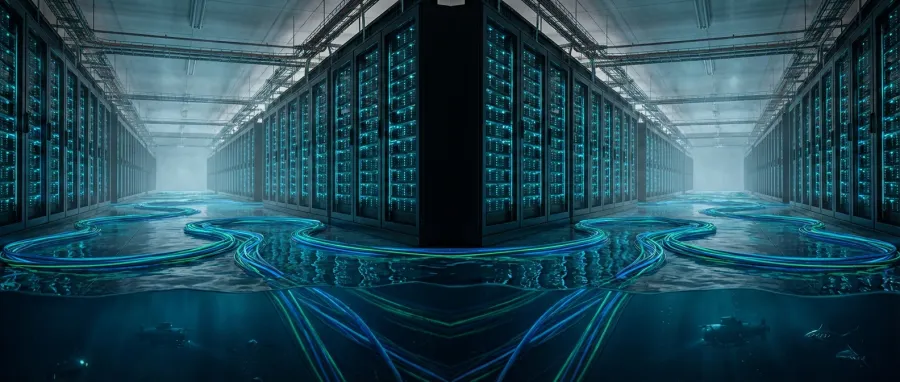
The infrastructure required to support this new intelligence extends far beyond the server farm. To make these models work at the speed of thought, the world is being re-wired. Some of the most critical infrastructure for the future of OpenAI lies at the bottom of the ocean. Sprawling networks of fiber-optic cables, increasingly owned by tech giants rather than telecom companies, now crisscross the ocean floor. This is the nervous system of the modern world. Without these cables, the latency would render real-time AI interactions impossible.
For developers trying to build on this expensive infrastructure, cost is the primary bottleneck. While OpenAI provides the cutting-edge intelligence, the bill for using it can be debilitating for a startup. This is where middleware solutions like GPT Proto have become essential. By offering up to 60% off mainstream API prices, GPT Proto allows smaller players to access the same high-level intelligence without bleeding capital. Their unified standard, which lets developers switch between OpenAI, Claude, and Google models, is a crucial layer of efficiency in a high-cost environment.
The Autonomy Race: Tesla vs. The Ecosystem
In the transportation sector, 2025 was the year the "Robotaxi" evolved from a promise into a tangible—and sometimes chaotic—reality. We witnessed a fascinating divergence in strategy. Google’s Waymo and Uber have solidified a "Partnership Model," acknowledging that building both the self-driving brain and the ride-hailing network is too capital-intensive for one firm. They are the incumbents of the autonomous age, relying on expensive LiDAR and proven safety records to dominate urban hubs.
Conversely, Tesla has doubled down on a "Single-Player Model." Elon Musk is betting the farm on vision-based systems, eschewing LiDAR and partners. Tesla believes it can solve the autonomy problem using only cameras and the massive data harvested from its fleet. It is a high-stakes gamble to create a general-purpose driving system that mirrors the general-purpose reasoning of OpenAI models. While Tesla's share of the EV market grows as others retreat, the regulatory hurdles remain immense.
Simultaneously, the dream of flying cars moved into the halls of Congress. Companies like Archer Aviation transitioned from engineering to lobbying. Spending on federal approval skyrocketed in 2025. It turns out that defying gravity is easier than defying the FAA. These companies hope to leapfrog ground traffic, but the regulatory traffic jam is proving difficult to navigate. Like the race toward AGI led by OpenAI, the race for the skies is now as much about policy as it is about physics.
The Ubiquity of Intelligence: 900 Million Users
The speed at which OpenAI has integrated into daily life is unprecedented in the history of technology. The adoption curve of ChatGPT makes the rise of social media look sluggish. In 2025, OpenAI reported nearly 900 million weekly users. We are no longer just experimenting with AI; we are dependent on it. It drafts our emails, debugs our code, and plans our travel. The transition from OpenAI being a tech curiosity to a fundamental utility has been so seamless that it is almost invisible.
This ubiquity, however, comes with a massive energy price tag. The race to achieve Artificial General Intelligence (AGI) is fueled by billions of venture capital dollars and gigawatts of electricity. Leaders at OpenAI are making bold predictions about AGI arriving as early as 2026. This timeline is driving a valuation that hovers around $500 billion. The financial world is pricing in a future where OpenAI owns the ultimate labor-saving device.
For the end-user, this manifests as a flood of "multi-modal" capabilities. We can now converse with our devices, show them images, and receive complex, reasoned responses. This shift toward audio and video requires exponentially more computing power than text. This is why cost-efficiency tools are vital. For businesses to offer these features without bankruptcy, they need the "Smart Scheduling" provided by platforms like GPT Proto, which routes traffic to the most cost-effective model, be it from OpenAI or a competitor, based on the complexity of the task.
Supply Chains: Tariffs and the Chip War
Perhaps the most disruptive force of 2025 wasn't digital, but geopolitical. The implementation of massive global tariffs sent shockwaves through the supply chain. We saw a fundamental shift in inventory management from "just-in-time" to "just-in-case." Companies like Eli Lilly led the charge, stockpiling three times their usual inventory of drugs to get ahead of tariff walls. This hoarding mentality has rippled through every industry.
The trade deficit with China remains the focal point. Americans imported over $438 billion in Chinese goods, including the electronics and machinery that power the data centers where OpenAI trains its models. The tension between the need for cheap hardware and the political drive for domestic manufacturing has created a volatile environment. Even Apple is scrambling to move production to India and Vietnam to escape the tariff drag.
What is fascinating is how this dominated corporate discourse. In earnings calls, mentions of "tariffs" surpassed mentions of "AI" for several months. This highlights the dual reality of 2025: companies are desperate to use OpenAI tools to innovate, but they are bogged down by the terrestrial realities of trade wars. Innovation is effectively taxed by geopolitical friction.
Silicon Valley Game of Thrones
No review of 2025 is complete without acknowledging the billionaire beefs. It was a year of ego-driven conflict among the tech elite. Elon Musk, Jeff Bezos, and Mark Zuckerberg saw their interests overlap in a high-stakes game of digital Monopoly. Whether it was competing satellite constellations or rival social media platforms, the fight for dominance became deeply personal.
At the center of these disputes is the future of intelligence. Every major billionaire is attempting to build their own version of OpenAI. Musk has xAI, Zuckerberg has Llama, and Bezos is backing Anthropic. They are all fighting to avoid dependence on a single provider. This competition drives innovation but fragments the ecosystem. Developers are often forced to choose a side, unless they utilize a unified API layer like GPT Proto to hedge their bets.
Conclusion
Looking back at 2025, it is clear we have crossed a threshold. The charts tell a story of a world moving faster than its institutions can handle. We have seen the rise of OpenAI from a startup to a titan. We have watched the streaming industry cannibalize itself and the global economy brace for trade shocks. It has been a year of extreme highs and unsettling lows.
But beyond the valuations and drama, there is a human story. It is the story of developers, businesses, and consumers trying to navigate a new reality. 2025 was the year we stopped asking if AI would change our lives and started asking how we would manage the cost of that change. As we move into 2026, the only certainty is that the influence of OpenAI will continue to grow, and we will need every tool available to keep up.
Original Article by GPT Proto
"We focus on discussing real problems with tech entrepreneurs, enabling some to enter the GenAI era first."
All-in-One Creative Studio
Generate images and videos here. The GPTProto API ensures fast model updates and the lowest prices.
Start Creating
Related Models

gemini-3.5-flash/text-to-text
Gemini 3.5 Flash is a high-throughput multimodal model from Google, featuring a 1M token context window and native audio/video reasoning. Built for speed and efficiency, it delivers elite performance for long-document QA and real-time analysis.
$ 5.4
40% off
Market: $ 9
gemini-3.5-flash/image-to-text
The Gemini 3.5 Flash API delivers a massive 1M token context window with native multimodal reasoning. Built for speed, this Gemini 3.5 model excels at video analysis, high-speed document QA, and low-latency agentic workflows at a fraction of the cost.
$ 5.4
40% off
Market: $ 9
gemini-3.5-flash/web-search
google gemini 3.5 flash is a high-throughput multimodal model from google. It features a massive 1M token context window and native audio reasoning, making it the premier choice for fast, cost-effective, and long-form data processing tasks.
$ 5.4
40% off
Market: $ 9
gemini-3.5-flash/file-analysis
The ai gemini 3.5 flash model offers a massive 1M token context window and native multimodal reasoning. Optimized for speed and cost-efficiency, it excels at processing video, audio, and large-scale datasets via our unified API at GPTProto.com.
$ 5.4
40% off
Market: $ 9