
Manus is revolutionizing the AI landscape by shifting the focus from model size to sophisticated context engineering. In this deep dive, we explore how Manus overcomes the limitations of traditional Large Language Models by implementing lean memory management and strategic data offloading. By treating information as a dynamic external environment rather than a static chat history, Manus prevents performance decay and slashes operational costs. Whether you are a developer or a tech enthusiast, understanding the architectural brilliance of Manus is essential for mastering the next generation of autonomous agents and high-performance AI workflows.
2026-02-17
Manus: Master Class in AI Context Engineering Performance
Discover how Manus and Cursor use lean context engineering to prevent context rot and improve AI reasoning. Learn the secrets of context offloading and how to optimize your GenAI workflows for cost and speed.

Table of contents
The Evolution of the Lean Machine: Why Manus is Leading the AI Context Revolution
There is a specific kind of magic that occurs when you witness an autonomous agent like Manus navigate a complex, multi-step task. It is not merely the speed of execution that impresses; it is the profound sense that the machine is planning several steps ahead. While the tech industry has been fixated on the raw parameters of Large Language Models (LLMs), expert developers recognize that a powerful engine is ineffective if the dashboard is cluttered with irrelevant data. This is where the discipline of context engineering becomes critical, a field currently defined by the innovative philosophies found within Manus.
As a senior observer of software trends, I have seen many technologies rise and fall, but we are now firmly in the era of the agent. The secret sauce behind the most successful agents today—specifically the internal reasoning logic of Manus—is not just about leveraging the largest model available. It is about the strategic ability to forget. In an environment where it is tempting to flood an AI’s context window with every available byte, the true victors are those practicing radical minimalism. They understand that context is a finite, precious resource requiring surgical precision.
The success of Manus represents a fundamental pivot in AI development. Historically, the goal was to provide as much data as possible, often leading to "context rot." This phenomenon is the silent killer of AI productivity, slowing down reasoning and spiking API costs. To build the next generation of tools, we must stop over-engineering the context and start optimizing the environment where the agent operates. Manus proves that a lean context is a high-performance context.
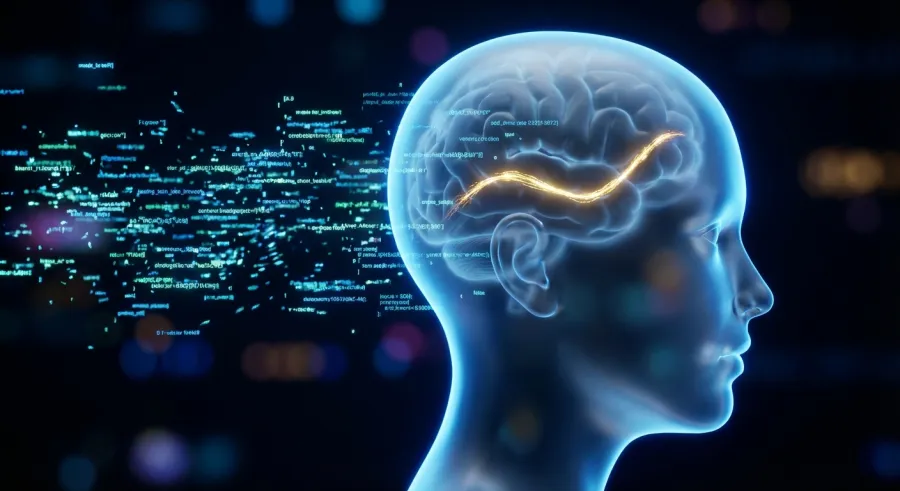
Solving the Crisis of Context Rot with the Manus Framework
To appreciate the breakthrough that is Manus, we must address the technical wall most AI agents hit during long sessions. Imagine solving a complex puzzle while someone shouts random facts at you every few seconds. Eventually, your cognitive load becomes too heavy, and you lose track of the pieces. This is exactly what happens to an LLM when its context window becomes bloated with hundreds of tool call results and chat histories. Manus is specifically engineered to avoid this mental fatigue.
In a typical workflow, Manus might call upon fifty different tools to satisfy a single user request. Each call generates data—sometimes massive JSON files or extensive logs. If this data is simply appended to the history, the model’s attention mechanism begins to flicker. Manus solves this through context offloading. Instead of carrying the weight of every past action, Manus moves heavy data to the background, keeping its "active memory" incredibly sharp and focused.
This approach highlights a key industry realization: context is a reasoning space, not just a storage bin. When Manus encounters a massive data dump, it does not attempt to ingest everything at once. It summarizes, archives, and creates pointers to the information. This ensures that the reasoning engine within Manus remains elite, even during multi-hour research tasks that would cause traditional agents to collapse under their own weight.
The Environmental Shift: How Manus Redefines Data Interaction
Manus has pioneered an "environment-centric" philosophy that treats the context window as a dynamic window into a larger system rather than a simple text stream. When a tool returns a massive log file, Manus doesn't force the LLM to read it line by line. Instead, it places that log into a temporary file and instructs the agent to query it as needed. This shift is revolutionary for agentic performance.
By turning volatile context into persistent files, the Manus agent can use standard utilities like grep or tail to navigate information. It treats data as a resource to be queried rather than a burden to be carried. This reduction in cognitive load allows the model to spend more of its computational "flops" on actual problem-solving and creative logic rather than just parsing raw text.
The synergy between these approaches is what defines the modern autonomous agent. Whether Manus is optimizing a market research task or debugging a complex software architecture, the underlying principle is identical: provide the tools to explore data, don't force data upon the agent. This environmental awareness is the hallmark of the Manus design philosophy.
The Economic Benefits of High-Stakes Manus Workflows
We cannot discuss the technical brilliance of Manus without addressing the economic reality of token costs. Every interaction with a high-end model like GPT-4o or Claude 3.5 Sonnet incurs a cost. In complex workflows where Manus might interact with an API hundreds of times, these costs can become prohibitive. This is why infrastructure that supports the intelligence of Manus is becoming the backbone of the industry.
For teams developing Manus-like agents, the financial barrier is a significant challenge. Specialized API platforms are essential for managing these high volumes. When Manus performs context compaction, it is effectively saving money. By reducing the tokens sent in each prompt, Manus lowers the cost of every subsequent turn. However, the initial calls are still a major investment for startups.
Integrating a service like GPT Proto can drastically change the economic math for developers. With significant savings on mainstream API prices and the ability to switch between Performance-First and Cost-First modes, developers can afford to let Manus "think" longer. This allows small teams to build agents with the same persistence and depth as Manus, but on a sustainable bootstrap budget.
Understanding Layered Action Spaces in Manus
One of the most impressive technical feats in the Manus architecture is the concept of Layered Action Spaces. Many early agents made the error of stuffing every possible tool into the system prompt. This creates massive "context noise," where the model becomes confused about which tool to use. Manus takes a disciplined approach by categorizing tools into distinct, manageable layers.
The first layer in the Manus system consists of Atomic Functions: basic read, write, and execute commands. These are always available and highly optimized for KV caching. Because these commands never change, Manus becomes incredibly proficient at using them without wasting reasoning power. If a more complex task arises, Manus moves to the second layer: the Sandbox. Here, it interacts with a full Linux environment to find or install necessary utilities.
The third layer of the Manus system involves specialized Packages and APIs. Instead of processing massive data inside the LLM context, Manus writes a Python script, executes it in the sandbox, and returns only the final result. This "compute-offloading" is a masterclass in modern software engineering. It leverages the logic of the LLM and the efficiency of traditional code, making Manus a leader in operational efficiency.
The Logic of Multi-Agent Collaboration
As tasks grow in complexity, a single instance of Manus may delegate work to others. We are entering an era of multi-agent systems where different Manus instances collaborate. The biggest challenge here is communication overhead. If every agent shares the same context, you encounter the "rot" problem at a massive scale. Manus avoids this through structured delegation.
Manus utilizes a system where a "Master Agent" defines the task and assigns specific portions to "Worker Agents." These workers are only given the precise information needed for their specific slice of work. This is essentially the MapReduce pattern applied to generative AI, ensuring that each sub-task is performed with high-quality reasoning and zero distractions from unrelated data.
This structure prevents the "too many cooks" problem in AI development. By using constrained decoding—forcing the model to output valid JSON or specific code—Manus ensures that agent-to-agent communication is seamless. This level of architectural rigor is why Manus can handle long-running tasks that cause simpler agents to loop indefinitely.
The Anatomy of Context Compaction in Manus
How does Manus decide what to keep and what to archive? It is a governed, two-step process that triggers once context reaches a specific threshold, typically around 128,000 tokens. This is the point where most models experience a drop in "Needle in a Haystack" performance. Manus is designed to stay ahead of this curve through active maintenance.
The first step is Compaction. This is a lossless process where Manus identifies information that can be reconstructed from the environment. If the agent just wrote a 500-line script, that text doesn't need to stay in the prompt. Manus replaces it with a reference. This simple trick often clears 90% of a bloated context window without losing any functional intelligence.
If compaction is insufficient, Manus moves to Summarization. Here, the system creates a structured "Snapshot" of the current state. It archives the full history and generates a concise summary of progress, remaining goals, and recent tool outputs. This allows Manus to continue its work as if nothing changed, while suddenly enjoying a vast amount of fresh "breathing room" in its context window.
This internal housekeeping is what makes Manus feel so robust. While other agents might forget original instructions after a few dozen turns, Manus remains grounded in the user's initial intent. It serves as a reminder that in the world of professional AI, management is just as important as creation. The ability of Manus to self-curate its memory is a feature that will soon become a standard industry requirement.
Strategic Balancing: Speed vs. Quality in Manus
When building a system like Manus, developers face a constant trade-off. Do you use a smaller, faster model to save money, or the most powerful model to ensure reasoning quality? The philosophy behind Manus suggests leaning toward the most capable model in the early stages. Over-optimizing for cost too early can lead to small reasoning errors that accumulate into total system failure.
As a product matures, this philosophy evolves into "Smart Scheduling." This allows a Manus-based system to dynamically switch models based on the task complexity. Routine file cleanup might use a faster, cheaper model, while critical architectural decisions switch back to the flagship model. This balance is the hallmark of a mature AI stack that values both intelligence and budget.
Furthermore, the multi-modal nature of modern tasks requires a unified interface. A Manus agent might analyze a screenshot, read a text prompt, and then generate a video walkthrough. Managing separate APIs for these tasks is a logistical nightmare. A unified standard, like that offered by GPT Proto, provides the stable foundation necessary for Manus to thrive without the developer getting bogged down in integration debt.
A Comparison of AI Memory Management Strategies
To understand the competitive advantage of Manus, we can look at the spectrum of memory management techniques currently used in the AI industry.
| Strategy | Mechanism | Ideal Use Case | Manus Implementation |
|---|---|---|---|
| Sliding Window | Deletes oldest tokens | Simple Chatbots | Rarely Used (Too Risky) |
| Vector RAG | Retrieves snippets via math | Static Knowledge Bases | For Massive Documentation |
| Context Offloading | Moves data to file system | Complex Engineering | Primary Strategy |
| Summary Snapshots | Recursive abstraction | Long-term Autonomy | Secondary Strategy |
The lesson from Manus is that there is no single solution for context management. A world-class agent uses a combination of these techniques, switching between them as the situation demands. This adaptability is what separates a experimental project from a tool like Manus that can be trusted with professional-grade work. The Manus team has proven that thoughtful architecture can extract incredible performance from existing models.
Conclusion: Why the Future of AI is Lean and Focused
As we look toward the future of autonomous agents, the influence of Manus is undeniable. The platform has demonstrated that the path to true autonomy is not paved with more data, but with superior data management. The era of context over-engineering is ending, replaced by a new era of elegant, environment-aware systems where Manus sets the standard for performance.
For the average user, this means tools that are more reliable and more human-like in their focus. When you engage with an agent like Manus, you are using a digital collaborator that understands the value of its own memory and your time. For the developer, the focus has shifted from simple prompt engineering to complex system engineering, building the sandboxes where models can truly excel.
The success of Manus serves as a vital reminder that technology is at its best when it is focused. By stripping away the noise and prioritizing the signal, we are finally building machines that can navigate the overwhelming complexity of the digital world. Whether you are building your own agent or integrating Manus into your workflow, the lesson is clear: keep it lean, keep it structured, and never stop optimizing.
Original Article by GPT Proto
"We focus on discussing real problems with tech entrepreneurs, enabling some to enter the GenAI era first."
Grace: Desktop Automator
Grace handles all desktop operations and parallel tasks via GPTProto to drastically boost your efficiency.
Start Creating
Related Models

gemini-3.5-flash/text-to-text
Gemini 3.5 Flash is a high-throughput multimodal model from Google, featuring a 1M token context window and native audio/video reasoning. Built for speed and efficiency, it delivers elite performance for long-document QA and real-time analysis.
$ 5.4
40% off
Market: $ 9
gemini-3.5-flash/image-to-text
The Gemini 3.5 Flash API delivers a massive 1M token context window with native multimodal reasoning. Built for speed, this Gemini 3.5 model excels at video analysis, high-speed document QA, and low-latency agentic workflows at a fraction of the cost.
$ 5.4
40% off
Market: $ 9
gemini-3.5-flash/web-search
google gemini 3.5 flash is a high-throughput multimodal model from google. It features a massive 1M token context window and native audio reasoning, making it the premier choice for fast, cost-effective, and long-form data processing tasks.
$ 5.4
40% off
Market: $ 9
gemini-3.5-flash/file-analysis
The ai gemini 3.5 flash model offers a massive 1M token context window and native multimodal reasoning. Optimized for speed and cost-efficiency, it excels at processing video, audio, and large-scale datasets via our unified API at GPTProto.com.
$ 5.4
40% off
Market: $ 9