2025: The Year DeepSeek Changed the Calculus of the Digital Age
If we look back at the history of technology, there are years that feel like a slow climb and years that feel like a freefall. 2025 was neither; it was a total recalibration. We began the year thinking we understood the trajectory of artificial intelligence—expensive, guarded by Silicon Valley titans, and requiring the GDP of a small nation to advance. Then came DeepSeek. When the DeepSeek R1 model dropped in January, it wasn't just a software update; it was a structural earthquake that leveled the playing field and forced every CEO from San Francisco to Beijing to rethink their five-year plan. The story of 2025 is the story of how a single underdog, DeepSeek, proved that efficiency is the new currency of power.
As a columnist who has watched the rise of the PC, the internet, and the smartphone, I have rarely seen the industry experience such a collective whiplash. For years, the narrative was that bigger is better. More parameters, more GPUs, more electricity. DeepSeek shattered that myth by showing that clever architecture and reinforcement learning could achieve at a fraction of the cost what the giants were spending billions on. This shift didn't just affect developers; it hit the stock market, influenced global geopolitics, and changed how you and I interact with our devices every single day. The DeepSeek moment was the moment the AI bubble didn't pop, but rather evolved into something far more interesting and accessible.
In this retrospective, we are going to dive deep into the 15 defining moments of 2025. From the dramatic "seven days that broke Wall Street" to the bizarre sight of billionaires personally delivering soup to recruit talent, it has been a year of high drama and low-level digital warfare. At the center of it all remains the DeepSeek influence, a constant reminder that in the world of tech, the most disruptive force is often the one you didn't see coming until it was already on your screen.
Let’s unpack the milestones that defined our lives in 2025, starting with the event that triggered the most significant market correction in the history of the modern tech sector.
1. The Seven Days That Shook the World: DeepSeek R1
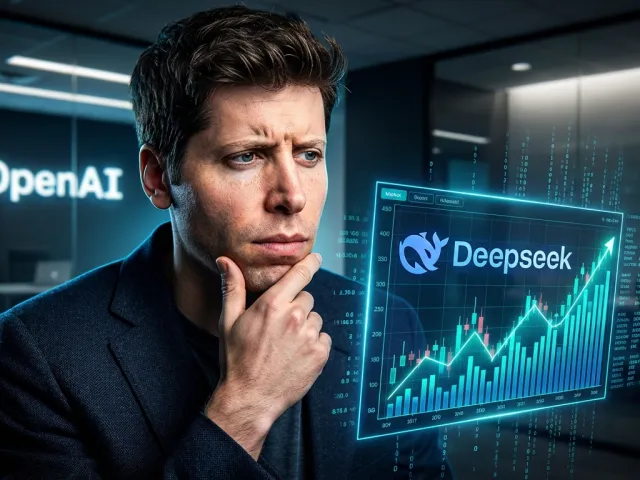
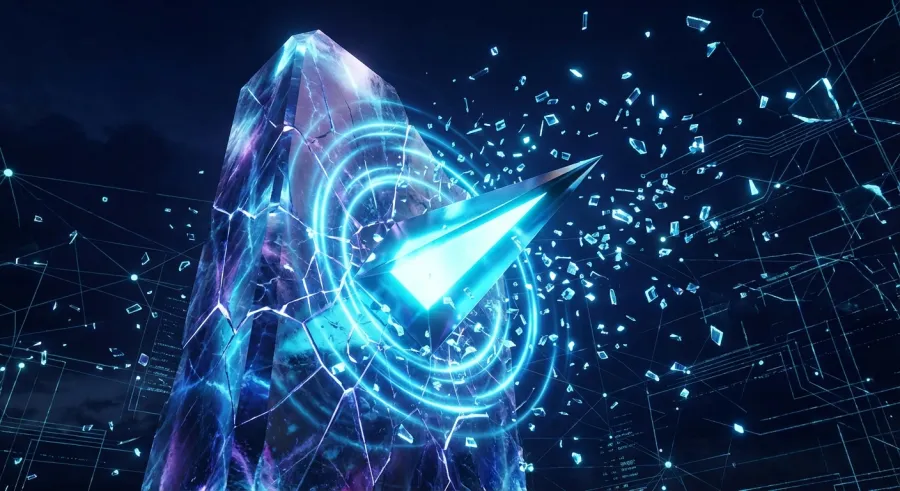
It began on January 20th, a Monday that seemed ordinary until the release of DeepSeek R1. Within hours, the technical community realized that this wasn't just another open-source model. DeepSeek had managed to match the reasoning capabilities of the world’s most advanced closed systems while using a training budget that wouldn't even cover the annual catering bill at some Silicon Valley firms. The shockwaves were immediate. Investors, who had bet trillions on the idea that only a few companies with massive capital could win the AI race, suddenly faced a new reality: if DeepSeek could do it for $6 million, why were we valuing chipmakers at $3 trillion?
By January 27th, the panic had moved from Discord servers to the floor of the New York Stock Exchange. In a single day, NVIDIA’s market value plummeted by nearly $600 billion. The headlines were sensational, claiming that DeepSeek had "shredded $9 trillion in market value" in just one week. While the markets eventually stabilized, the psychological damage was done. The era of "infinite spending" was over, replaced by the era of DeepSeek-style efficiency. It was a wake-up call that sent every major tech lab back to the drawing board to figure out how they could compete with a model that was essentially free to use but world-class in performance.
- Democratization of Reasoning: DeepSeek R1 brought high-level logic to the masses without the high-level price tag.
- Efficiency over Brute Force: The industry shifted its focus from simply buying more chips to finding better algorithmic paths, a direct result of the DeepSeek breakthrough.
- Global Competition: It proved that the leading edge of AI was no longer a monopoly of a few square miles in Northern California.
"The genius of DeepSeek wasn't just in the code, but in the audacity to prove that the ivory towers of AI were built on sand. They turned a trillion-dollar moat into a puddle in seven days."
2. The Anthropic Pivot: Dario Amodei’s Political Awakening
Before the rise of DeepSeek, Anthropic was the darling of the "safety-first" AI movement. Their Claude models were praised for their nuance and helpfulness. But as DeepSeek began to dominate the global conversation, Anthropic’s CEO, Dario Amodei, underwent a visible transformation. In a widely read essay titled "On DeepSeek and Export Controls," Amodei argued that the success of DeepSeek was not a miracle but a predictable outcome of existing technology curves. He didn't stop there; he became one of the most vocal advocates for tightening tech blockades, fearing that the accessibility of models like DeepSeek would erode the West's competitive advantage.
This shift was fascinating to watch. Amodei went from being a scientist worried about AI "alignment" to a geopolitical strategist worried about AI "sovereignty." The industry watched as Anthropic leaned into its role as a key player in the national security conversation. The DeepSeek effect had forced their hand, making it impossible to stay in a neutral academic lane. For the rest of 2025, every major product release from Anthropic felt as much like a political statement as a technological one, highlighting the growing friction between open-source progress and national interests.
In many ways, this was the end of the "innocence" phase of the AI boom. When a model like DeepSeek can be downloaded and run by anyone, the questions of who controls the hardware and who writes the rules become existential. Anthropic’s pivot was just the first of many as the industry realized that the DeepSeek genie could not be put back in the bottle. The tension between sharing knowledge and protecting secrets became the defining subtext of every developer conference throughout the year.
3. The "War of a Hundred Glasses": China’s Hardware Explosion
While the software world was reeling from DeepSeek, the hardware world was trying to find a home for all this intelligence. 2025 became the year of the AI Glass. Following Meta’s success with the Ray-Ban collaboration, a swarm of Chinese manufacturers—including Xiaomi, Rokid, and INMO—launched their own versions of smart eyewear. This "War of a Hundred Glasses" turned every major city's tech district into a sea of people talking to their frames. These weren't just cameras; they were portals to the same kind of reasoning power pioneered by DeepSeek, shrunk down to fit on the bridge of your nose.
The goal was simple: to create the "iPhone moment" for the face. These glasses could translate signs in real-time, identify people at networking events, and provide a constant stream of information without the need to pull out a phone. The integration of DeepSeek-level logic meant these devices could actually understand context. They weren't just repeating programmed scripts; they were observing the world alongside the user. However, the sheer volume of choices led to a fragmented market where consumers struggled to know which pair of glasses would actually survive the year.
| Brand |
Key Feature |
Target Audience |
Price Point |
| Xiaomi AI Glass |
Hyper-fast Translation |
Travelers & Students |
$299 |
| Rokid Vision |
AR Productivity |
Remote Workers |
$499 |
| Meta Ray-Ban (2nd Gen) |
Social Integration |
Content Creators |
$329 |
| DeepSeek-Integrated INMO |
Open AI Ecosystem |
Developers |
$399 |
Despite the excitement, the hardware race faced a reality check. Battery life and heat management remained the "digital traffic jams" of the wearable world. You could have the brain of a DeepSeek model, but if the glasses burned your temples after twenty minutes, nobody was going to wear them. By the end of 2025, the market began to consolidate, moving away from gimmickry and toward devices that could actually last a full workday while providing meaningful, low-latency assistance.
4. The Rise of the Agents: Manus Hits $100M ARR
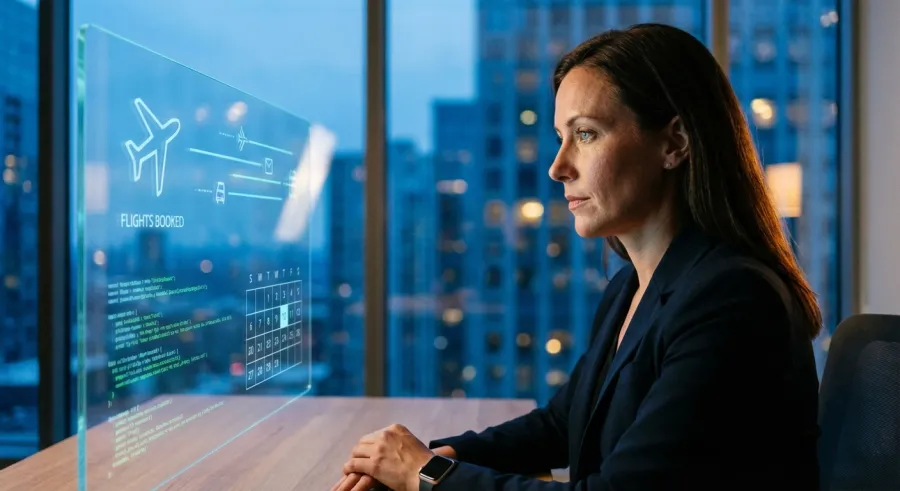
If 2024 was about chatbots, 2025 was about agents—AI that doesn't just talk, but does. The standout story here was Manus. Released in March, Manus became the poster child for the autonomous agent revolution. It could book flights, manage calendars, and even execute complex coding tasks with minimal supervision. Despite early skepticism and controversies regarding its invitation-only rollout, Manus proved that the market was hungry for tools that saved time, not just words. By the end of the year, it had reached a staggering $100 million in Annual Recurring Revenue (ARR).
Manus succeeded because it leveraged the efficiency trends set by DeepSeek. It wasn't trying to be the most "creative" AI; it was trying to be the most reliable employee. This shift toward "task-oriented" AI changed the startup landscape. Instead of building general-purpose models to compete with DeepSeek, developers began building "wrappers" and "orchestrators" that could use those models to solve specific business problems. Manus was the proof of concept that an agentic future was not only possible but highly profitable.
This success triggered a gold rush. Suddenly, every venture capitalist was looking for the "Manus of Healthcare" or the "Manus of Legal Tech." The underlying theme remained the same: using efficient, powerful backends like DeepSeek to power a frontend that could actually complete a workflow. It was a move from the "Chat" button to the "Do" button, and for many businesses, it was the first time AI felt like it was finally earning its keep instead of just being a fancy novelty.
5. The Costs of Integration: Navigating the Multi-Model Maze
With so many models like DeepSeek, Claude, and GPT-5 hitting the market, a new problem emerged for businesses: how do you manage the cost and complexity? If you use the most powerful model for every simple task, you go broke. If you use the cheapest model for complex reasoning, your product fails. This is where specialized integration platforms like GPT Proto became essential. For companies trying to keep up with the pace set by DeepSeek while still needing the specific features of other vendors, the ability to switch models on the fly was a lifesaver.
The beauty of the current landscape is that you no longer have to be locked into one ecosystem. Platforms like GPT Proto offer a "unified standard," allowing developers to write their code once and deploy it across DeepSeek, OpenAI, or Google models. This is particularly crucial when dealing with the cost-efficiency mandates of 2025. With GPT Proto offering up to 60% off mainstream API prices, the dream of a high-performance, low-cost AI stack became a reality for startups that were previously priced out of the market.
- Smart Scheduling: Tools like GPT Proto allow for "Cost-First" modes, automatically routing simple queries to DeepSeek and reserving the heavy hitters for specialized logic.
- Multi-Modal Access: Whether you need the text reasoning of DeepSeek or the image generation of Midjourney, a single interface simplifies the entire development process.
- Volume Discounts: For enterprises scaling their agentic fleets, the unified billing and volume discounts provided by GPT Proto make the math of AI finally work.
As we saw with the DeepSeek market crash, the industry is hyper-sensitive to margins. In this environment, GPT Proto isn't just a utility; it's a strategic advantage. It allows businesses to adopt a "best-of-breed" approach, ensuring they can leverage the latest DeepSeek breakthrough without sacrificing the stability or features they’ve built around other platforms. This layer of the tech stack—the orchestration layer—is where the real battles for enterprise dominance were fought in 2025.
6. The Zuckerberg Soup Chronicles: The Battle for Talent
While the models were getting smarter, the human drama was getting weirder. Meta had a difficult 2025. Between internal power struggles involving AI luminary Yann LeCun and the pressure to catch up with the DeepSeek efficiency curve, Mark Zuckerberg was reportedly in a state of high alert. The most iconic moment came when reports leaked that Zuckerberg was personally attempting to poach researchers from OpenAI. The most famous anecdote? Zuckerberg allegedly personally made soup and delivered it to the homes of key engineers to convince them to jump ship.
This "Soup Diplomacy" became a meme, but it reflected a very real desperation. The talent pool for people who actually understand the architectural secrets behind models like DeepSeek is incredibly small. At the highest levels of AI, it’s not just about who has the most money; it’s about who has the most compelling vision—or the best homemade broth. It was a stark reminder that even in an industry dominated by silicon and code, the most valuable assets are still the biological brains that can dream up the next DeepSeek.
Meta’s year was defined by this frantic energy. They spent billions on GPUs, but struggled to release a model that captured the public's imagination the way DeepSeek R1 had. The "Soup Chronicles" highlighted the human cost of the AI arms race. Engineers were being treated like professional athletes, with signing bonuses and personal attention that would make a rock star jealous. It was a peak moment of Silicon Valley absurdity, proving that even in the age of DeepSeek, the human element is the ultimate wild card.
7. The Apple Enigma: When "Liquid Glass" Replaced AI
In 2023 and 2024, the tech world spent every waking moment asking, "Where is Apple AI?" By the time WWDC 2025 rolled around, the expectation was a total AI overhaul of the iPhone. Instead, Apple did something truly "Apple." They barely mentioned artificial intelligence at all. Their big reveal? A new design aesthetic called "Liquid Glass," which focused on fluid UI animations and transparency effects. It was as if Tim Cook had looked at the DeepSeek revolution and decided that Apple would simply opt out of the conversation.
For critics, this was proof that Apple had lost its way, unable to keep up with the rapid-fire releases of DeepSeek and its peers. For fans, it was a classic move to wait until the tech was "ready" and "human-centric." However, the silence was deafening. While the rest of the world was integrating DeepSeek-style logic into every corner of the operating system, Apple users were left with prettier folders. It created a strange dichotomy: the most valuable company in the world was treating the most important technology in the world as a background feature.
"Apple's 2025 was a masterclass in distraction. While DeepSeek was rewriting the rules of intelligence, Apple was busy making sure your icons looked more like puddles. It was beautiful, but was it enough?"
This strategy felt increasingly risky as the year progressed. As third-party apps integrated DeepSeek to provide smarter, faster experiences, the native Apple features started to feel like artifacts from a previous era. The "Liquid Glass" sell was a bet that users cared more about the feel of their device than the brain inside it. Only time will tell if Apple can afford to stay on the sidelines while the DeepSeek era matures, but in 2025, they were definitely dancing to a different beat.
8. The Windsurf Controversy: The End of Silicon Valley Openness
Coding was the first major industry to be truly transformed by AI. Tools like Cursor and Windsurf became the standard for developers, often powered by the Claude 3.5 Sonnet or DeepSeek models. But in 2025, the "open and collaborative" spirit of Silicon Valley hit a wall. When rumors surfaced that OpenAI was looking to acquire Windsurf, Anthropic took a drastic step. With only five days' notice, they cut off all API access for Windsurf, effectively trying to kill a competitor before it could be bought by a rival.
This "Silicon Valley Ultimatum" was a wake-up call for the entire ecosystem. It showed that being dependent on a single model provider was a massive business risk. Developers who had relied on Claude's nuance suddenly had to scramble to integrate DeepSeek or other alternatives to keep their products alive. The incident highlighted the fragility of the "API Economy." If a provider can kill your business over a weekend because of a boardroom grudge, how can you ever feel secure?
This controversy actually accelerated the adoption of DeepSeek. Because DeepSeek offered an open-weight version of its models, developers felt they had a safety net. If a proprietary provider like Anthropic or OpenAI decided to pull the plug, the DeepSeek infrastructure was there as a reliable, high-performance backup. This shifted the balance of power. Developers realized that "open source" wasn't just a philosophical choice; it was a survival strategy in a world where tech giants were starting to behave like 19th-century monopolies.
9. The Corporate Maneuver: Agibot’s Reverse Takeover
In the world of Embodied AI—robots that move and act like humans—2025 saw one of the most unusual financial plays in tech history. Agibot, a startup with plenty of buzz but no mass-produced products, managed to take control of a publicly traded company, Shangwei New Materials. This "reverse takeover" was a signal of how desperate the market was for tangible AI hardware. It wasn't about the technology yet; it was about the financial positioning for a future where robots powered by DeepSeek-like brains would be everywhere.
The Agibot deal was a reflection of the "DeepSeek effect" on the robotics world. If the software (the brain) was becoming a commodity thanks to DeepSeek, then the value had to shift to the hardware (the body). Investors weren't looking for better code; they were looking for better gears, motors, and sensors. The fact that a startup could swallow a public company showed the sheer amount of speculative capital flowing into anything that promised to put AI into the physical world.
However, this led to a year of "press release robotics." We saw many impressive demos of robots folding laundry or making coffee, but very few were actually in homes. The brain (often a version of DeepSeek optimized for physical tasks) was ready, but the bodies were still too expensive and fragile. 2025 was the year the financial foundation for robotics was laid, but the actual revolution remained just out of reach for the average consumer, stuck in the transition between a lab experiment and a household appliance.
10. The "Death Star" and the GPT-5 Backlash
Sam Altman, the master of the hype cycle, spent much of 2025 teasing the release of GPT-5. He posted a cryptic image of a "Death Star" rising, leading the world to believe that OpenAI was about to drop a model that would make everything else, including DeepSeek, look like a calculator. But when GPT-5 finally arrived in August, the reaction was not what OpenAI expected. Instead of awe, there was a wave of mockery and disappointment. The model was certainly powerful, but it felt "sterile" and "over-sanitized" compared to the more raw and efficient DeepSeek R1.
The backlash peaked when OpenAI decided to forcibly retire GPT-4o to push users toward GPT-5. The internet erupted in what can only be described as a "digital uprising." Users on Reddit and X shared stories of how they felt they had lost an "emotional companion." GPT-4o had a certain personality that GPT-5 lacked. This was a pivotal moment in tech history: for the first time, users didn't want the "smarter" tool; they wanted the one they had a connection with. The DeepSeek models, by being more open and less "nanny-like," suddenly looked even more attractive to power users.
The "Death Star" moment was a lesson in the dangers of over-promising. When you set the bar at "world-changing," a 20% improvement in logic feels like a failure. Meanwhile, DeepSeek was winning by over-delivering. They didn't have the marketing budget of OpenAI, but they had the community's trust. By the end of August, Sam Altman had to publicly apologize and restore access to GPT-4o, a humiliating climb-down that signaled the end of OpenAI's total dominance over the cultural narrative of AI.
11. The Circular Economy of AI Giants
As the costs of training these massive models soared, a strange financial pattern emerged among the giants. OpenAI would get a massive investment from Microsoft, which OpenAI would then spend on Microsoft’s Azure cloud services. NVIDIA would invest in AI startups, which would then use that money to buy NVIDIA chips. Critics called it a "circular trade," a high-stakes game of hot potato designed to keep valuations high. It looked more like the accounting of the East India Company than a modern tech market.
This environment made the DeepSeek model even more disruptive. Because DeepSeek didn't play in this circular sandbox, their cost figures were seen as a "truth serum" for the industry. If DeepSeek could achieve parity without the billion-dollar cloud credits and incestuous investments, it suggested that much of the Western AI market was built on inflated costs. This realization led to a cooling of the venture capital market, as investors began asking for "DeepSeek-style" capital efficiency rather than "OpenAI-style" burn rates.
- The Reality Check: Investors began demanding clear paths to profitability, tired of the "money-in, money-out" games.
- Hardware Independence: Startups began looking for ways to run models like DeepSeek on cheaper, alternative hardware to break the NVIDIA monopoly.
- Open Source as Leverage: Companies used the existence of DeepSeek to negotiate better rates with their cloud providers, proving that alternatives were viable.
By the end of 2025, the "circular economy" was under intense scrutiny from regulators. The question of whether this was real growth or just a sophisticated way to hide costs remained unanswered. However, the presence of an outsider like DeepSeek provided a benchmark that made it much harder for the giants to hide behind their massive budgets. The transparency brought by open-source efficiency was perhaps DeepSeek's greatest contribution to the market's health.
12. Google’s Gemini 3: The Empire Strikes Back
Google had spent much of 2024 being the punchline of AI jokes. From their awkward "Gemini 1.5" launch to the "pizza glue" search results, the mountain was struggling. But in November 2025, Google finally found its footing with Gemini 3 Pro. It was a massive counter-attack. Gemini 3 didn't just compete; it crushed every available benchmark, including the ones where DeepSeek had previously excelled. Google leveraged its massive data advantage—YouTube, Search, and Maps—to create a model that understood the world in a way no one else could.
Gemini 3’s strength was its multi-modality. It could "watch" a video and "listen" to a podcast simultaneously, synthesizing the information in seconds. While DeepSeek was the king of reasoning, Gemini 3 was the king of context. This gave Google a much-needed win and stabilized their stock price. It also showed that while efficiency is great, having a massive, proprietary data moat still matters. Google’s "Big Tech" advantage finally translated into a product that felt significantly ahead of the pack.
The rivalry between Gemini 3 and the DeepSeek ecosystem became the focal point of late 2025. It was a battle of philosophies: Google’s "Integrated Everything" versus the DeepSeek "Efficient Everywhere." For users, this competition was a dream come true, as it led to a rapid drop in prices and a massive spike in capabilities. Google had finally stopped trying to be OpenAI and started being Google again, using its scale to do things that even a brilliant upstart like DeepSeek couldn't replicate.
13. The Global Shift: HuggingFace’s New Sovereignty
If you looked at the HuggingFace leaderboards—the "Billboard Charts" of AI—at the start of 2025, you would have seen mostly Western models like Llama. By December, the charts were dominated by names like Qwen, Kimi, and, of course, DeepSeek. The global balance of power in open-source AI had shifted dramatically to the East. Reports from a16z and OpenRouter showed that the usage of Chinese models had jumped from 1.2% to nearly 30% in a single year.
This wasn't just about nationalism; it was about performance. Developers around the world were choosing DeepSeek because it worked better and cost less. This "New Sovereignty" in the AI world meant that the global developer community was no longer waiting for Silicon Valley to give them permission to innovate. The DeepSeek architecture was being modified, fine-tuned, and deployed in every language and every industry, often faster than the original creators could have imagined.
This led to a fascinating "cultural exchange" in the code. We saw Western developers using DeepSeek techniques to improve their own models, while Eastern firms adopted Western safety frameworks. The internet had done what it does best: it had turned a breakthrough from one corner of the world into a global utility. DeepSeek had become a language of its own, a standard that transcended borders and politics, proving that in the age of AI, the best code is the code that everyone can use.
14. The IPO Surge and the "Chinese NVIDIA" Dream
In December 2025, the financial world turned its eyes to the stock market debuts of companies like Moore Threads and Muxi. These were being hailed as the "Chinese NVIDIAs," and their IPOs were nothing short of historic. Moore Threads opened with a 468% gain, reaching a valuation of over $60 billion. Why? Because the success of DeepSeek had proved that there was a massive domestic market for high-end AI chips that could bypass Western export controls.
The irony was thick. Just as Jensen Huang was lobbying the US government to allow the export of "tailored" chips to China, the Chinese market was already moving on. The success of DeepSeek on existing hardware had given these domestic chipmakers the time they needed to catch up. Investors were betting that if DeepSeek could do so much with so little, imagine what it could do with hardware specifically designed for its architecture. It was a gamble on a future where the AI stack was entirely decoupled from the West.
This financial frenzy was the final proof that the DeepSeek moment was more than a tech trend—it was a tectonic shift. It created an entirely new investment class and forced a global conversation about the future of the semiconductor industry. While the technical hurdles for these new chipmakers remained high, the political and economic momentum was undeniable. The world was preparing for a multi-polar AI future, and DeepSeek was the catalyst that made it seem inevitable.
15. The Battle for the Screen: Doubao vs. The Old Guard
The year ended with a dramatic confrontation on the smartphones of millions of users. ByteDance released the "Doubao" mobile assistant, an AI-native interface designed to replace the traditional grid of apps. Within 48 hours, the "Classical Internet" fought back. WeChat blocked its features, Alipay and JD.com experienced mysterious "lag" when Doubao was active, and banking apps began crashing if the AI was detected. It was the first Great War between the GUI (Graphic User Interface) and the LUI (Language User Interface).
This conflict was about who owns the user’s attention. If an AI assistant powered by DeepSeek-level intelligence can book your flight, pay your bills, and talk to your friends, why do you need to open fifty different apps? The "Gatekeepers" of the old internet were terrified. They were watching as their walled gardens were being bypassed by a single, conversational thread. It was a battle for the soul of the smartphone, and it showed that the final frontier of the AI revolution wasn't the data center, but the screen in your pocket.
As we head into 2026, this battle remains unresolved. Will we stick to our icons and menus, or will we move to a world where we just tell our phones what we want? The success of DeepSeek in making high-level reasoning cheap and fast has made the latter far more likely. The old guard is fighting a rearguard action against a trend that seems unstoppable. In 2025, the walls of the digital world started to crumble, and the rubble is being used to build something entirely new.
Conclusion
Looking back at these 15 moments, it is clear that 2025 was the year the "Magic" of AI was replaced by the "Utility" of AI. We stopped being amazed that a computer could talk and started being annoyed if it wasn't efficient, affordable, and helpful. DeepSeek was the architect of this new reality. By stripping away the hype and focusing on the raw mechanics of reasoning and cost, they forced the entire world to grow up. The "DeepSeek effect" meant that companies could no longer hide behind flashy demos; they had to deliver real value at a real price.
We saw the stock market tremble, billionaires deliver soup, and users mourn the loss of their digital friends. We saw the rise of agents that actually work and hardware that tried (and sometimes failed) to change how we see the world. But through all the chaos, one truth remained: the democratization of intelligence is a one-way street. Once you prove that a world-class model like DeepSeek can be built for millions instead of billions, there is no going back to the old ways.
The lesson of 2025 is that technology is at its most powerful when it becomes accessible. DeepSeek didn't just build a better model; they built a better market. They showed us that the future of AI isn't a "Death Star" controlled by a few, but a diverse ecosystem of efficient, open, and integrated tools that anyone can use to build their own future. As we move forward, the question isn't whether AI will change our lives—that’s already happened. The question is how we will use this newfound efficiency to solve the problems that actually matter. And if 2025 was any indication, the answer will be faster, cheaper, and more surprising than any of us expected.
Original Article by GPT Proto
"We focus on discussing real problems with tech entrepreneurs, enabling some to enter the GenAI era first."