The Invisible Architect: How AlphaFold Is Remaking Biology
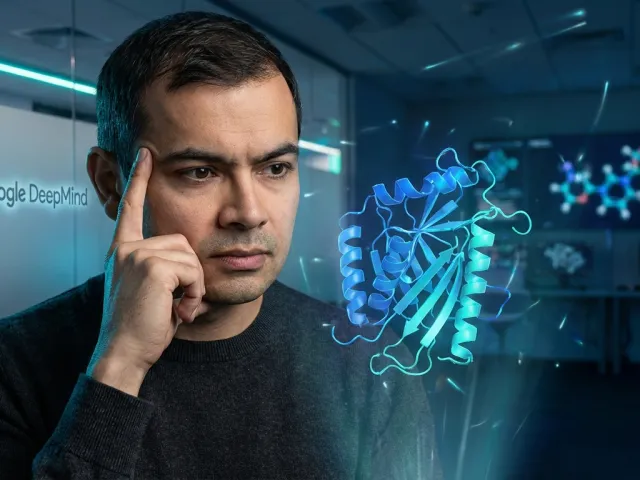
In the grand timeline of scientific history, there are moments of distinct demarcation: before the microscope and after; before the sequencing of the human genome and after. We are now living in the era defined by AlphaFold. Five years ago, Google DeepMind introduced an artificial intelligence system capable of predicting a protein's 3D structure from its 1D amino acid sequence. This challenge, known as the "protein folding problem," had stumped chemists and biologists for over 50 years.
Proteins are the fundamental machinery of life. They transport oxygen, detect light in our eyes, and fight off viruses. However, a protein's function is inextricably linked to its shape—the complex, origami-like structure it folds into. If a protein folds incorrectly, it can lead to devastating conditions like Alzheimer's or Parkinson's. Conversely, if we can understand these shapes, we can design drugs to lock into them like a key in a keyhole. Before the advent of AlphaFold, determining a single protein structure required expensive techniques like X-ray crystallography or cryo-electron microscopy, often costing hundreds of thousands of dollars and consuming years of PhD research.

The release of the AlphaFold Protein Structure Database changed the economics of discovery overnight. It essentially provided a structural Google Search for biology, offering open access to over 200 million protein structure predictions—covering nearly every protein known to science. This massive influx of data has shifted the scientific paradigm from "discovery by observation" to "discovery by prediction." Research labs no longer spend their initial grant funding on finding the shape of a target; they start with the shape provided by AlphaFold and move immediately to engineering solutions.
As we mark the fifth anniversary of this technological marvel, it is crucial to move beyond the hype of generative AI and look at the tangible, peer-reviewed impacts of structural AI. The following 21 case studies represent the diversity of AlphaFold's application, proving that while chatbots may dominate the headlines, it is DeepMind's protein folder that is quietly saving the world.
1. Decoding the Molecular Rhythms of the Human Heart
Cardiovascular disease remains the leading cause of death globally, yet the molecular intricacies of the human heart have long remained elusive. The "thick filament," a complex assembly of proteins responsible for muscle contraction, possesses a structure so intricate that traditional imaging methods failed to capture it in high resolution. This blind spot hindered the development of precision therapies for genetic heart conditions.
researchers at the University of Massachusetts leveraged AlphaFold to bypass these experimental limitations. By integrating AlphaFold predictions with existing low-resolution cryo-EM data, the team successfully modeled the cardiac thick filament in unprecedented detail. They mapped the precise arrangement of myosin and titin proteins, revealing the mechanical "clutch" of the heart.
This breakthrough has immediate pharmaceutical applications. With an accurate 3D model, drug designers can now simulate how small molecules interact with cardiac muscle proteins. This paves the way for a new class of drugs that treat heart failure by directly modulating the mechanics of contraction, rather than just managing symptoms like blood pressure. AlphaFold acted as the lens that finally brought the engine of the human body into focus.
2. The Frontline Defense Against Antimicrobial Resistance
The World Health Organization has declared antimicrobial resistance (AMR) one of the top 10 global public health threats. Bacteria are evolving to resist our most potent antibiotics faster than we can invent new ones. The Global Antibiotic Research & Development Partnership (GARDP) is utilizing AlphaFold to turn the tide in this evolutionary arms race.
The primary challenge in antibiotic development is identifying unique targets—proteins essential for bacterial survival that are sufficiently different from human proteins to avoid toxicity. AlphaFold allows researchers to screen thousands of bacterial proteins rapidly. By predicting the structures of these potential targets, scientists can identify "binding pockets," or crevices where a drug molecule could lodge itself to disable the bacteria.
Without AlphaFold, identifying these targets involves trial and error. With the AI's structural predictions, GARDP has compressed the target identification phase from years to months. This acceleration is vital for staying ahead of "superbugs" like Klebsiella pneumoniae and drug-resistant Gonorrhea. AlphaFold is providing the blueprints for the next generation of antibiotics, potentially saving millions of lives in the coming decades.
3. Engineering a Molecular Syringe for Precision Gene Therapy
CRISPR and other gene-editing technologies offer the promise of curing genetic diseases, but they face a significant logistical hurdle: delivery. Injecting gene-editing tools into the body is useless if they cannot enter the specific cells that need repair. The Broad Institute, led by Feng Zhang, utilized AlphaFold to engineer a solution inspired by nature.
The team studied bacterial "tail fibers"—protein structures that bacteria use to puncture and inject material into other cells. Using AlphaFold, they visualized the 3D structure of these molecular syringes and identified the regions responsible for recognizing specific cell types. They then re-engineered these proteins to target human cells, creating a programmable delivery vehicle.
| Feature |
Pre-AlphaFold Approaches |
AlphaFold-Enabled Engineering |
| Targeting Specificity |
Low (Systemic side effects) |
High (Programmable cell recognition) |
| Development Timeline |
Years of experimental evolution |
Weeks of computational design |
| Delivery Mechanism |
Viral vectors (Safety concerns) |
Engineered protein syringes (Safer) |
This application of AlphaFold transforms gene therapy from a "blunt instrument" into a "smart missile," ensuring that therapeutic payloads are delivered only to diseased cells while sparing healthy tissue.
4. Enhancing Carbon Capture Through Bacterial Engineering
Addressing climate change requires not only reducing emissions but also actively removing carbon dioxide from the atmosphere. Certain bacteria possess organelles called carboxysomes, which are incredibly efficient at fixing carbon. Replicating this efficiency in crops or industrial systems could revolutionize carbon capture strategies.
A collaborative team in the UK used AlphaFold to peer inside the protein shell of the carboxysome. The AI revealed the precise architectural arrangement of the enzymes packed inside, a structure that acts as a turbocharger for carbon fixation. Understanding this assembly is the first step toward synthetic biology applications where we transplant these "carbon-eating" engines into plants.
By effectively reverse-engineering nature's most efficient carbon capture mechanisms, AlphaFold is empowering environmental scientists to design biological solutions to the climate crisis. This is a prime example of AI bridging the gap between fundamental biochemistry and planetary engineering.
5. Breaking the Deadlock in Tuberculosis Research
Tuberculosis (TB) is an ancient scourge that still kills over 1.6 million people annually. The bacterium Mycobacterium tuberculosis is notoriously resilient, partly due to its complex cell wall and nutrient uptake systems. The Bhabha + Ekiefi lab turned to AlphaFold to decipher the mechanisms TB uses to feed itself.
Specifically, they focused on the ABC transporter proteins that act as gates for nutrient intake. Experimental determination of these structures is difficult because they are membrane-bound and unstable when isolated. AlphaFold predicted the structure of a key transporter involved in TB survival, revealing a unique "intake valve" mechanism.
This structural insight provided a target for new drugs that could essentially starve the bacteria to death. The researchers noted that AlphaFold accelerated their project by at least six months—a critical timeframe in infectious disease research. By elucidating the enemy's supply lines, AlphaFold is helping scientists cut them off.
6. Safeguarding Global Food Security from Crop Pathogens
With a growing global population, food security is paramount. However, fungal pathogens like the one responsible for the Irish Potato Famine (Phytophthora infestans) continue to destroy massive quantities of crops. Plant pathologists are using AlphaFold to understand the "effector" proteins that pathogens inject into plants to suppress their immune systems.
By modeling the interaction between pathogen effectors and plant immune receptors, scientists can identify resistance genes in wild plant varieties. Breeders can then introduce these genes into commercial crops. AlphaFold is particularly valuable here because the protein sequences of plant pathogens are often highly divergent and difficult to model using older homology-based methods.
The result is a faster breeding cycle for disease-resistant wheat, rice, and potatoes. AlphaFold is equipping agriculture with the molecular intelligence needed to stay one step ahead of evolving blights and rusts, ensuring stability in the global food supply chain.
7. Manufacturing Sustainable Biomaterials from Bee Silk
The petrochemical industry dominates textile manufacturing, but the environmental cost is unsustainable. Nature offers alternatives, such as the silk produced by bees. Unlike silkworm silk, bee silk is coiled and non-fibrous in its natural state, making it tougher and more versatile. CSIRO researchers in Australia utilized AlphaFold to understand the molecular coil of bee silk proteins.
The AI predictions revealed a complex "coiled-coil" structure that gives the material its unique strength-to-weight ratio. Armed with this blueprint, bioengineers are now synthesizing artificial bee silk using fermentation tanks. This material is biodegradable, biocompatible, and strong enough for use in everything from aerospace composites to medical sutures.
This transition from petroleum-based plastics to protein-based polymers is a cornerstone of the circular economy. AlphaFold serves as the design tool that makes biomimicry scalable, allowing us to replace polluting synthetics with materials designed by evolution.
8. Democratizing Drug Discovery in Developing Nations
Historically, structural biology has been the domain of well-funded labs in the Global North, as the requisite equipment (synchrotrons, cryo-EM scopes) costs millions. AlphaFold has democratized this field. The Drugs for Neglected Diseases initiative (DNDi) utilizes the free AlphaFold database to research treatments for neglected tropical diseases like Chagas disease and Leishmaniasis.
These diseases affect the world's poorest populations and offer little financial incentive for major pharmaceutical companies. However, with AlphaFold providing high-quality structural models for free, researchers in endemic regions can conduct sophisticated drug docking simulations on standard laptops. This capability allows for the development of drugs that are effective, affordable, and accessible.
AlphaFold is effectively acting as a digital equalizer, distributing the power of cutting-edge structural biology to the scientists who are closest to the problems they are trying to solve.
9. Solving "Cold Cases" in Molecular Biology
Every research institution has "cold cases"—projects that stalled because a key protein structure could not be solved experimentally. Professor Marcelo Sousa at the University of Colorado faced such a deadlock with a bacterial protein linked to antibiotic resistance. For a decade, the experimental data was insufficient to build a model.
When AlphaFold was released, the team plugged in the sequence. Within 30 minutes, the AI produced a high-confidence model that perfectly fit their experimental data. The decade-long mystery was solved in the time it takes to eat lunch. This phenomenon is repeating in labs worldwide, where AlphaFold is unblocking research pipelines and allowing scientists to publish findings that were previously stuck in limbo.
The efficiency gains here are immeasurable. By clearing the backlog of unsolved structures, AlphaFold allows the scientific community to focus its cognitive energy on the next set of questions—functional mechanisms and drug design.
10. Accelerating the Development of Plastic-Eating Enzymes
Plastic pollution is an environmental catastrophe, with microplastics now found in the deepest oceans and human blood. The Center for Enzyme Innovation at the University of Portsmouth is engineering enzymes that can digest polyethylene terephthalate (PET) plastic, breaking it down into reusable monomers.
Natural enzymes that eat plastic exist but are too slow for industrial recycling. The team used AlphaFold to model the structures of over 100 related enzymes, identifying structural mutations that could increase their catalytic speed and thermal stability. This rapid prototyping allowed them to engineer "super-enzymes" capable of digesting plastic at industrial rates.
- Material Target: Single-use PET bottles and textiles.
- AlphaFold Contribution: Structural mapping of the active site to enhance efficiency.
- Outcome: A path toward infinitely recyclable plastics.
Without AlphaFold, mapping these enzyme variants would have taken years. The AI has accelerated the timeline for biological recycling, offering a glimmer of hope for a cleaner planet.
11. Designing the Next-Generation Malaria Vaccine
Malaria remains a devastating killer, particularly of children in Africa. Current vaccines provide only partial protection. Researchers at Oxford University are developing a "transmission-blocking" vaccine that targets the Pfs48/45 protein on the parasite's surface. However, Pfs48/45 is unstable and difficult to produce in the lab for study.
AlphaFold successfully predicted the structure of Pfs48/45, revealing how it folds to present specific sites to the immune system. This structural clarity allowed researchers to design a stable version of the protein to use in vaccines. By training the immune system on this specific structure, the new vaccine aims to prevent the parasite from reproducing in the mosquito, effectively breaking the chain of transmission.
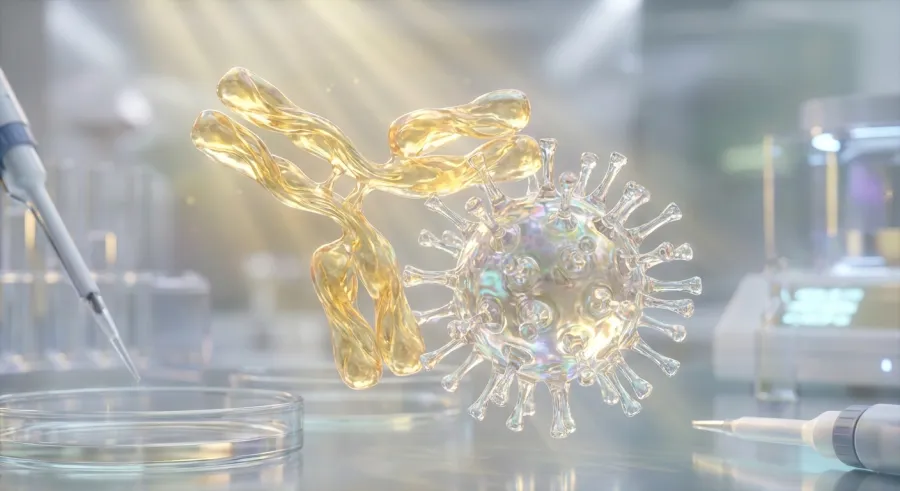
This breakthrough underscores the humanitarian impact of AlphaFold. By solving the structure of a "difficult" protein, AI is directly contributing to the fight against one of humanity's oldest microbial enemies.
12. The Infrastructure of AI Science: Integration is Key
The success of AlphaFold has created a secondary challenge: data management. The sheer volume of structural data requires robust computational infrastructure. Scientists now routinely combine AlphaFold predictions with Large Language Models (LLMs) to analyze results and write code for simulations. This is where platforms like GPT Proto become essential.
GPT Proto acts as a unified hub, allowing researchers to access various AI models—from OpenAI's GPT-4 for data synthesis to Claude for reasoning—without managing multiple expensive subscriptions. By integrating these tools, researchers can automate the "heavy lifting" of data interpretation. For example, a biologist can generate an AlphaFold structure and immediately use an LLM via GPT Proto to search literature for similar protein domains, dramatically speeding up the workflow.
Cost efficiency is also critical. Academic grants are finite. GPT Proto's ability to offer volume-based access to top-tier models ensures that the financial barrier to entry for AI-driven science remains low, allowing AlphaFold's insights to be maximized across the research community.
13. Rescuing the Honey Bee: A Structural Approach to Conservation
Pollinators are the backbone of global agriculture, yet honey bee populations are collapsing due to colony collapse disorder. A key protein in bee health is Vitellogenin (Vg), which regulates immunity and longevity. Despite its importance, its full structure was unknown until recently.
Using AlphaFold, an international team solved the structure of honey bee Vg. They discovered structural nuances that explain how Vg transports fat and zinc to support the immune system. This knowledge is now being used to develop targeted nutritional supplements for bees, helping colonies resist pesticides and viral infections.
This application highlights AlphaFold's versatility. It is not limited to human medicine; it is a tool for planetary health, helping us understand and protect the keystone species that sustain our ecosystems.
14. Palaeoproteomics: Identifying Extinct Species
AlphaFold is also illuminating the past. In Australia, archaeologists discovered burnt eggshells from 50,000 years ago but couldn't identify the bird species. They extracted ancient proteins from the shell but needed a reference structure to identify them. AlphaFold generated the predicted structures for candidate bird species.
By comparing the ancient protein sequences against the AlphaFold models, the team confirmed the eggs belonged to Genyornis newtoni, a massive extinct "thunder bird." This settled a long-standing debate about human interaction with megafauna. AlphaFold has thus become a tool for "molecular archaeology," allowing us to reconstruct the biological history of our planet with precision.
15. Mastering the Physics of Ice Formation
Ice nucleation is a critical process in atmospheric science, influencing cloud formation and precipitation. Some bacteria, like Pseudomonas syringae, produce proteins that force water to freeze at higher temperatures, damaging crops. The mechanism was a mystery until AlphaFold modeled these ice-nucleation proteins.
The AI revealed that these proteins form long, repetitive structures that act as a template, aligning water molecules into a crystal lattice. Understanding this mechanism allows scientists to develop inhibitors to protect crops from frost damage. Conversely, it aids in the development of better cloud-seeding agents to combat drought. Here, AlphaFold bridges the gap between biology and meteorology.
16. Tracing the Evolutionary Tree of Life
Pedro Beltrao’s team at ETH Zurich is using AlphaFold to conduct evolutionary biology at scale. By predicting protein structures across thousands of species, they can observe how proteins have structurally diverged over millions of years. This goes beyond DNA sequence comparison, offering a functional view of evolution.
The team found that while DNA sequences change rapidly, protein structures are often conserved over vast timescales. However, when structures do change, it usually signals a major evolutionary adaptation. AlphaFold provides the visual evidence of natural selection in action, helping us understand the fundamental rules of how life adapts to new environments.
17. Unlocking the Secrets of Adult Gastroenteritis
Rotavirus B (RVB) is a poorly understood virus that causes severe diarrhea in adults. Unlike its cousin Rotavirus A, which affects children, RVB has been difficult to culture and study. Researchers utilized AlphaFold to predict the structure of RVB's spike protein.
The prediction revealed a "novel fold"—a protein shape never before seen in nature. This unique structure explains why RVB can infect adults who have immunity to other rotaviruses; its "key" is completely different. This discovery identifies the target for future RVB vaccines, demonstrating AlphaFold's ability to reveal biological novelty that escapes traditional homology modeling.
18. The Dawn of Personalized Molecular Medicine
The future of medicine is personal. We are moving toward a world where treatments are tailored to an individual's specific genetic makeup. AlphaFold is crucial for interpreting "Variants of Uncertain Significance" (VUS)—genetic mutations found in patients that doctors don't know how to interpret.
By modeling a patient's specific mutated protein with AlphaFold, clinicians can see if the mutation disrupts the protein's shape and function. This is particularly vital for rare diseases where patient data is scarce. AlphaFold allows for "n=1" clinical trials, where the therapy is designed for a single patient based on their unique structural biology.
19. Breeding Heat-Resilient Crops for a Warmer World
Climate change poses a severe threat to potato farming, a staple food source. Heat stress causes proteins within the plant to misfold and fail. Researchers in Serbia used AlphaFold to study Superoxide Dismutase (SOD), a protein that protects plants from oxidative stress.
By modeling SOD variants from different potato cultivars, they identified which structural features correlate with heat tolerance. This empowers breeders to select parent plants that carry the most robust protein structures. AlphaFold acts as a high-tech sieve, helping agronomists rapidly identify the genetic lines that can withstand a warming climate.
20. Biomimicry from the Deep: The Argonaut Octopus
The Argonaut octopus is unique; the female secretes a paper-thin calcite shell to protect her eggs. A Japanese team sequenced the shell-matrix proteins and used AlphaFold to determine their structure. They discovered that the octopus had repurposed proteins originally used for other functions to build this novel material.
This insight into "molecular co-option" is fascinating for materials scientists. By understanding how the octopus synthesizes a lightweight, protective shell underwater, engineers can design new bio-inspired cements and ceramics. AlphaFold provides the blueprints for nature's most creative engineering feats.
21. Curing Rare Bone Diseases in Malta
In a powerful example of precision medicine, researchers investigated a Maltese family suffering from a rare, early-onset form of osteoporosis. Genetic sequencing identified three potential mutations, but it was unclear which one was the culprit. AlphaFold was brought in to model the consequences of each mutation.
The AI showed that one specific mutation caused a catastrophic destabilization of a protein involved in bone density. Visualizing this molecular breakage confirmed the diagnosis and guided the therapeutic strategy. For this family, AlphaFold was not an abstract scientific tool, but the key to understanding a condition that had plagued them for generations.
Conclusion: The AlphaFold Era Has Just Begun
The past five years have proven that AlphaFold is more than just a software update; it is a fundamental upgrade to the scientific method itself. By solving the protein folding problem, Google DeepMind has handed humanity a master key to the building blocks of life. We have moved from a scarcity of structural data to an abundance, shifting the bottleneck from knowing what a protein looks like to deciding what to do with that knowledge.
The 21 case studies detailed here are merely the vanguard of a much larger revolution. From fighting antibiotic resistance and climate change to personalizing medicine and securing our food supply, the applications are limitless. However, realizing this potential requires more than just the model itself; it requires an ecosystem of integrated tools. Platforms like GPT Proto are critical in this next phase, providing the computational reasoning and data synthesis capabilities that allow scientists to navigate the ocean of data AlphaFold has created.
As we look to the next five years, one thing is certain: the biological world is no longer a mystery to be observed, but a system to be understood, engineered, and improved. We are firmly in the AlphaFold era, and the best discoveries are yet to come.
Original Article by GPT Proto
"We focus on discussing real problems with tech entrepreneurs, enabling some to enter the GenAI era first."