The Great Compute Reckoning: Inside the $4 Trillion Bet on the Agentic Future
In the high-stakes theater of global technology, the script is being rewritten at a pace that defies traditional economic gravity. As 2025 unfolds, we are no longer merely observing a "trend" or a "cycle." We are witnessing what NVIDIA CEO Jensen Huang aptly describes as the dawn of a new industrial revolution. The numbers are staggering: a projected $2 trillion worth of data centers will rise over the next five years to power the world’s software. But beneath the headline-grabbing CapEx figures lies a deeper, more complex narrative about market concentration, the collapse of traditional software margins, and a frantic race for the ultimate 21st-century utility: compute.

The latest Globalscape report from Accel paints a picture of a world divided. On one side, the "Super Six" tech titans—NVIDIA, Microsoft, Apple, Alphabet, Amazon, and Meta—have achieved a level of market hegemony rarely seen in history, accounting for nearly 50% of the NASDAQ’s total market capitalization. On the other, a new breed of AI-native startups is scaling from zero to $100 million in Annual Recurring Revenue (ARR) at speeds that make the previous "Cloud" era look like a slow-motion rehearsal. Yet, as we accelerate into this agentic future, the bottlenecks are shifting from code to carbon—from the brilliance of algorithms to the cold reality of power grids and gigawatts.
The Decoupling: AI’s Immunity to Macro Uncertainty
Perhaps the most startling observation of the current era is the complete decoupling of the AI platform shift from geopolitical and macroeconomic turmoil. In a year defined by hard-right political surges in Europe, tariffs, trade wars, and ongoing conflicts in the Middle East and Ukraine, the technology sector has not just survived—it has soared. The NASDAQ Composite Index has mirrored, and in many ways exceeded, the trajectories of the Mobile and Cloud eras, surging 114% between 2020 and 2025.
Investors are voting with their capital, signaling that AI is viewed as an "escape velocity" technology. While consumer confidence may waver and the Federal Reserve’s independence may be tested, the imperative to build the AI stack remains absolute. This isn't just about speculation; it's about the fundamental restructuring of global GDP. Estimates suggest that AI adoption could boost global output by an additional 15 percentage points by 2035. For the C-suite, the risk of being "AI-legacy" is now viewed as far more dangerous than the risk of overspending on infrastructure.
"We are at the beginning of a new industrial revolution... over the course of the next four or five years we’ll have $2T worth of data centers that will be powering software around the world." — Jensen Huang, CEO of NVIDIA
The Hegemony of the Super Six
The concentration of power in the hands of the "Super Six" is not merely a financial curiosity; it is the structural reality of the AI era. With a combined market cap of $20.7 trillion and $1.9 trillion in annual revenue, these six entities are the primary architects and landlords of the generative era. In the past year alone, they added $4.9 trillion in market value. NVIDIA led the charge with a $1.6 trillion gain, effectively becoming the "central bank of compute."
However, this leadership is not uniform. While infrastructure plays (NVIDIA) and integrated cloud/model plays (Microsoft, Alphabet) are thriving, the broader enterprise software market is experiencing a "mixed story." We are seeing a distinct divide between those "Lifted by AI"—companies like Oracle and Palantir that bridge raw models to business use cases—and those "Still waiting for adoption," such as Salesforce and Adobe, which are in the midst of painful transitions to agentic architectures. This churn is healthy but brutal; the Globalscape Public Cloud Index has recovered by 25% year-over-year, but multiples are only now returning to pre-COVID levels of 7.8x EV/NTM Revenue.
The Agentic Shift: From Tools to Teammates
The defining technological transition of 2025 is the move from Generative AI (producing text and images) to Agentic AI (executing complex workflows). Public software giants are no longer just adding "chatbots" to their interfaces; they are building "Agent Studios." Salesforce’s Agentforce, released in late 2025, already boasts an estimated $440 million in agentic ARR across 13,000 customers. Microsoft’s Copilot Studio has seen over 1 million agents created by 230,000 B2B users.
For the modern developer, this transition introduces a new layer of complexity. As the pace of model releases remains relentless—moving from GPT-4 to GPT-5 and beyond—the challenge is no longer just finding a model that works, but managing the orchestration, cost, and latency of a multi-model ecosystem. This is where the developer experience is being radically simplified. Integration platforms are emerging to shield engineers from the maintenance burden of shifting APIs.
For organizations looking to navigate this volatility without getting locked into a single provider's soaring costs, tools that offer unified integration across all major models have become essential. By providing a single point of entry for Official, OpenAI, and specialized formats, developers can achieve "zero maintenance" integration. This allows them to focus on the logic of the agent rather than the plumbing of the API. Furthermore, as inference costs drop—GPT-4 to GPT-5 Mini has seen a 97% decline in cost over 31 months—the ability to manage billing and resource scheduling through a centralized dashboard becomes a competitive advantage for startups and listed enterprises alike.
The Efficiency Paradox: ARR/FTE and the Lean Unicorn
The AI-native application landscape is producing a new breed of "Lean Giants." The speed to $100 million in ARR has been shattered. Companies like Lovable and Cursor are reaching milestones in months that took companies like Slack or Shopify years. This isn't just about viral growth; it's about a fundamental shift in efficiency.
The ARR per FTE (Full-Time Equivalent) metric is perhaps the most revealing data point in the Accel report. AI-native companies are generating revenue with a fraction of the headcount required by traditional SaaS. Cursor and Lovable are operating at efficiency levels that dwarf established players like Datadog or Salesforce. Why? Because AI is "collapsing the builder stack." Self-serve tools are shifting developers from "wiring systems" to "specifying intent." This is the rise of the "Vibe Coder"—the developer who uses high-level intent and AI-orchestrated code generation to build applications that previously required teams of fifty.

However, there is a catch: Gross margins. While efficiency is high, emerging AI application leaders currently operate at gross margins significantly below the traditional software average of 70-80%. The "AI Tax"—the cost of inference—remains a heavy burden. The bet, of course, is that the 97% decline in inference costs will eventually drive massive margin expansion, turning these lean giants into the most profitable entities in corporate history.
The $4 Trillion Utility: Compute as the New Oil
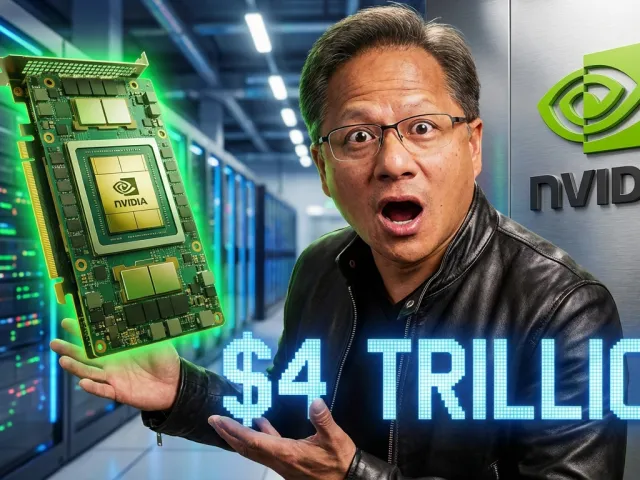
If software is the engine of the 2020s, compute is the fuel. The scale of infrastructure investment required to power this revolution is unprecedented. Accel forecasts that 117 additional gigawatts (GW) of data center capacity will be needed by 2030—enough to power Italy, Spain, and the UK combined. This translates to $4.1 trillion in AI CapEx between 2026 and 2030.
The breakdown of this $4 trillion is telling:
- 57% ($2.3T) will go toward Compute Infrastructure (GPUs, CPUs).
- 29% ($1.2T) will go toward Facility Build (the physical shells).
- 14% ($0.6T) will go toward Networking & Storage.
The hyperscalers—Amazon, Microsoft, Google, and Meta—are footing most of the bill, funded by their massive operating cash flows. But they are racing against a physical bottleneck. It’s not just about money; it’s about power. In the US alone, a 36 GW electricity shortfall is looming. To cover this gap with solar panels would require an area larger than the city of Los Angeles, or 35 new nuclear reactors (a 37% increase in current US nuclear capacity). This "Race for Compute" is turning tech giants into energy moguls, as they strike multi-billion dollar deals for renewable energy and modular nuclear reactors.
The Global Landscape: A Tale of Two Ecosystems
While the US remains the epicenter of AI model funding—driven by massive rounds for OpenAI ($500B valuation), Anthropic ($183B), and xAI ($75B)—the rest of the world is not sitting still. Europe and Israel are carving out a significant niche in the Application and Infrastructure layers.
The Accel Europe AI 100 highlights a vibrant ecosystem of companies valued at less than $1 billion but generating over $1 million in revenue. Funding in the EU and Israel represents roughly two-thirds of US levels in the application space, a remarkably strong showing. New unicorns like Lovable (Sweden), Helsing (Germany/UK), and Cyera (Israel) prove that while the "Foundational Model" war may be a battle of American balance sheets, the "Vertical AI" and "Security" wars are truly global. Interestingly, US winners skew younger (average age 2.4 years) compared to their European counterparts (4.1 years), suggesting a slightly more aggressive "fail fast" culture in the States, while Europe leans into deep-tech resilience.
What’s Next: The Five Frontiers of 2026
As we look toward the next twelve months, Accel identifies five key domains that will define the next phase of the cycle:
1. Enterprise Agentic & Computer-Use Deployment: We are moving past chat. The next year will see agents that can "see" and "use" a computer interface just like a human, navigating legacy software, filling out forms, and executing cross-platform tasks. While the probabilistic nature of LLMs still prevents mass deployment, a new generation of "guardrail tools" is emerging to unlock the enterprise budget.
2. AI-Native Vertical Applications: The "SaaS-ification" of industries like Legal, Construction, and Healthcare is being replaced by "AI-Native" platforms. Companies like Abridge (Medical) and Harvey (Legal) aren't just selling software; they are capturing spend that previously went to human-delivered services.
3. AI Security as the New Battleground: The rise of agents creates a massive new attack surface. Prompt injection, model poisoning, and data exfiltration are now top-tier concerns for CISOs. AI Security is no longer a niche; it is the primary pain point for the modern enterprise.
4. The Vibe Coding Revolution: The software development life cycle (SDLC) is being reimagined. With AI-driven code generation becoming the norm, enterprises will have to rethink CI/CD and deployment cycles. If an agent can write 10,000 lines of code in a minute, the bottleneck becomes verification, not creation.
5. Voice & Media for the Enterprise: Synthetic media is moving beyond "deepfakes" into core business functions. Ultra-realistic avatars from companies like Synthesia are being integrated into customer support, sales onboarding, and corporate training, enabling richer experiences at a fraction of the historical cost.
Conclusion
The 2025 Globalscape report confirms that we have exited the "hype" phase of AI and entered the "industrialization" phase. The numbers are no longer theoretical. The $4 trillion in projected CapEx and the emergence of decacorn-scale AI-native applications represent a permanent shift in how value is created and captured.
The friction, however, is real. The "Race for Compute" is hitting the hard limits of physics and the power grid. For the winners of this era, success will not just come from having the best model, but from having the best scheduling—the ability to orchestrate intelligence, manage soaring inference costs, and deploy agents that actually move the needle on the balance sheet. As the barrier between "human intent" and "software execution" continues to dissolve, the only remaining question is how fast your organization can adapt to the new "vibe" of the digital economy.
For those building in this space, staying ahead means more than just watching the news; it requires a deeply integrated approach to model usage and cost management. As performance between models converges, the real alpha lies in execution efficiency. The race is on, and the compute belongs to those who can afford to play—and those who know how to optimize.
Original Article by GPT Proto
"We focus on discussing real problems with tech entrepreneurs, enabling some to enter the GenAI era first."