In November 2025, Cloudflare announced its acquisition of Replicate, bringing together two platforms with a shared mission of simplifying how developers build applications. For the thousands of developers already using Replicate to deploy image generators, video models, and text processors, this news raises important questions about platform stability and future direction.
When major platforms change ownership, developers naturally worry about pricing shifts, feature changes, and whether their current projects will continue working as expected. Understanding what Replicate offers and how this transition might affect your work is essential for making informed decisions about your AI infrastructure.
Key Points Covered:
- What Replicate AI is and how it works
- Core features that make Replicate popular among developers
- Honest pros and cons based on real usage
- What the Cloudflare acquisition means for users
- Alternative platforms to consider for stability
What is Replicate AI
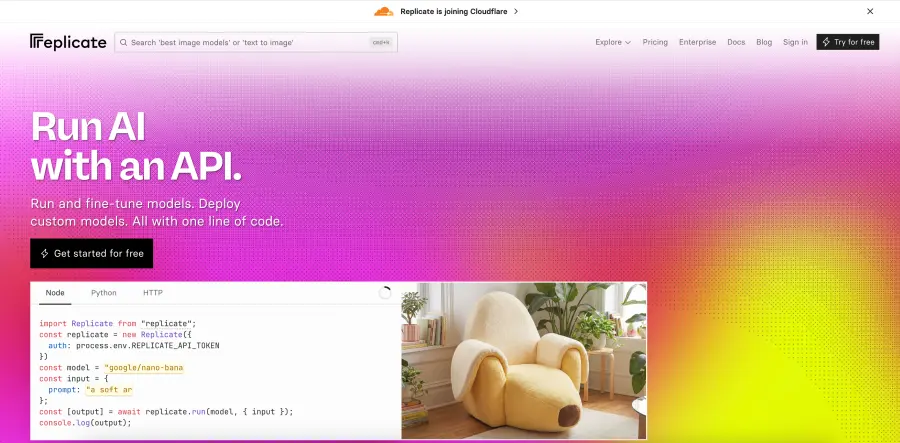
Replicate is a cloud platform that simplifies machine learning model deployment through an intuitive API interface, eliminating traditional barriers to AI implementation by providing instant access to powerful models without requiring complex infrastructure.
Think of it as a massive library where developers can find and run AI models without needing to understand the technical details of GPU management, dependency installation, or scaling infrastructure. You send a prompt to the model, the model processes it, and returns an output.
How It Actually Works
Replicate lets you run machine learning models with a cloud API, without having to understand the intricacies of machine learning or manage your own infrastructure. Here's the practical process:
- Browse through thousands of available models on the platform
- Choose one that fits your needs (image generation, text processing, video creation, etc.)
- Make an API call with your input
- Receive the processed output
Replicate only bills you for how long your code is running. You don't pay for expensive GPUs when you're not using them. The platform automatically scales up when you have traffic and scales down to zero when you don't, which can significantly reduce costs compared to maintaining your own infrastructure.
Key Features of Replicate AI
Replicate offers several features that have made it attractive to developers building AI applications:
Large Model Catalog
Replicate's 50,000+ production-ready models will be made available to Cloudflare Workers AI users to build serverless applications. This extensive library includes models for:
- Image generation and editing
- Video creation and manipulation
- Text processing and language models
- Audio synthesis and music generation
- Speech recognition
Simple API Integration
The platform makes it possible to start with any open-source model with just one line of code. You don't need to be a machine learning expert to get started. The API is straightforward, with client libraries available for popular programming languages like Python and JavaScript.
Pay-As-You-Go Pricing
The platform uses a pay-as-you-go model where users only pay for the computing power they use, with pricing varying based on the GPU type selected. This means you're not locked into expensive monthly subscriptions for resources you might not fully utilize.
Automatic Scaling
If you get a ton of traffic, Replicate scales up automatically to handle the demand. The platform manages the infrastructure complexity, allowing developers to focus on building their applications rather than worrying about server capacity.
Model Customization
Developers can deploy their own custom models using Cog, an open-source tool that defines a standard format for models. This flexibility allows teams to fine-tune models for specific use cases without starting from scratch.
|
Feature
|
Description
|
Best For
|
|
Model Library
|
50,000+ ready-to-use AI models
|
Quick prototyping
|
|
API Access
|
Simple one-line code integration
|
Fast development
|
|
Auto-Scaling
|
Dynamic resource allocation
|
Variable traffic apps
|
|
Custom Models
|
Deploy your own models with Cog
|
Specialized needs
|
|
Pay-Per-Use
|
Only pay for active compute time
|
Cost management
|
Pros and Cons
Pros
- Easy to Get Started: The platform simplifies the process of utilizing AI models, making advanced AI accessible to non-experts. You don't need a PhD in machine learning to build AI-powered features into your application.
- No Infrastructure Management: The platform handles scaling automatically, which helps manage resources as usage grows. This removes the headache of configuring servers, managing GPU drivers, or debugging CUDA issues.
- Wide Model Selection: With access to thousands of models covering various AI capabilities, developers can experiment with different approaches without building everything from scratch.
- Cost Efficient for Variable Workloads: If you don't get any traffic, we scale down to zero and don't charge you a thing. This makes Replicate particularly attractive for projects with unpredictable or sporadic usage patterns.
- Active Community: The platform benefits from a vibrant community of developers sharing and improving models, which means you often find solutions to common problems already implemented.
Cons
- Learning Curve for New Users: While streamlined, new users may need time to familiarize themselves with the platform's capabilities. Understanding which model works best for your specific use case takes experimentation.
- Dependency on External Models: The effectiveness of projects depends on the quality and suitability of available models. If the specific model you need isn't available or doesn't work well, you're limited in your options.
- Cold Start Delays: When a model hasn't been used for a little while, we turn it off. When you make a request to run a prediction on a model, you'll get a fast response if the model is "warm" (already running), and a slower response if the model is "cold" (starting up).
- Variable Pricing: While the pay-as-you-go model offers flexibility, costs can add up quickly for high-volume applications or when using expensive GPU configurations. Prices range from $0.36/hour for CPU instances up to $43.92/hour for the most powerful 8x H100 GPU configuration.
- Platform Uncertainty: With the recent acquisition announcement, some developers are concerned about potential changes to pricing, features, or platform direction as Cloudflare integrates Replicate into its ecosystem.
Why Developers Are Looking at Alternatives Like GPT Proto
The API isn't changing. The models you're using today will keep working, according to the Cloudflare announcement. However, when major platform shifts occur, experienced developers know that stability matters. When a multimodal AI platform undergoes acquisition, several things can happen: pricing structures may change, feature development priorities shift, new constraints appear, and the product roadmap may no longer align with what existing users built their applications around.
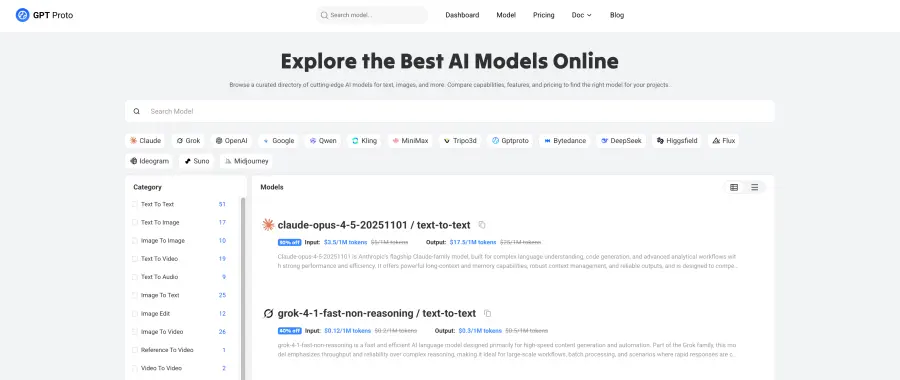
GPT Proto represents a different approach to accessing AI models. Rather than focusing on a single platform's model library, GPT Proto offers developers and creators a single platform to access top AI APIs such as GPT, Claude, Gemini, Midjourney, Grok, Suno, and more, eliminating the need to manage multiple accounts.
What Makes GPT Proto Different:
- Unified API Access: Instead of juggling multiple platform accounts and API keys, developers get one interface for accessing various AI models
- Predictable Pricing: Its pay-as-you-go model provides cost-effective, on-demand access with no monthly fees or hidden charges
- Independent Platform: Not subject to the integration changes and priority shifts that come with corporate acquisitions
- Wide Model Range: The platform hosts APIs for a wide range of AI capabilities, from natural language processing and conversation to image generation, music production, and cinematic video creation
For developers building production applications, having a stable, independent platform can provide peace of mind. While Cloudflare promises continuity for Replicate users, GPT Proto offers an alternative path for those who prefer to diversify their AI infrastructure.
FAQs About Replicate AI
Q: Will my existing Replicate projects continue working after the Cloudflare acquisition?
Your APIs and workflows will continue to work without interruption, according to the official announcement. Cloudflare has stated that existing users will soon benefit from the added performance and reliability of their global network.
Q: How much does Replicate cost to use?
Replicate uses a pay-as-you-go model where you're billed by the second for compute time, with prices ranging from $0.36/hour for CPU instances up to $43.92/hour for the most powerful 8x H100 GPU configuration. With public models, you only pay when the model is actively processing your requests.
Q: Can I use my own custom models on Replicate?
Yes, Replicate supports deploying custom models using their open-source tool called Cog. This allows you to package and deploy your own models with the same ease as using models from their library.
Q: What happens during cold starts and how can I avoid them?
When a model hasn't been used for a little while, it gets turned off. Starting up a cold model results in slower response times. For applications requiring consistent low latency, you may need to consider keeping models warm or using private deployments that stay online.
Conclusion
Replicate AI has earned its place as a popular platform for developers who need quick access to AI models without infrastructure headaches. The acquisition by Cloudflare aims to accelerate the company's vision to make Cloudflare Workers the leading end-to-end platform for building and running scalable, fast, and reliable AI applications.
For developers currently using Replicate, the immediate future looks stable with promises of continued service and improved performance. However, the technology landscape teaches us that diversification often provides resilience. Whether you continue with Replicate, explore alternatives like GPT Proto, or use both platforms strategically, the key is understanding your options and choosing tools that align with your project's long-term needs.
The AI development space continues evolving rapidly. Staying informed about platform changes and maintaining flexibility in your infrastructure choices will serve you well regardless of which tools you ultimately choose.