Why Modern Creators Are Obsessed With Nano Banana AI
The digital creative world moves fast, and right now, everyone's talking about nano banana ai. It’s not just another filter or a basic prompt-to-image generator. Developed by Google, this tool has fundamentally changed how we think about "realistic" digital content.
I’ve spent years testing generative models, and I’ll be honest: most of them feel like toys. They give you "uncanny valley" faces or six-fingered hands. But nano banana ai hits differently. It produces images that make you double-check if you're looking at a photograph or pixels.
Creators are using nano banana ai to build entire brands without picking up a camera. It’s about more than just pretty pictures. It’s about efficiency. Whether you're an indie developer or a marketing pro, the ability to spin up high-fidelity assets in seconds is a massive competitive advantage.
The Real-World Impact of Nano Banana AI on Content Production
Here’s the thing: we are seeing a shift in how influencers operate. Some of the most successful accounts on social media right now aren't even human. They are powered by nano banana ai. These creators are generating consistent, high-quality characters that secure actual brand deals.
But it's not all sunshine and rainbows. The realism of nano banana ai brings up some heavy questions about truth in media. When an image is this perfect, how do we know what’s real? That’s the tension at the heart of this technology today.
Solving the "Stock Photo" Problem With Nano Banana AI
We’ve all been there—scrolling through endless pages of cheesy stock photos. They look fake, and your audience knows it. By using nano banana ai, you can generate specific, context-aware imagery that actually fits your brand’s unique aesthetic. No more generic office handshakes.
Instead of settling, you can command nano banana ai to create exactly what you need. Need a hyper-realistic documentary shot of a tech lab in 1990? It can do that. The level of control is what makes nano banana ai a staple in the modern creator’s toolkit.
"The era of reliable photographic evidence is essentially over because of tools like nano banana ai." — A common sentiment among digital ethics researchers.
Understanding the Core Mechanics of Nano Banana AI
So, how does nano banana ai actually work? At its heart, it’s a sophisticated neural network trained on massive datasets. Unlike older models that struggle with lighting and texture, nano banana ai excels at mimicking how light hits real-world surfaces.
When you give nano banana ai a prompt, it doesn't just "search" for images. It reconstructs the concept from scratch. This is why the results feel so cohesive. It understands the relationship between a subject and its environment, which is the secret sauce of nano banana ai.
If you want to dive deeper into how these models integrate with your existing workflow, you can explore all available AI models to see how different engines compare to the specific output of this tool.
The Architecture Behind Nano Banana AI Realism
The magic of nano banana ai lies in its diffusion process. It starts with a field of noise and slowly "carves" out an image. This iterative approach allows nano banana ai to refine details that other models often skip, like the reflection in a human eye.
Google’s engineering team focused heavily on "semantic consistency." This means nano banana ai understands that if a character is standing in the rain, their clothes should look wet. It’s these small details that elevate nano banana ai above the competition.
Nano Banana AI vs. Legacy Image Generators
If you’ve used older tools, you know the frustration of "spaghetti fingers." Nano banana ai has mostly solved these structural issues. It has a better grasp of human anatomy and physics, which makes the generated results much more believable.
Table 1: How nano banana ai stacks up against older generation tech.
| Feature |
Legacy Models |
Nano Banana AI |
| Skin Texture |
Plastic/Blurry |
Pores and Imperfections |
| Lighting |
Flat/Artificial |
Cinematic/Natural |
| Anatomy |
Frequently Distorted |
Highly Accurate |
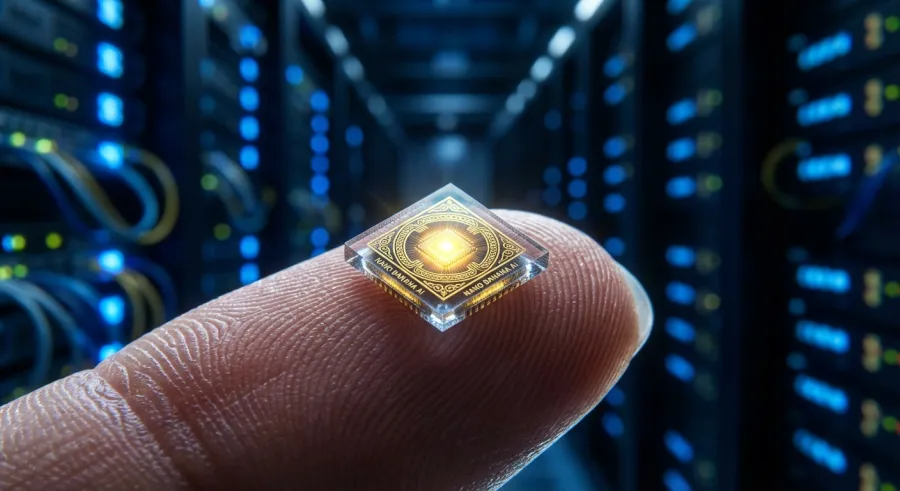
And because nano banana ai is built on such a robust foundation, it handles complex scenes with multiple subjects far better than the first wave of AI image generators did.
Mastering the Nano Banana AI Workflow for Consistent Results
Getting a good image out of nano banana ai is easy. Getting the *same* character in five different poses? That’s the hard part. Professional users have developed specific workflows to maintain this consistency, which is vital for long-term projects.
The trick is to use previous results as a reference. When you generate a character you like in nano banana ai, you don't just move on to the next prompt. You feed that image back into the system to guide the next generation.
This "chaining" method ensures your nano banana ai outputs don't look like five different people. It’s how AI influencers are born. You build a visual identity step-by-step, ensuring every pixel aligns with your original vision for the brand.
The Secret to Character Consistency in Nano Banana AI
One pro tip for nano banana ai is to give your characters "anchors." Mention specific features like a unique scar, a specific earring, or a hairstyle. These anchors help nano banana ai "remember" the character across different sessions and prompts.
But don't overcomplicate it. If you give nano banana ai too many instructions, the model can get confused. Keep your anchors simple and distinct. That’s how you get that professional, "hand-crafted" look without spending hours in a traditional design suite.
Advanced Prompting Structures for Nano Banana AI
Most people just type "a dog in a hat" into nano banana ai. That’s a waste of potential. To get the most out of nano banana ai, you need to think like a photographer. Mention lenses, lighting conditions, and even film stock.
- Specify the camera: "Shot on Sony A7R V."
- Specify the lens: "35mm prime lens."
- Specify the f-stop: "f/11 for deep depth of field."
- Specify the lighting: "Golden hour, soft backlight."
When you talk to nano banana ai in the language of photography, it responds with professional-grade results. It bridges the gap between a "cool AI trick" and a legitimate creative tool for serious designers.
So, why settle for basic outputs? If you're building a business around these visuals, you should learn more on the GPT Proto tech blog about how to optimize your prompts for maximum conversion and engagement.
Common Roadblocks When Using Nano Banana AI
Let's be real: nano banana ai isn't perfect. One of the biggest headaches is the safety filter. Google has implemented very strict blocks. Sometimes, even perfectly innocent prompts get flagged because of a "false positive" in the safety layer.
For example, images featuring swimwear or even certain artistic poses can trigger a block in nano banana ai. It’s frustrating when you’re trying to do legitimate work and the system shuts you down. There’s no easy way around this yet.
Another issue is the "flat image" problem. Nano banana ai gives you a beautiful picture, but if there's a typo in the text, you're stuck. You can't just click the text and edit it. You have to start over or head to Photoshop.
Navigating the Safety Blocks in Nano Banana AI
When nano banana ai blocks your prompt, try rephrasing. Avoid words that might be misinterpreted. Instead of "revealing," use "minimalist." It takes some trial and error to learn the "forbidden vocabulary" that triggers the nano banana ai safety protocols.
It’s a bit of a cat-and-mouse game. But understanding the boundaries of nano banana ai helps you work faster. You stop fighting the system and start working within its constraints to get the job done effectively.
The Struggle With Text and Infographics in Nano Banana AI
If you're using nano banana ai to create slides or infographics, be prepared for some weirdness. It might give you a stunning layout, but the words often look like gibberish. "Nano Banana Pro" claims to handle this better, but it’s still not perfect.
And if you find yourself with an image that has unwanted artifacts or subtle watermarks from its training data influences, you might need to remove artifacts from nano banana ai images using specialized post-processing tools before they are client-ready.
Table 2: Common User Frustrations with nano banana ai.
| Problem |
Why it Happens |
The Workaround |
| Safety Blocks |
Strict Google filters |
Use neutral, descriptive language |
| Non-Editable Text |
Output is a flat raster file |
Use AI for the background, add text in Canva |
| Inconsistent Hands |
Complexity of finger joints |
In-painting or cropping |
Advanced Techniques to Push Nano Banana AI Beyond Basic Prompts
If you want to move from "hobbyist" to "power user," you need to look at the ecosystem around nano banana ai. One of the best ways to scale is through model aggregation. Tools like GPT Proto allow you to access multiple models, including ones that complement nano banana ai.
For instance, GPT Proto offers a unified API that can help you manage your creative pipeline more efficiently. Instead of jumping between five different websites, you can monitor your API usage in real time for all your AI needs in one place.
This is especially helpful if you're running a business. You need to know your costs. GPT Proto provides a smart scheduling system that balances performance and cost, which is a lifesaver when you're generating thousands of nano banana ai images.
Scaling Your Production With the Nano Banana AI API
For developers, the real power is in the API. Integrating nano banana ai into your own app or website opens up endless possibilities. Imagine a real estate site that automatically "furnishes" rooms using nano banana ai. That’s the kind of value you can build.
To get started, you should read the full API documentation for the various models that interface with your creative stack. It makes the transition from manual prompting to automated production much smoother and more professional.
Post-Processing Your Nano Banana AI Generations
Rarely is the first output from nano banana ai truly "done." Professionals often take the raw generation and run it through an upscaler. This adds that final layer of crispness that makes the image look like a 40-megapixel photograph.
If you need to hit those high-resolution targets for print or large-scale web headers, you can enhance your nano banana ai outputs with an image upscaler. It’s the difference between "good enough" and "perfection."
"I stopped thinking of nano banana ai as a final step and started seeing it as a high-end raw material for my design process."
By treating the nano banana ai output as a "digital negative," you can apply color grading, grain, and sharpening to create a truly unique piece of art. It’s about using the AI to do the heavy lifting, while you keep the creative direction.
The Future of Visual Truth in a Nano Banana AI World
We have to talk about the elephant in the room: ethics. As nano banana ai becomes more accessible, the potential for misuse grows. Deepfakes are no longer the domain of basement hackers; anyone with a nano banana ai account can create convincing fake photos.
This is why understanding nano banana ai is so important. We need to be critical consumers of media. If an image looks too perfect, it might just be the work of a well-tuned prompt in nano banana ai. The world is changing, and our eyes have to catch up.
But it's not all doom and gloom. Nano banana ai is also democratizing creativity. People who couldn't draw a stick figure are now telling visual stories. They are building worlds and sharing visions that would have stayed locked in their heads otherwise.
Ethical Considerations for Nano Banana AI Users
If you're using nano banana ai professionally, transparency is your best friend. Tell your audience when an image is AI-generated. It builds trust. As nano banana ai becomes the standard, the "secret sauce" won't be that you used AI—it will be *how* you used it.
There’s also the question of data. Where does nano banana ai get its "knowledge"? These models are trained on the collective work of humanity. That’s a huge responsibility. Using nano banana ai ethically means respecting the creators whose styles influenced the model.
What’s Next for Nano Banana AI and Generative Tech?
We are just at the beginning. Soon, nano banana ai won't just generate images—it will generate editable, layered files. We’ll be able to move objects around inside an AI-generated scene. The boundary between "generating" and "editing" will disappear entirely.
Until then, mastering the current version of nano banana ai is the best investment you can make. It’s a powerful, frustrating, beautiful, and slightly terrifying tool. And it’s not going anywhere. So, you might as well get good at it.
Whether you’re looking to save money on expensive API costs or you want to experiment with multiple models, GPT Proto offers a way to integrate tools like nano banana ai into your workflow without the typical headaches of multi-vendor management.
Written by: GPT Proto
"Unlock the world's leading AI models with GPT Proto's unified API platform."