


128k OpenAI Context Window
Process massive documents with OpenAI GPT 5 mini. The 128,000 token window allows for deep RAG applications and long-form content analysis without losing track of details.

image
text
Image To Text (Response)
curl --request POST "https://gptproto.com/v1/responses" \
  --header "Authorization: Bearer $GPTPROTO_API_KEY" \
  --header "Content-Type: application/json" \
  --data '{
    "model": "gpt-5-mini",
    "input": [
      {
        "role": "user",
        "content": [
          {
            "type": "input_text",
            "text": "What is in this image?"
          },
          {
            "type": "input_image",
            "image_url": "https://tos.gptproto.com/resource/cat.png"
          }
        ]
      }
    ]
  }'
Image To Text (Chat)
curl --request POST "https://gptproto.com/v1/chat/completions" \
  --header "Authorization: Bearer $GPTPROTO_API_KEY" \
  --header "Content-Type: application/json" \
  --data '{
    "model": "gpt-5-mini",
    "messages": [
      {
        "role": "user",
        "content": [
          {
            "type": "text",
            "text": "What is in this image?"
          },
          {
            "type": "image_url",
            "image_url": {
              "url": "https://tos.gptproto.com/resource/cat.png"
            }
          }
        ]
      }
    ],
    "max_tokens": 300
}'Discover the technical strengths that make OpenAI GPT 5 mini a leader in cost-efficient AI.
Process massive documents with OpenAI GPT 5 mini. The 128,000 token window allows for deep RAG applications and long-form content analysis without losing track of details.
Achieve 100% reliability in structured outputs. OpenAI GPT 5 mini uses constrained decoding to match your schemas perfectly, which is essential for automated data pipelines.

Reduce overhead with $0.15 per million tokens. OpenAI GPT 5 mini provides frontier-level intelligence at a fraction of the cost of larger models, maximizing your ROI.

Experience Time To First Token under 200ms. OpenAI GPT 5 mini is built for real-time chat and interactive apps where every millisecond counts for the user experience.

Getting a gpt-5-mini API key takes four steps and a few minutes. Create a free GPTProto account, add credits, generate your key, and make your first call — at $0.175 / $1.4 it's a cheaper gpt-5-mini API key than going direct, and one key works across every model on the platform. Full gpt-5-mini Documentation is in the docs.
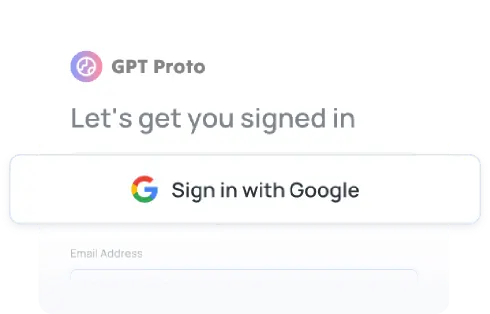
Sign up
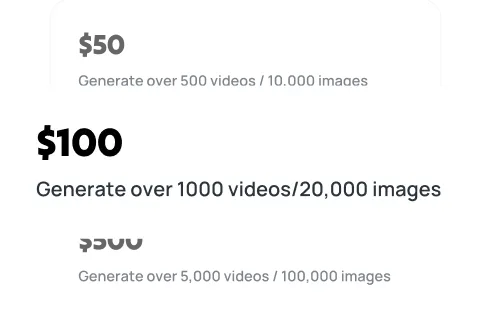
Top up
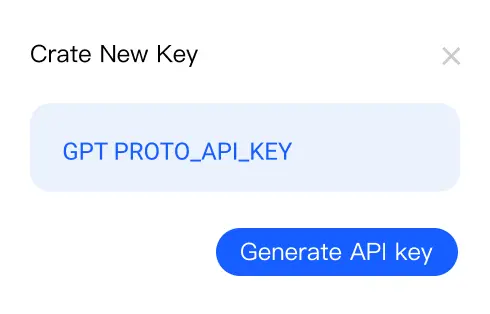
Generate your API key
Make your first API call
Find expert answers about OpenAI GPT 5 mini performance, pricing, and integration steps.
Explore the GPT-5 Mini API release status, performance benchmarks, and $2/1M token pricing. Optimize your AI development today. Discover more...

Explore how GPT-5.3 Codex and the new Codex app are transforming the coding landscape with recursive intelligence and multi-tasking agentic capabilities. Learn how to optimize costs and leverage multi-modal workflows for maximum developer productivity in the new era of AI.
Discover how OpenAI and Anthropic redefined AI Coding on February 5, 2026. Explore the recursive power of GPT-5.3 and the multi-agent collaboration of Claude 4.6, and learn how these tools are automating software development for enterprises globally.