The Harsh Reality of Anthropic Mythos Unauthorized Access
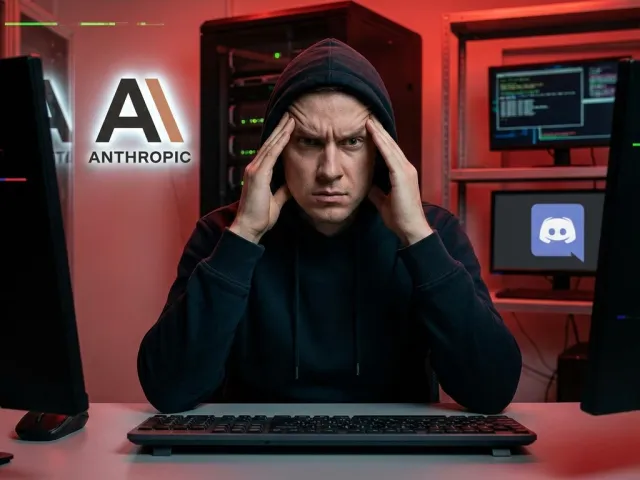
The tech world just got a wake-up call. News broke recently about Anthropic Mythos unauthorized access, and it’s not just another minor data leak. This incident involves a model specifically designed to be dangerous. We aren't talking about a chatbot that writes bad poetry.
Anthropic Mythos represents a tier of AI that identifies system vulnerabilities. It can reportedly exploit major operating systems. When news surfaced that unauthorized users gained entry, the cybersecurity community shifted from curiosity to concern. This wasn't a direct hack of Anthropic’s core servers, though.
The leak originated through a third-party vendor environment. Anthropic shared the powerful Mythos model with partners for pentesting. Somewhere in that chain, security failed. Partners like Google, Apple, and Nvidia had access. Unfortunately, some employees reportedly shared their credentials with outsiders.
The Anthropic Mythos unauthorized access highlights a massive gap in how we handle high-risk AI. If the people hired to protect the systems are the ones leaking the keys, we have a fundamental trust problem.
Why Mythos Security Matters Now
Security practitioners are currently dissecting the fallout of this breach. Anthropic Mythos unauthorized access suggests that even "controlled releases" are vulnerable. The model was part of Project Glasswing. This initiative aimed to let software providers test their own defenses against AI-driven attacks.
When you have a tool capable of cracking web browsers, access control is everything. The fact that Anthropic Mythos unauthorized access happened via API key sharing is frustrating. It proves that human error remains the weakest link. Even the most sophisticated encryption can't stop a partner from pasting a key into Discord.
The Risk of Dangerous Model Exposure
What makes this specific incident unique is the model's intent. Unlike Claude 3.5, Mythos is tuned for exploitation. Anthropic claims the model finds flaws in every major OS. If unauthorized groups have this tool, the barrier to entry for complex cyberattacks drops significantly.
Anthropic Mythos unauthorized access provides a template for future leaks. If we can't secure a model during a limited pilot, how can we secure it at scale? This incident forces us to rethink the entire distribution model for "red-team" AI tools.
Understanding the Powerful Mythos Model Concepts
To grasp why Anthropic Mythos unauthorized access is such a big deal, you have to understand the tech. Mythos isn't your standard LLM. It's built for offensive security. It looks for "zero-day" vulnerabilities and crafts exploits in real-time.
Most AI models have guardrails to prevent harmful code generation. Anthropic intentionally lowered those for Mythos. The goal was to help defenders stay ahead. But the Anthropic Mythos unauthorized access turned that defensive tool into a potential weapon for the unvetted.
Project Glasswing was supposed to be the "clean room" for this experiment. It limited access to a handful of massive tech firms. The idea was simple: give the good guys the weapon so they can build better armor. Anthropic Mythos unauthorized access broke that clean room seal.
The Architecture of Offensive AI
Offensive models like Mythos use specialized training datasets. They ingest massive amounts of source code and historical exploit data. Because of this, Anthropic Mythos unauthorized access gives attackers a massive head start. They don't need to be geniuses; they just need the API.
Managing these high-stakes tools requires more than just a password. It requires hardware-level locks and strict IP whitelisting. The Anthropic Mythos unauthorized access incident shows those measures were either absent or bypassed by trusted insiders. It's a classic case of lateral movement through a trusted partner.
Vulnerability Identification Capabilities
Mythos excels at finding logic flaws in complex software. It doesn't just look for typos in code. It understands how different components interact. Anthropic Mythos unauthorized access means this deep reasoning is now in the hands of "model hunters" on private Discord servers.
The Discord group involved reportedly used bots to scour the web for leaked details. They combined Anthropic's naming conventions with data from a third-party contractor breach. This sophisticated reconnaissance allowed them to pinpoint the exact locations of Mythos API endpoints before the leak even happened.
| Model Feature |
Intended Defensive Use |
Risk Post-Unauthorized Access |
| OS Exploitation |
Patching core system flaws |
Automated malware development |
| Browser Fuzzing |
Securing web navigation |
Zero-day browser hijacks |
| API Pentesting |
Hardening cloud infrastructure |
Direct attacks on SaaS platforms |
| Code Logic Analysis |
Finding hidden backdoors |
Creating undetectable exploits |
How Anthropic Mythos Unauthorized Access Happened
Let's look at the actual mechanics of the breach. It wasn't a movie-style hacking montage. It was social and procedural. Anthropic gave Mythos access to over 40 companies. These partners were supposed to be the gatekeepers.
Instead, individuals within those companies reportedly treated Mythos access like a Netflix password. They shared Mythos API keys with unauthorized users. Some were likely trying to help friends, while others might have been looking for clout in AI research circles.
This is where the Discord group enters the picture. These weren't necessarily malicious state actors. They were enthusiasts who specialized in "hunting" unreleased models. They used GitHub scrapers and bot-driven searches to find any mention of Mythos. Once they had the credentials, they walked right in.
The Role of Third-Party Vulnerabilities
Third-party vendors are often the soft underbelly of AI security. Anthropic can have the best internal security in the world. But if a partner's employee saves a Mythos API key in a public Notion doc, it's over. That's exactly the kind of friction that led to Anthropic Mythos unauthorized access.
We've seen this before in other sectors. Large enterprises often outsource the "grunt work" of testing. These smaller contractors might not have the same rigorous security posture as Anthropic. The Anthropic Mythos unauthorized access incident is a textbook example of supply chain risk in the AI era.
The Discord Connection and Guessing Games
The "hunters" didn't just stumble onto the model. They were methodical. By analyzing Anthropic's public GitHub repositories and previous data leaks, they figured out how the company names its internal servers. They effectively "guessed" the online location of Mythos.
Combine that server address with a leaked API key, and you have Anthropic Mythos unauthorized access. It’s a reminder that security through obscurity never works. If your model is online, someone will eventually find the URL. You need robust authentication that doesn't rely on users keeping secrets.
For developers who want to avoid these headaches, using a managed platform can help. You can manage your API billing and access through centralized dashboards that offer better oversight than raw key distribution. Platforms like GPT Proto offer a unified way to handle multiple models without the messy credential sharing.
Common Mistakes Leading to Unauthorized Mythos Access
The biggest mistake in the Anthropic Mythos unauthorized access saga was over-trusting human partners. Anthropic assumed that employees at Google or Nvidia would follow strict protocols. In reality, the more people you give access to, the higher the chance of a leak.
Another mistake was the lack of hardware-bound authentication. If the Mythos API keys were tied to specific physical devices, the unauthorized access would have been much harder. Instead, a simple string of text was enough to unlock a dangerous model.
Companies often fail to rotate keys frequently enough. If a key is compromised, it should only be valid for a few hours or days. In the Anthropic Mythos unauthorized access case, it seems the keys remained active long enough for outsiders to explore the model extensively.
Failure of Key Management Protocols
Key management is boring, so people skip it. They hardcode keys into scripts. They send them over Slack. They save them in "Test_Keys.txt" files. This sloppy behavior directly enabled Anthropic Mythos unauthorized access. It wasn't a failure of the AI; it was a failure of the humans using it.
If you're building with these tools, you need to read the full API documentation regarding security best practices. Most leaks happen because developers take shortcuts. The Anthropic Mythos unauthorized access incident is a $100 billion lesson in why shortcuts are dangerous.
Ignoring Reconnaissance Patterns
Anthropic likely saw the Discord bots scanning their GitHub, but they might not have connected the dots. Monitoring for "unreleased model hunting" should be a standard part of AI security. The hunters were loud, but the defenders weren't listening closely enough.
When you're dealing with something like Mythos, every anomalous ping matters. The Anthropic Mythos unauthorized access could have been prevented if the company had flagged the brute-force server name guessing earlier. It’s about proactive monitoring, not just reactive patching.
Expert Tips for Hardening AI Access Controls
If you're worried about Anthropic Mythos unauthorized access affecting your own projects, you need a better strategy. First, stop issuing long-lived API keys. Use short-lived tokens that expire. If a token leaks, the window of opportunity is tiny.
Second, implement IP whitelisting. If an API call comes from an unexpected location, block it automatically. The Anthropic Mythos unauthorized access happened because the model was accessible from anywhere. Restricting access to specific VPCs or office IPs would have stopped the Discord group in their tracks.
Third, use a unified API gateway. Instead of managing twenty different keys for twenty different models, use a service like GPT Proto. You can explore all available AI models through a single, secure entry point. This reduces the surface area for potential leaks and simplifies auditing.
Implementing Multi-Factor Authentication for APIs
We use MFA for our email, so why don't we use it for our most powerful AI? Every call to a high-risk model should require a secondary signature. This would have completely prevented the Anthropic Mythos unauthorized access. It adds latency, but it adds massive security.
For models as dangerous as Mythos, the "human in the loop" shouldn't just be for the output. They should be part of the authentication chain. The Anthropic Mythos unauthorized access proves that automated security isn't enough when your partners are the ones leaking the keys.
Auditing and Monitoring Usage in Real Time
You need to know exactly who is calling your model and what they are asking. If a pentesting partner suddenly starts asking about "unreleased OS exploits" from a home IP, that's a red flag. Real-time monitoring could have caught the Anthropic Mythos unauthorized access while it was still happening.
Advanced logging can detect patterns of "model scraping" or "weight hunting." Most unauthorized users don't use the model like a normal developer. They try to find its limits. Detecting these behavioral anomalies is key to stopping the next Anthropic Mythos unauthorized access event.
The Future of Powerful Models and Enterprise Trust
The Anthropic Mythos unauthorized access incident has left a stain on Anthropic's reputation. Enterprises are now questioning the security posture of AI labs. If Anthropic can't keep their "most dangerous" model under wraps, how can they protect sensitive corporate data?
We are likely headed toward a "closed-loop" model for high-risk AI. Instead of giving partners API keys, companies might require them to use a secure terminal within a controlled cloud environment. The days of "sharing keys for pentesting" are probably over after the Anthropic Mythos unauthorized access fiasco.
There's also a growing skepticism. Some Redditors think Anthropic Mythos unauthorized access was a calculated marketing move. They argue it creates "hype" by making the model seem more dangerous and powerful than it actually is. Whether it's a leak or a stunt, the impact on security discourse is the same.
Impact on the AI Security Landscape
This incident will trigger new regulations. Governments don't like the idea of "cyber-weapons" being leaked via Discord. We might see mandatory reporting for any unauthorized access to models above a certain compute threshold. The Anthropic Mythos unauthorized access is the "Sputnik moment" for AI safety regulation.
Trust is hard to build but easy to lose. Anthropic now has to prove that Claude and their other models are safe from similar breaches. The Anthropic Mythos unauthorized access isn't just about one model; it's about the entire industry's ability to handle the power they've created.
Will Enterprise Users Pivot to Other Models?
Companies might start looking for alternatives with better track records. However, the truth is that every AI company faces these risks. The solution isn't necessarily a different model, but a different way of accessing them. Using a platform that prioritizes secure, unified access can mitigate many of these third-party risks.
If you want to stay updated on how these security issues evolve, check out the GPT Proto tech blog. We cover the intersection of AI performance and enterprise-grade security. Understanding the lessons from the Anthropic Mythos unauthorized access will help you build more resilient AI integrations.
The irony of the "cybersecurity AI" being hacked isn't lost on anyone. But the real lesson is that the most powerful code in the world is still at the mercy of a 20-year-old employee sharing a password on Discord.
Ultimately, the Anthropic Mythos unauthorized access incident serves as a crucial case study. It highlights the dangers of model proliferation without corresponding security maturity. As we move toward even more capable agents, the protocols we build today—based on the failures of yesterday—will determine if we can truly control the technology we've unleashed.
Written by: GPT Proto
"Unlock the world's leading AI models with GPT Proto's unified API platform."