The Cultural Weight and Visual Evolution of the green screen
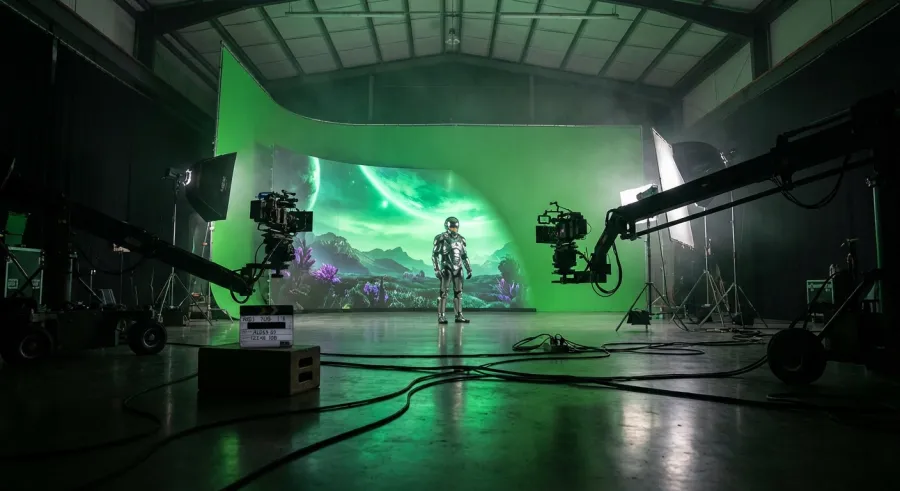
There is a specific, piercing shade of neon that defines the modern imagination. We have all seen it in behind-the-scenes featurettes: a vast, empty warehouse draped in radioactive emerald. This is the world of the green screen, a technology that has arguably shaped the last thirty years of cinema more than any lens or camera body.
The green screen represents a paradox in modern media. On one hand, it is the ultimate tool of infinite possibility. On the other, it has become a shorthand for "lazy" filmmaking or disconnected performances. Yet, the green screen persists because it is the most efficient bridge between human performance and digital imagination.
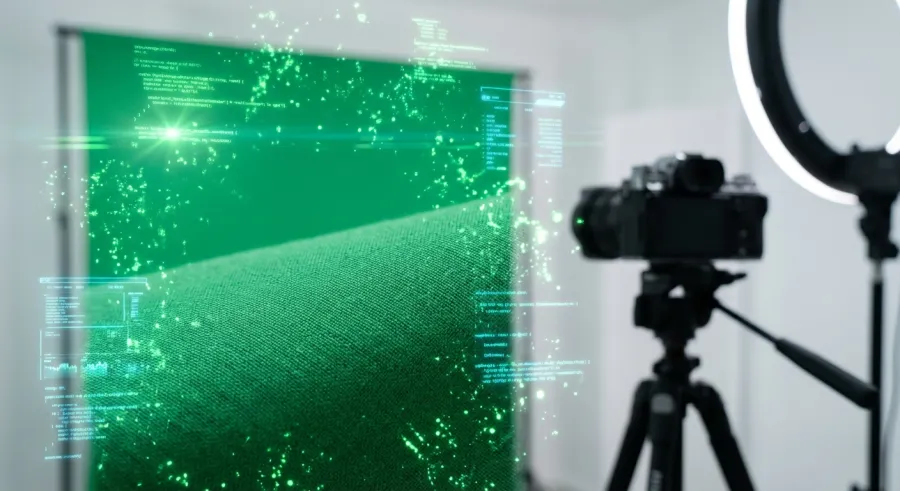
When we look at a green screen, we aren't just looking at a piece of fabric. We are looking at a mathematical placeholder. The green screen works because digital sensors are particularly sensitive to green light, making it the easiest color to isolate and remove in post-production. This process, known as chroma keying, relies entirely on the consistency of that green screen.
In recent years, the vibe surrounding the green screen has shifted. We are moving away from the era of "everything is a green screen" toward more nuanced applications. Creators are realizing that while a green screen can take you anywhere, it requires a specific kind of discipline to make that journey feel real to the audience.
The immediate market reaction to new green screen alternatives, like LED volumes, suggested that the green screen was headed for the scrap heap. However, the sheer cost-effectiveness of a green screen keeps it relevant. From the smallest YouTuber to the largest commercial house, the green screen remains the gold standard for compositing.
Here’s the thing: the green screen isn't dying; it’s just getting smarter. With the integration of machine learning, the margin for error when using a green screen has widened. You no longer need a multi-million dollar lighting rig to pull a clean key from a consumer-grade green screen setup.
This democratization of the green screen has changed how we perceive reality in video. We now assume that any professional-looking background might actually just be a well-executed green screen. It has fundamentally altered our trust in the moving image, for better or worse.
Ultimately, the green screen is a testament to human ingenuity. It is a simple solution to a complex problem: how do we film the impossible? By standing in front of a green screen, actors become wizards, astronauts, and superheroes, proving that the tech is only as good as the story it supports.
Navigating the Practical Use Cases of a Modern green screen
The applications for a green screen extend far beyond the high-budget corridors of Marvel Studios. In fact, the most common use of a green screen today might be happening in a spare bedroom. Streamers and remote workers have adopted the green screen to maintain privacy and professional aesthetics during live broadcasts.
For a Twitch streamer, a green screen is a space-saving miracle. Instead of showing a messy bedroom, the green screen allows them to overlay their silhouette directly onto their gameplay. This use of a green screen creates a more immersive experience for the viewer, removing the literal "fourth wall" of the creator's office.
In the corporate world, the green screen has revolutionized training and internal communications. A CEO can stand in front of a green screen in London and appear to be presenting from the company’s new factory in Singapore. This use of a green screen saves thousands in travel costs while maintaining visual engagement.
Education has also been transformed by the green screen. Teachers use a green screen to place themselves inside historical recreations or biological cells. This "weather person" style of presentation, powered by a green screen, helps students visualize complex concepts that would otherwise be purely theoretical.
For independent filmmakers, the green screen is the great equalizer. It allows a director with a hundred-dollar budget to film a scene on the moon. Without the green screen, indie sci-fi and fantasy would barely exist in their current, visually ambitious forms. The green screen provides a canvas for those who lack the resources for location scouting.
We are also seeing the green screen integrated into specialized software workflows. For those working with generative art or quick visual adjustments, tools that simulate the green screen effect are becoming essential. For instance, the image editing tools at GPT Proto allow creators to manipulate backgrounds with a level of precision that was once reserved for green screen masters.
The "why" behind using a green screen usually boils down to control. When you use a green screen, you control the sun, the wind, and the environment. You aren't at the mercy of a cloud passing over your location. The green screen offers a laboratory-like environment where every variable is under the creator's thumb.
However, the most creative use cases for a green screen are the ones you never notice. Many "on-location" shoots still utilize a green screen outside of windows to allow for perfect exposure of both the interior and the "exterior" view. In these cases, the green screen is a tool of subtle perfectionism rather than grand spectacle.
The green screen in Mobile Content Creation
Mobile apps have brought green screen technology to the masses. TikTok’s green screen effect is one of its most popular features, allowing users to react to photos or videos behind them. This simplified green screen logic has turned every smartphone user into a basic compositor.
Overcoming the Technical Hurdles and Challenges of the green screen
Despite its ubiquity, the green screen is notoriously difficult to master. The biggest challenge with any green screen setup is lighting. If the light hitting the green screen is uneven, it creates "hot spots" or shadows that make it impossible for software to identify a single color to remove.
Then there is the issue of "spill." This happens when light reflects off the green screen and bounces onto the subject, giving them a faint emerald glow. Spill is the enemy of a convincing green screen composite, as it makes the subject look like they are vibrating against their new background.
Fine details, like frizzy hair or transparent glassware, are the traditional "boss fights" of green screen work. The tiny gaps in a person's hair often trap the color of the green screen, leading to a "buzzcut" effect where the hair looks unnaturally sharp or missing altogether. Solving this requires advanced keying algorithms and hours of manual masking.
Material choice also matters. A cheap, wrinkled green screen will produce micro-shadows that haunt your post-production process. Professional studios use specialized green screen paint or high-grade tensioned fabric to ensure a perfectly flat, matte surface. A wrinkled green screen is a nightmare for even the best editor.
The "uncanny valley" is another significant hurdle. Even if you pull a perfect key from your green screen, the lighting on the subject must match the lighting of the digital background. If your subject is lit with warm light but your green screen background is a snowy mountain, the brain instantly flags the image as fake.
Pink, blue, or green—the choice of chroma key color can vary, but the green screen is the most common because digital sensors are optimized for it. However, the color spill and matching lighting remain high-level technical challenges.
Ethical concerns are also rising in the age of deepfakes and AI. While a green screen is a neutral tool, its ability to place people in locations they never visited can be used for misinformation. The green screen is the foundational technology for creating deceptive visual narratives, requiring a new level of media literacy from the public.
There is also the "acting in a vacuum" problem. Actors working on a green screen set often struggle to give authentic performances because they have no physical environment to react to. This "green screen fatigue" can lead to wooden performances, as the actor is staring at a tennis ball on a stick instead of a monster.
Finally, there is the technical ceiling of the green screen itself. In some cases, the green screen simply cannot handle complex reflections. If a character is wearing a chrome suit, the green screen will reflect everywhere, making it impossible to key out the background without also keying out the character's clothing.
Performance Comparisons and Benchmarking the green screen
How does the traditional green screen stack up against modern alternatives? When we look at performance benchmarks, the green screen wins on affordability and flexibility, but loses on "in-camera" realism. An LED volume—the "Mandalorian" tech—allows for real-time reflections, something the green screen cannot do.
In terms of render time, a green screen workflow is front-heavy. You save time on set because you don't need to build environments, but you spend hundreds of hours in post-production. Conversely, virtual production moves that cost to pre-production, reducing the time spent fixing green screen issues after the fact.
Data-wise, the cost of a professional green screen setup can be as low as $50 for a basic kit. In contrast, an LED volume can cost tens of thousands of dollars per day to operate. For most creators, the green screen provides 90% of the results for 1% of the cost, which is a compelling benchmark.
Speed is another factor. Modern AI-powered keying tools have reduced the time it takes to process green screen footage by nearly 70%. What used to take a specialized compositor a full day can now be roughed out in minutes by an automated green screen plugin. This efficiency keeps the green screen at the center of fast-turnaround content.
However, when comparing the "final pixel" quality, the green screen often requires more "cheating." To make a green screen composite look real, you have to add artificial grain, light wrap, and color grading. In virtual production, these elements are captured naturally by the camera, leading to a more organic look.
For those managing large-scale AI video projects, the cost of processing high-resolution green screen plates can add up. If you are using cloud-based tools to refine your green screen edges, you might find yourself needing to manage your API credits effectively. Monitoring your usage at a billing center becomes crucial when your green screen workflow scales up.
The efficiency of the green screen also depends on the camera's color sampling. Filming a green screen in 4:2:2 or 4:4:4 color space provides significantly better results than the 4:2:0 sampling found in basic smartphones. The green screen "performance" is capped by the data depth of the video file itself.
Ultimately, benchmarks show that the green screen remains the most versatile tool. While newer technologies are better for specific high-end scenarios, the green screen is the only one that works for a solo creator and a blockbuster studio alike. Its performance-to-cost ratio is currently unbeatable in the visual effects industry.
Green Screen vs. AI Rotoscoping
Recent benchmarks suggest that AI rotoscoping (removing backgrounds without a green screen) is catching up. However, for professional-grade edges, a physical green screen still provides a cleaner mathematical "delta" for the software to work with, resulting in fewer artifacts.
Community Feedback and the Developer Perspective on the green screen
If you head over to Reddit’s r/vfx or Hacker News, the conversation around the green screen is one of weary respect. Developers and artists often joke about their "love-hate" relationship with the green screen. It is a tool that enables their careers, but one that also causes endless frustration when handled poorly by production teams.
On Twitter, "tech-bros" often herald the death of the green screen in favor of AI-generated environments. But the filmmaking community is quick to push back. Experienced cinematographers argue that a green screen offers a level of control over lighting that "The Volume" or AI tools simply cannot match yet.
Discord communities dedicated to streaming are filled with tips on the best "budget" green screen setups. The consensus among these users is that the software is now more important than the fabric. They focus on how OBS (Open Broadcaster Software) handles the green screen filter, sharing settings for the perfect "chroma key" threshold.
There is also a growing movement of "Green Screen Purists" who believe that the move toward LED walls has led to a decrease in cinematography quality. They argue that the green screen forced a level of precision and planning that is being lost to "fix it in the volume" mentalities.
Feedback from developers who build keying plugins is particularly enlightening. They are increasingly focusing on "AI-assisted green screen" tools. These tools don't just look for the green color; they use object recognition to understand that "this is a person" and "this is the green screen," leading to much smarter edge detection.
Interestingly, some developers are working on "digital green screen" solutions that don't require the color green at all. By using depth sensors (like LiDAR on iPhones), they can create a virtual green screen around a subject based on distance. This is a hot topic in developer circles as it solves the "spill" issue entirely.
The sentiment on platforms like GitHub, where open-source keying tools are developed, is that we are entering a "Post-Green Screen" era of hybrid workflows. Developers are creating tools that combine traditional green screen math with modern neural networks to handle things like motion blur and transparency more gracefully.
Many creators have found that using a unified interface for their AI tools helps streamline this process. For example, developers often look for model lists that can handle image segmentation to assist with their green screen cleanup. Having all these models in one place is a major time-saver.
Common complaints in the community usually center around "bad green screen work" in big-budget movies. When a multi-million dollar film has obvious green screen halos, the community is ruthless. This highlights that the green screen is not a "set it and forget it" technology; it requires immense skill to execute at a high level.
The Future of the green screen: A Forward-Looking Summary
So, where does the green screen go from here? We are not witnessing the death of the green screen, but rather its total absorption into the digital workflow. The physical green screen is becoming a "suggestion" for the computer, a high-contrast guide that helps AI understand where reality ends and the digital world begins.
In the next few years, we will likely see "smart" green screen fabrics that can communicate with the camera. Imagine a green screen that can adjust its own brightness or hue based on the camera's metadata. This would eliminate the most common technical errors associated with a traditional green screen setup.
We will also see the rise of "invisible" green screen techniques. Using infrared light, filmmakers can create a "green screen" effect that is invisible to the human eye (and the actors) but clearly visible to the camera sensor. This would solve the "green screen fatigue" and "acting in a vacuum" problems once and for all.
The green screen is also becoming a gateway to more complex AI skills. As creators learn to navigate the complexities of a green screen, they are naturally moving toward AI-driven video synthesis. Exploring specialized AI skills is the next logical step for anyone who has mastered the basics of the green screen.
Let's be real: as long as we want to tell stories that are larger than our budgets, we will need the green screen. It is the most democratic tool in the visual effects arsenal. It allows a kid in a basement to have the same "set" as a Hollywood legend. That power is too valuable to ever truly disappear.
The green screen has taught us that reality is malleable. It has trained our eyes to look for the seams in the world, and it has trained our minds to accept the impossible. Whether it's made of paint, fabric, or pixels, the concept of the green screen will remain the cornerstone of visual storytelling.
We are moving toward a future where the green screen is everywhere and nowhere at the same time. It will be so well-integrated into our devices and our software that we will stop calling it a "green screen" and just call it "filming." But the foundation of that magic will always be that brilliant, neon-green void.
In conclusion—wait, let's avoid the clichés. Here's the bottom line: the green screen is a bridge. It’s a bridge between the physical world we inhabit and the digital worlds we dream up. As that bridge gets more sophisticated, the gap between our imagination and the screen will continue to shrink, all thanks to a simple green screen.