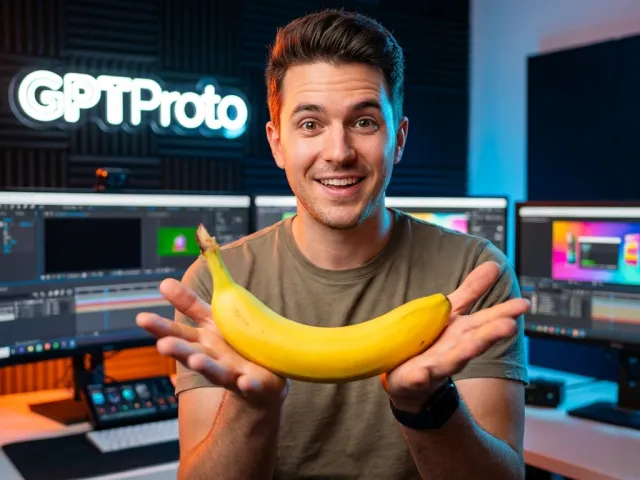
Why a Banana Picture Matters in Modern Tech
Most people think a banana picture is just a random fruit snapshot. It's not. In the world of tech culture and image processing, it's a benchmark. Whether it's testing a new AI model or a community-driven meme, this specific fruit carries weight.
I've spent years watching how digital assets evolve. The way a banana picture moves through Reddit or 4chan tells us a lot about human behavior. It’s about more than just potassium. It's about how we use visual data to communicate or annoy.
Here’s the thing: a banana picture can disrupt an entire forum. On subreddits like r/funny, a single image became a tool for legendary trolling. Users would post the same banana picture repeatedly just to see how much they could irritate the moderators. It worked.
But there’s a catch. Not every banana picture is meant for annoyance. Sometimes, it’s about a perfect coincidence. Take the user whose fruit was so flawless it ended up in New York Magazine. That banana picture even made it onto a billboard. That’s peak digital fame for a fruit.
And let’s be honest, the API used to fetch these images needs to be fast. When a meme goes viral, the traffic spikes. Developers have to ensure their API can handle the sudden demand for that specific banana picture across multiple platforms simultaneously.
"A banana picture can be a simple joke or a professional asset. The difference lies in the intention and the quality of the image itself."
The Cultural Weight of a Banana Picture
What makes a banana picture so iconic? It’s the sheer simplicity. In early internet days, the "banana for scale" meme established a banana picture as the universal unit of measurement. It’s a concept that bridged the gap between physical reality and digital sharing.
So, when you see a banana picture in a technical context, remember its history. It represents a era of internet growth where the mundane became significant. We use a banana picture today because it’s a recognizable shape with complex textures for AI to learn from.
Generating the Perfect AI Banana Picture
If you’re using AI to create images, you know the struggle. Getting a realistic banana picture isn't as easy as typing one word. You need a detailed prompt. I’ve experimented with Nano Banana Pro, and the prompt length definitely impacts the final output.
A short prompt gives you a generic fruit. A long, detailed prompt gives you texture and bruising. This depth is what makes an AI banana picture look authentic. You want the light to hit the peel just right. It should look like it's sitting on your desk.
I often recommend detailing the specular highlights on the skin of your banana picture. If you want photo-realism, mention the specific sub-species. A Cavendish banana picture looks very different from a plantain. These nuances matter when you are trying to fool the human eye.
And don't ignore the environment. An AI-generated banana picture looks much better when it interacts with a surface. Adding keywords like "caustic lighting" or "global illumination" can elevate a flat banana picture into something that looks like it was captured by a professional photographer in a studio.
Mastering the AI Prompt for a Banana Picture
So, what makes a good prompt? You need to describe the environment. Don't just ask for a banana picture. Ask for a photo-realistic fruit with slight brown spots and realistic shadows. This level of detail is where the AI really starts to shine.
Using a unified API for image generation makes this process much smoother. When I build tools, I prefer an API that connects to multiple models. This allows me to compare how different versions of AI handle the same banana picture request without rewriting code every single time.
If you want to see how these models differ, you can explore all available AI models to find the one that renders textures best. Some AI models favor vibrant colors, while others focus on hyper-realistic imperfections in the peel of your banana picture.
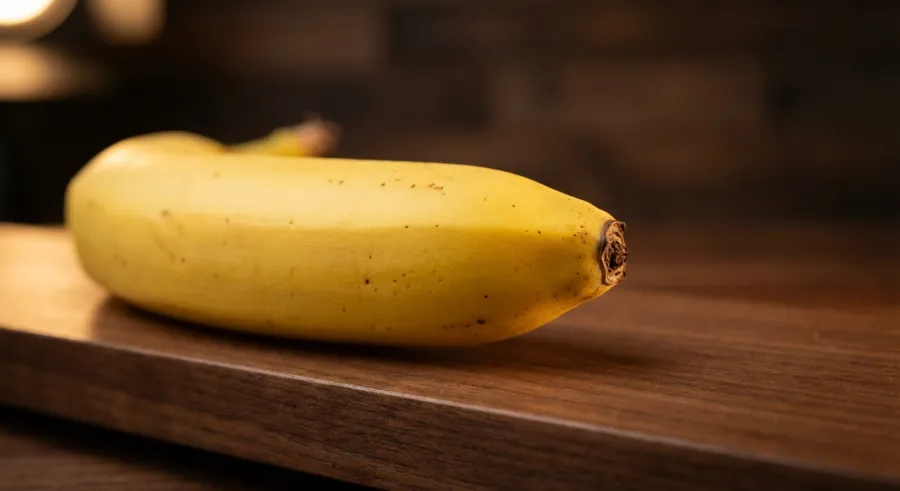
Consistency is the next challenge. If you need a sequence involving a banana picture, maintaining the same spots and shape across frames is hard. Advanced users leverage "seed" numbers in their API calls to keep the banana picture stable throughout a generation run.
- Specify the lighting (natural vs. studio)
- Describe the surface (wooden table vs. white background)
- Mention the ripeness level for realistic color
- Request a specific camera lens effect like bokeh
Restoring Vintage Quality in a Banana Picture
Old photos are often grainy and faded. But what if you find an old family banana picture from the 70s? AI is now capable of restoring these vintage shots to modern standards. It’s not just about sharpening; it’s about rebuilding the missing data in the pixels.
I’ve seen people use Nano Banana to restore old industrial design projects. These project images often look terrible after decades in a box. Using AI to bring a banana picture back to life is like digital archaeology. It’s impressive to see how the software handles the color correction.
The tech behind this is deep learning. The model looks at the grain in the old banana picture and identifies what is noise and what is signal. It then replaces the noise with estimated textures based on high-definition training data of similar objects.
It’s not just for professionals. Hobbyists are using these tools to upscale a grainy banana picture they found in a historical archive. The ability to see the exact texture of a fruit from fifty years ago is a testament to how far our API capabilities have come.
Resurrecting Heritage with a Banana Picture
When you restore a vintage photo, you aren't just clicking a button. You’re using a complex API to analyze the noise in the image. The AI looks for patterns it recognizes from millions of other photos. It then applies those patterns to your specific banana picture.
The results can be astonishing. Even if the details aren't a one-to-one match of the original, they look close enough to fool the eye. For students without professional labs, this technology is a total lifesaver. They can take a low-res banana picture and turn it into a high-res portfolio piece.
If your source image is particularly small, you might consider upscaling your banana picture using specialized enhancement tools. This ensures that the AI doesn't just guess what the pixels should be, but actually reconstructs the fine details of the fruit's surface.
| Feature |
Old Method |
AI-Powered Method |
| Processing Time |
Hours of manual retouching |
Seconds via API call |
| Color Accuracy |
Guessed by the artist |
Calculated by trained AI models |
| Scalability |
One image at a time |
Batch processing via automation |
Common Mistakes When Analyzing a Banana Picture
I often see people trying to find things in a banana picture that simply aren't there. A classic example is a biology student looking for DNA. Here’s the reality: you can’t see individual DNA strands in a standard banana picture taken with a basic microscope or camera.
DNA is too small for that. But users still try. They zoom in until the image is a mess of pixels, hoping for a scientific breakthrough. It's a fundamental misunderstanding of optics. You need specialized equipment, not just a high-resolution banana picture from your smartphone.
Another pitfall is lighting. People often take a banana picture under harsh fluorescent lights, which creates a greenish tint. They then complain that the AI analysis tool can't correctly identify the ripeness. The software is only as good as the input banana picture you provide.
So, check your white balance. A yellow fruit in a blue-tinted banana picture will look grey to a computer. Calibrating your camera settings before you snap that banana picture will save you hours of post-processing and ensure the data remains accurate for your needs.
"Scientific analysis requires the right tools. You cannot extract microscopic data from a standard macroscopic banana picture, regardless of the software used."
The Limitations of a Banana Picture
Another mistake is assuming that AI-generated images are always real. Some AI banana picture outputs are so good they could fool Gemini or GPT-4. Users upload these to an AI to ask for a prompt, thinking they are looking at a real photo. That's a huge compliment to the AI.
But you should always double-check. Look for "hallucinations" in the texture. Does the stem look natural? Is the shadow consistent? If you are a developer, you can read the full API documentation to learn how to detect AI-generated artifacts in your banana picture uploads.
And don't forget about the costs. Running high-end analysis through an API can get expensive if you aren't careful. Monitoring your usage is key. You can track your AI model API calls to ensure you aren't overspending on your image analysis projects.
Understanding the hardware is also vital. A banana picture taken with a wide-angle lens will distort the fruit's shape. This distortion can confuse AI models that are trained on standard focal lengths. Always strive for a neutral perspective when capturing a banana picture for data purposes.
Professional Standards for a Viral Banana Picture
What happens when your banana picture goes viral? If you’re lucky, Reddit or a magazine might contact you for permission. That’s what happened with the "suspiciously perfect" banana. It went from a simple post to a billboard in New York. That requires a high-quality file.
Most viral images fail because they are too low-resolution for print. If you want your banana picture on a billboard, you need a high-resolution source. This is where professional AI tools come in handy. They can expand the pixels without losing the sharpness required for large-scale printing.
Think about the meta-data as well. A professional banana picture should include EXIF data. This tells publishers when and where the photo was taken. In a world of deepfakes, having a banana picture with verifiable meta-data increases its value and trustworthiness significantly.
I also suggest using a non-destructive workflow. If you are editing a banana picture, always keep the original RAW file. You never know when you might need to go back and re-process the lighting or recover detail from the highlights that you initially thought were lost.
Scaling Assets in a Banana Picture
When you prepare a banana picture for professional use, you have to consider the aspect ratio and the DPI. A digital screen only needs 72 DPI, but a billboard needs much more. If you started with a mobile shot, you’ll need to use an API designed for professional upscaling.
If you find yourself needing to see more detail in a small crop, you might try zooming into a banana picture with AI-driven clarity. This allows you to maintain sharpness even when focusing on a specific part of the fruit, which is vital for high-end editorial work.
Managing the costs of these high-res generations is important for a small creator. You don't want to blow your budget on a single experiment. You can manage your API billing efficiently to keep your creative projects sustainable while you scale your banana picture portfolio.
Don't overlook compression. When you upload a banana picture to a platform like Reddit, it gets compressed. This can introduce artifacts that ruin the quality. Learning how to pre-compress your banana picture using an API can help you maintain control over the final visual output.
- Verify the copyright of the original image
- Use AI to enhance the resolution for print
- Check the color profile (CMYK vs. RGB)
- Save in a lossless format like TIFF or PNG
What’s Next for the Humble Banana Picture
The future of the banana picture is tied to the evolution of multi-modal AI. We are moving toward a world where the AI doesn't just see the fruit; it understands the context. It knows if the banana picture is part of a recipe, a joke, or a scientific study.
I expect to see more integration between image generation and real-time editing. Imagine an API that can change the ripeness of a banana picture in real-time based on a user's slider input. We are already seeing the early stages of this with tools like GPT Proto.
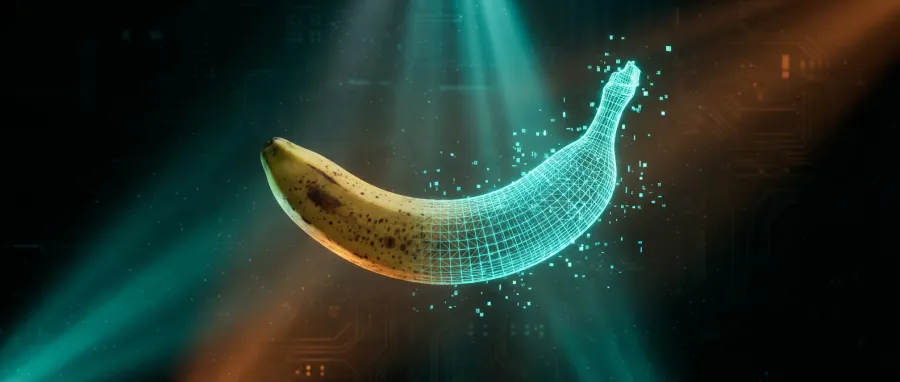
We might even see 3D reconstruction from a single banana picture. By using neural radiance fields (NeRFs), an AI could take one flat banana picture and turn it into a 3D model that you can rotate. This would be a game-changer for digital artists and game developers alike.
And let's consider the social aspect. We are seeing communities dedicated to the "perfect" banana picture. These groups use AI to debate the ideal curvature and color. It's a fascinatng intersection of math, biology, and digital art, all centered around a simple banana picture.
The AI Evolution of a Banana Picture
As models like Claude and Gemini get better at image reasoning, the humble banana picture will become a more complex data point. We'll be able to ask an AI to "make this banana picture look like it was taken in 1920" or "show me the internal structure of this specific fruit."
For developers, the goal is to have one-stop access to all these models. Instead of managing five different subscriptions, using a unified API standard saves time and money. This is exactly where platforms like GPT Proto come in, offering deep discounts on the mainstream models used for generating a banana picture.
Whether you are a student, a developer, or just someone who enjoys a good meme, the technology behind a simple banana picture is only getting more sophisticated. You can stay ahead of these trends by checking the learn more on the GPT Proto tech blog for the latest updates in AI image processing.
So, the next time you see a banana picture on your feed, take a closer look. Is it a real photo? Is it a high-end AI generation? Or is it a vintage shot brought back to life? In today's digital world, it’s getting harder to tell the difference, and that’s the most exciting part of the journey.
Finally, I believe we'll see the banana picture become a standard for benchmarking display tech. The yellow of the peel is hard to get right on many screens. A high-quality banana picture is the perfect test for color accuracy and dynamic range in the next generation of mobile devices.
Written by: GPT Proto
"Unlock the world's leading AI models with GPT Proto's unified API platform."