GPT-5.4-nano: Performance, Speed, and Efficiency Guide
The release of the GPT-5.4-nano API marks a significant shift in how we handle small-scale, high-frequency intelligence tasks. You can browse GPT-5.4-nano and other models right now on GPTProto to see exactly where it fits in your technical stack.
When we talk about AI efficiency, we usually mean doing more with less. GPT-5.4-nano is the embodiment of that goal. It isn't trying to be the largest model on the market. Instead, GPT-5.4-nano focuses on being the fastest. For developers building real-time applications, every millisecond counts. When you switch to GPT-5.4-nano, you aren't just saving money; you are improving the user experience by reducing the 'time to first token' to levels previously unseen in the GPT-5 generation.
GPT-5.4-nano Architecture and Why It Matters for API Efficiency
The internal structure of GPT-5.4-nano is built on a distilled transformer framework. Unlike the massive parameter counts found in its siblings, GPT-5.4-nano uses a pruned set of weights that prioritize language fluency and logic. This means the GPT-5.4-nano API can run on hardware with much lower memory requirements, translating to lower costs for the end user. I've found that for tasks like JSON extraction or intent classification, GPT-5.4-nano performs nearly as well as models ten times its size but at a fraction of the latency.
If you are looking to read the full API documentation, you will see that the integration process for GPT-5.4-nano is identical to other OpenAI-compatible models. This makes migrating from older versions to GPT-5.4-nano a simple afternoon task. You just swap the model ID to GPT-5.4-nano and watch your response times drop. It's a reliable choice for production environments where stability is the top priority.
If you need responses under 200ms for high-traffic applications, GPT-5.4-nano is the only model in the current line that consistently hits those marks without sacrificing logical coherence. It is the perfect balance of brainpower and speed.
Scaling Your Production Apps With GPT-5.4-nano Performance
Scaling a startup often hits a wall when API costs spiral out of control. This is where GPT-5.4-nano becomes your best friend. Because the GPT-5.4-nano API is priced so aggressively, you can run millions of requests without breaking the bank. To keep a close eye on your spending, you can monitor your API usage in real time through our intuitive dashboard. We see many users start with GPT-5.4-nano for their initial proof of concept and keep it for the final product because the performance is just that good.
Another benefit of GPT-5.4-nano is its predictability. Larger models sometimes hallucinate or become 'lazy' with long prompts. GPT-5.4-nano is much more focused. It follows instructions with a high degree of fidelity, especially when those instructions are clear and structured. Whether you are using GPT-5.4-nano for sentiment analysis or simple text transformations, it delivers consistent results every single time.
Why Choose GPT-5.4-nano Over Larger LLM Variants?
Choosing between models is usually a trade-off between cost, speed, and intelligence. Below is a comparison of how GPT-5.4-nano stacks up against other popular choices available on GPTProto.
| Feature | GPT-5.4-nano | GPT-4o-mini | GPT-3.5-Turbo |
|---|---|---|---|
| Avg. Latency | Very Low (< 250ms) | Medium (~500ms) | Medium (~450ms) |
| Cost per 1M Tokens | Lowest | Low | Medium |
| Logic Reasoning | High (Distilled) | Medium-High | Medium |
| Context Window | 128k Tokens | 128k Tokens | 16k Tokens |
As the table shows, GPT-5.4-nano beats out older generations while holding its own against newer 'mini' models. The real-world advantage of GPT-5.4-nano lies in its throughput. If your app handles thousands of concurrent users, the GPT-5.4-nano API won't throttle or slow down like heavier models might during peak hours.
Best Practices for Integrating GPT-5.4-nano Into Your Workflow
To get the most out of GPT-5.4-nano, I recommend using Few-Shot prompting. Since GPT-5.4-nano is a smaller model, giving it two or three examples of your desired output helps it lock onto the pattern instantly. Also, always set a clear system message. GPT-5.4-nano responds incredibly well to being told exactly what its role is—whether it's a code reviewer or a friendly support agent. You can learn more on the GPTProto tech blog about optimizing your prompts for smaller models.
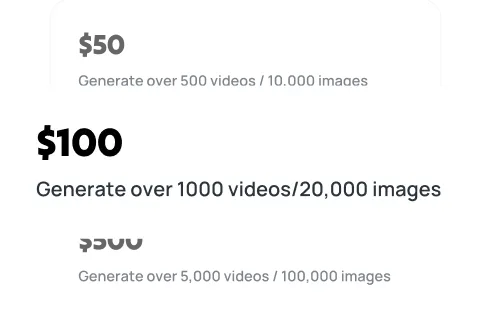
Another tip is to use our flexible pay-as-you-go pricing. There are no monthly commitments or hidden credits that expire. You simply top up your balance and use GPT-5.4-nano as much or as little as you need. This is ideal for developers who are still in the testing phase and don't want to commit to large upfront costs. For even more savings, you can earn commissions by referring friends to the GPTProto platform, which can then be applied to your GPT-5.4-nano API usage.
GPT-5.4-nano and the Future of Intelligent Edge Computing
We are seeing more developers move GPT-5.4-nano into edge scenarios where response speed is the primary metric. Because the GPT-5.4-nano API is so lean, it's the top choice for mobile app integrations. Users expect instant feedback on their phones, and GPT-5.4-nano delivers that. To stay ahead of the curve, make sure to follow the latest AI industry updates on our site, where we track the evolution of nano-sized models across the industry. GPT-5.4-nano is just the beginning of a trend toward highly specialized, lightning-fast AI tools.