Claude Sonnet 4-Thinking Performance: Reasoning, Coding, and API Guide
The launch of Claude Sonnet 4-Thinking has sparked intense debate among developers and AI researchers, as it pushes the boundaries of what we expect from a mid-tier model that punches into the heavyweight division. At GPTProto, we provide a streamlined way to explore all available AI models, including this specific iteration that balances speed with deep analytical thought.
Why Developers Are Choosing Claude Sonnet 4-Thinking for Complex Logic
Claude Sonnet 4-Thinking isn't just another incremental update; it's a refined reasoning machine. When you use the Claude Sonnet 4-Thinking API, you'll notice a distinct shift in how the model handles long-form reasoning. Unlike previous versions that might rush to a conclusion, Claude Sonnet 4-Thinking takes a moment to 'think' through the problem, which often leads to more accurate results in technical architecture and logic puzzles. This quiet competence makes Claude Sonnet 4-Thinking feel more like a mature assistant than a simple text predictor.
However, users have noted some quirks. If you don't manage your system prompts carefully, Claude Sonnet 4-Thinking can fall into habits similar to other large language models, such as an over-reliance on em-dashes and colons. This stylistic choice can sometimes make the output feel 'obviously AI.' To get the most out of your Claude Sonnet 4-Thinking API calls, it's often best to include custom instructions that explicitly define your preferred writing style, especially if you're using it for high-end prose or creative content where natural flow is paramount.
Claude Sonnet 4-Thinking vs GPT-4o: A Direct Comparison
In various benchmarks, Claude Sonnet 4-Thinking often places second or third only to top-tier models like GPT-5.4. A common observation is that while GPT-5.4 is more decisive in investment theory or direct recommendations, Claude Sonnet 4-Thinking tends to explain and analyze rather than simply dictate a choice. For many researchers, this explanatory nature of Claude Sonnet 4-Thinking is actually a feature, not a bug, as it provides the reasoning trail necessary for human oversight. You can monitor your API usage in real time to see how Claude Sonnet 4-Thinking performs across different prompt types compared to your existing AI stack.
| Feature | Claude Sonnet 4-Thinking | GPT-4o | Claude 3.5 Sonnet |
|---|---|---|---|
| Reasoning Style | Chain-of-Thought (Native) | Direct/Fast | Standard |
| Coding Ability | Excellent (Claude Code) | Very High | High |
| Context Management | Top Tier | High | Moderate |
| Prose Naturalness | Varies (Watch punctuation) | Standardized | High |
"Claude Sonnet 4-Thinking has this quiet competence. It doesn't try too hard to impress; it just gets the logic right, even if you have to tell it twice to stop using so many em-dashes." — Senior AI Architect at GPTProto.
How to Get the Best Results From Claude Sonnet 4-Thinking's API
Getting the best out of Claude Sonnet 4-Thinking requires a slightly different approach than you might use with GPT models. One of the most effective strategies is task breakdown. Because Claude Sonnet 4-Thinking can occasionally take shortcuts or 'ellipse' instructions during long sessions, the fix is to break every task into atomic, verifiable steps with explicit checkpoints. This ensures the Claude Sonnet 4-Thinking API delivers consistent results without skipping critical requirements.
If you're using it for coding, the 'Claude Code' environment is widely considered one of the best tools currently available. Many developers find that Claude Sonnet 4-Thinking excels at debugging complex codebases where smaller models lose the thread. To start implementing these techniques, you can read the full API documentation for specific integration patterns. Additionally, if you're interested in how this model handles multilingual tasks, it’s worth noting a strange quirk: when prompted in Chinese without a system prompt, Claude Sonnet 4-Thinking has been known to identify itself as DeepSeek, a curious artifact of its training data or fine-tuning process.
Claude Sonnet 4-Thinking Coding Performance: A Double-Edged Sword?
The feedback on Claude Sonnet 4-Thinking's coding performance has been polarized. Some developers swear by it, claiming that Claude Sonnet 4-Thinking is the best model for refactoring legacy code. Others have expressed disappointment, feeling that it takes too many shortcuts in large-scale sessions. This variance often comes down to how the API is utilized. When you manage your API billing on GPTProto, you can experiment with different parameters without worrying about expiring credits, allowing you to fine-tune your Claude Sonnet 4-Thinking temperature and top-p settings to find the 'sweet spot' for your specific codebase.
Pricing and Reliability for Your Claude Sonnet 4-Thinking API Implementation
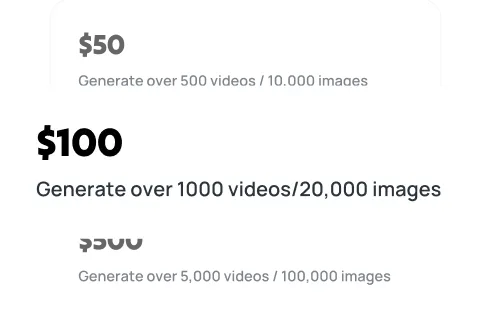
At GPTProto, we believe that accessing premium models like Claude Sonnet 4-Thinking should be straightforward. Our 'No Credits' policy means you only pay for what you use, avoiding the frustration of pre-purchasing tokens that eventually expire. You can stay informed with AI news and trends to see how Claude Sonnet 4-Thinking stacks up as new iterations are released. If you're looking to scale your application, our infrastructure ensures that your Claude Sonnet 4-Thinking API calls remain stable, even during peak demand. For more advanced implementations, you can also try GPTProto intelligent AI agents which are already optimized to use the reasoning strengths of Claude Sonnet 4-Thinking. Don't forget to earn commissions by referring friends to the platform, making it even more cost-effective to use Claude Sonnet 4-Thinking for your professional projects.
For those diving deep into the technical nuances, we recommend checking our technical blog & tutorials for a deep-dive on mitigating the 'shortcut' behavior often reported in Claude Sonnet 4-Thinking. By following structured prompting and atomic task management, you can turn Claude Sonnet 4-Thinking into the most reliable tool in your AI arsenal.